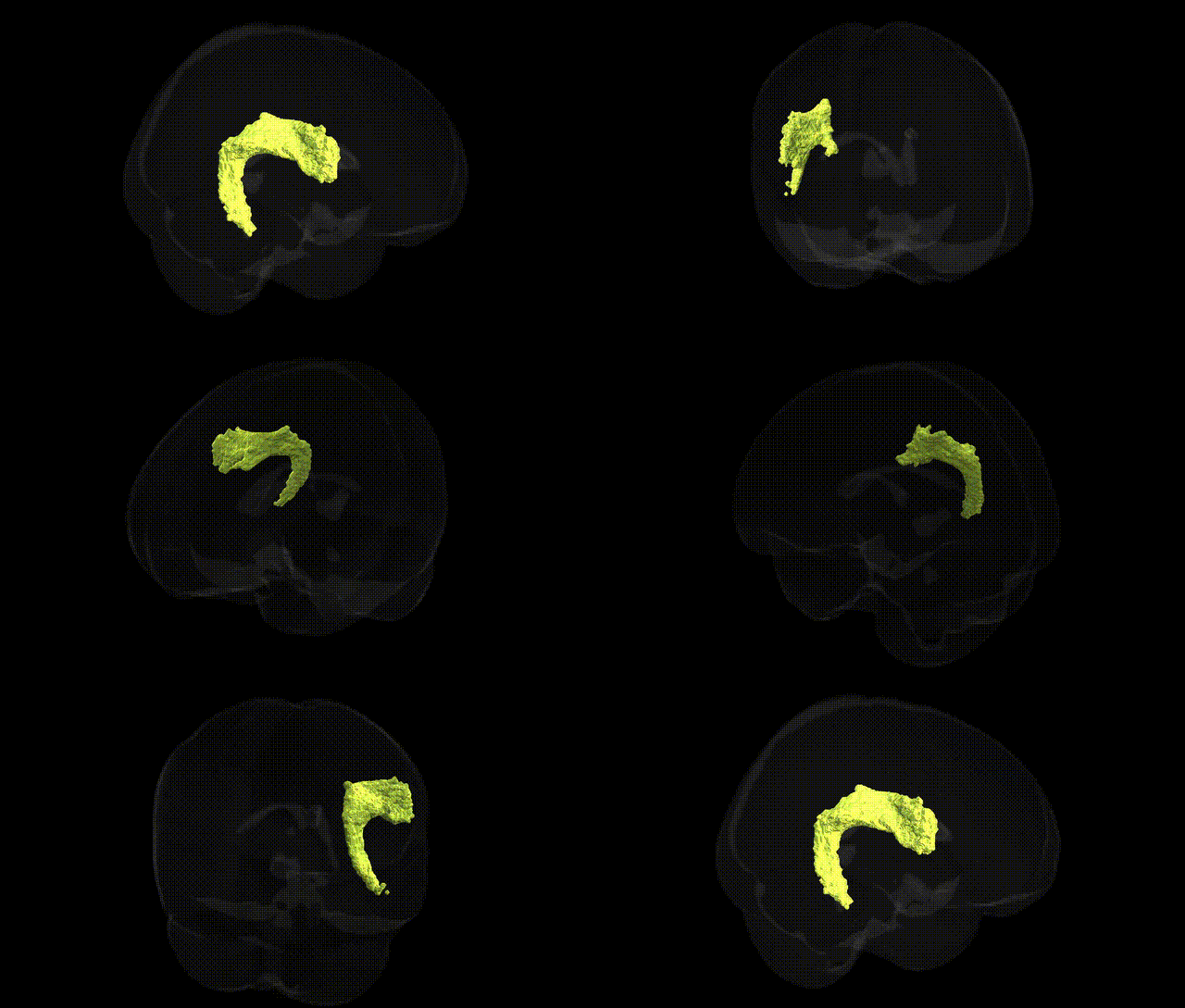
The bilateral Superior longitudinal fasciculus L (left-hemisphere component of the superior longitudinal fasciculus) is a major intrahemispheric white matter association tract that connects frontal, parietal, and temporal cortical regions, running dorsally and laterally to the insula and caudate nucleus. In the JHU ICBM tracts atlas, it is defined probabilistically and thresholded to capture the core of this pathway, which is implicated in higher-order cognitive functions such as language, attention, spatial processing, and working memory. Structurally, the superior longitudinal fasciculus comprises multiple subcomponents (often including what is historically termed the arcuate fasciculus), conveying bidirectional cortico-cortical signals that integrate sensory input with executive and linguistic processes. There is no direct Wikipedia article for “Superior longitudinal fasciculus L”; a related entry describing the overall tract is: Superior longitudinal fasciculus.
The bilateral superior longitudinal fasciculus (SLF), as defined in the JHU ICBM tracts atlas, shows robust heritability of diffusion MRI measures and is influenced by numerous common variants identified in large GWAS of white-matter microstructure. Polygenic effects involving axon guidance (e.g., ROBO1/2, SLIT genes), myelination and oligodendrocyte function (e.g., MAG, MBP, ERBB4, NRG1), and neurodevelopmental and synaptic genes (e.g., CNTNAP2, DISC1-related pathways) contribute to inter-individual variation in SLF integrity. GWAS of fractional anisotropy and related metrics have implicated loci across chromosomes 1, 3, 5, 10, and 17, among others, often overlapping with genes expressed in association cortices connected by the SLF (fronto-parietal and temporal regions). Genetically influenced alterations in SLF structure have been associated with neurodevelopmental and psychiatric disorders, including schizophrenia, bipolar disorder, autism spectrum disorder, ADHD, and dyslexia, as well as with Alzheimer’s disease risk and mild cognitive impairment, where risk loci such as APOE and other AD-related variants show associations with SLF degeneration. Additionally, polygenic scores for intelligence, educational attainment, and cognitive performance correlate with SLF microstructural measures, suggesting that genetic variation affecting this tract contributes to individual differences in higher-order cognitive and language functions.
Overview generated by GPT-4o (2026).
Region ID: 15
Hemisphere: bilateral
Atlas: JHU ICBM tracts maxprob thr25 1mm
Full Quality Version: Download MP4
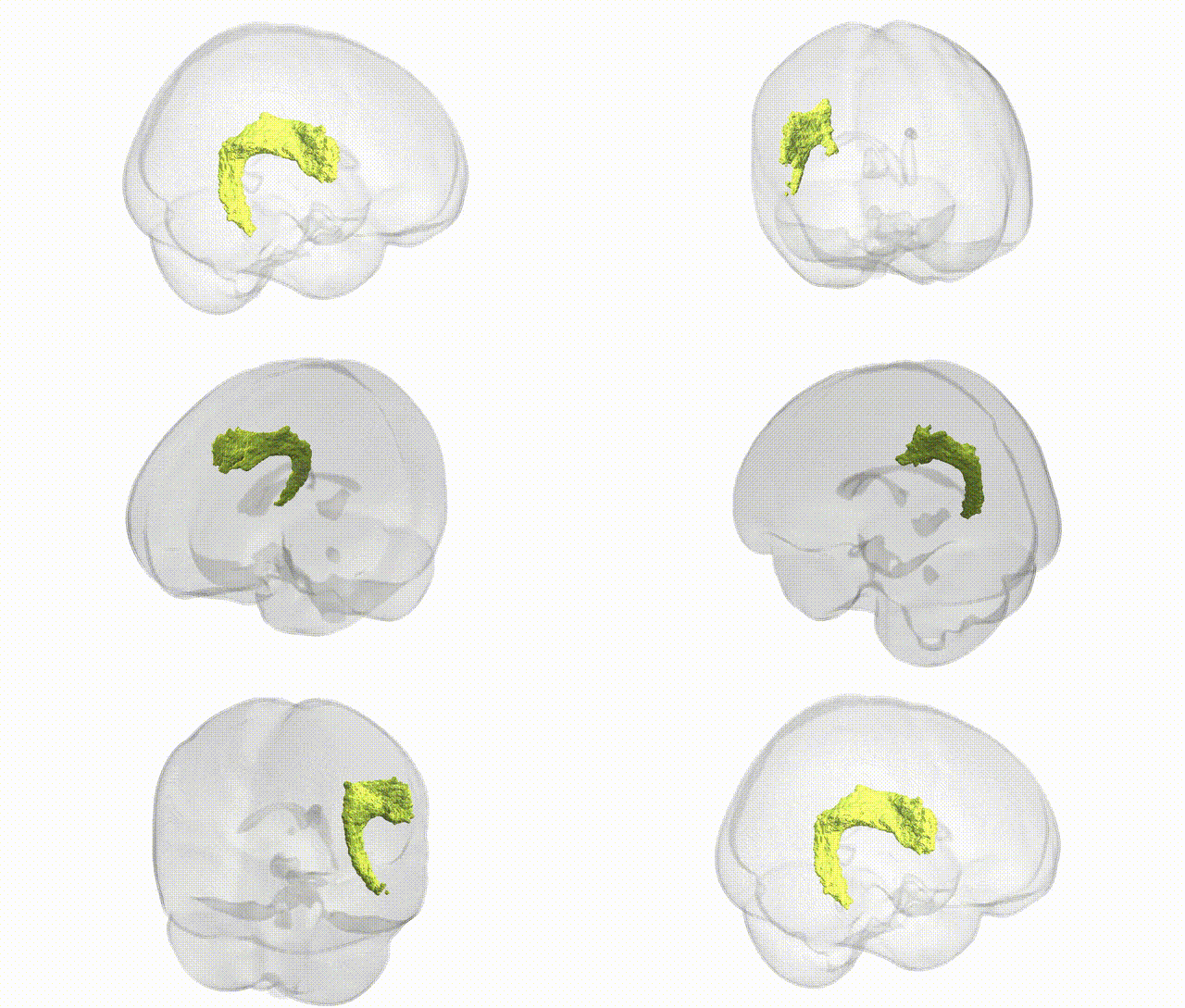
Full Quality Version: Download MP4
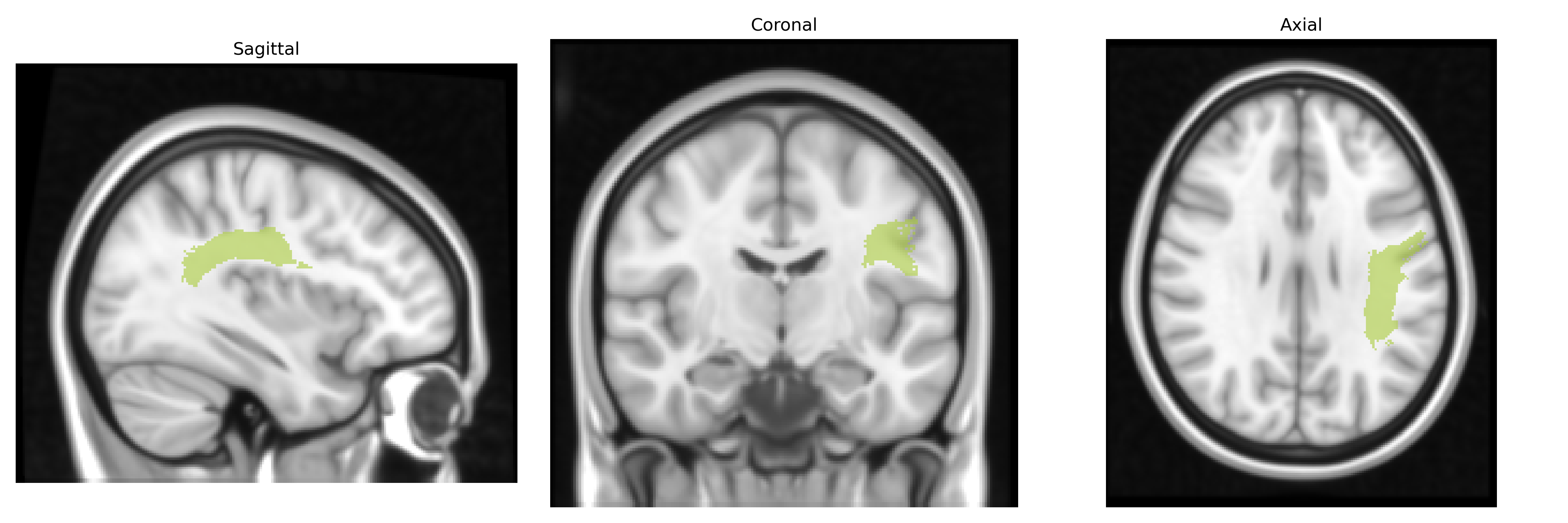
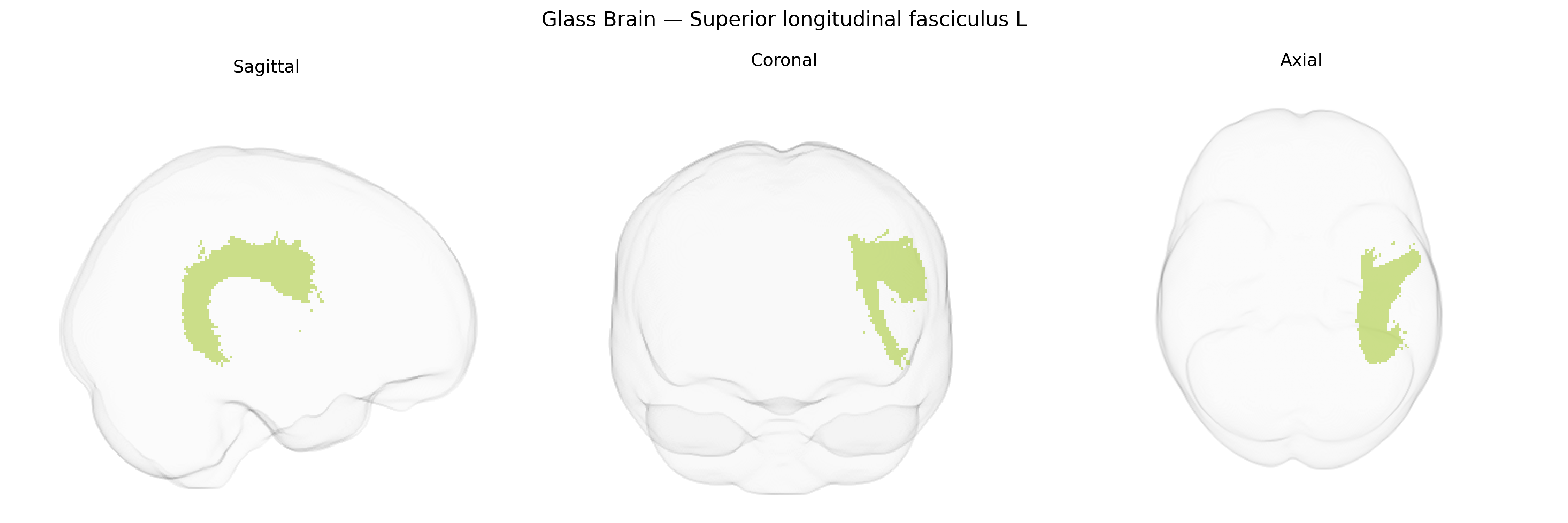
Wali Sidiqyar*, Gaurav Rudravaram*, Elyssa M. McMaster, Trent M. Schwartz, Adam M. Saunders, Kurt G. Schilling, Bennett A. Landman "Introducing SPINS: A Shared Public Visualization Library of Neuroanatomical Structures." Medical Imaging with Deep Learning- short paper
This resource is licensed under CC0 1.0 Universal (Public Domain).