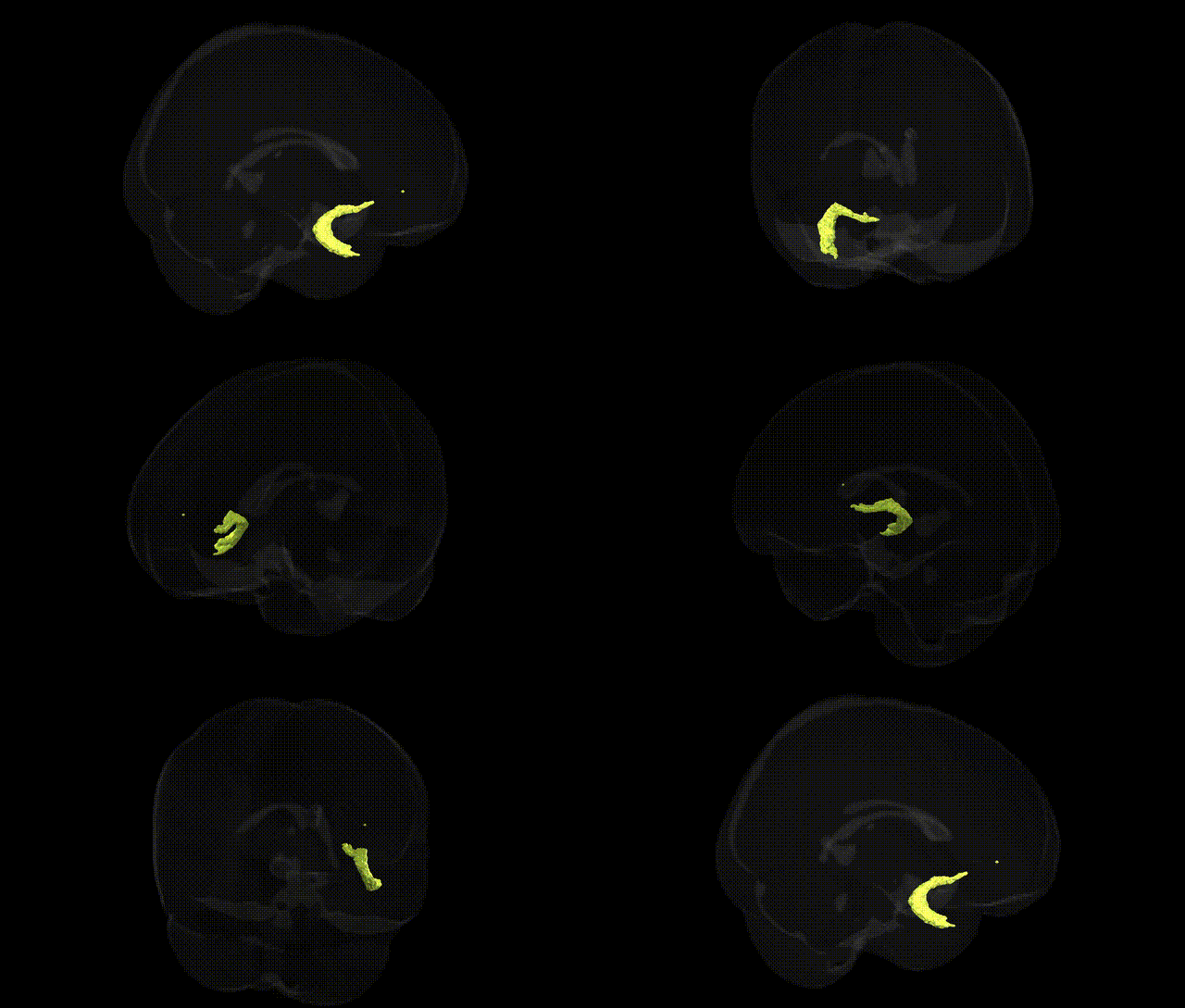
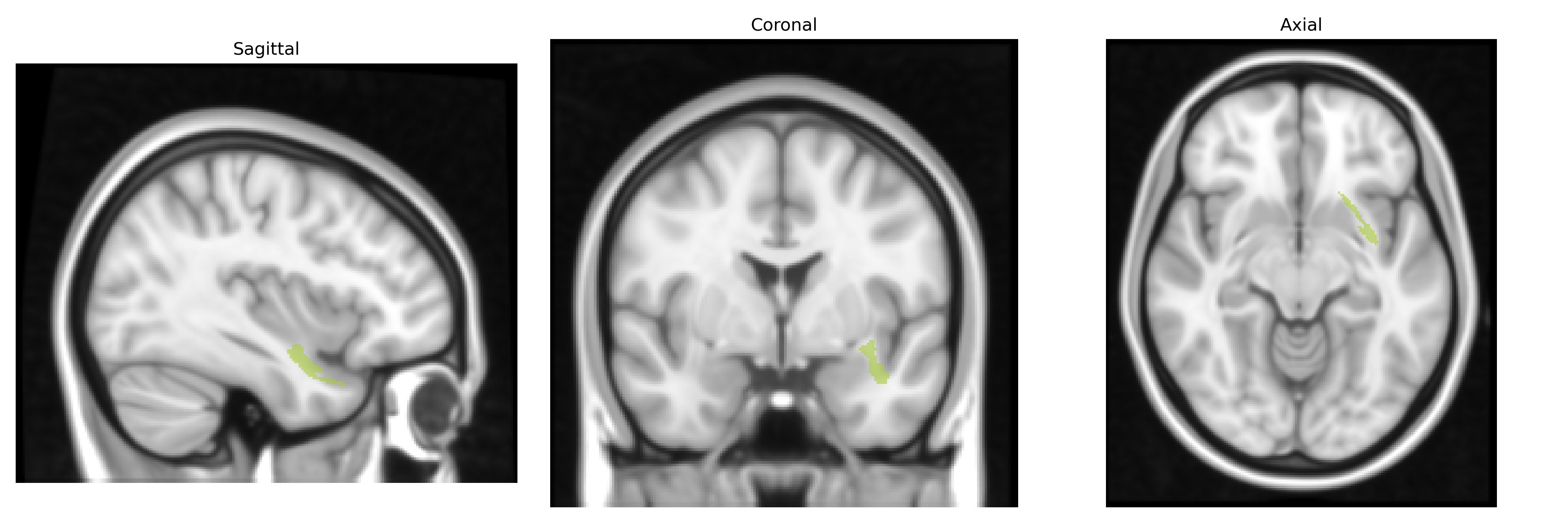
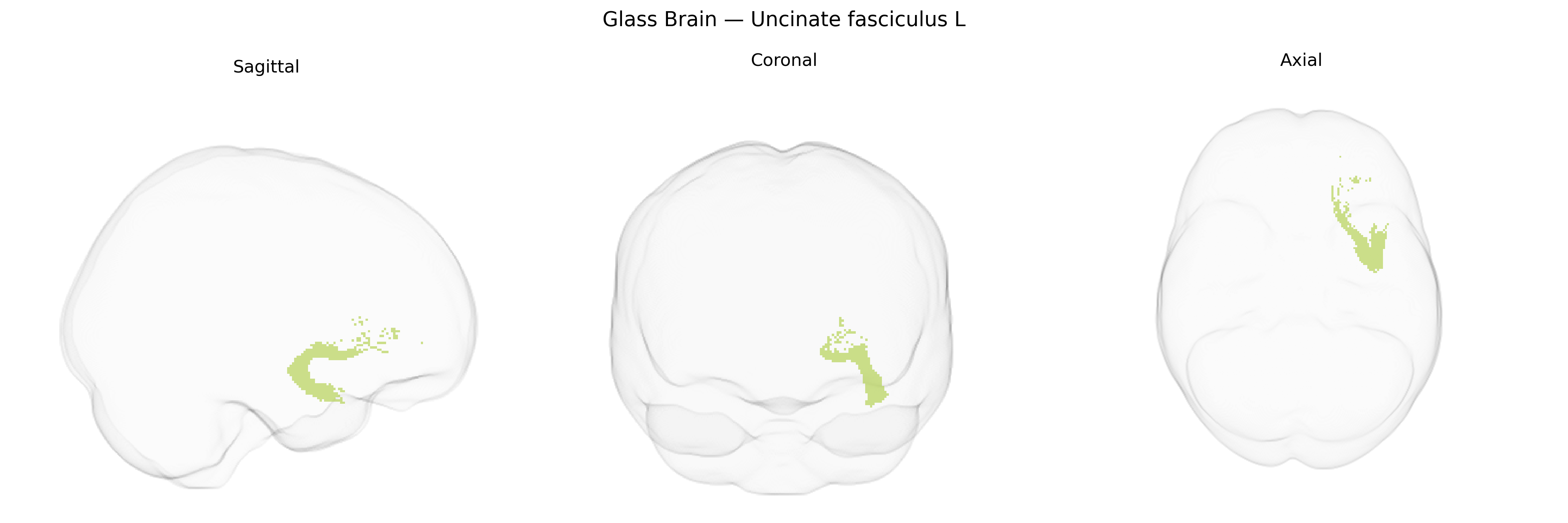
The bilateral uncinate fasciculus (L) is a long-range, hook-shaped white matter association tract that connects the anterior temporal lobe (including parts of the temporal pole and amygdala) with the ventral prefrontal and orbitofrontal cortices, coursing through the anterior limb of the internal capsule and the insular region. It is implicated in integrating emotional, mnemonic, and semantic information, supporting functions such as emotional regulation, social cognition, and aspects of episodic memory. Structural or functional alterations in the uncinate fasciculus have been associated with various neuropsychiatric and neurodevelopmental conditions, including mood disorders, schizophrenia, and autism spectrum disorders. There is no direct Wikipedia article for the bilateral uncinate fasciculus (L), but a related structure is described at Uncinate fasciculus.
The bilateral uncinate fasciculus, a frontotemporal association tract represented in the JHU ICBM tracts maxprob thr25 1 mm atlas, shows heritable variation in microstructure and has been implicated in multiple GWAS of diffusion MRI measures, psychiatric and neurodevelopmental disorders, and behavioral traits. Twin and family studies report moderate heritability for uncinate fractional anisotropy (FA) and mean diffusivity (MD), and large-scale imaging–genetics consortia (e.g., ENIGMA, UK Biobank) have identified common variants in genes related to axon guidance, myelination, and neurodevelopment (such as genes in the NRG1/ErbB, MAG, and CNTN families, as well as regulators of oligodendrocyte and white-matter development) that associate with uncinate FA or MD, though specific loci often show small effects and are not always replicated across cohorts. GWAS of major depressive disorder, bipolar disorder, schizophrenia, autism spectrum disorder, and anxiety-related traits report polygenic influences that overlap with genetic architectures of frontotemporal white matter, including the uncinate, and case–control diffusion MRI studies consistently link risk alleles or higher polygenic risk scores for these conditions to reduced FA or altered microstructure in this tract. Variants in genes involved in synaptic plasticity and stress response have also been associated with uncinate integrity in candidate-gene and polygenic-score studies of mood and anxiety disorders, while neuroticism, impulsivity, and externalizing behaviors show modest genetic correlations with diffusion metrics in the uncinate fasciculus. Overall, current evidence supports a polygenic architecture in which numerous common variants of small effect, many in neurodevelopmental and myelination pathways, contribute to individual differences in uncinate fasciculus structure and to its involvement in psychiatric and cognitive phenotypes.
Overview generated by GPT-4o (2026).
Region ID: 17
Hemisphere: bilateral
Atlas: JHU ICBM tracts maxprob thr25 1mm
Full Quality Version: Download MP4
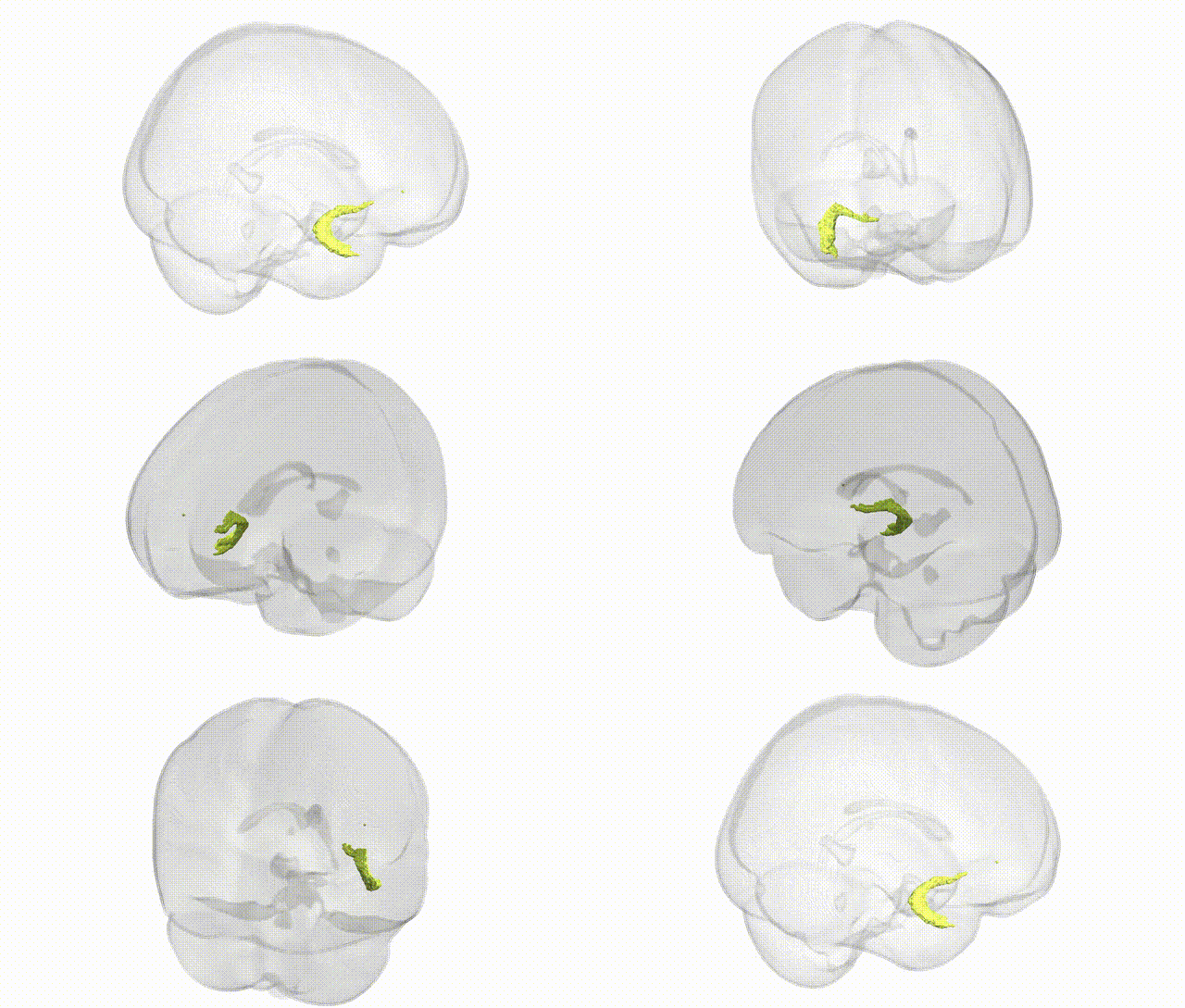
Full Quality Version: Download MP4
Wali Sidiqyar*, Gaurav Rudravaram*, Elyssa M. McMaster, Trent M. Schwartz, Adam M. Saunders, Kurt G. Schilling, Bennett A. Landman "Introducing SPINS: A Shared Public Visualization Library of Neuroanatomical Structures." Medical Imaging with Deep Learning- short paper
This resource is licensed under CC0 1.0 Universal (Public Domain).