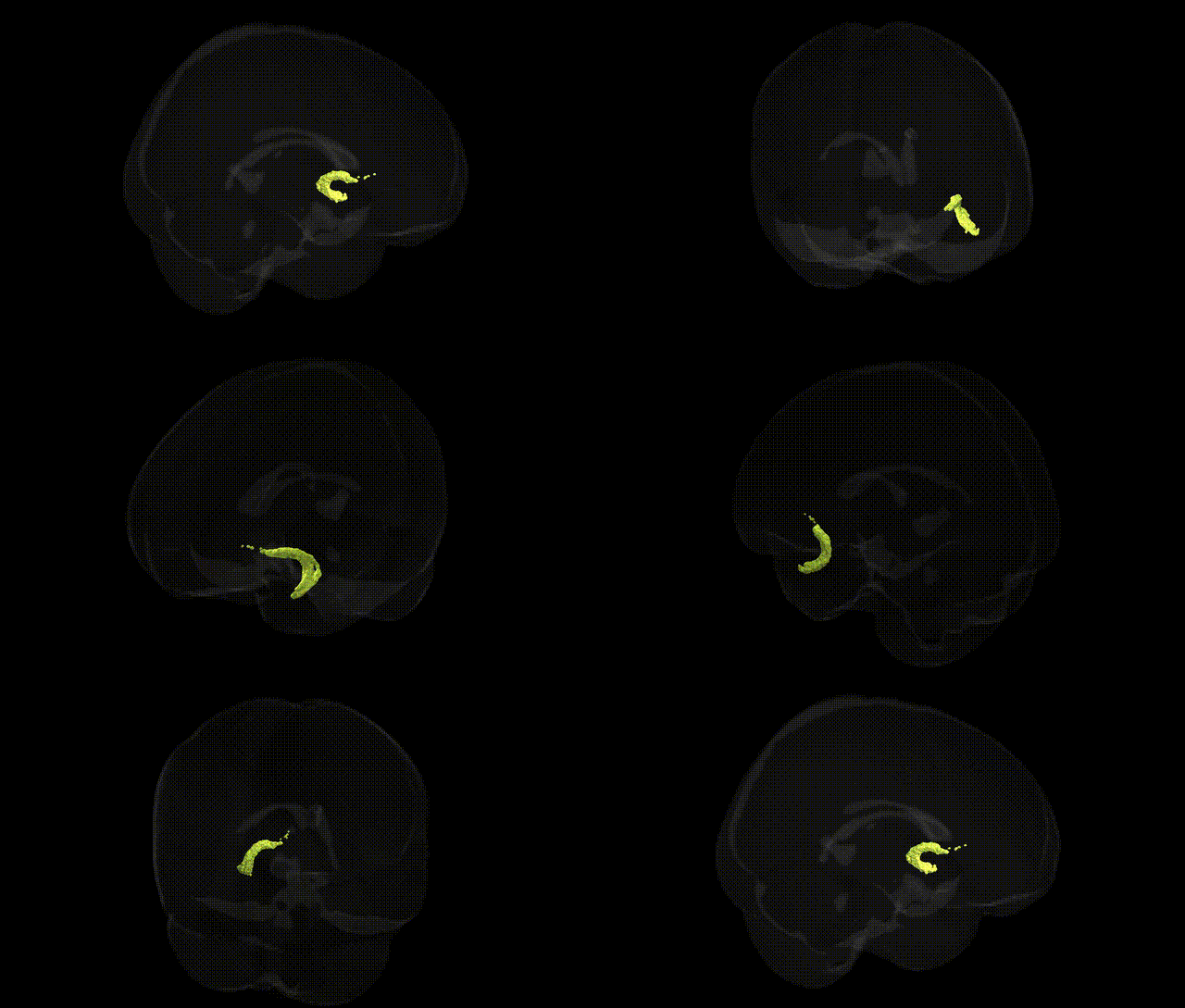
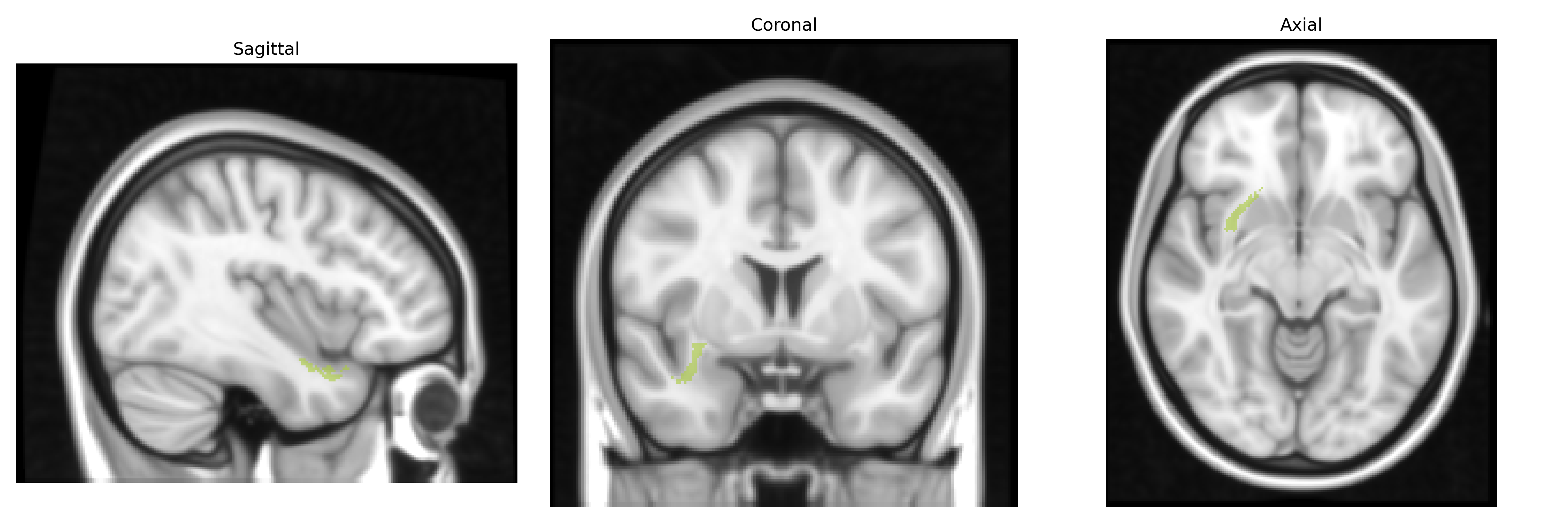
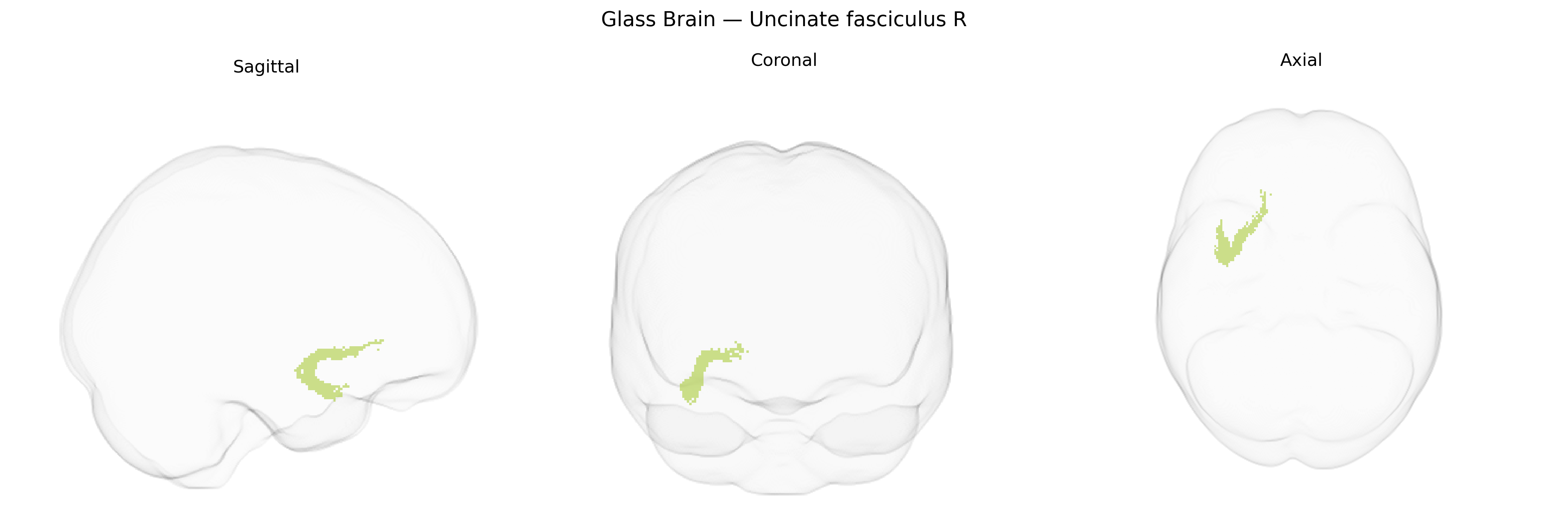
The bilateral Uncinate fasciculus is a hook-shaped association fiber tract that connects anterior temporal lobe structures—including parts of the temporal pole, amygdala, and hippocampal region—with the orbitofrontal and ventromedial prefrontal cortices, forming a key pathway within the limbic and paralimbic systems. Anatomically, it courses ventral to the insula and over the lateral sulcus, linking regions critical for emotional processing, episodic memory, reward valuation, and social cognition, and is implicated in functions such as emotional regulation and decision-making under uncertainty. Microstructural alterations in the uncinate fasciculus have been associated with a range of neuropsychiatric and neurodevelopmental conditions, including mood disorders, anxiety, psychopathy, and temporal lobe epilepsy, highlighting its role in frontotemporal integration of affective and mnemonic information. Uncinate fasciculus
The bilateral uncinate fasciculus, as defined in the JHU ICBM tracts maxprob thr25 1mm atlas (including the right segment, “Uncinate fasciculus R”), has been repeatedly implicated in genetic studies of brain connectivity, psychiatric and neurodevelopmental disorders, and cognitive-emotional traits, although specific GWAS often treat this tract bilaterally or as a combined measure rather than isolating the right side. Imaging-genetics work and diffusion MRI GWAS have shown that common variants influencing white matter microstructure (e.g., in genes related to axonal guidance, myelination, and synaptic function) contribute to interindividual differences in uncinate fasciculus integrity; notable examples include associations of general white matter integrity measures with loci near genes such as NRG1, CNTNAP2, and those in neurodevelopmental or neuropsychiatric GWAS hits, though these links are usually indirect and regionally broad. The uncinate fasciculus, a key fronto-temporal limbic tract, has been widely implicated in genetic risk for major depressive disorder, anxiety, bipolar disorder, schizophrenia, and autism spectrum disorder, where risk alleles identified in large psychiatric GWAS consortia have been associated with altered uncinate fasciculus fractional anisotropy or structural connectivity in imaging-genetics samples. Additionally, genetic influences on callous-unemotional traits, antisocial behavior, and emotion regulation have been connected to individual differences in uncinate fasciculus structure, and twin studies indicate substantial heritability of its microstructural properties. Overall, genetic findings support the uncinate fasciculus—captured in the JHU atlas, including the right tract—as a heritable, genetically modulated pathway that mediates part of the biological link between polygenic risk for psychiatric and cognitive-emotional traits and observable brain phenotypes.
Overview generated by GPT-4o (2026).
Region ID: 18
Hemisphere: bilateral
Atlas: JHU ICBM tracts maxprob thr25 1mm
Full Quality Version: Download MP4
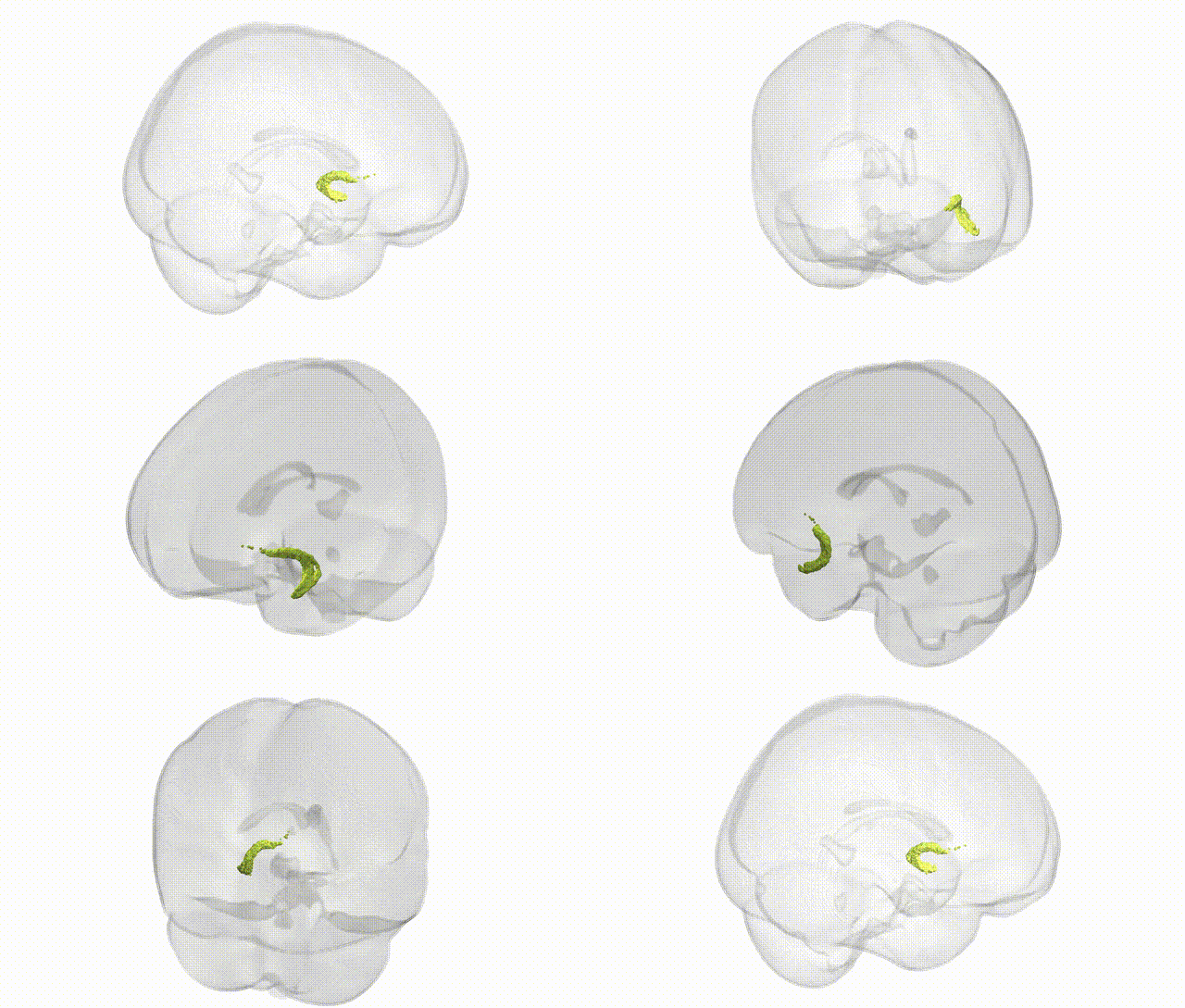
Full Quality Version: Download MP4
Wali Sidiqyar*, Gaurav Rudravaram*, Elyssa M. McMaster, Trent M. Schwartz, Adam M. Saunders, Kurt G. Schilling, Bennett A. Landman "Introducing SPINS: A Shared Public Visualization Library of Neuroanatomical Structures." Medical Imaging with Deep Learning- short paper
This resource is licensed under CC0 1.0 Universal (Public Domain).