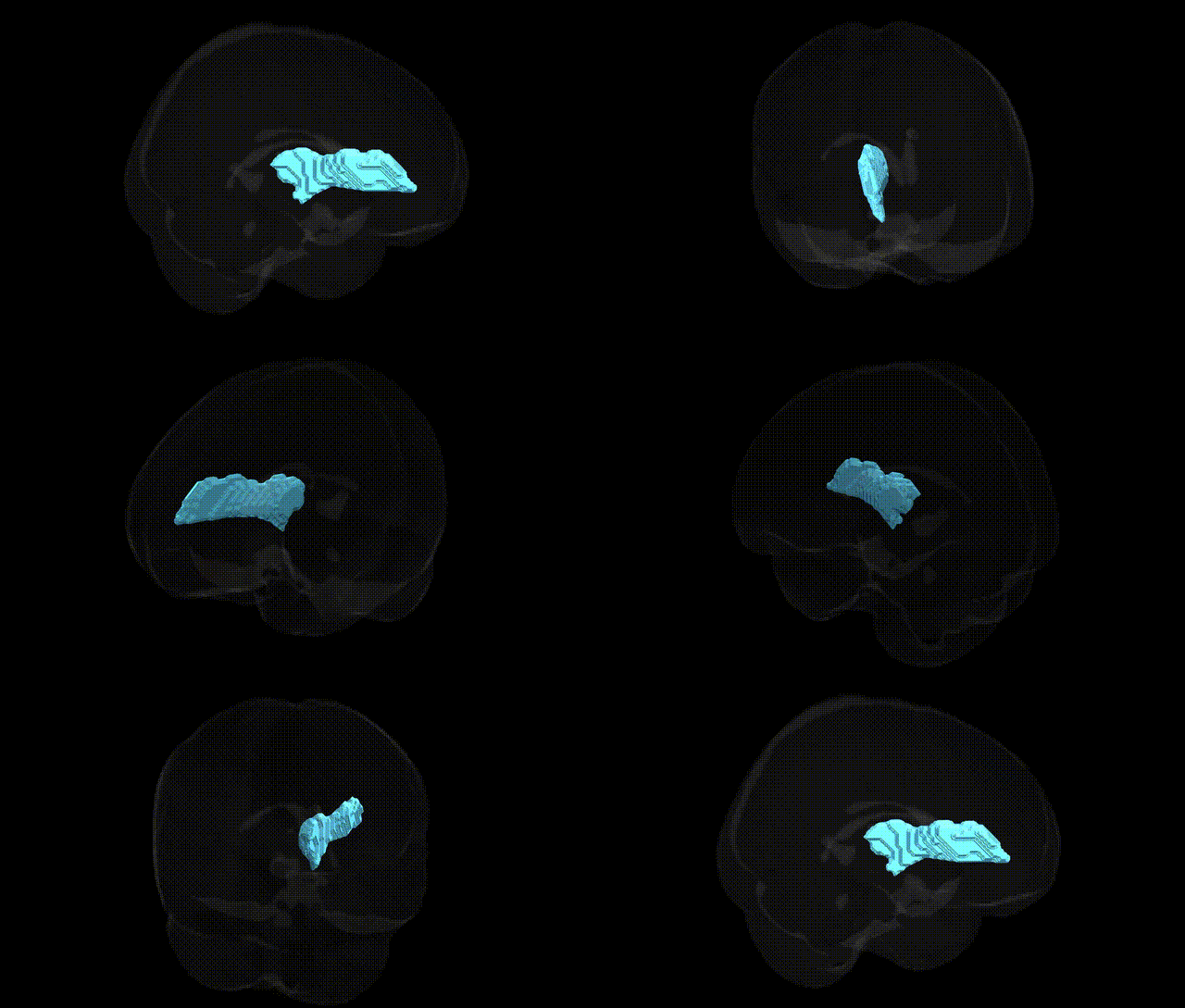
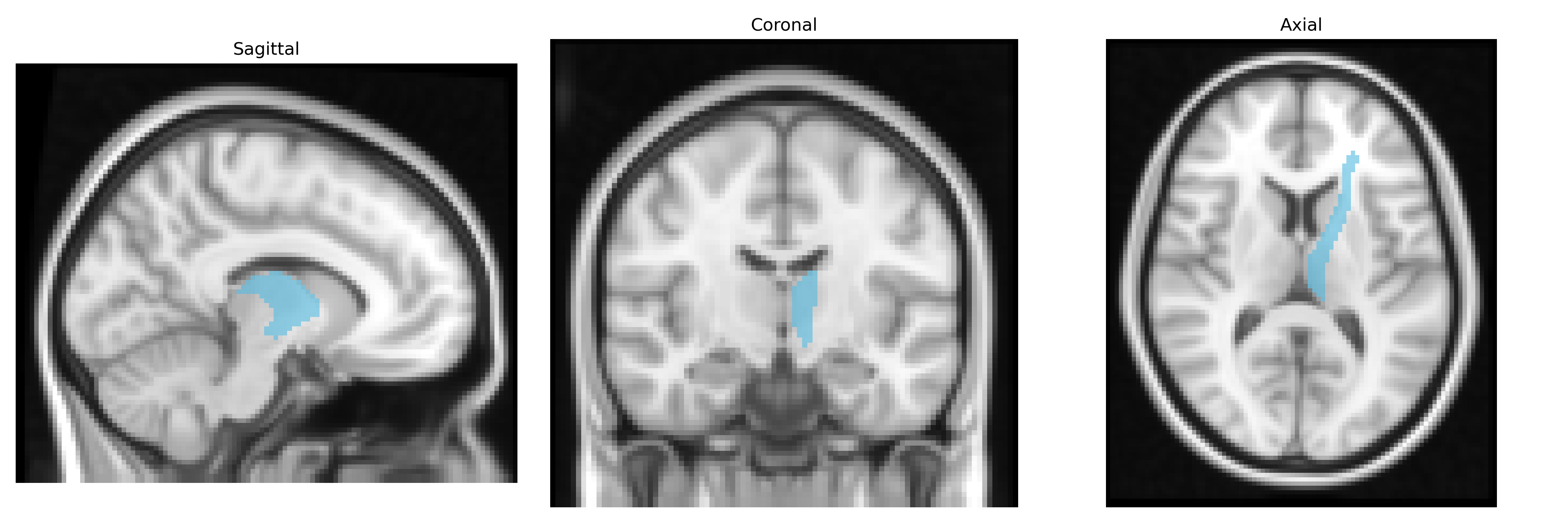
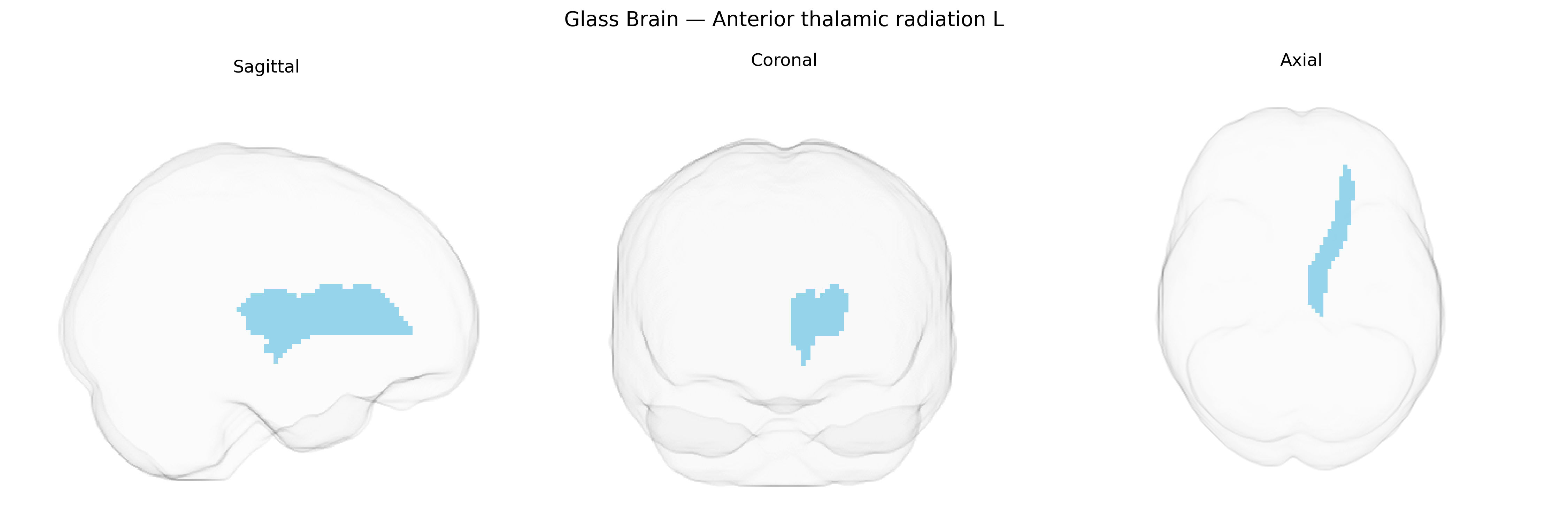
The bilateral Anterior thalamic radiation L, as defined in the JHU ICBM tracts maxprob thr25 2mm atlas, is a major white matter pathway connecting the anterior and medial thalamic nuclei to frontal lobe regions, particularly the prefrontal cortex and anterior cingulate cortex. This tract courses anteriorly from the thalamus through the anterior limb of the internal capsule, contributing to circuits involved in executive function, attention, memory (especially episodic and working memory), and aspects of emotional regulation. Functionally, it participates in thalamo-cortical loops that integrate subcortical processing with higher-order cognitive operations, and it is implicated in various neuropsychiatric and neurodegenerative conditions when structurally or functionally disrupted. There is no direct Wikipedia article for this tract; a closely related and encompassing structure is the Internal capsule.
The bilateral anterior thalamic radiation (ATR L) as defined in the JHU ICBM tracts atlas has been implicated in multiple genetic imaging and GWAS studies focused on white matter microstructure, particularly fractional anisotropy (FA) and mean diffusivity (MD). Variants in genes involved in axonal guidance, myelination, and neurodevelopment (such as CNTN4, NRG1, MAG, and genes within the major histocompatibility complex) have shown associations with ATR diffusion metrics, often in the context of large-scale brain-wide imaging genetics analyses rather than region-specific candidate studies. Polygenic risk scores for schizophrenia, bipolar disorder, and major depressive disorder have been linked to altered FA in the anterior thalamic radiation, suggesting that common psychiatric risk variants contribute to microstructural changes in this tract. Similarly, GWAS of general cognitive ability and processing speed have identified loci whose effects partly map onto ATR integrity, consistent with its role in fronto-thalamic circuits supporting executive function. ATR metrics have also been associated with genetic risk for neurodegenerative and small-vessel cerebrovascular disease (e.g., variants in APOE and blood pressure–related loci), which may influence white matter hyperintensity burden and ischemic damage preferentially affecting fronto-thalamic fibers. Overall, genetic findings point to the anterior thalamic radiation as a key conduit through which polygenic influences on psychiatric vulnerability, cognition, and vascular brain injury are expressed at the level of white matter structure, although specific locus–tract relationships remain incompletely characterized and are typically derived from whole-brain imaging GWAS rather than studies targeting ATR L in isolation.
Overview generated by GPT-4o (2026).
Region ID: 1
Hemisphere: bilateral
Atlas: JHU ICBM tracts maxprob thr25 2mm
Full Quality Version: Download MP4
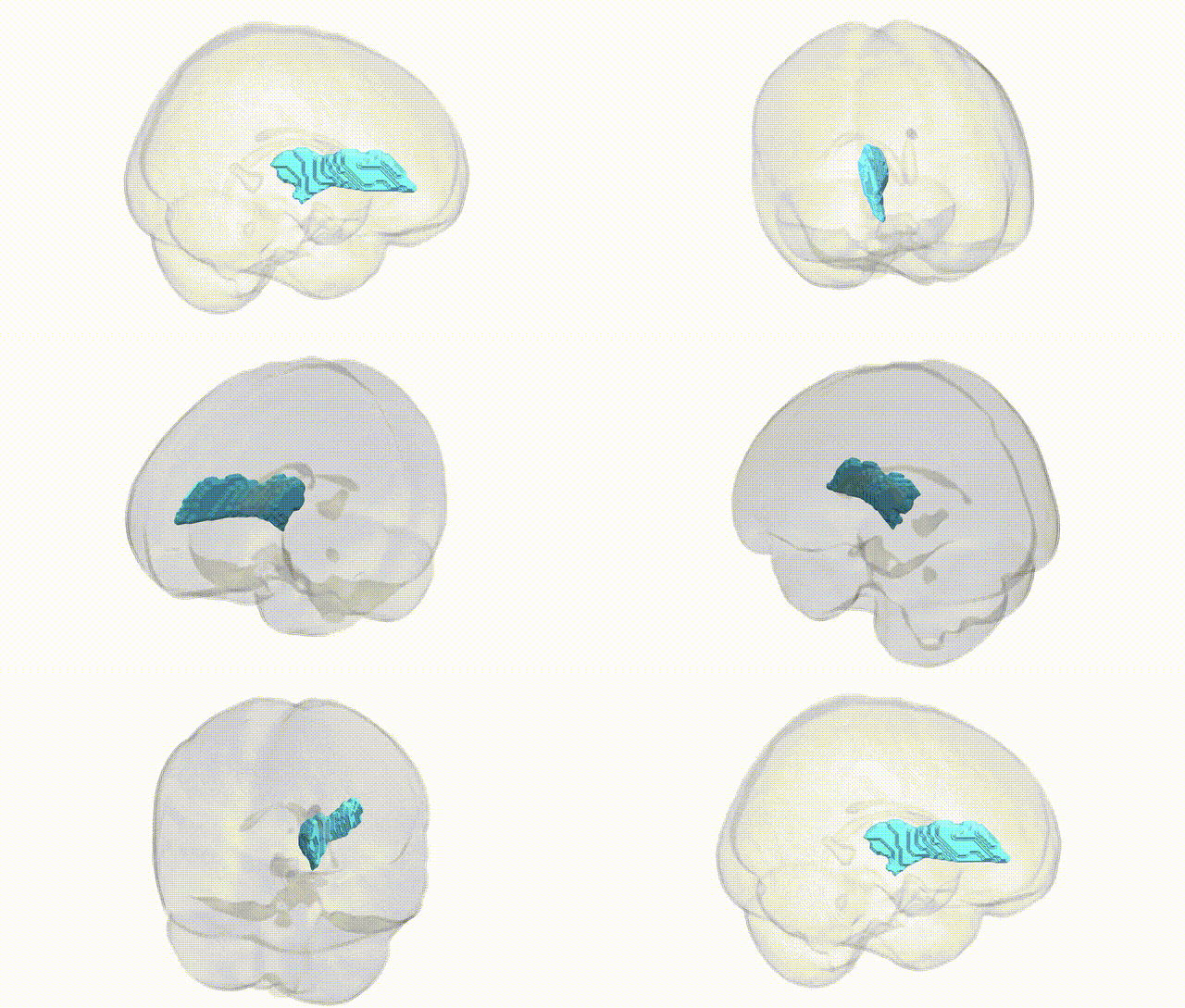
Full Quality Version: Download MP4
Wali Sidiqyar*, Gaurav Rudravaram*, Elyssa M. McMaster, Trent M. Schwartz, Adam M. Saunders, Kurt G. Schilling, Bennett A. Landman "Introducing SPINS: A Shared Public Visualization Library of Neuroanatomical Structures." Medical Imaging with Deep Learning- short paper
This resource is licensed under CC0 1.0 Universal (Public Domain).