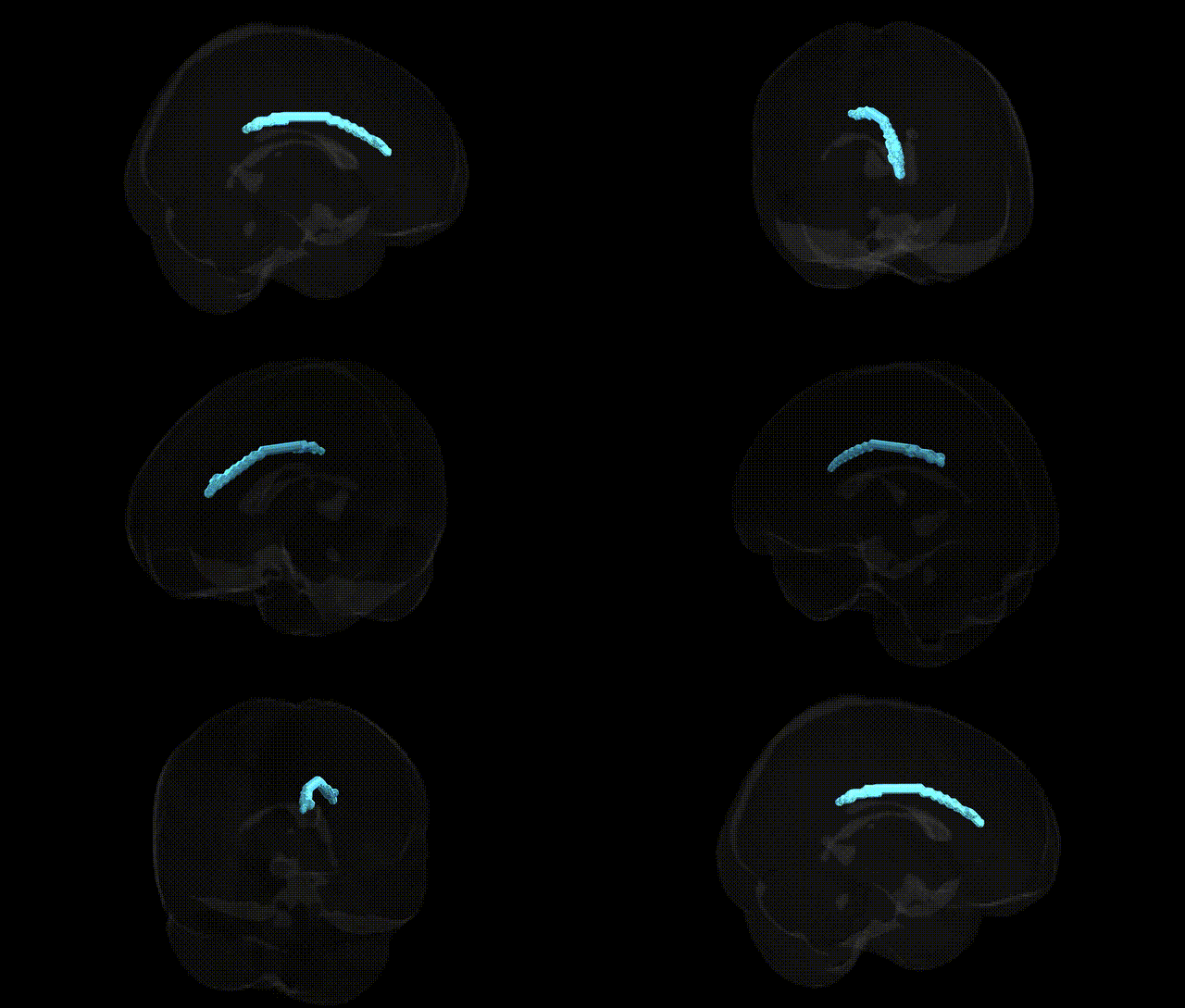
The bilateral Cingulum (cingulate gyrus) L, as defined in the JHU ICBM tracts maxprob thr25 2mm Atlas, is a major association white matter tract running within the cingulate gyrus on the medial surface of the cerebral hemispheres. It forms part of the limbic system’s core connectivity, arching around the corpus callosum and linking medial frontal, parietal, and temporal (including parahippocampal) regions. This tract supports integration of emotional, motivational, and cognitive processes, and is crucial for attention, executive control, and memory-related functions through its connections with the prefrontal cortex and hippocampal formation. Structural or functional alterations in the cingulum bundle have been implicated in psychiatric and neurological disorders, including depression, schizophrenia, and dementia. No direct Wikipedia article exists for the “Cingulum (cingulate gyrus)” tract; a closely related structure is the Cingulate cortex.
The bilateral cingulum (cingulate gyrus) tract, as defined in the JHU ICBM tracts maxprob thr25 2mm atlas, has been repeatedly implicated in genetic studies of brain structure and psychiatric and cognitive phenotypes. GWAS of diffusion MRI metrics (e.g., fractional anisotropy and mean diffusivity) have identified common variants in genes related to axonal guidance, myelination, and synaptic plasticity (including loci near NRG1, CNTNAP2, MAG, and several oligodendrocyte-related genes) as contributors to inter-individual variation in cingulum microstructure. Twin and family studies show high heritability for cingulum integrity, and polygenic risk scores for schizophrenia, bipolar disorder, major depression, ADHD, and autism spectrum disorder are associated with altered cingulum white matter properties, supporting a genetically mediated vulnerability pathway. Variants in genes such as COMT, BDNF, and APOE have been linked to cingulum volume or connectivity changes that relate to working memory, executive function, emotional regulation, and risk for neurodegenerative disorders, including Alzheimer’s disease. Large imaging-genetics consortia (e.g., ENIGMA) have further connected genome-wide significant loci for white matter integrity and cognitive performance to structural measures in cingulum tracts, highlighting this region as a key genetically influenced hub in networks subserving mood, attention, and self-referential processing.
Overview generated by GPT-4o (2026).
Region ID: 5
Hemisphere: bilateral
Atlas: JHU ICBM tracts maxprob thr25 2mm
Full Quality Version: Download MP4
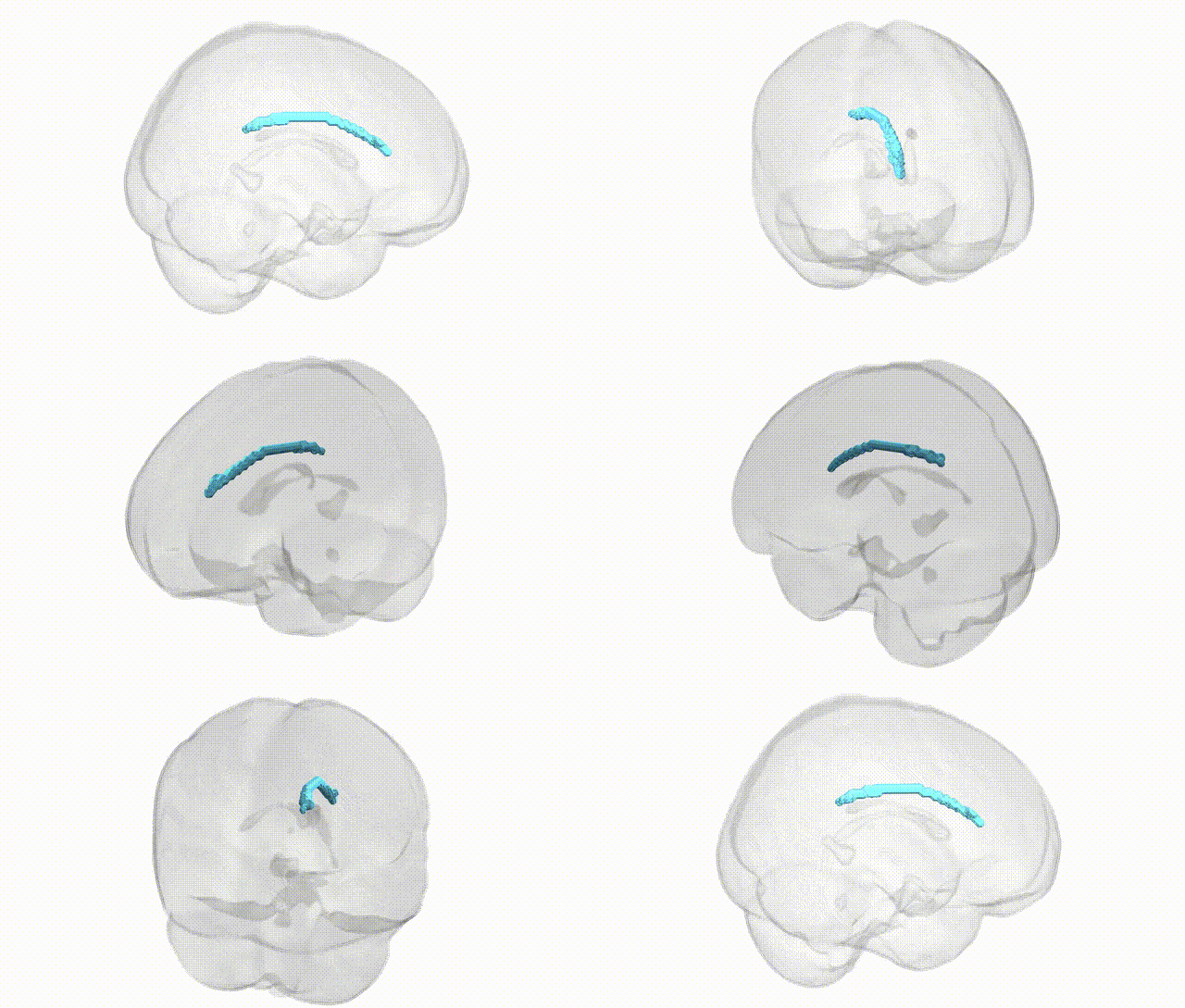
Full Quality Version: Download MP4
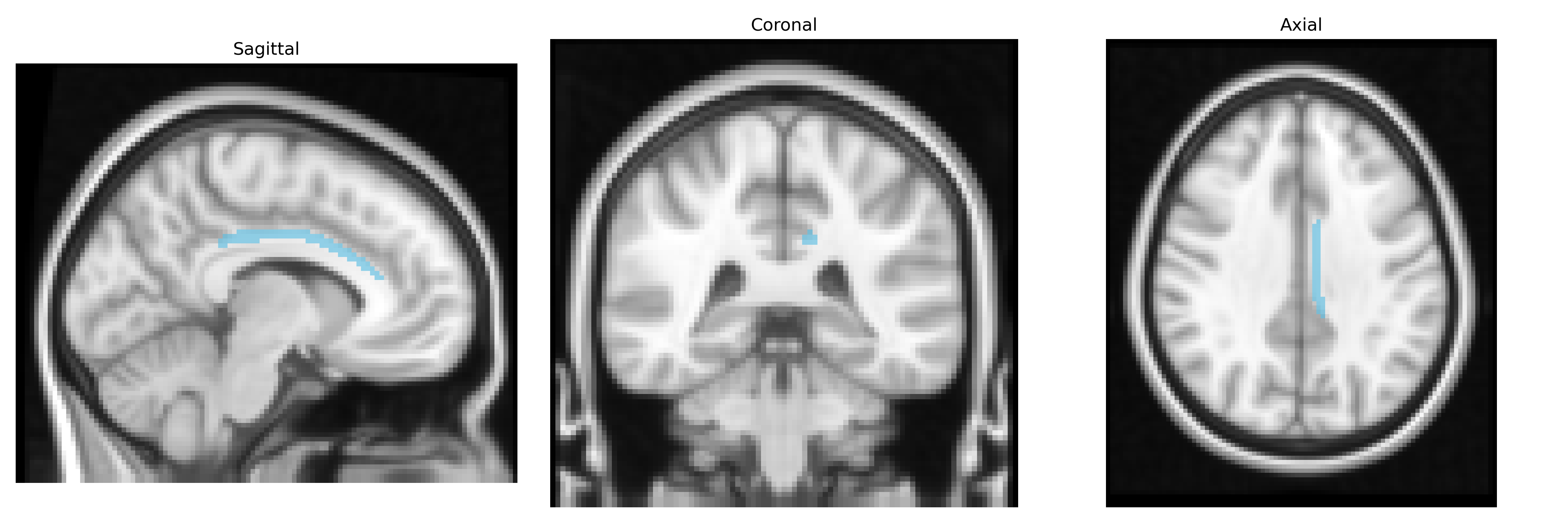
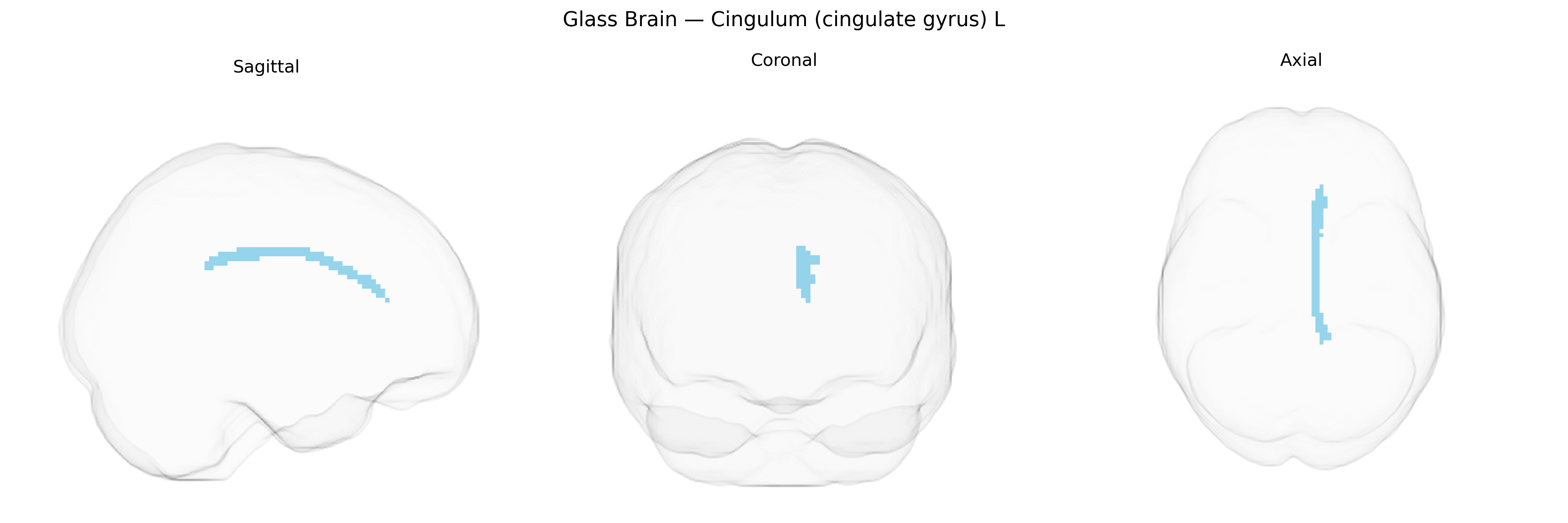
Wali Sidiqyar*, Gaurav Rudravaram*, Elyssa M. McMaster, Trent M. Schwartz, Adam M. Saunders, Kurt G. Schilling, Bennett A. Landman "Introducing SPINS: A Shared Public Visualization Library of Neuroanatomical Structures." Medical Imaging with Deep Learning- short paper
This resource is licensed under CC0 1.0 Universal (Public Domain).