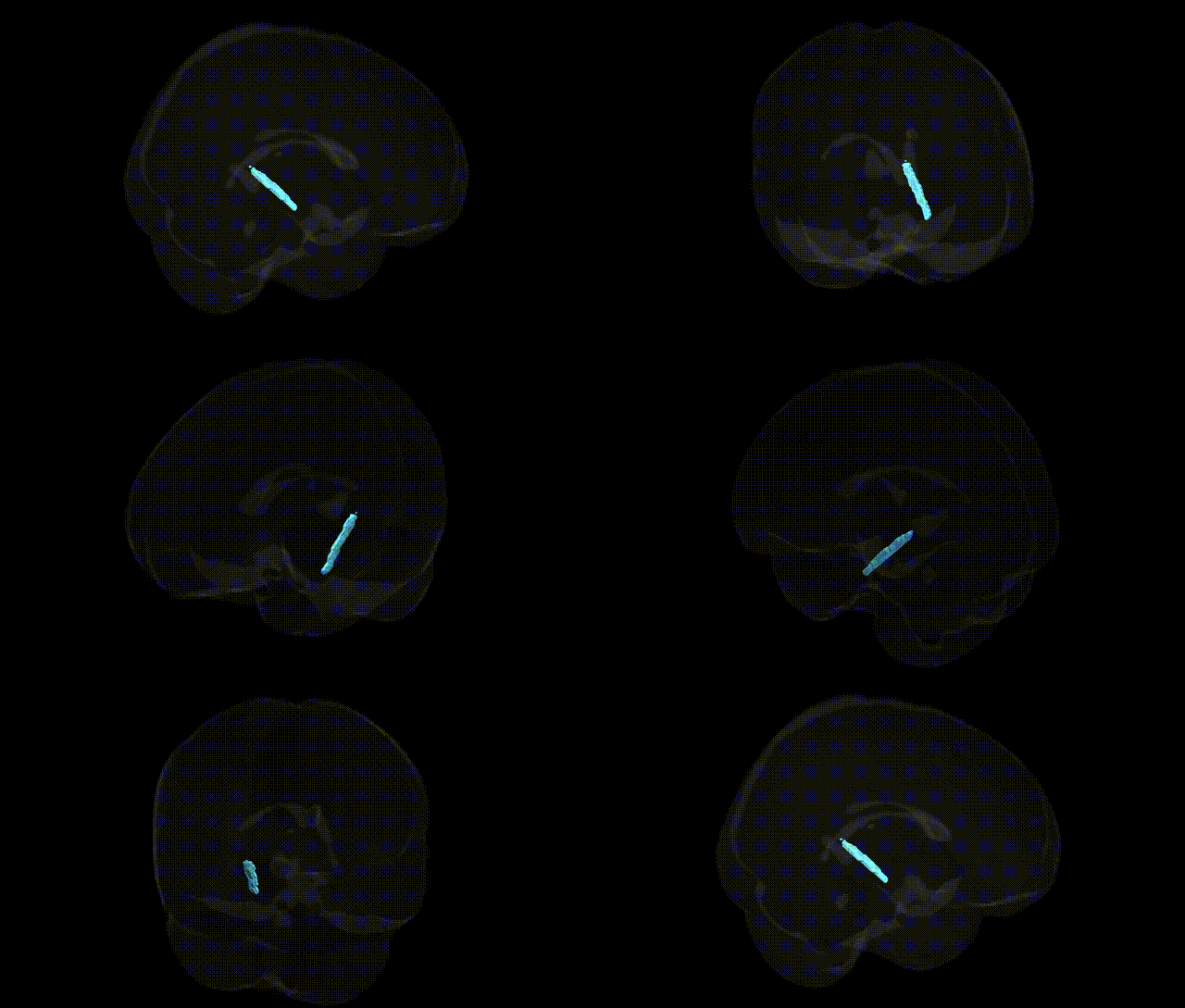
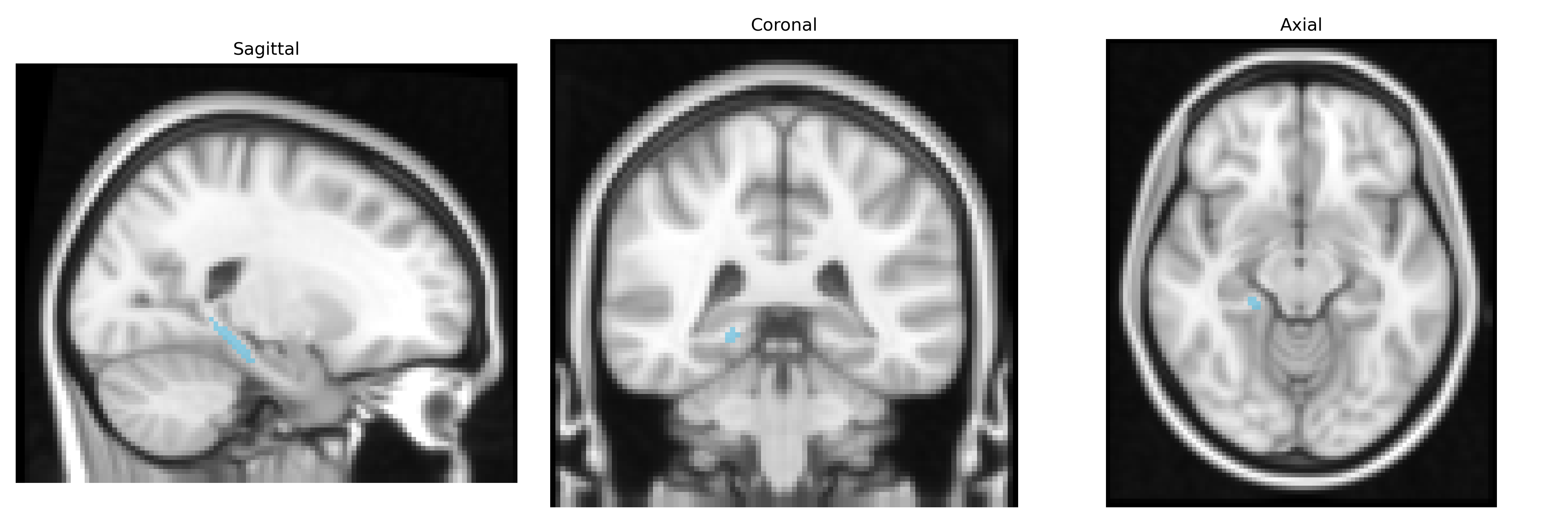
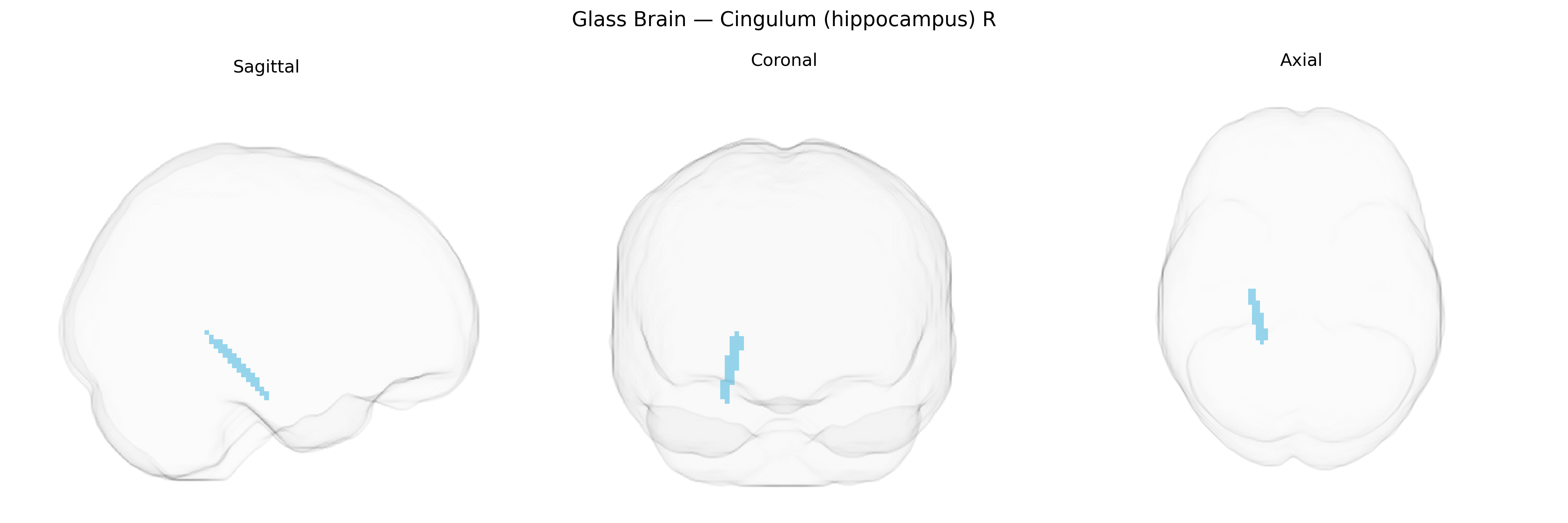
The bilateral cingulum (hippocampus) R, as defined in the JHU ICBM tracts maxprob thr25 2mm atlas, is a white matter tract segment running within the cingulum bundle adjacent to the hippocampus, primarily in the right hemisphere but typically considered together with its left counterpart for tract-based analyses. This tract follows the medial temporal lobe, connecting the hippocampal formation and parahippocampal regions with cingulate and other limbic cortical areas, thereby supporting memory, emotional processing, and aspects of attention via long-range limbic connectivity. It forms part of the broader cingulum bundle, a key component of the limbic system’s structural network, and is commonly studied in diffusion MRI for its role in neurodegenerative and psychiatric conditions. There is no direct Wikipedia article for this specific tract segment; a related structure is the broader Cingulum.
The bilateral cingulum (hippocampus) segment, as defined in the JHU ICBM tracts maxprob atlas, has been repeatedly implicated in genetic imaging studies that link white-matter microstructure—typically indexed by fractional anisotropy and related diffusion metrics—to common genetic variation and risk for neuropsychiatric and neurodegenerative disorders. GWAS of diffusion MRI have identified associations between cingulum (hippocampal) integrity and variants in genes related to myelination and axonal structure (e.g., NRG1, MS-related loci, and general oligodendrocyte/axon development genes), although many signals are shared across multiple tracts. Polygenic risk scores for schizophrenia, major depressive disorder, bipolar disorder, and autism spectrum disorder have been associated with altered cingulum (hippocampus) microstructure, suggesting this pathway is a structural mediator of distributed genetic risk for psychopathology. Similarly, Alzheimer’s disease and other dementia-related genetic risk, including APOE ε4 and loci involved in amyloid and tau processing, have been linked to reduced integrity of this tract, consistent with its role in hippocampal–limbic circuits vulnerable to neurodegeneration. Additional genetic associations involve cognitive traits (memory performance, general intelligence) and internalizing symptoms, where higher polygenic load correlates with microstructural differences in the cingulum (hippocampus), highlighting this region as a convergent target of pleiotropic genetic influences on mood, cognition, and neurodegenerative vulnerability.
Overview generated by GPT-4o (2026).
Region ID: 8
Hemisphere: bilateral
Atlas: JHU ICBM tracts maxprob thr25 2mm
Full Quality Version: Download MP4
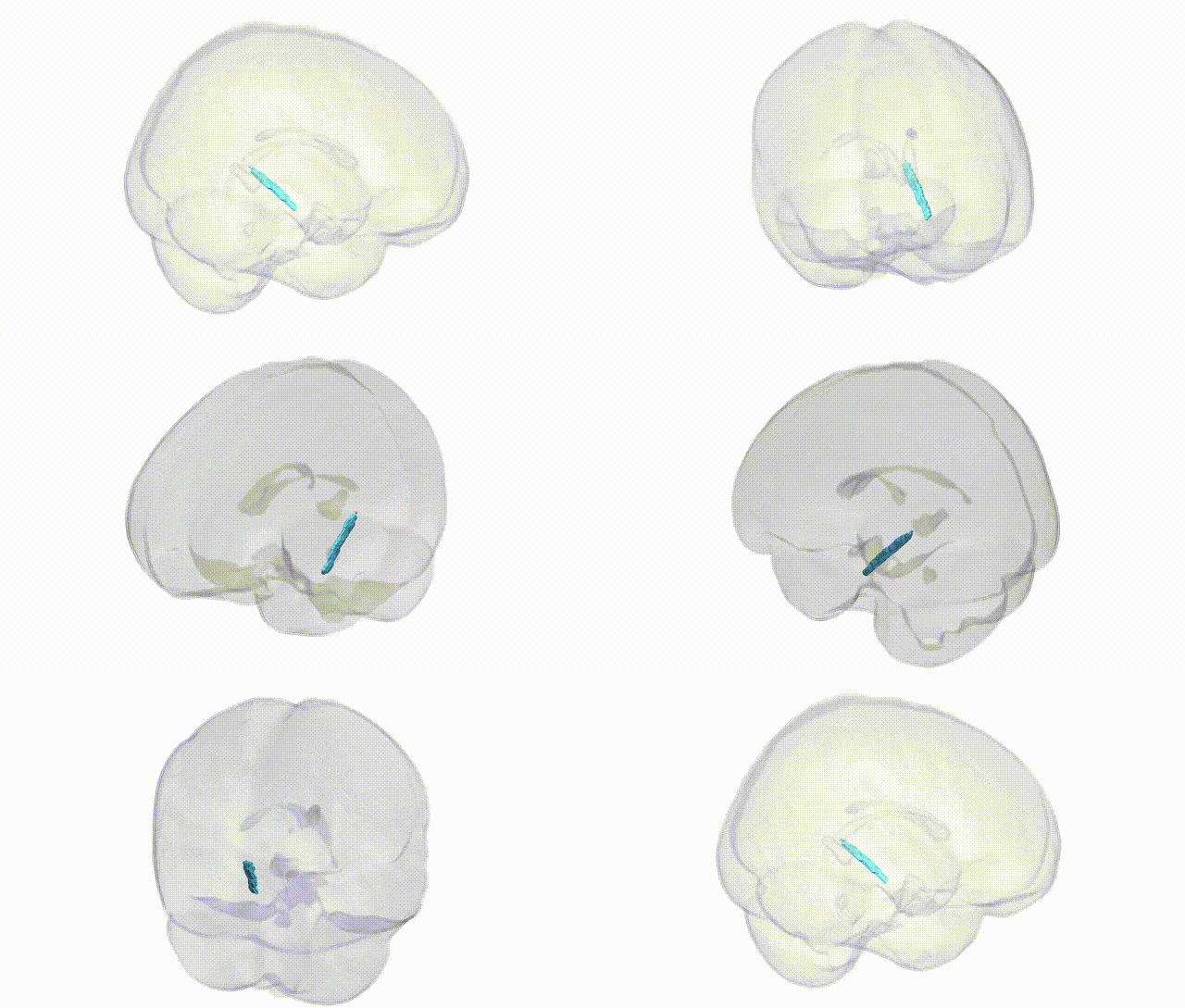
Full Quality Version: Download MP4
Wali Sidiqyar*, Gaurav Rudravaram*, Elyssa M. McMaster, Trent M. Schwartz, Adam M. Saunders, Kurt G. Schilling, Bennett A. Landman "Introducing SPINS: A Shared Public Visualization Library of Neuroanatomical Structures." Medical Imaging with Deep Learning- short paper
This resource is licensed under CC0 1.0 Universal (Public Domain).