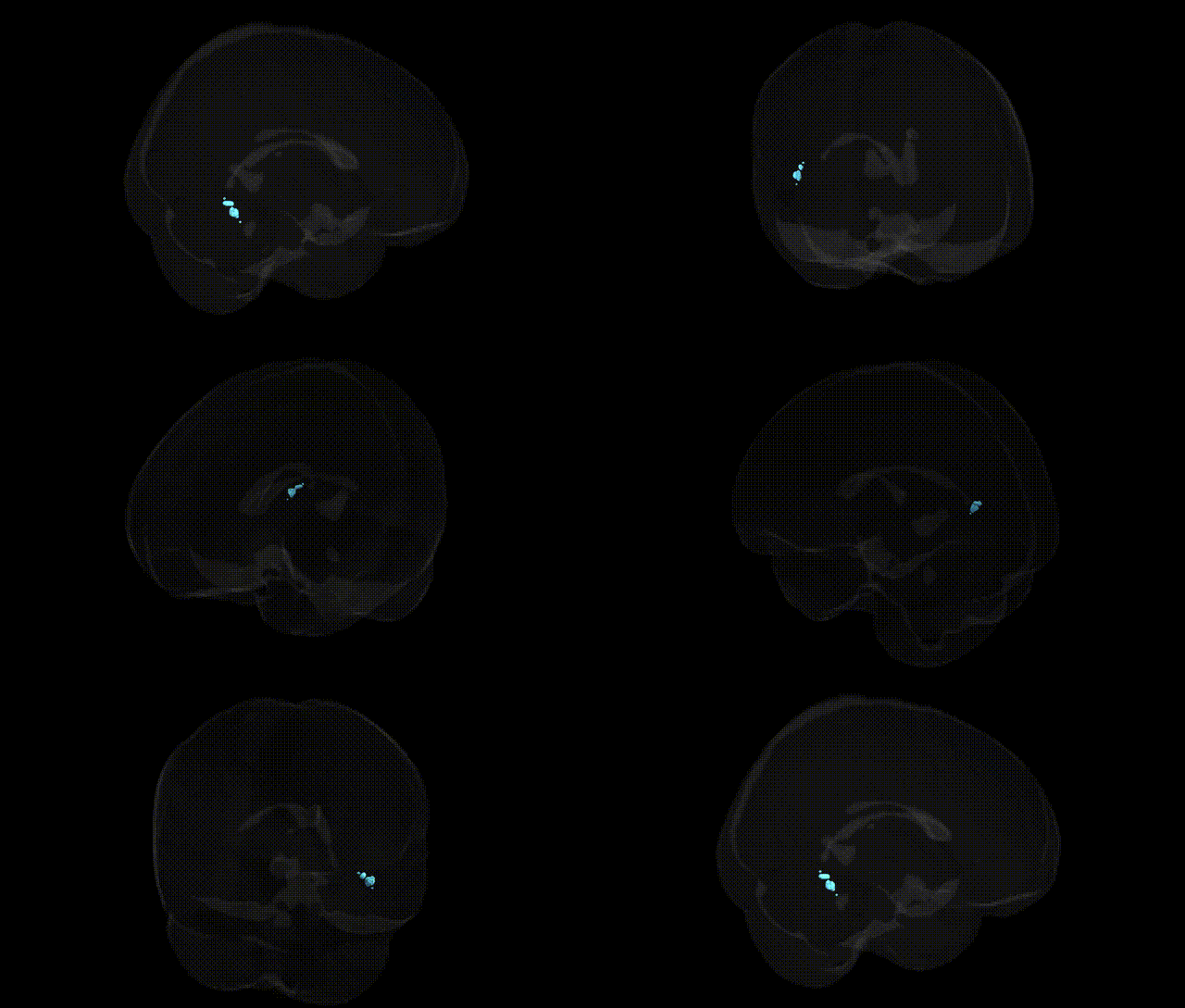
The bilateral Superior longitudinal fasciculus (temporal part) L, as defined in the JHU ICBM tracts maxprob thr25 2mm Atlas, is a long-range association white matter tract segment located in the left hemisphere that connects lateral and posterior temporal cortices with parietal and frontal regions. It forms part of the larger superior longitudinal fasciculus system, contributing to the integration of auditory, language, and multimodal sensory information with higher-order cognitive and motor planning areas. This tract supports functions such as language processing, phonological and semantic integration, and aspects of spatial attention by facilitating rapid bidirectional communication between temporal lobe regions and dorsal fronto-parietal networks. There is no direct Wikipedia article for this specific temporal part; see the related structure Superior longitudinal fasciculus.
The bilateral superior longitudinal fasciculus (temporal part) L, as defined in the JHU ICBM tracts maxprob thr25 2mm atlas, is a major associative white matter pathway connecting temporal with frontal and parietal regions, and genetic influences on its microstructure have been characterized primarily through diffusion MRI GWAS and imaging–genetics studies. Twin and family-based work indicates substantial heritability of fractional anisotropy (FA) and other diffusion metrics in SLF subdivisions, with common variants in genes related to axon guidance, myelination, and neurodevelopment (for example, genes in the neuregulin/ERBB, CNTNAP, and cell-adhesion pathways) repeatedly implicated across white matter tracts, including SLF segments. Large-scale GWAS using UK Biobank and similar cohorts have identified multiple loci associated with diffusion properties of fronto-temporal and parieto-temporal fibers overlapping the SLF, often mapping to genes involved in oligodendrocyte function (e.g., variants near MAG, MBP, and other myelin-associated genes) and general brain morphology (such as loci near MAPT and other chromosome 17q21 variants), though tract-specific signals for the temporal portion of the left SLF are often reported as part of broader “association fiber” or “superior longitudinal fasciculus” categories rather than isolated. Genetically influenced alterations of SLF microstructure have been linked to neurodevelopmental and psychiatric phenotypes, including schizophrenia, bipolar disorder, major depression, autism spectrum disorder, ADHD, and dyslexia, where risk variants in synaptic and neurodevelopmental genes show downstream effects on SLF integrity and language- or attention-related networks. Moreover, polygenic risk scores for cognitive performance and educational attainment correlate with diffusion measures in the SLF and related temporal association pathways, suggesting that shared genetic architectures for cognition and psychiatric risk contribute to variability in this tract’s structure. Overall, genetic studies support that the temporal component of the left SLF is a heritable, polygenic target of neurodevelopmental and myelination-related variants, with alterations in its microstructure serving as an intermediate phenotype linking common risk alleles to a spectrum of cognitive and psychiatric traits.
Overview generated by GPT-4o (2026).
Region ID: 19
Hemisphere: bilateral
Atlas: JHU ICBM tracts maxprob thr25 2mm
Full Quality Version: Download MP4
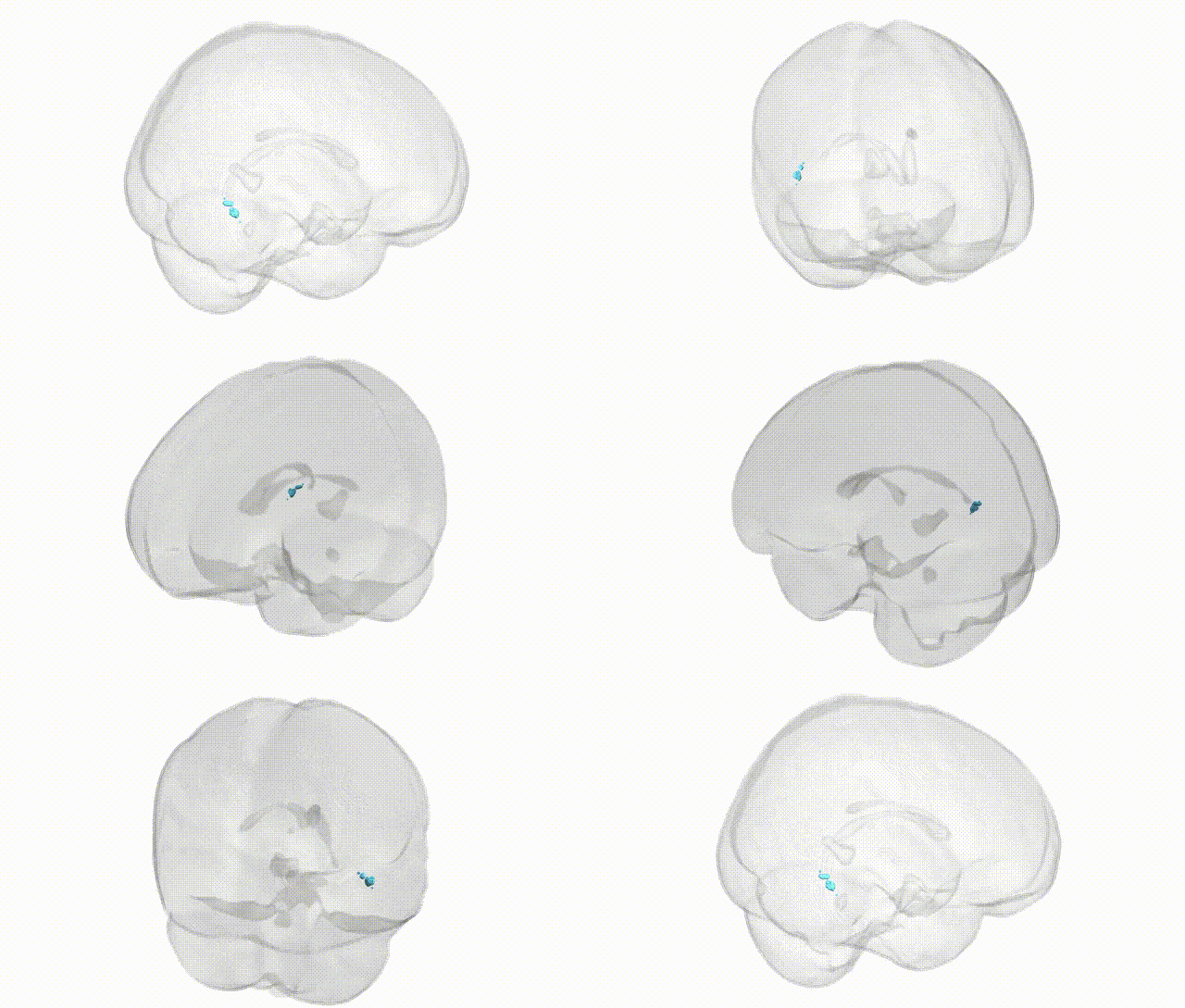
Full Quality Version: Download MP4
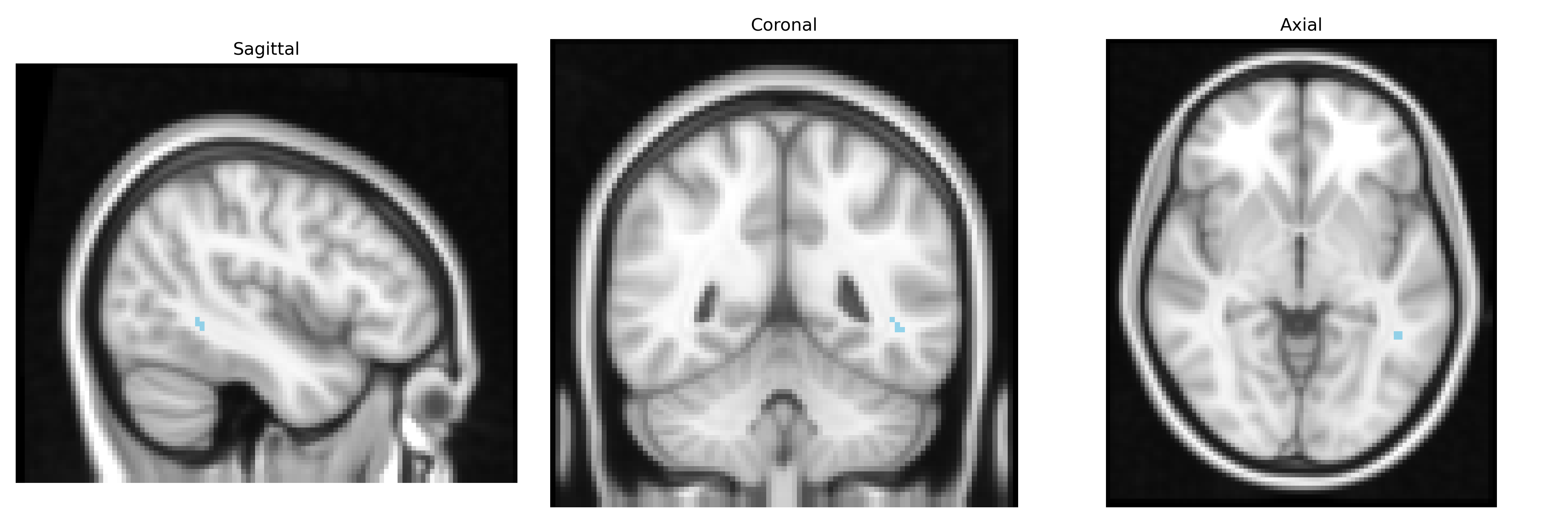
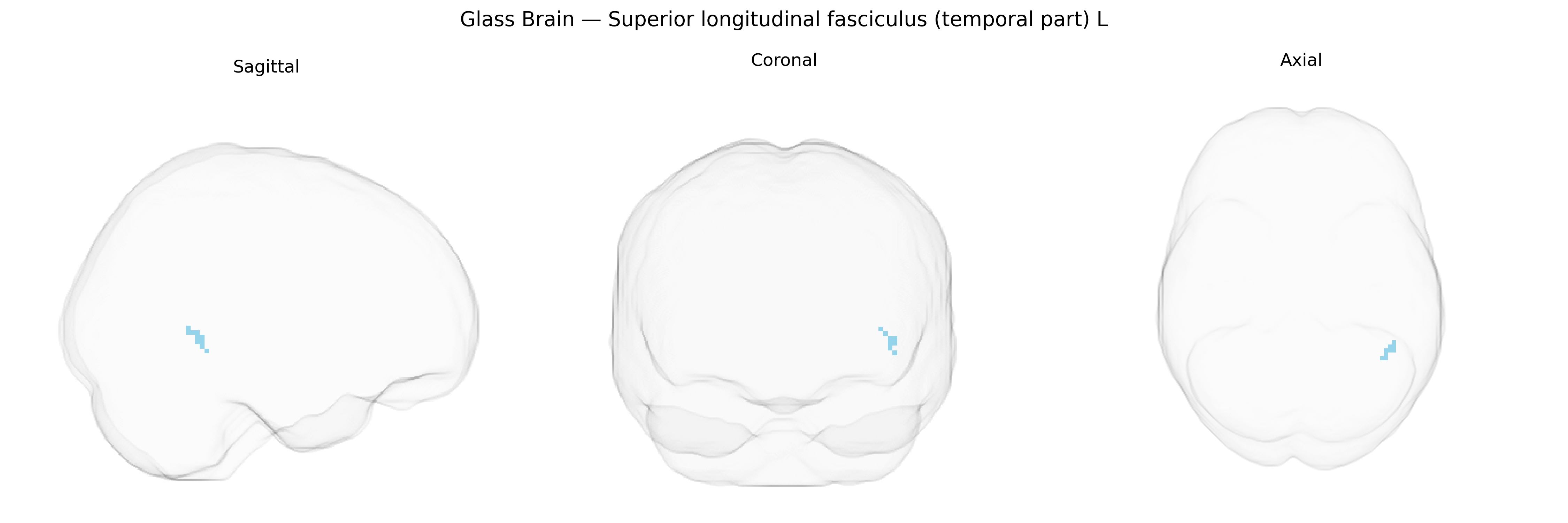
Wali Sidiqyar*, Gaurav Rudravaram*, Elyssa M. McMaster, Trent M. Schwartz, Adam M. Saunders, Kurt G. Schilling, Bennett A. Landman "Introducing SPINS: A Shared Public Visualization Library of Neuroanatomical Structures." Medical Imaging with Deep Learning- short paper
This resource is licensed under CC0 1.0 Universal (Public Domain).