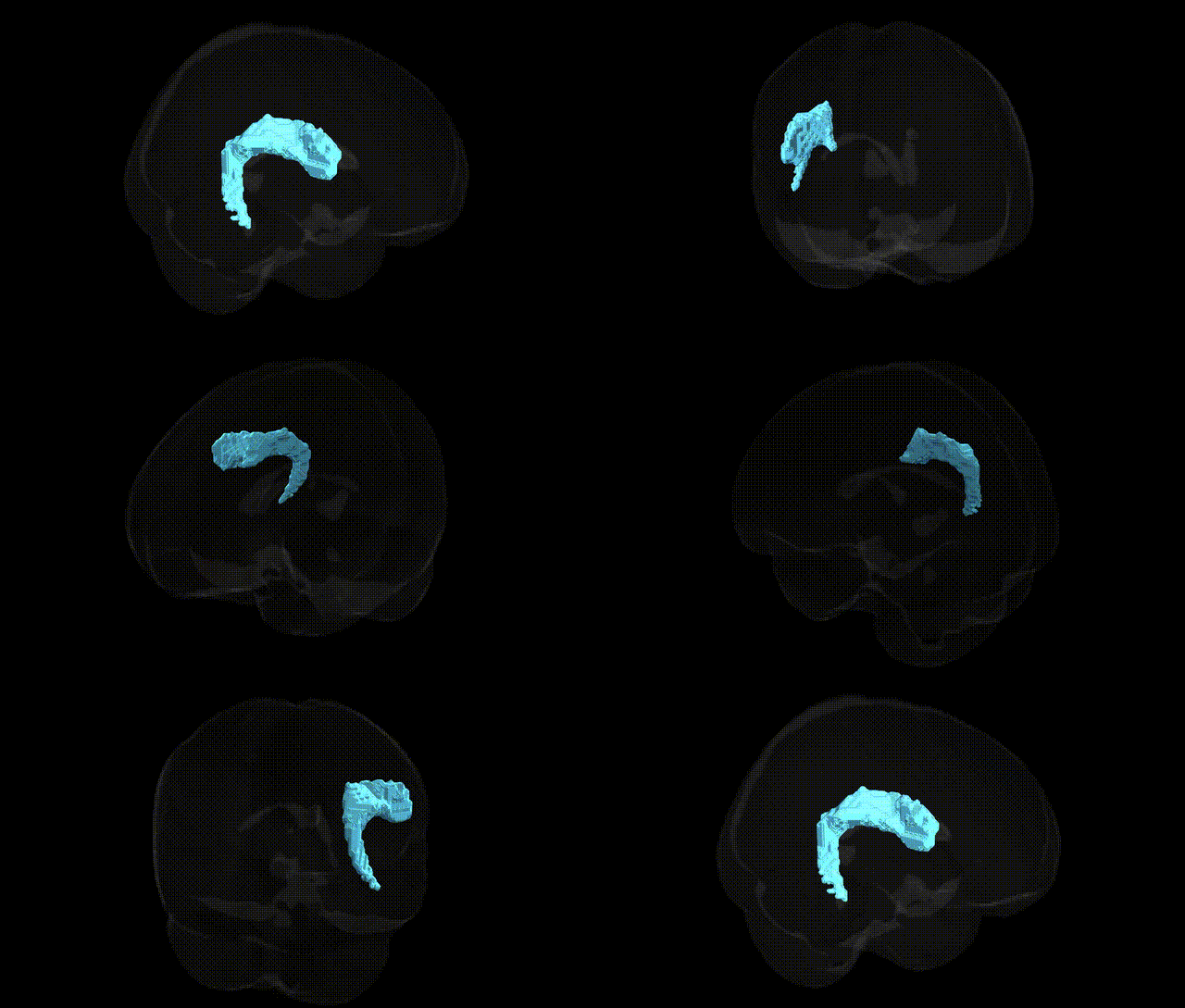
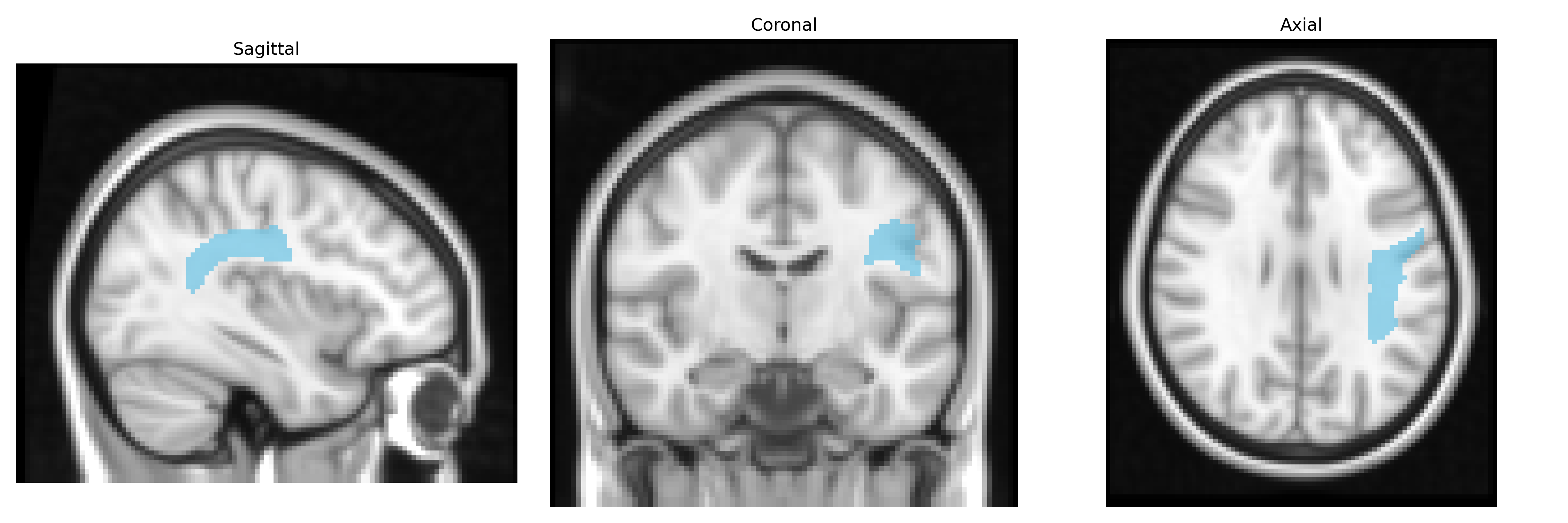
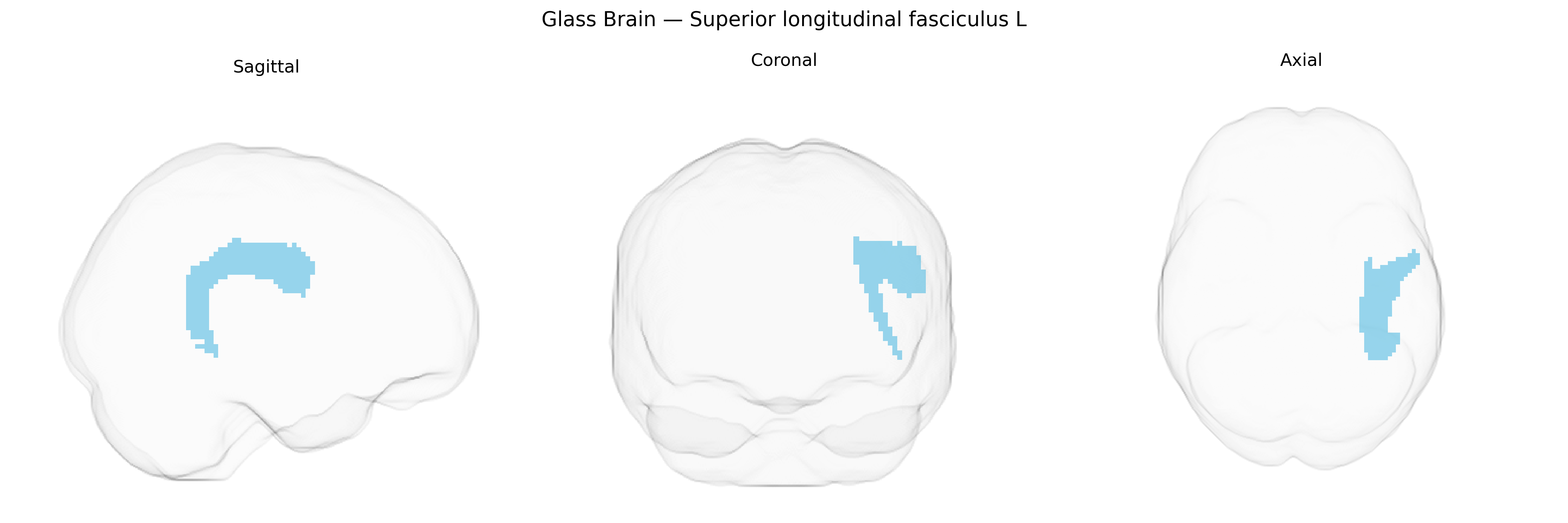
The bilateral Superior longitudinal fasciculus L, as defined in the JHU ICBM-DTI-81 white-matter tractography atlas (maxprob thr25, 2 mm), refers to the left-hemisphere component of the superior longitudinal fasciculus (SLF), a major association fiber bundle that arches around the insula and connects frontal, parietal, and temporal lobes. This tract courses dorsally and laterally to the corona radiata and internal capsule, linking regions such as the inferior parietal lobule, superior and middle temporal gyri, and lateral prefrontal cortex, thereby supporting higher-order functions including language, attention, working memory, and visuospatial processing. The SLF is often subdivided into multiple components (e.g., SLF I–III and the arcuate fasciculus), reflecting distinct but overlapping connectivity profiles, and is a key pathway implicated in network-level integration of sensory, motor, and cognitive information. There is no direct Wikipedia article for “Superior longitudinal fasciculus L,” but the broader tract is described at Superior longitudinal fasciculus.
The bilateral superior longitudinal fasciculus, as defined in the JHU ICBM tracts maxprob thr25 2mm atlas, has been implicated in multiple genetic studies investigating white matter microstructure, cognitive function, and neuropsychiatric risk. Diffusion MRI GWAS have identified associations between SLF fractional anisotropy and variants in genes involved in axon guidance, myelination, and cytoskeletal organization (e.g., CNTN4, NRXN1, and MAG), as well as loci near the 17q21 region containing genes such as WNT3 and NSF that broadly influence white matter integrity. Polygenic scores for schizophrenia, bipolar disorder, and major depressive disorder have been linked to reduced SLF integrity, while autism spectrum disorder and ADHD risk variants have been associated with altered SLF connectivity in frontoparietal circuits. Cognitive and educational attainment GWAS have shown that higher polygenic scores for intelligence and schooling correlate with greater SLF microstructural organization, supporting a genetically influenced role in language, working memory, and attentional control. Although specific tract-focused GWAS are still emerging, convergent evidence across imaging genetics studies indicates that the SLF is a key white matter pathway through which common genetic variants shape vulnerability to psychiatric disorders and variation in higher-order cognitive traits.
Overview generated by GPT-4o (2026).
Region ID: 15
Hemisphere: bilateral
Atlas: JHU ICBM tracts maxprob thr25 2mm
Full Quality Version: Download MP4
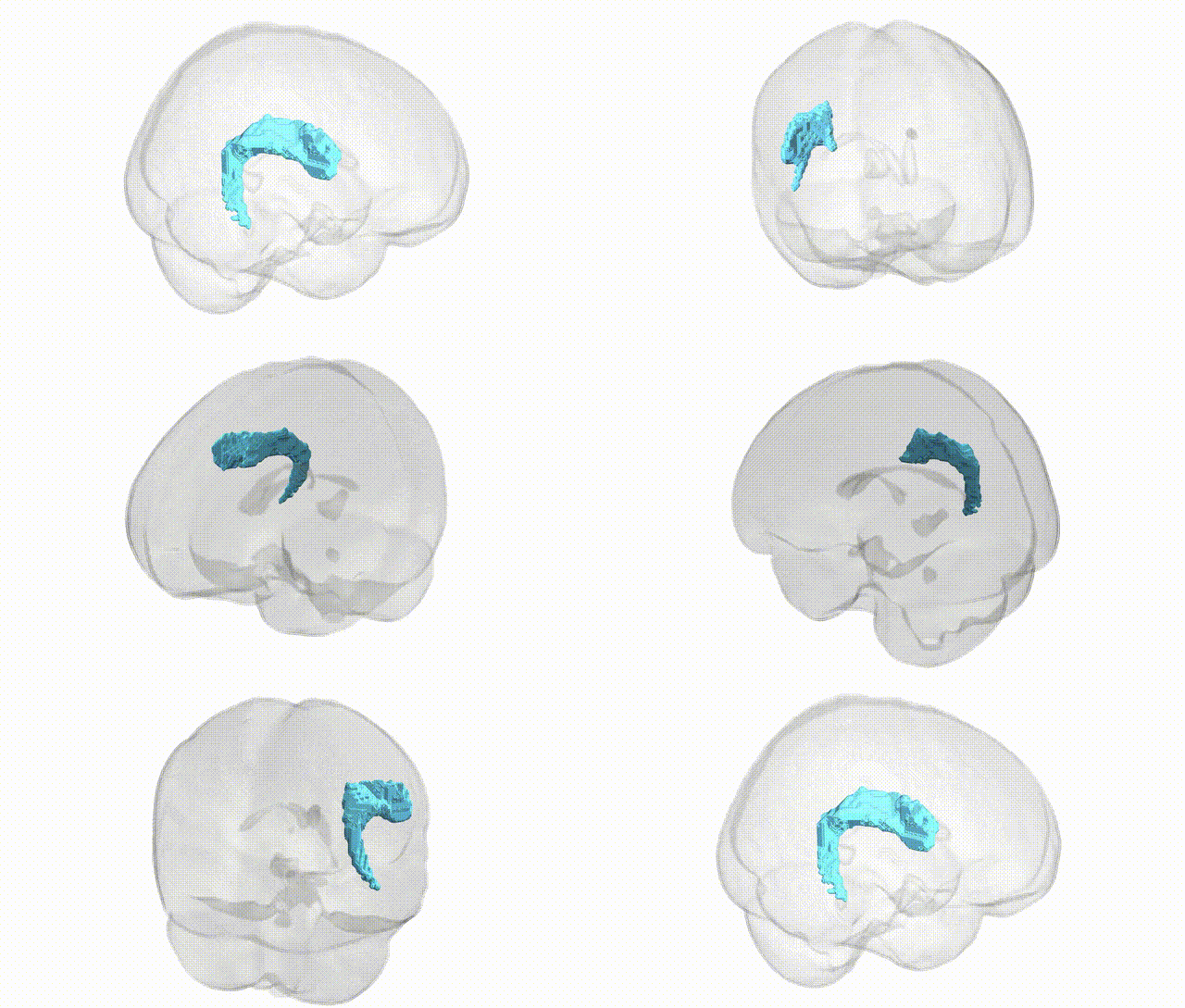
Full Quality Version: Download MP4
Wali Sidiqyar*, Gaurav Rudravaram*, Elyssa M. McMaster, Trent M. Schwartz, Adam M. Saunders, Kurt G. Schilling, Bennett A. Landman "Introducing SPINS: A Shared Public Visualization Library of Neuroanatomical Structures." Medical Imaging with Deep Learning- short paper
This resource is licensed under CC0 1.0 Universal (Public Domain).