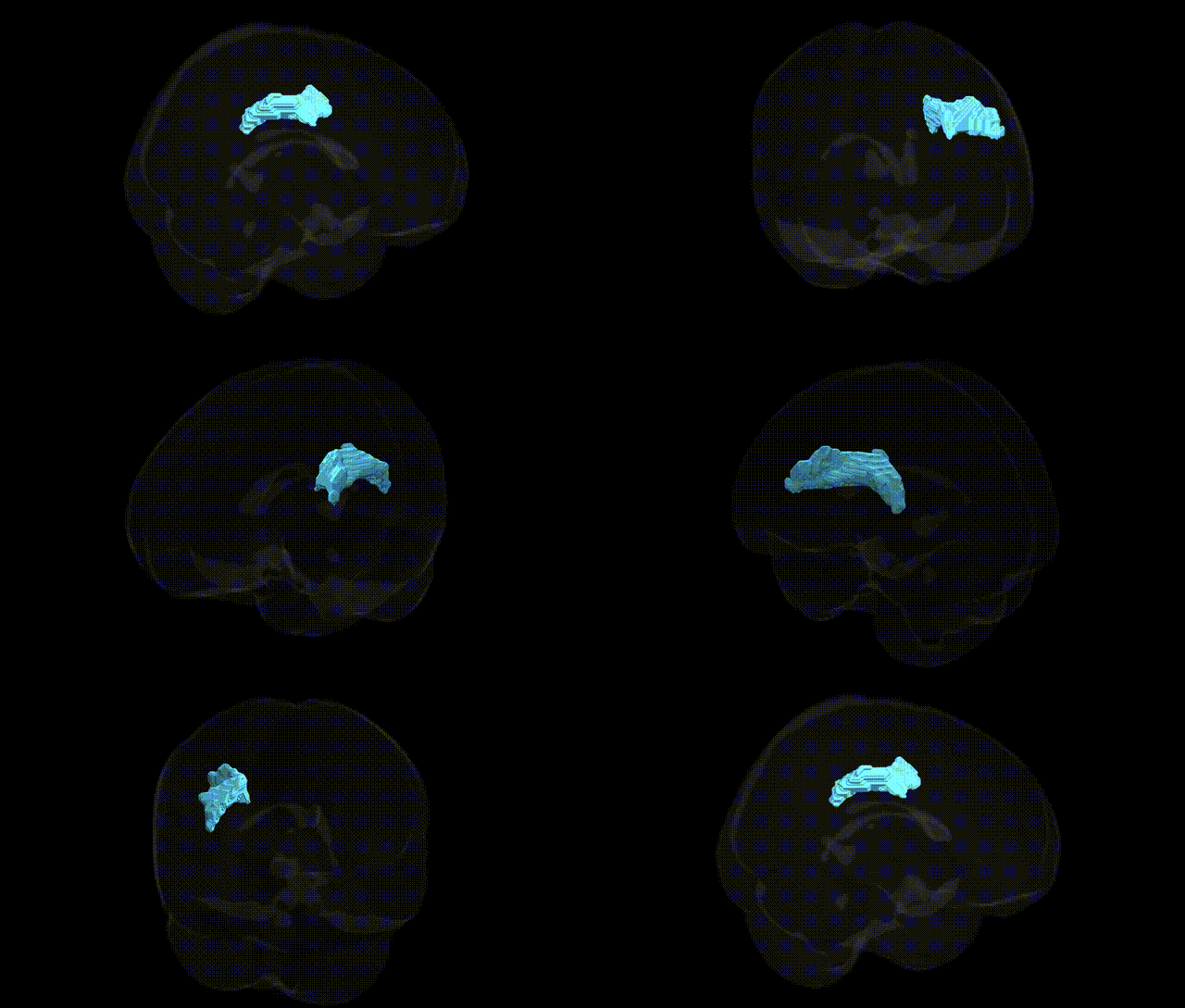
The bilateral Superior longitudinal fasciculus (R) is a major association white matter tract running longitudinally within the cerebral hemispheres, connecting frontal lobes with parietal, occipital, and portions of temporal cortex. In the JHU ICBM tracts maxprob thr25 2mm atlas, this tract is delineated probabilistically in the right hemisphere, reflecting its course through the deep white matter lateral to the ventricles and underlying the cortical mantle. Functionally, the superior longitudinal fasciculus is implicated in higher-order cognitive processes including attention, visuospatial integration, language, and working memory, by supporting rapid communication between distributed cortical regions. There is no direct Wikipedia article for the “Superior longitudinal fasciculus (R)” as a separate right-hemisphere entry; however, it corresponds to the right portion of the Superior longitudinal fasciculus.
The bilateral superior longitudinal fasciculus (SLF), including the right SLF as defined in the JHU ICBM tracts maxprob thr25 2 mm atlas, has been implicated in multiple genetic and GWAS findings that broadly converge on white-matter microstructure and frontoparietal connectivity, although few associations are strictly tract-specific. Large diffusion MRI GWAS consortia (e.g., ENIGMA, UK Biobank) have identified common variants affecting fractional anisotropy and other diffusion metrics in SLF regions, with implicated loci often involving genes related to axon guidance, myelination, and neurodevelopment (such as those in pathways including NTRK-, neuregulin/ErbB-, and cell-adhesion-related genes), and polygenic influences spanning hundreds of variants. Genetic correlations and locus-level associations link SLF microstructure to cognitive traits (e.g., general intelligence, processing speed, educational attainment), neurodevelopmental conditions (notably ADHD and autism spectrum disorder, where SLF alterations frequently co-occur with risk variants affecting cortical development and connectivity), and major psychiatric disorders (including schizophrenia and bipolar disorder, in which risk loci in synaptic and oligodendrocyte-related genes show downstream effects on frontoparietal white matter, including SLF). Additional associations have been reported with risk for major depressive disorder, anxiety, and psychosis-spectrum traits, as well as with motor and language-related phenotypes, where genetically influenced variation in SLF integrity contributes to interindividual differences in executive function, working memory, and language networks, although the current evidence is largely indirect—linking genetic variants to white-matter microstructure and then to behavior or diagnosis—rather than pinpointing genes uniquely specific to the right SLF segment of the JHU atlas.
Overview generated by GPT-4o (2026).
Region ID: 16
Hemisphere: bilateral
Atlas: JHU ICBM tracts maxprob thr25 2mm
Full Quality Version: Download MP4
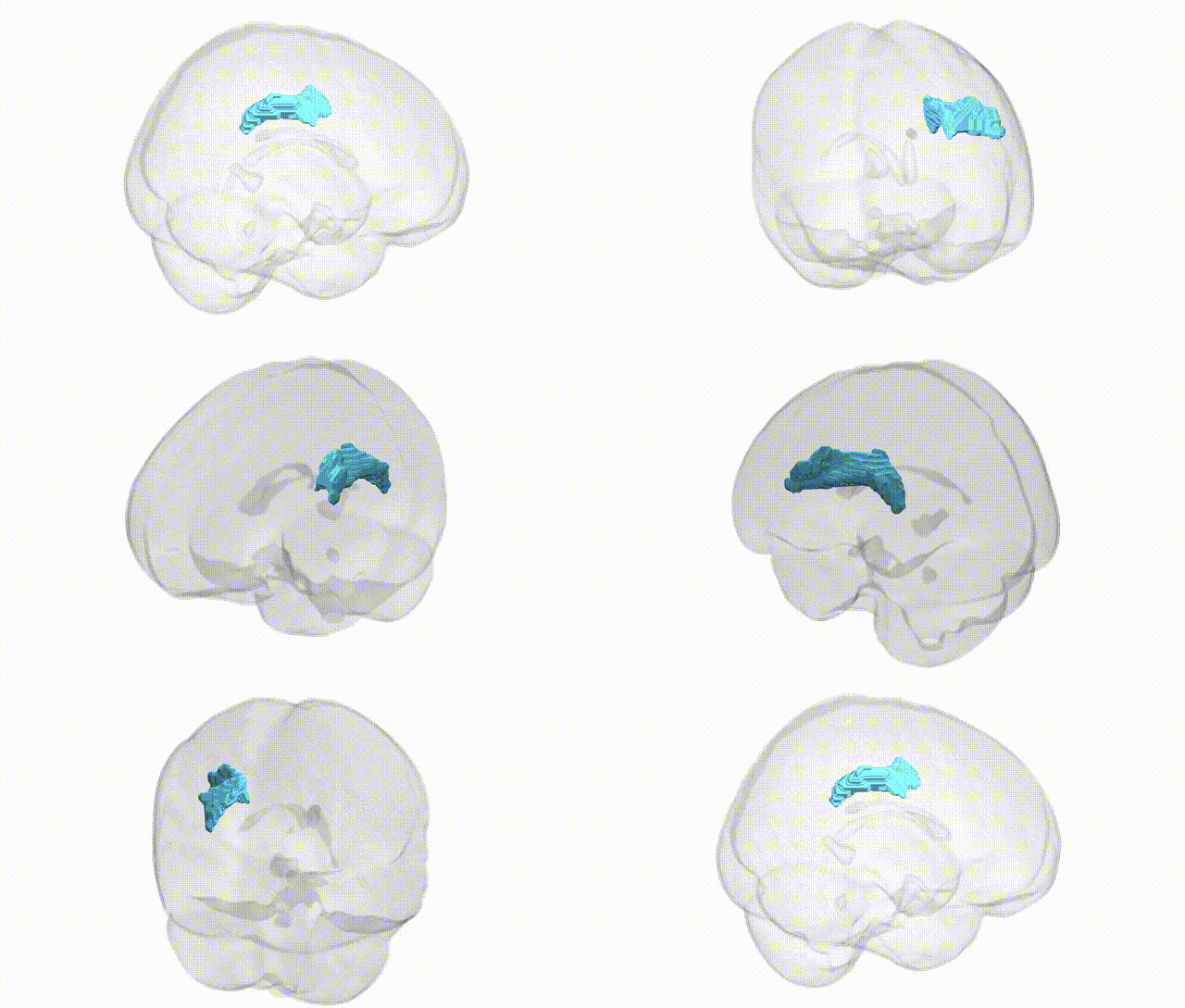
Full Quality Version: Download MP4
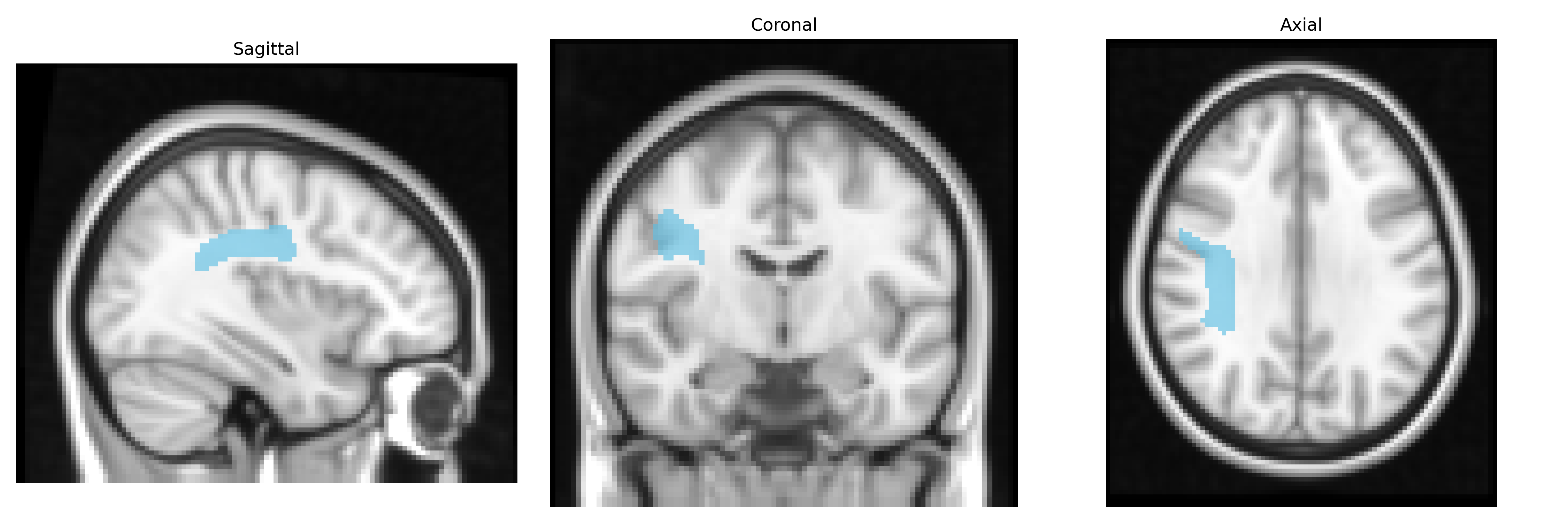
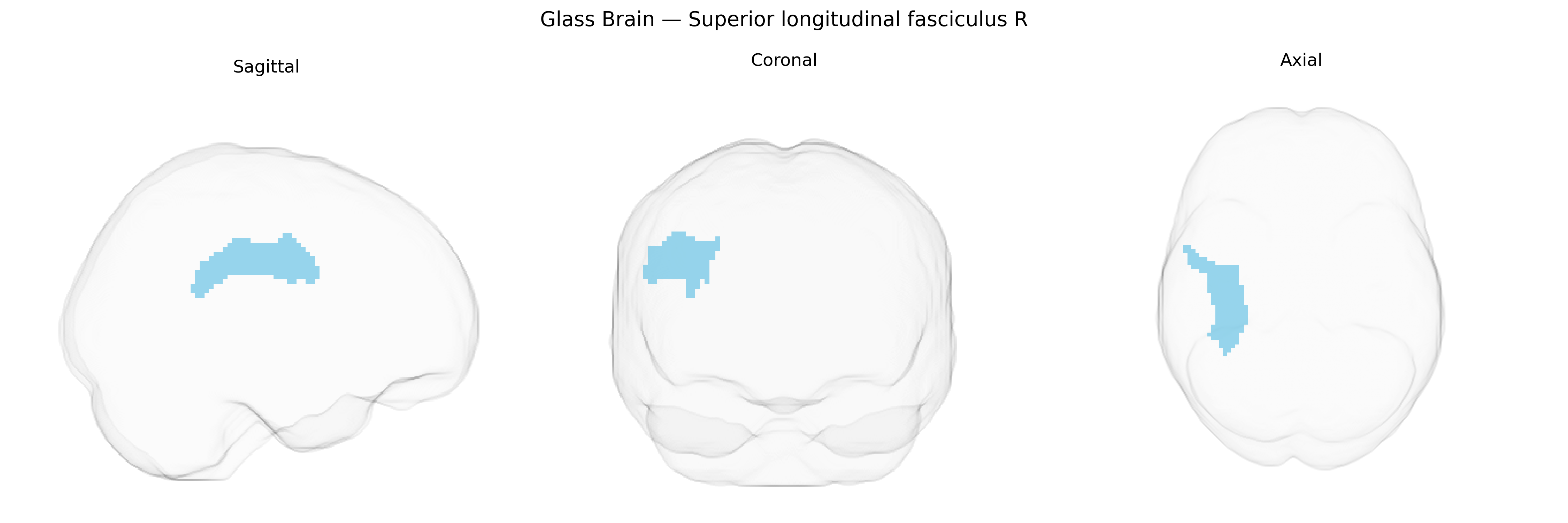
Wali Sidiqyar*, Gaurav Rudravaram*, Elyssa M. McMaster, Trent M. Schwartz, Adam M. Saunders, Kurt G. Schilling, Bennett A. Landman "Introducing SPINS: A Shared Public Visualization Library of Neuroanatomical Structures." Medical Imaging with Deep Learning- short paper
This resource is licensed under CC0 1.0 Universal (Public Domain).