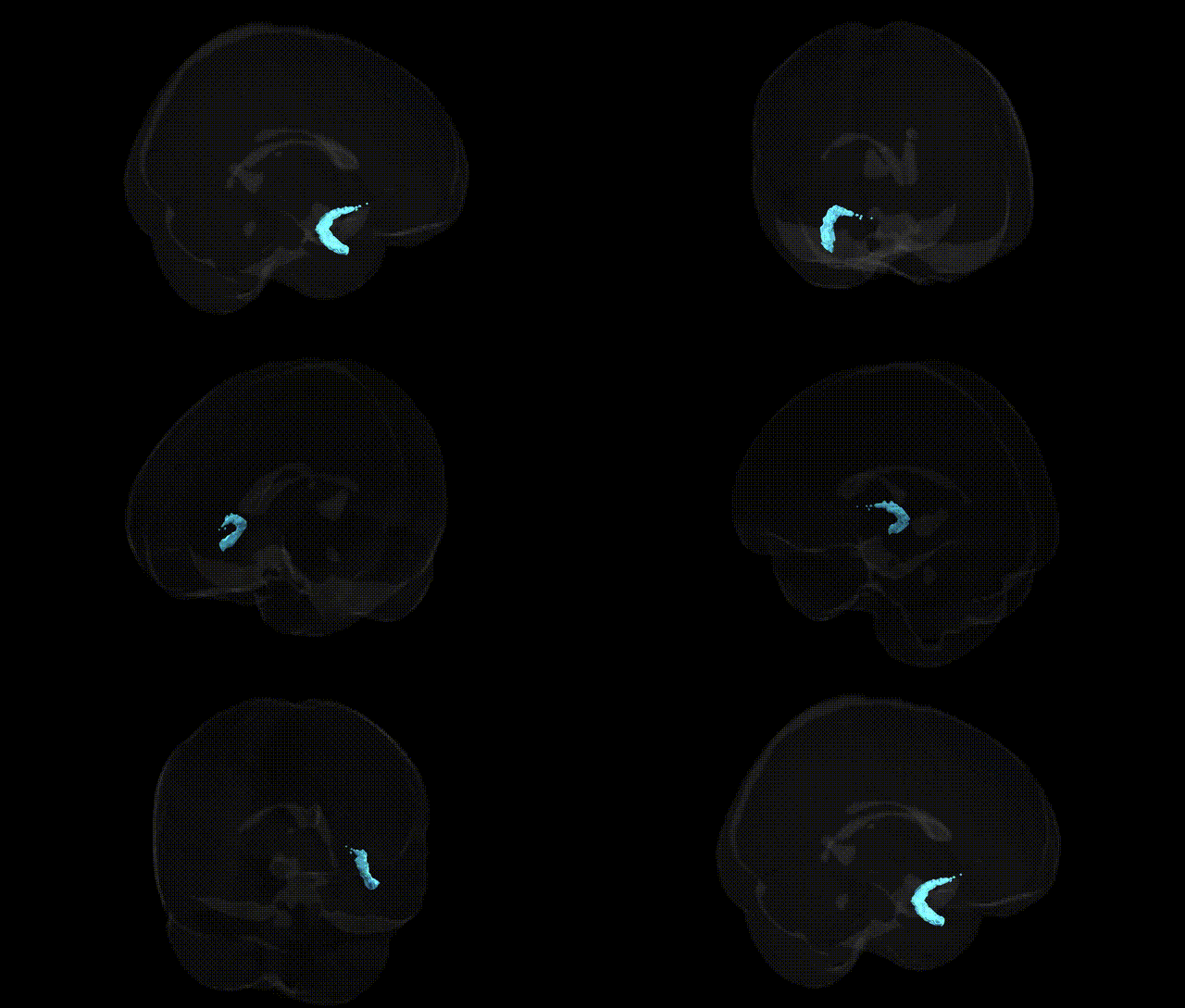
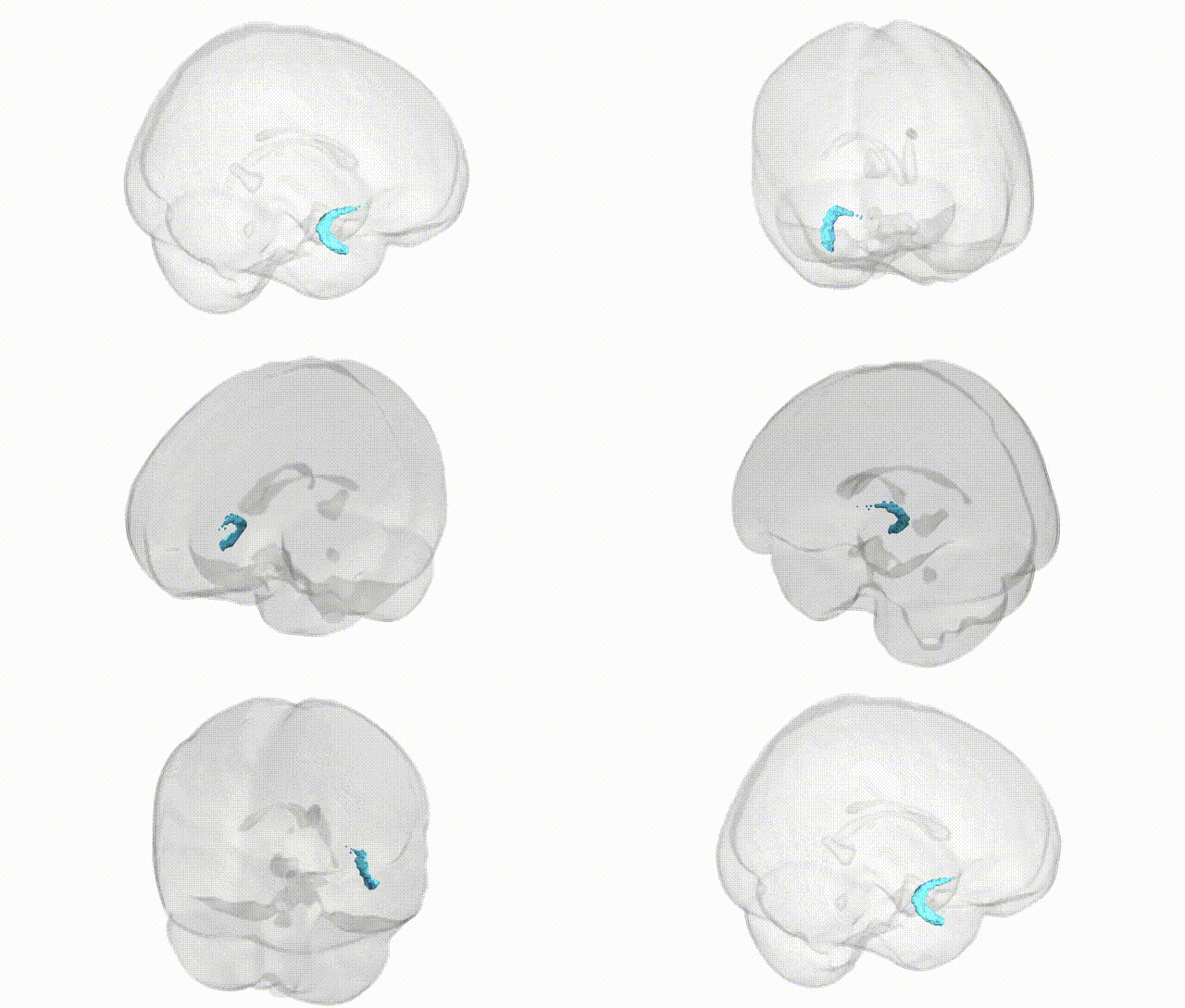
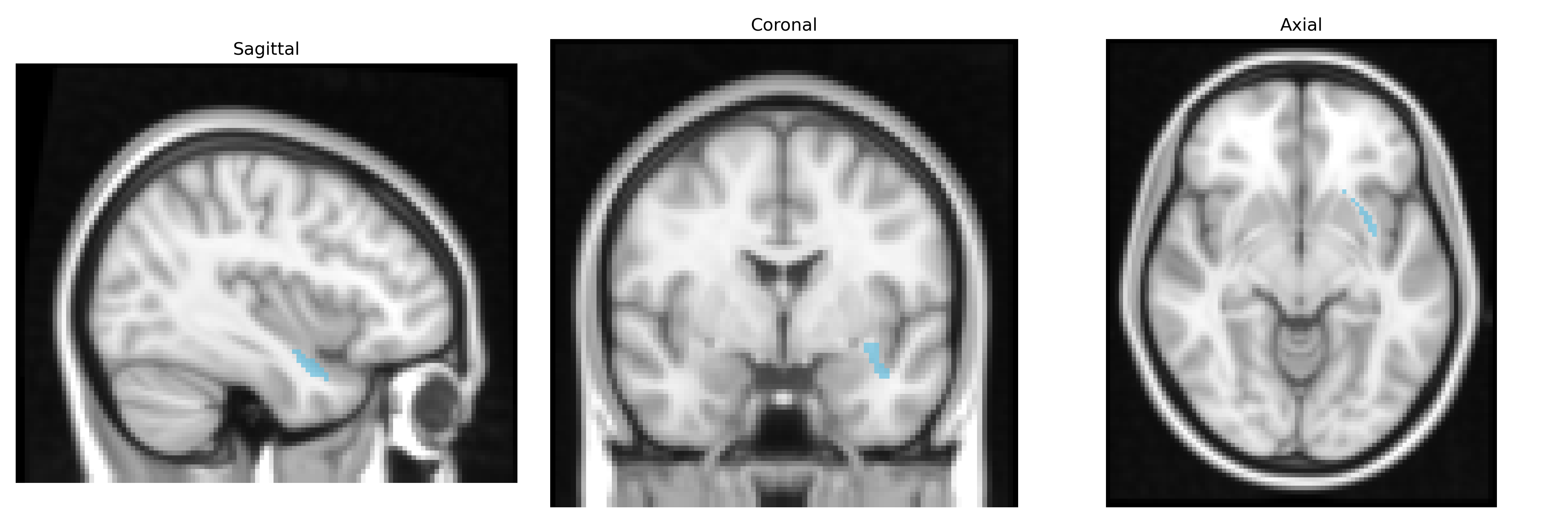
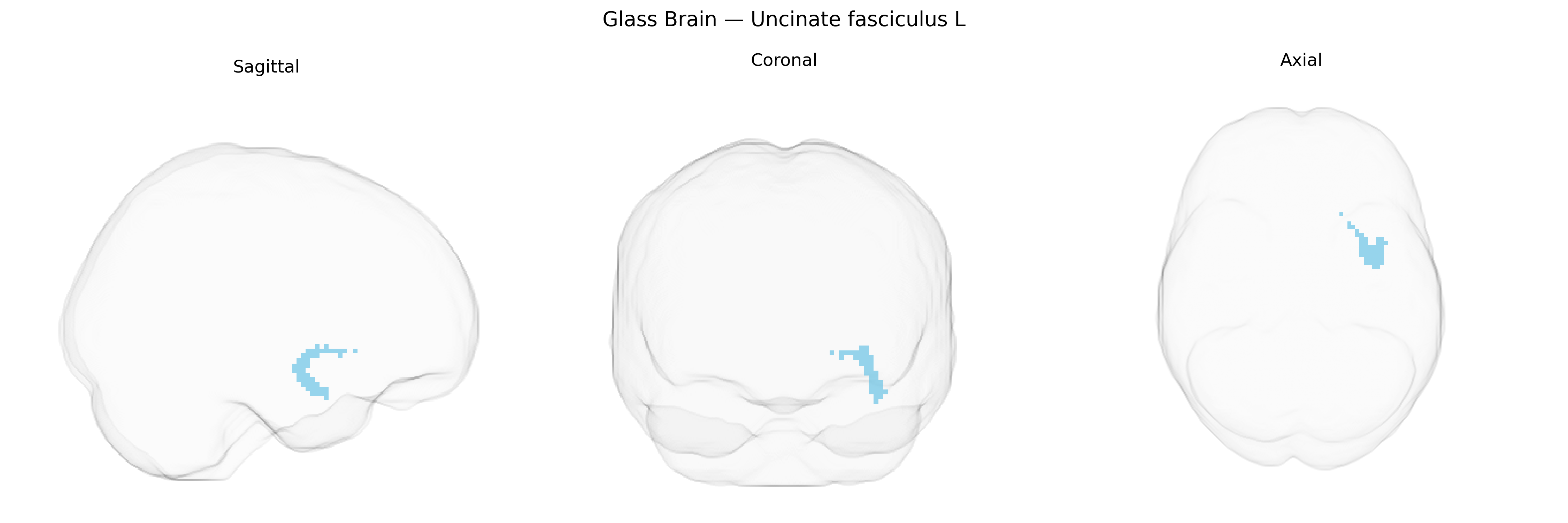
The bilateral Uncinate fasciculus L, as defined in the JHU ICBM tracts maxprob thr25 2mm Atlas, is a left-hemisphere white matter association tract that links the anterior temporal lobe (including portions of the temporal pole and amygdaloid region) with the inferior frontal and orbitofrontal cortex. It courses medially through the temporal stem, curving around the Sylvian fissure in a hook-like trajectory, and contributes to frontotemporal integration involved in aspects of emotional processing, social cognition, and language-related functions. Structurally, it consists of myelinated fibers that form part of the limbic and paralimbic connectivity network, with microstructural properties often quantified via diffusion tensor imaging to study neurodevelopment, aging, and neuropsychiatric or neurodegenerative disorders. There is no direct Wikipedia article for the “Uncinate fasciculus L” atlas label; a related structure is described at Uncinate fasciculus.
The bilateral uncinate fasciculus, including the left segment defined in the JHU ICBM tracts maxprob thr25 2 mm atlas, has been implicated in multiple genetic and GWAS-based findings related to frontotemporal connectivity, emotion regulation, and higher cognitive functions. Diffusion MRI GWAS have identified associations between uncinate fasciculus microstructure (e.g., fractional anisotropy and mean diffusivity) and common variants near genes involved in axon guidance, myelination, and synaptic function, including loci in or near CNTN4, NRG1, and genes related to oligodendrocyte biology. Polygenic risk for schizophrenia, bipolar disorder, and major depressive disorder has been linked to altered uncinate fasciculus integrity, and specific risk variants (for example in CACNA1C and ZNF804A) have been associated with microstructural changes in frontotemporal tracts that include the uncinate fasciculus. Genetic liability for anxiety and neuroticism, as well as autism spectrum disorder, has been tied to structural and connectivity differences in this region, supporting its role in emotion processing and social cognition. In Alzheimer’s disease and frontotemporal dementia, APOE ε4 and MAPT haplotypes, along with other neurodegeneration-related variants, are associated with reduced integrity of the uncinate fasciculus, suggesting genetically mediated vulnerability of this tract in age-related and frontotemporal neurodegenerative disorders.
Overview generated by GPT-4o (2026).
Region ID: 17
Hemisphere: bilateral
Atlas: JHU ICBM tracts maxprob thr25 2mm
Full Quality Version: Download MP4
Full Quality Version: Download MP4
Wali Sidiqyar*, Gaurav Rudravaram*, Elyssa M. McMaster, Trent M. Schwartz, Adam M. Saunders, Kurt G. Schilling, Bennett A. Landman "Introducing SPINS: A Shared Public Visualization Library of Neuroanatomical Structures." Medical Imaging with Deep Learning- short paper
This resource is licensed under CC0 1.0 Universal (Public Domain).