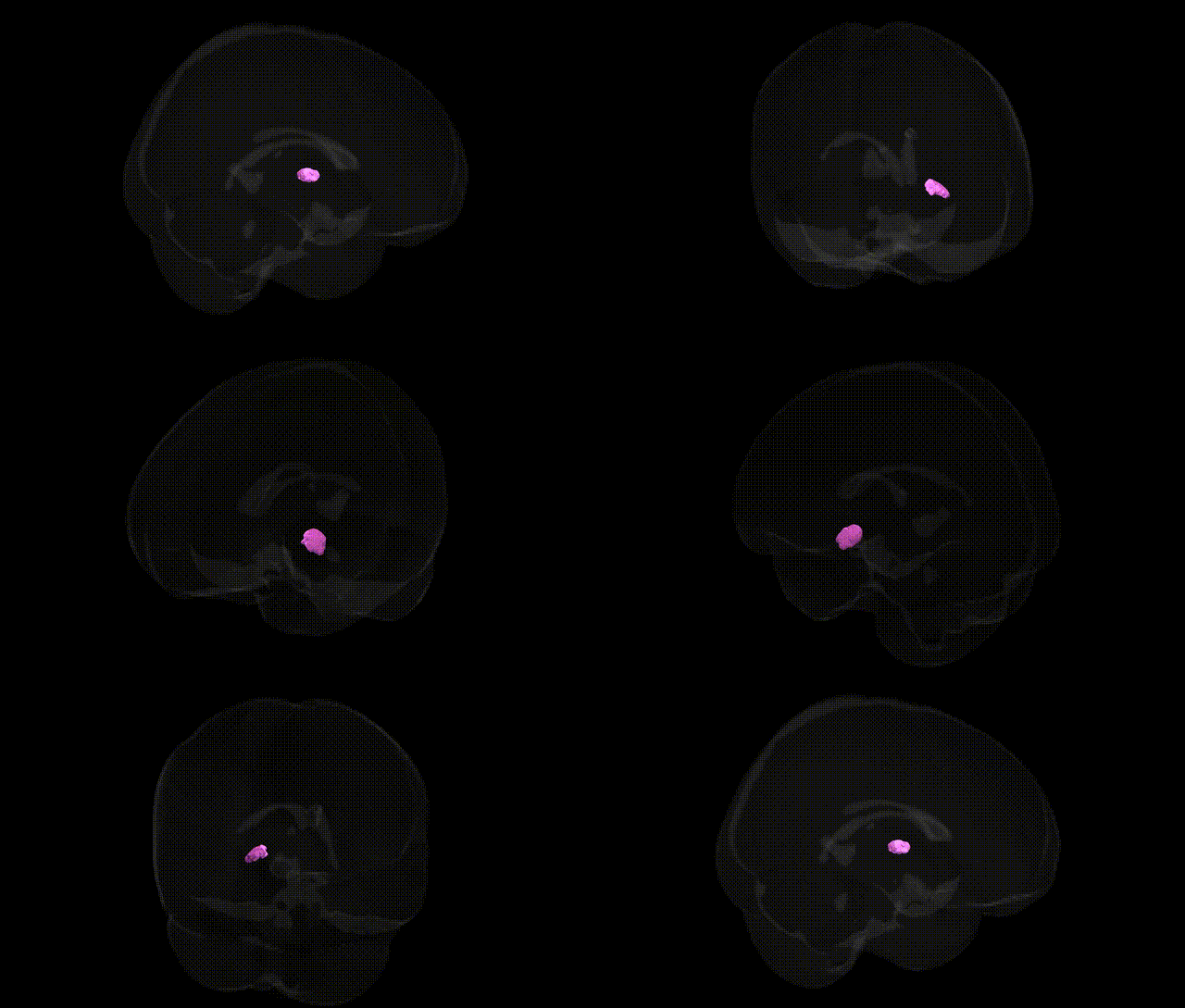
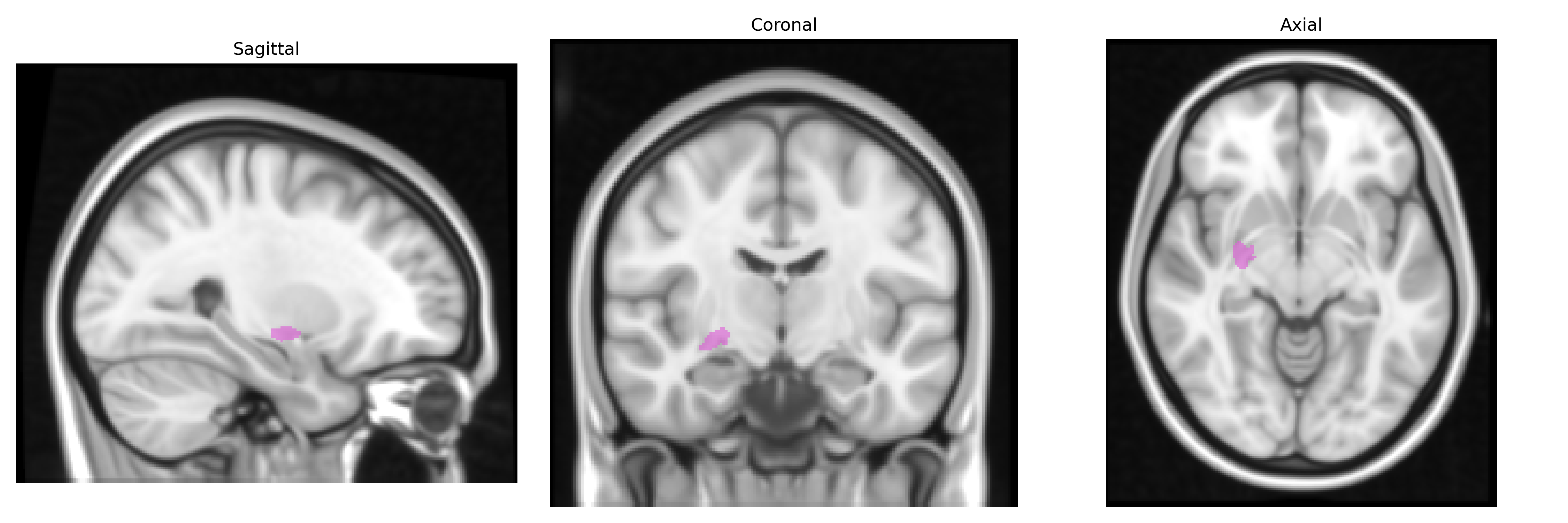
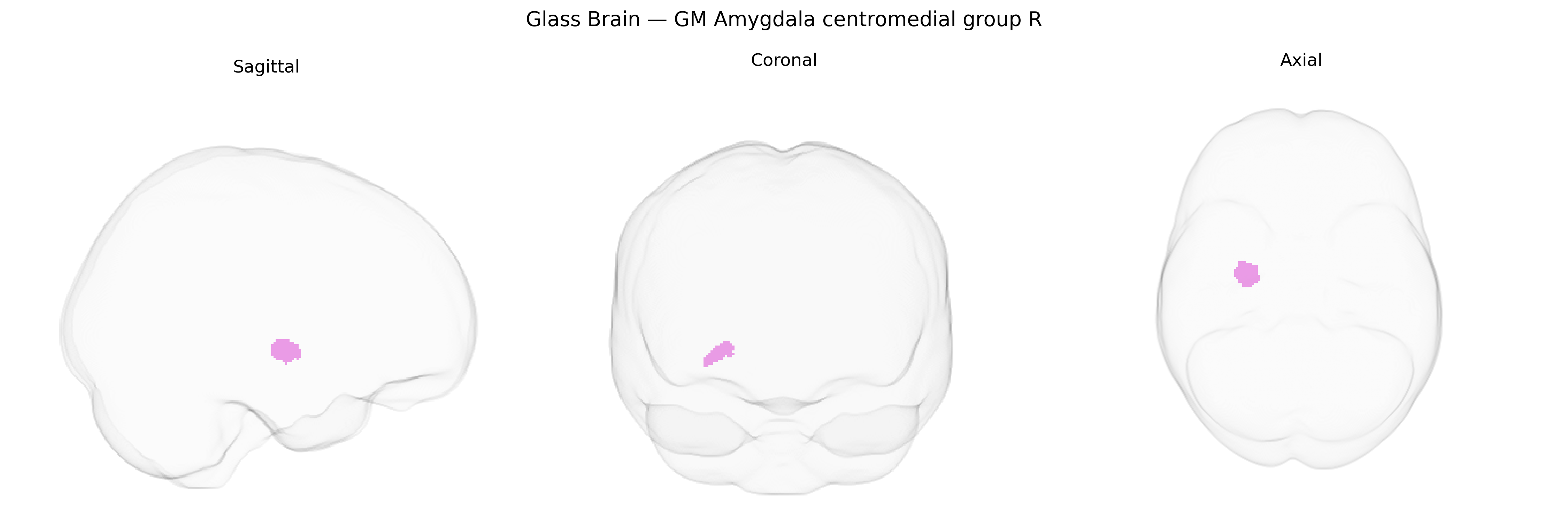
The bilateral GM Amygdala centromedial group R, as defined in the Juelich maxprob thr25 1 mm atlas, corresponds to the centromedial nuclear complex of the right amygdala, a cluster of gray-matter nuclei located in the medial temporal lobe within the medial portion of the amygdaloid complex. This group includes primarily the central and medial nuclei, which are heavily interconnected with hypothalamic and brainstem autonomic and endocrine centers, as well as with olfactory and limbic regions. Functionally, the centromedial amygdala is implicated in coordinating emotional, autonomic, and behavioral responses to salient, particularly threat-related, stimuli, including modulation of fear, anxiety, and pain-related processing, and contributes to the control of defensive behaviors and visceral reactions via its descending projections. There is no direct Wikipedia article for this exact subregion; a related structure is the broader Amygdala.
The centromedial amygdala complex, including the right centromedial group as defined in the Juelich maxprob thr25 1 mm atlas, has been implicated in several genetic and genome‑wide association findings related to emotional processing, threat reactivity, and psychiatric risk. Large imaging‑genetics studies from consortia such as ENIGMA and UK Biobank have shown that common variants (e.g., in genes involved in synaptic function, neurodevelopment, and stress response) contribute to variability in amygdala volume and functional reactivity, with loci near genes such as SLC6A4, BDNF, CRHR1, and several glutamatergic and GABAergic pathway genes repeatedly implicated in broader amygdala structure–function phenotypes. Polygenic risk scores for major depressive disorder, anxiety disorders, post‑traumatic stress disorder, schizophrenia, and bipolar disorder have been associated with altered amygdala volume or reactivity, often showing stronger effects in basolateral and centromedial subdivisions that mediate fear and aggression circuitry. GWAS and candidate‑gene work on traits such as neuroticism, harm avoidance, and impulsive aggression have linked risk alleles to increased activation or altered connectivity of centromedial amygdala regions during threat or emotional tasks, while genetic variants in stress‑axis and serotonergic genes moderate centromedial amygdala responsivity in fear‑conditioning and aversive‑learning paradigms. In sum, although few GWAS target the Juelich “GM Amygdala centromedial group R” label specifically, convergent evidence indicates that common genetic variation affecting monoaminergic regulation, synaptic plasticity, and hypothalamic–pituitary–adrenal axis function contributes to individual differences in the structure and function of the centromedial amygdala and to vulnerability for internalizing and psychotic disorders in which this region plays a key role.
Overview generated by GPT-4o (2026).
Region ID: 8
Hemisphere: bilateral
Atlas: Juelich maxprob thr25 1mm
Full Quality Version: Download MP4
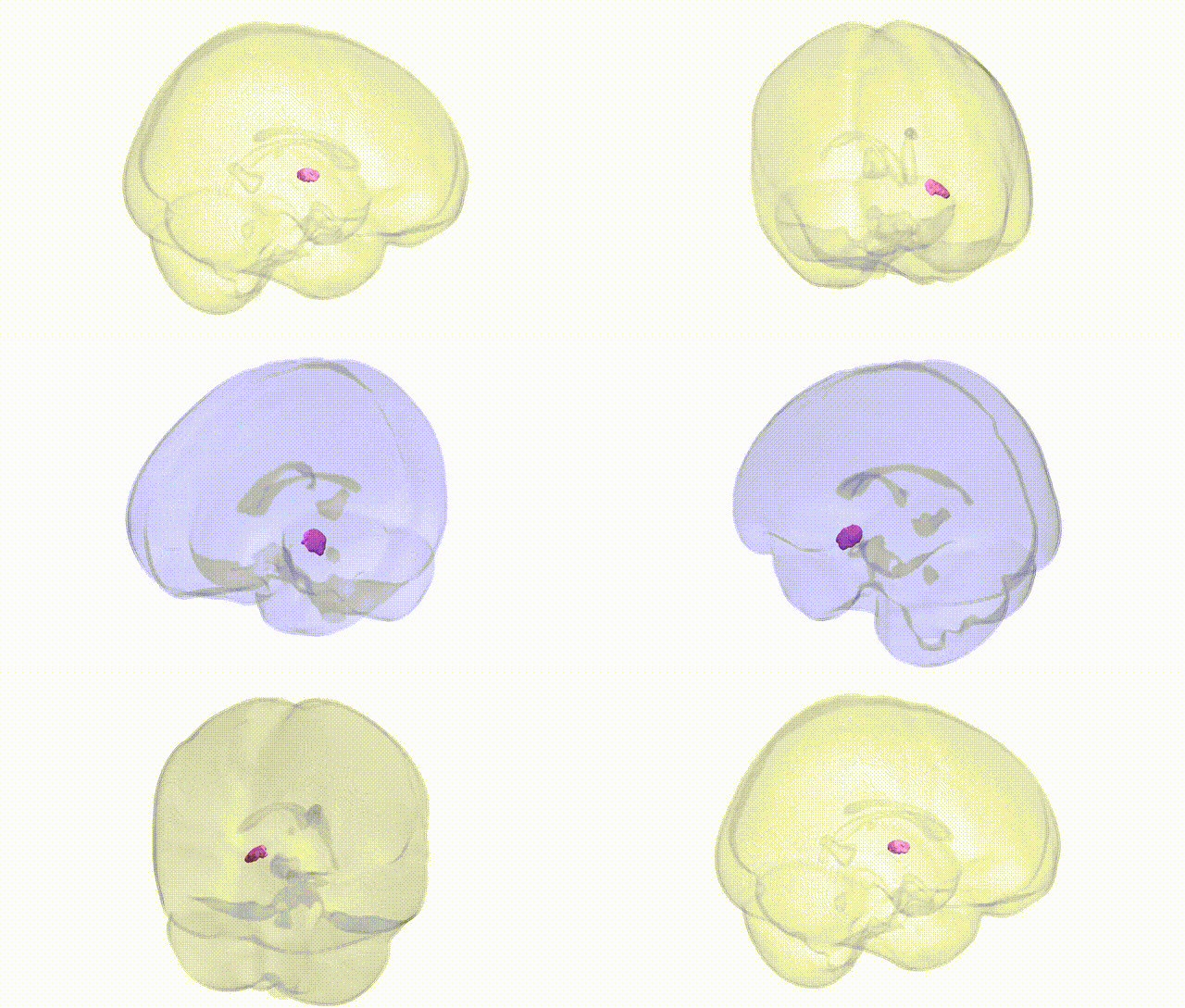
Full Quality Version: Download MP4
Wali Sidiqyar*, Gaurav Rudravaram*, Elyssa M. McMaster, Trent M. Schwartz, Adam M. Saunders, Kurt G. Schilling, Bennett A. Landman "Introducing SPINS: A Shared Public Visualization Library of Neuroanatomical Structures." Medical Imaging with Deep Learning- short paper
This resource is licensed under CC0 1.0 Universal (Public Domain).