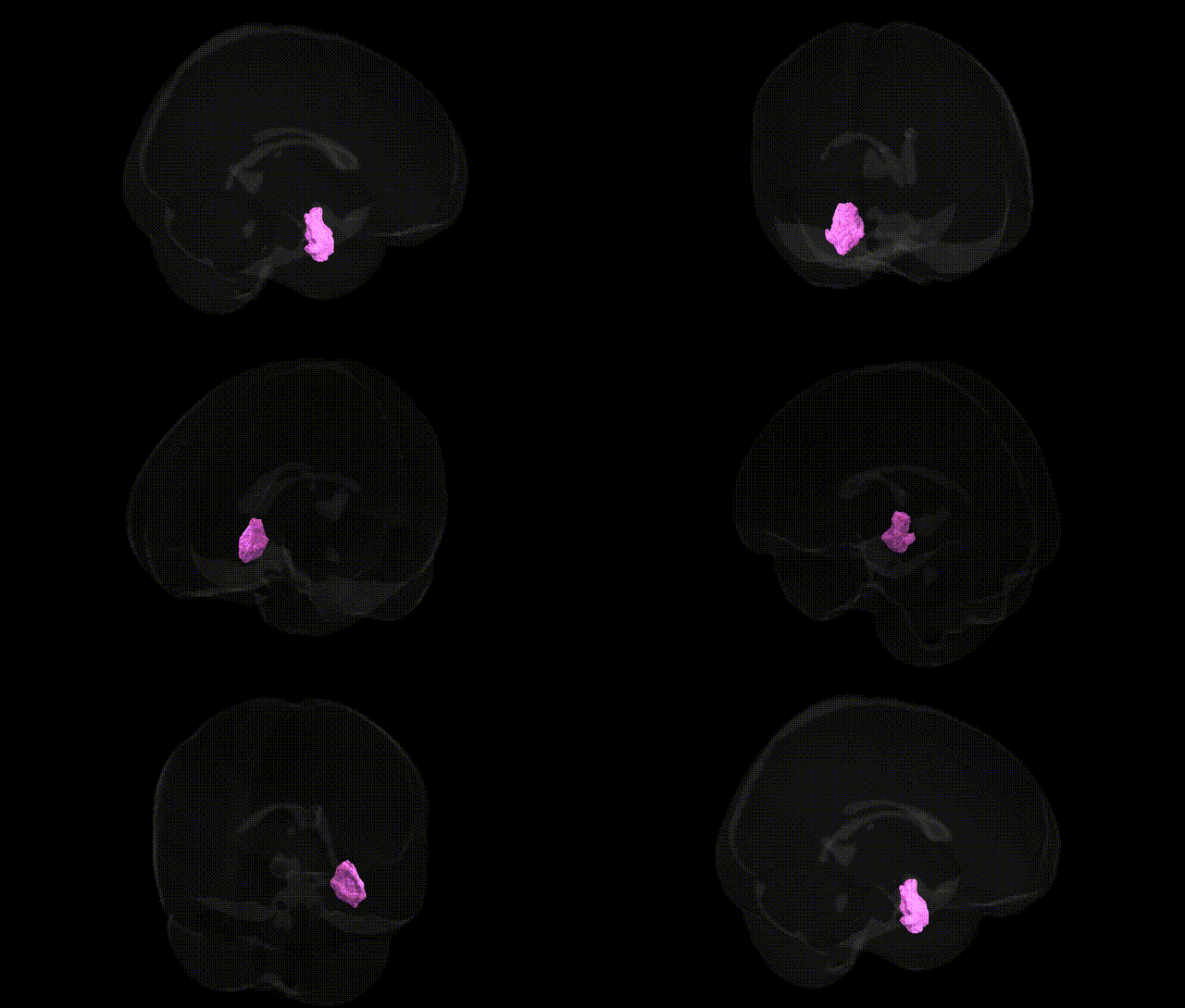
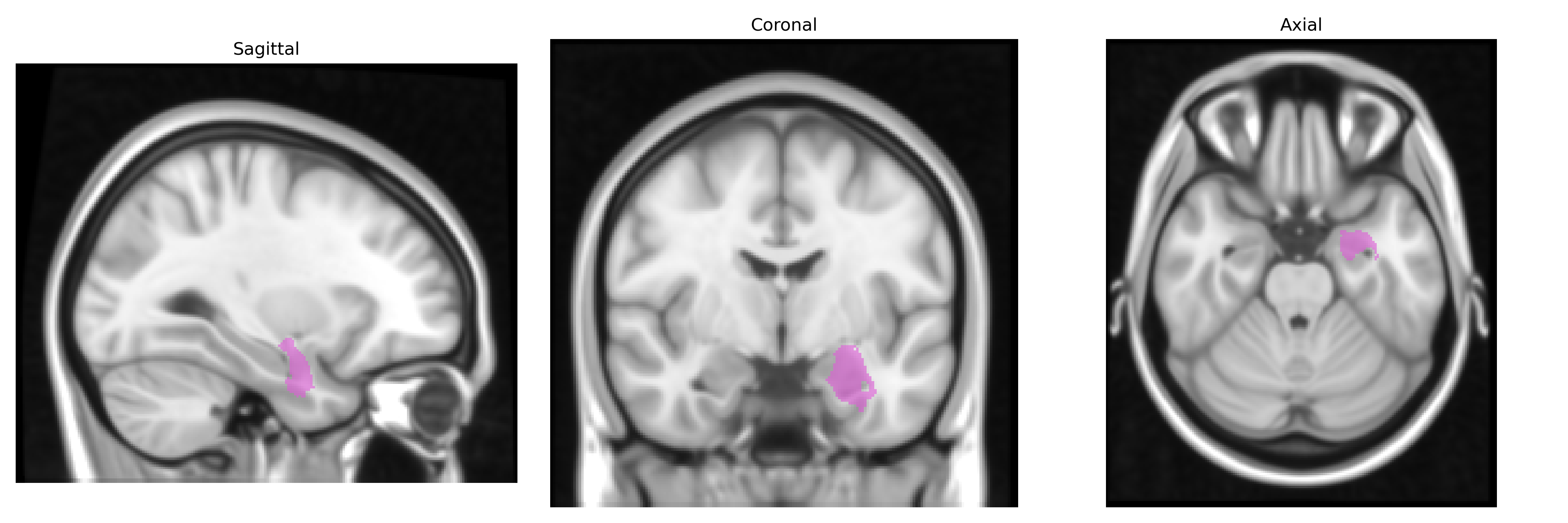
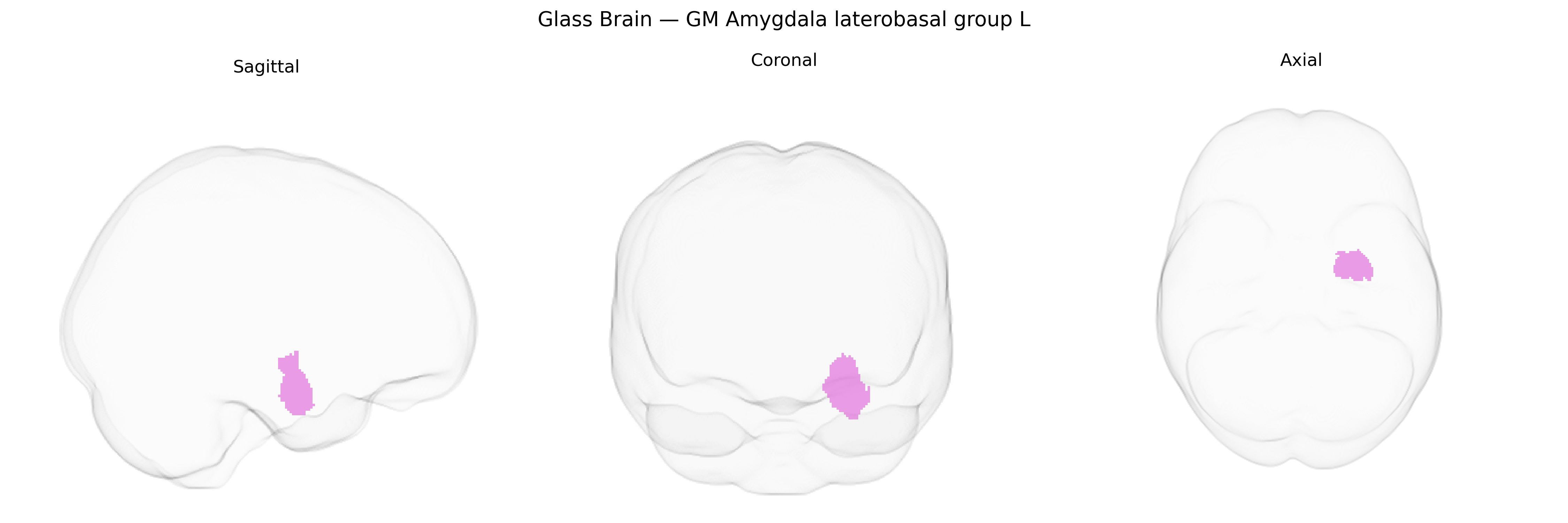
The bilateral GM Amygdala laterobasal group L, as defined in the Juelich maxprob thr25 1mm Atlas, corresponds to the left-sided laterobasal (also termed basolateral) complex of the amygdala, a deep gray matter structure in the medial temporal lobe. This complex comprises primarily the lateral, basal, and accessory basal nuclei, which together receive highly processed sensory input from association cortices and the thalamus and project to prefrontal, orbitofrontal, and other limbic regions. Functionally, the laterobasal group is critically involved in emotional learning and memory, especially fear conditioning, as well as in evaluating the emotional significance of stimuli and integrating this information with contextual and cognitive processes to guide behavior and autonomic responses. In humans, it plays a key role in affective processing, social cognition, and the modulation of stress and anxiety-related circuits. There is no direct link for this specific subregion; see the related structure Amygdala.
The bilateral laterobasal amygdala (laterobasal group, left hemisphere) in the Juelich maxprob thr25 1 mm atlas corresponds largely to the basolateral amygdala complex, a region strongly implicated in genetic studies of emotional processing, anxiety, and mood regulation. Twin and heritability studies show moderate to high heritability of amygdala volume (h² ≈ 0.3–0.6), with several genome-wide association studies identifying common variants (e.g., in or near SLC6A4, TCF4, DRD2, and BDNF-related pathways) associated with individual differences in amygdala structure or reactivity. Large consortia such as ENIGMA and UK Biobank imaging GWAS have reported loci affecting total and subregional amygdala volumes, including variants near MAPT, APOE, and genes involved in neurodevelopment and synaptic signaling, though many findings are shared across amygdala subnuclei rather than being specific to the laterobasal group. Genetically influenced alterations of the basolateral/laterobasal amygdala have been linked to risk for major depressive disorder, generalized anxiety, post-traumatic stress disorder, and schizophrenia, as well as to traits such as neuroticism, harm avoidance, and biased fear learning. Polygenic risk scores for depression, anxiety, and schizophrenia have been associated with differences in basolateral amygdala volume or functional activation, suggesting that this region is a key neuroanatomical substrate through which distributed psychiatric risk variants exert effects on emotion-related circuits.
Overview generated by GPT-4o (2026).
Region ID: 9
Hemisphere: bilateral
Atlas: Juelich maxprob thr25 1mm
Full Quality Version: Download MP4
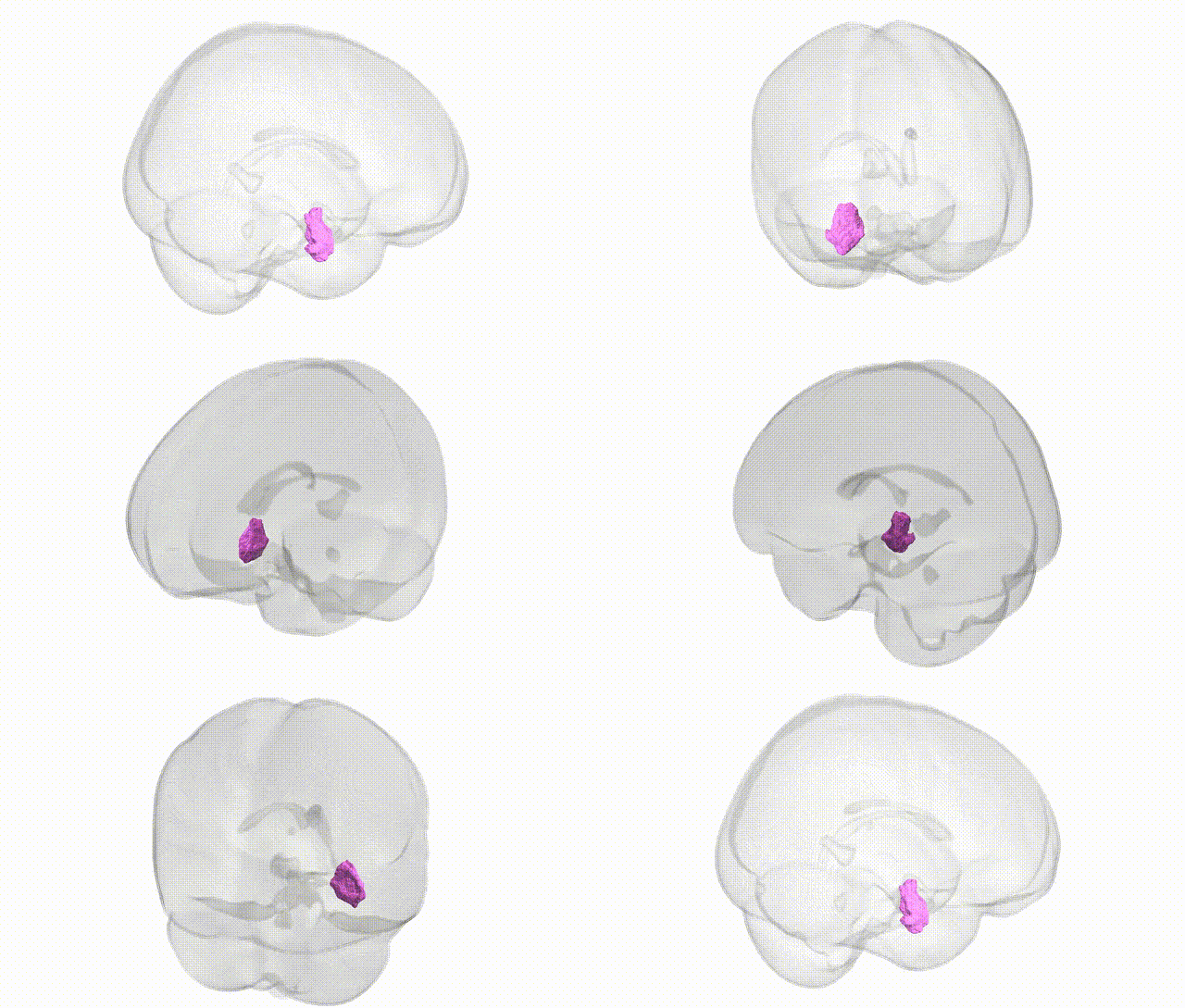
Full Quality Version: Download MP4
Wali Sidiqyar*, Gaurav Rudravaram*, Elyssa M. McMaster, Trent M. Schwartz, Adam M. Saunders, Kurt G. Schilling, Bennett A. Landman "Introducing SPINS: A Shared Public Visualization Library of Neuroanatomical Structures." Medical Imaging with Deep Learning- short paper
This resource is licensed under CC0 1.0 Universal (Public Domain).