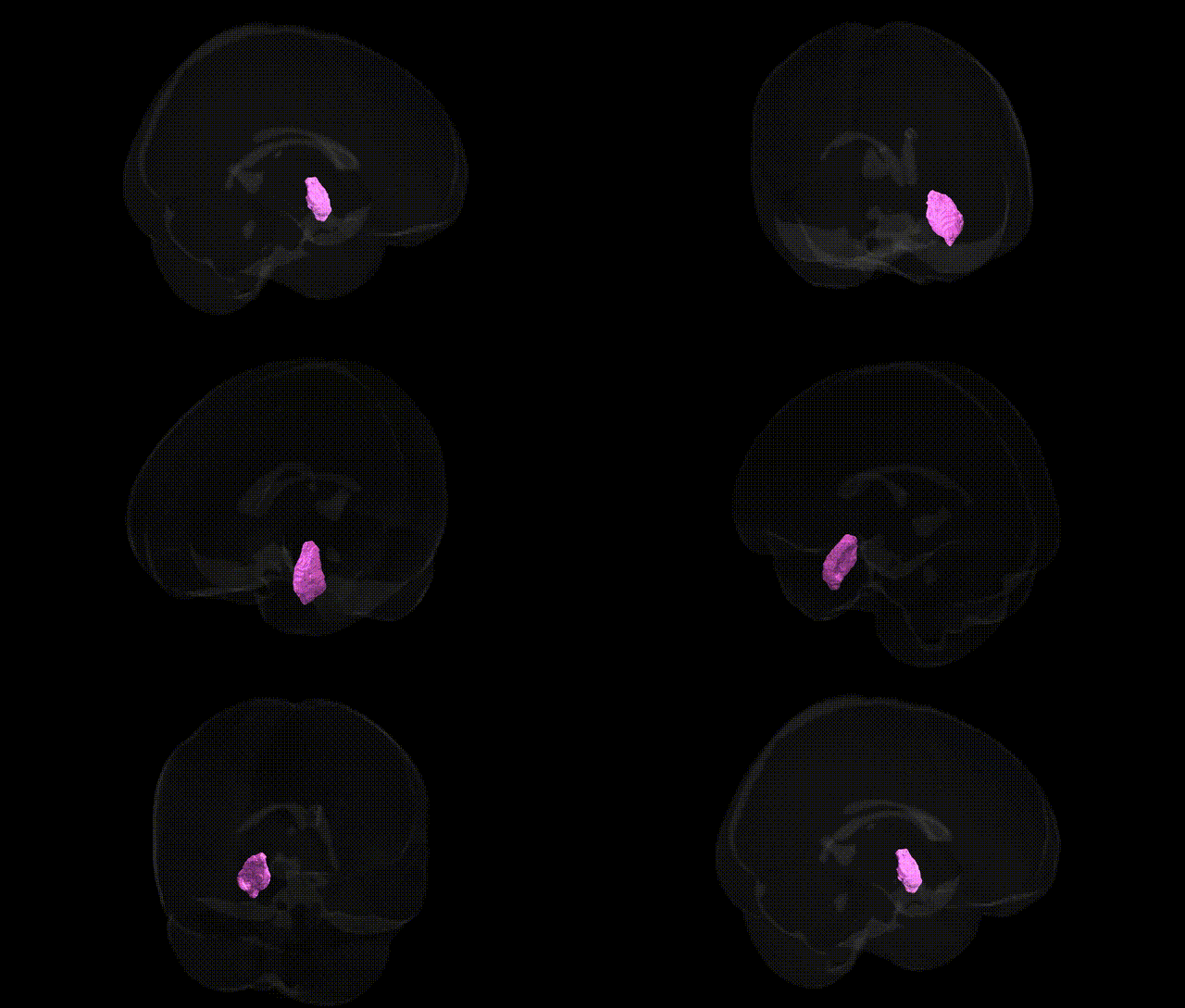
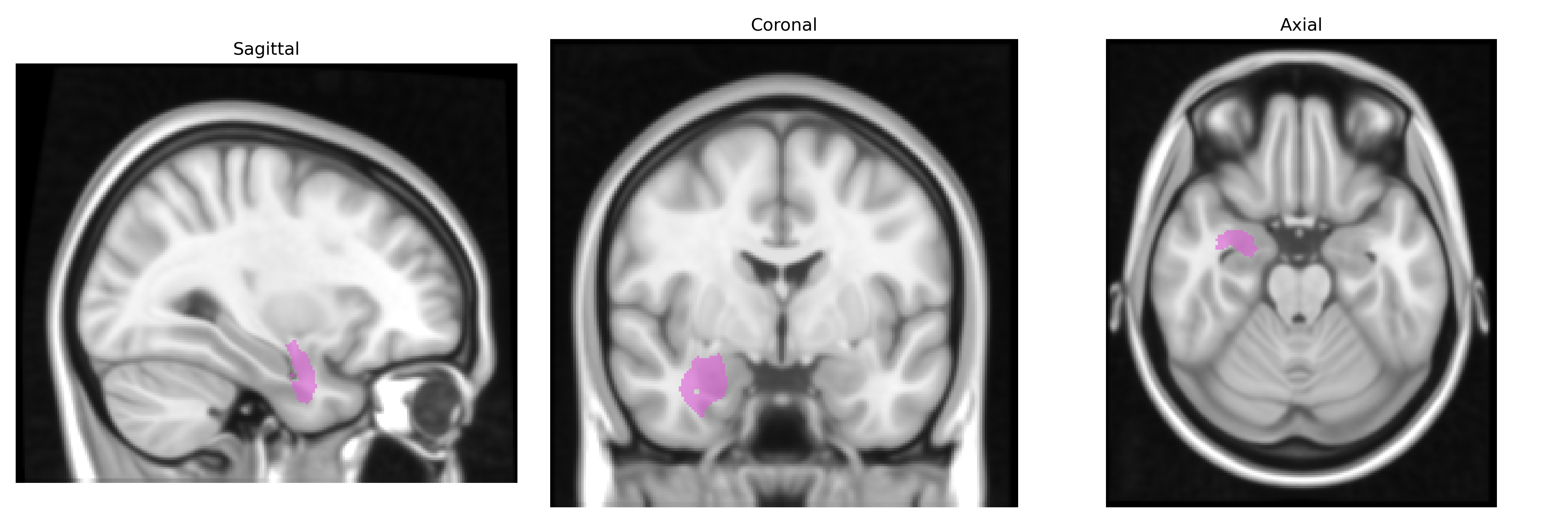
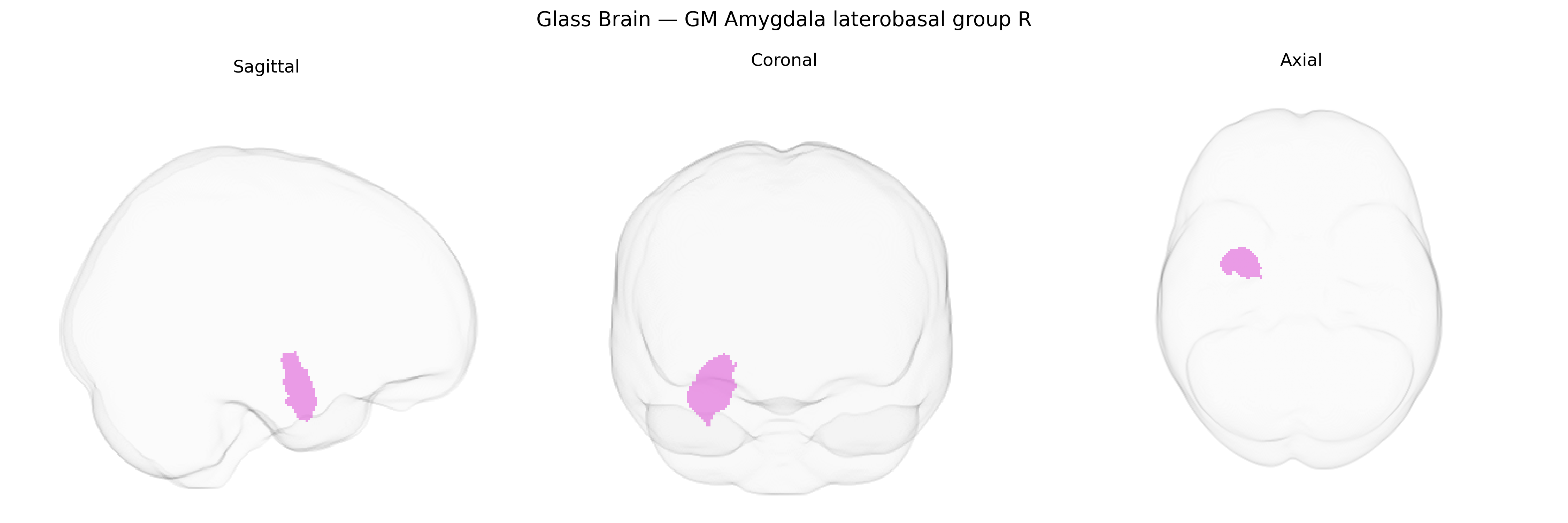
The bilateral GM Amygdala laterobasal group R in the Juelich maxprob thr25 1 mm atlas corresponds primarily to the laterobasal (basolateral) complex of the amygdala in the right hemisphere, encompassing nuclei such as the lateral, basal, and accessory basal nuclei that are heavily interconnected with temporal, frontal, and limbic cortical areas. This complex plays a key role in associative emotional learning, evaluation of sensory stimuli (especially visual and auditory), and modulation of autonomic and endocrine responses via connections with the hypothalamus and brainstem. It receives highly processed sensory input from neocortical regions and, in turn, influences decision-making, fear and reward processing, and memory consolidation by projecting to the prefrontal cortex, hippocampus, and other limbic structures. There is no direct link for this specific parcellation; a closely related entry is the broader Amygdala.
The bilateral gray-matter amygdala laterobasal (basolateral) group, as defined in the Juelich maxprob thr25 1 mm atlas, is a key limbic region whose structure and function show substantial heritability and multiple genetic associations across neuropsychiatric and behavioral traits. GWAS of amygdala volume and subregion morphology (e.g., ENIGMA and UK Biobank–based studies) have identified common variants in or near genes involved in neurodevelopment, synaptic plasticity, and stress response—such as SLC39A8, DRD2, BDNF, APOE, and several loci near glutamatergic and GABAergic pathway genes—that influence basolateral amygdala size and connectivity. Polygenic risk scores for major depressive disorder, schizophrenia, bipolar disorder, and autism spectrum disorder have been associated with altered amygdala volume and functional reactivity, implicating shared genetic architectures that modulate threat processing, emotional learning, and social cognition centered on this region. Variants in serotonin transporter (SLC6A4), catechol-O-methyltransferase (COMT), and FKBP5 have been linked to amygdala hyperreactivity and altered fear conditioning, providing a genetic bridge between the laterobasal amygdala and anxiety traits, PTSD risk, and stress sensitivity. Large-scale imaging-genetics consortia have further shown that many loci associated with internalizing symptoms, neuroticism, and risk-taking behavior exert part of their effect via structural and functional variation in the basolateral amygdala, although no single variant is specific to this subregion, and most associations reflect polygenic influences spread across cortical–subcortical networks.
Overview generated by GPT-4o (2026).
Region ID: 10
Hemisphere: bilateral
Atlas: Juelich maxprob thr25 1mm
Full Quality Version: Download MP4
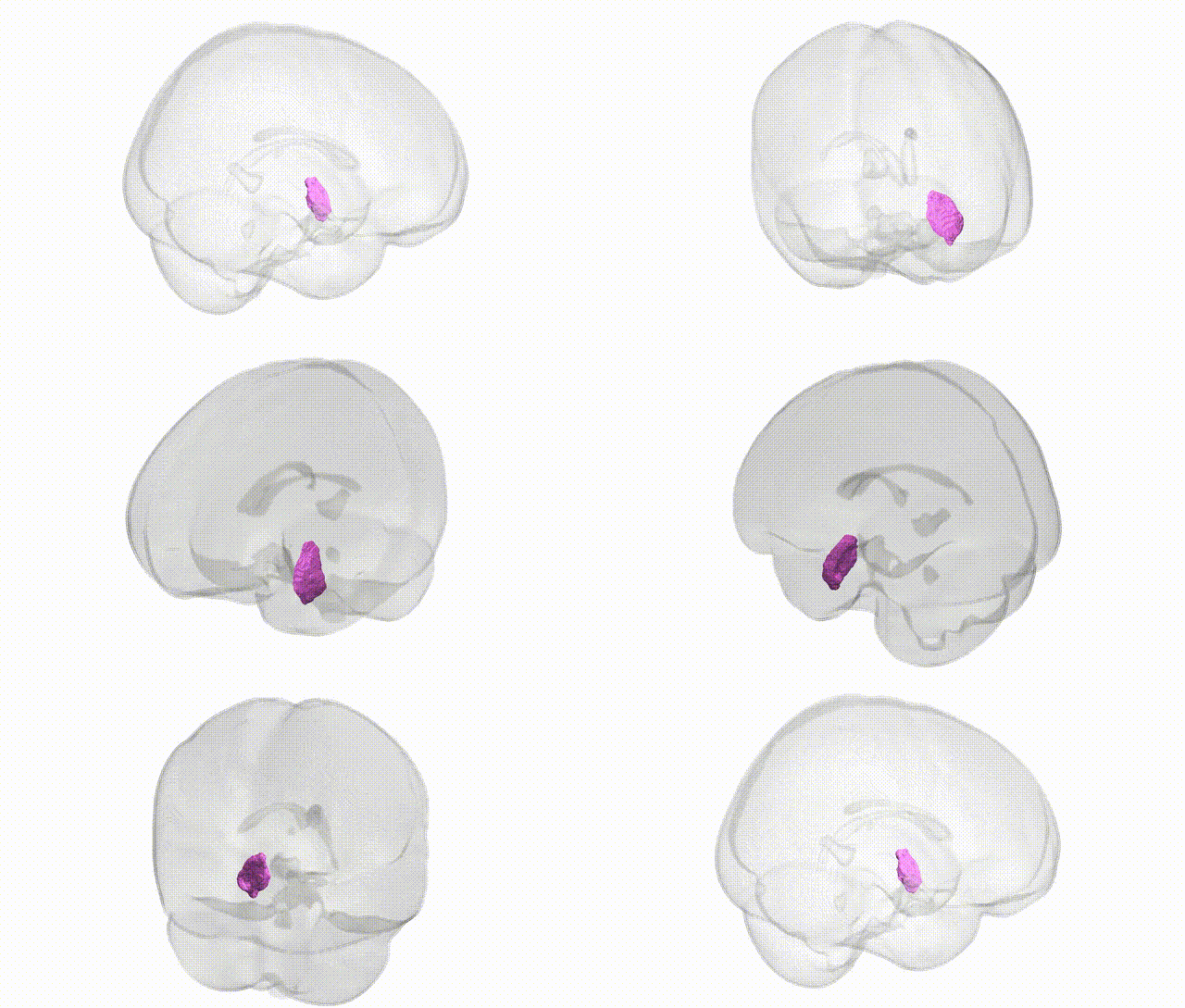
Full Quality Version: Download MP4
Wali Sidiqyar*, Gaurav Rudravaram*, Elyssa M. McMaster, Trent M. Schwartz, Adam M. Saunders, Kurt G. Schilling, Bennett A. Landman "Introducing SPINS: A Shared Public Visualization Library of Neuroanatomical Structures." Medical Imaging with Deep Learning- short paper
This resource is licensed under CC0 1.0 Universal (Public Domain).