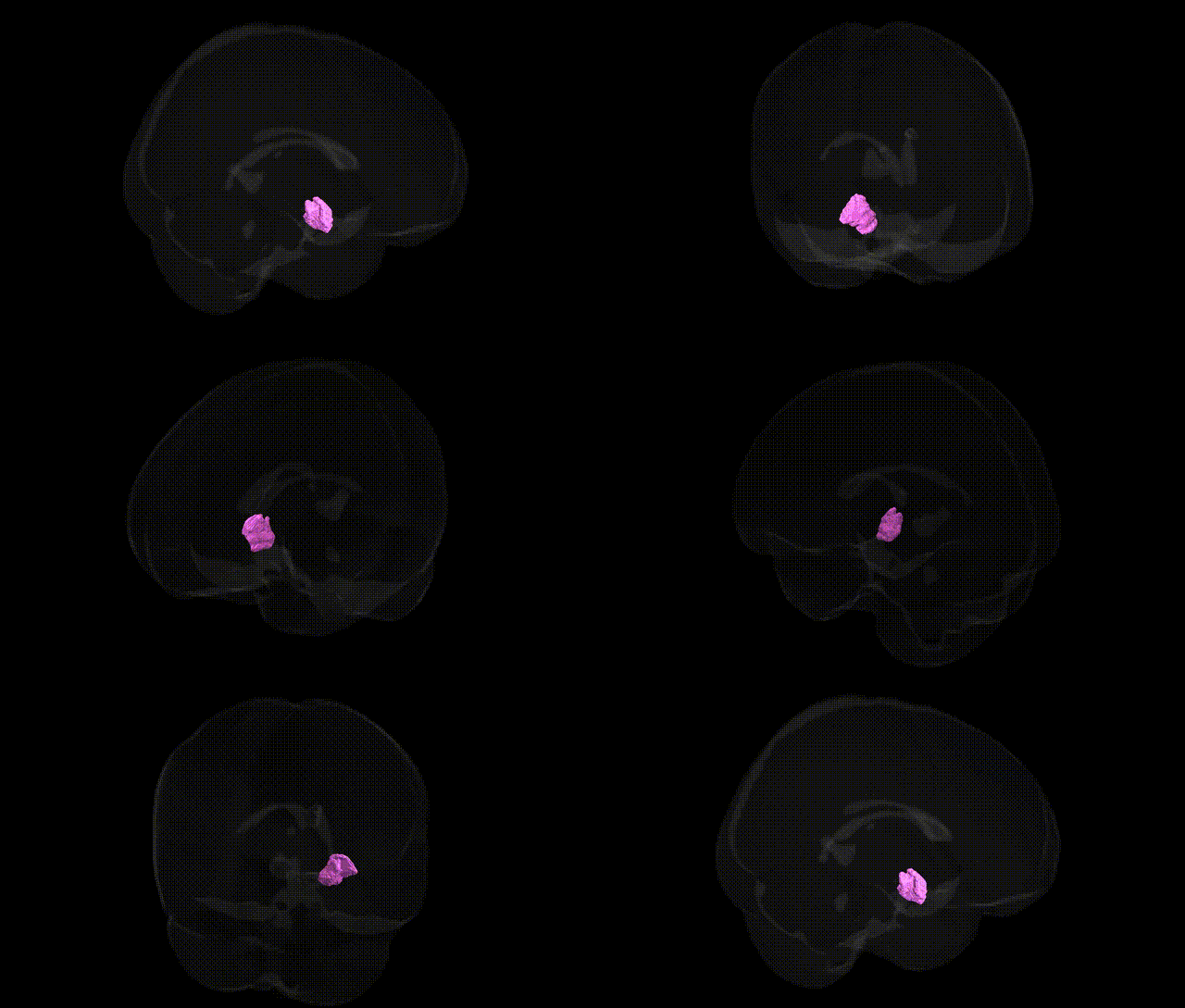
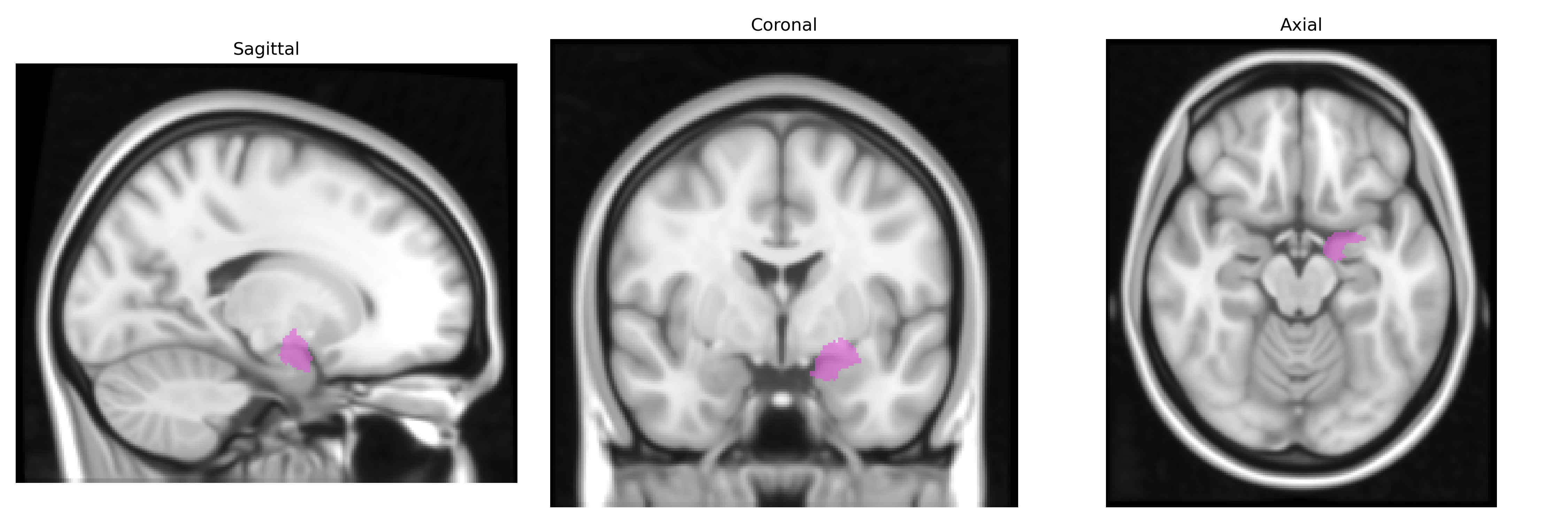
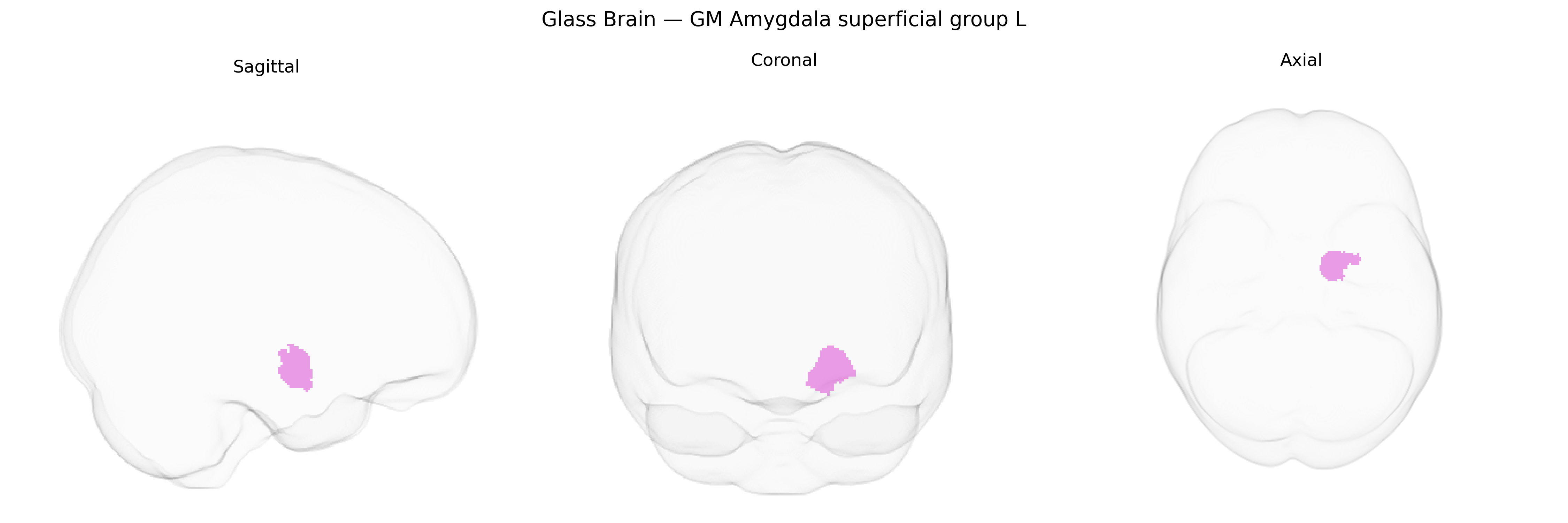
The bilateral GM Amygdala superficial group L, as defined in the Juelich maxprob thr25 1 mm atlas, corresponds to the left superficial nuclei of the amygdala, a collection of nuclei located in the medial temporal lobe within the anterior portion of the parahippocampal region. This superficial group is classically associated with olfactory and social-affective processing, integrating chemosensory and multimodal emotional information and contributing to evaluation of socially relevant cues, affective salience, and components of fear and reward-related behavior. Cytoarchitectonically, it consists of several small nuclei that interface between the amygdala, olfactory structures, and limbic cortical areas, and it participates in broader limbic networks involving the hippocampus, orbitofrontal cortex, and hypothalamus. There is no direct Wikipedia article for the “Amygdala superficial group,” but it is a recognized subdivision of the Amygdala.
The bilateral superficial group of the amygdala (Juelich maxprob thr25 1 mm Atlas) has been implicated in several genetic and GWAS-based associations, though findings are generally indirect and often derived from imaging genetics. Variants in genes involved in serotonergic and glutamatergic signaling (e.g., SLC6A4, 5-HTTLPR, MAOA, and GRM3), neurotrophic factors (BDNF, particularly Val66Met), and stress-response pathways (FKBP5, CRHR1) have been linked to altered amygdala volume or reactivity, including in superficial and basolateral complexes, in relation to anxiety, major depressive disorder, and post-traumatic stress disorder. Large-scale imaging GWAS from consortia such as ENIGMA and UK Biobank have identified polygenic influences on amygdala subregional volumes, including superficial nuclei, implicating genes involved in neurodevelopment, synaptic function, and cell adhesion (for example, loci near genes like MEF2C and DCC in some reports), and associating polygenic risk scores for schizophrenia, bipolar disorder, and depression with structural variation in this region. Additional GWAS and candidate-gene studies link variation in amygdala structure and function—including the superficial group, which is especially engaged in social and olfactory-affective processing—to traits such as neuroticism, extraversion, social anxiety, autism spectrum characteristics, and aggression or impulsivity, suggesting that genetically driven differences in this subregion contribute to vulnerability to affective and social-behavioral disorders.
Overview generated by GPT-4o (2026).
Region ID: 11
Hemisphere: bilateral
Atlas: Juelich maxprob thr25 1mm
Full Quality Version: Download MP4
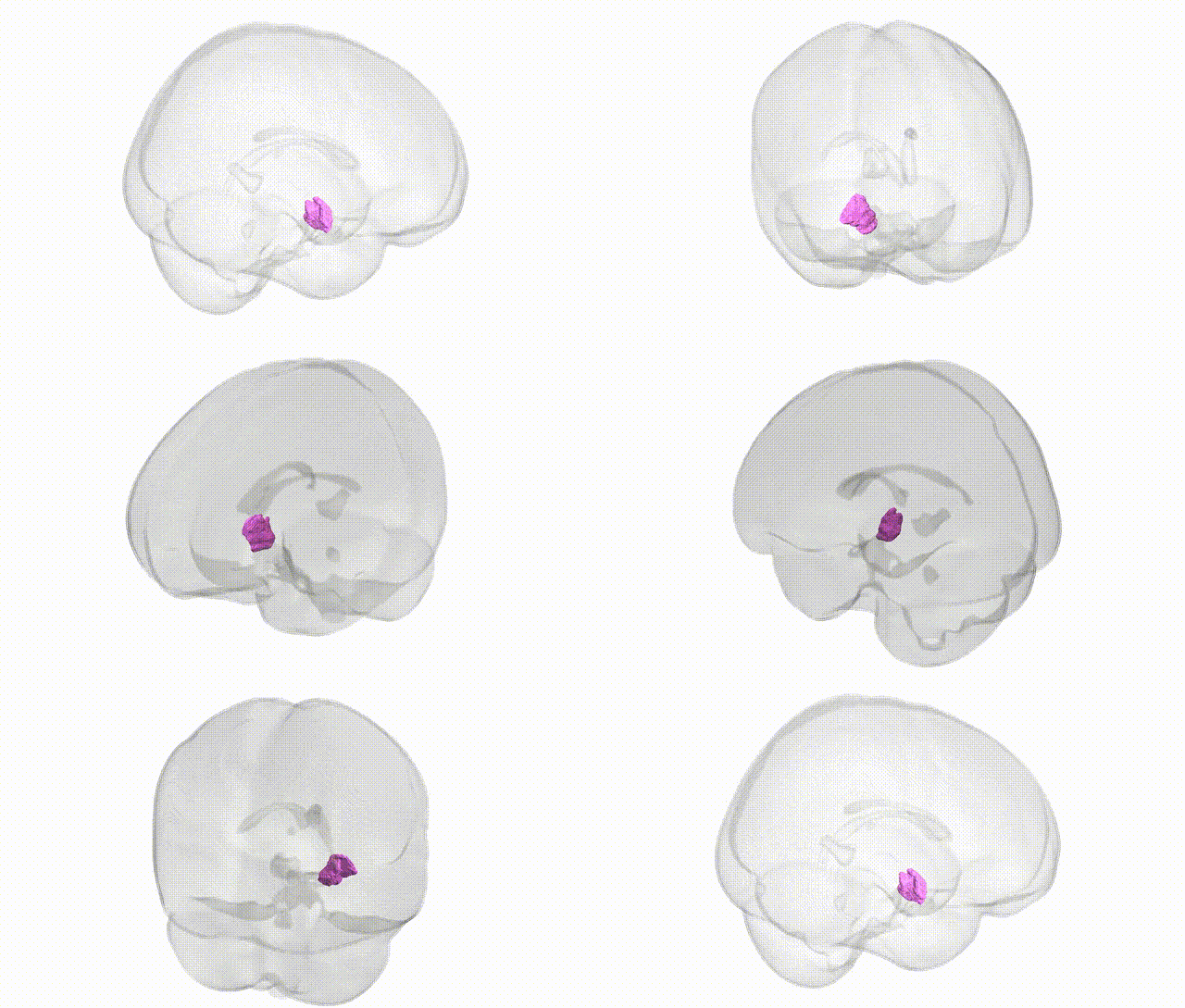
Full Quality Version: Download MP4
Wali Sidiqyar*, Gaurav Rudravaram*, Elyssa M. McMaster, Trent M. Schwartz, Adam M. Saunders, Kurt G. Schilling, Bennett A. Landman "Introducing SPINS: A Shared Public Visualization Library of Neuroanatomical Structures." Medical Imaging with Deep Learning- short paper
This resource is licensed under CC0 1.0 Universal (Public Domain).