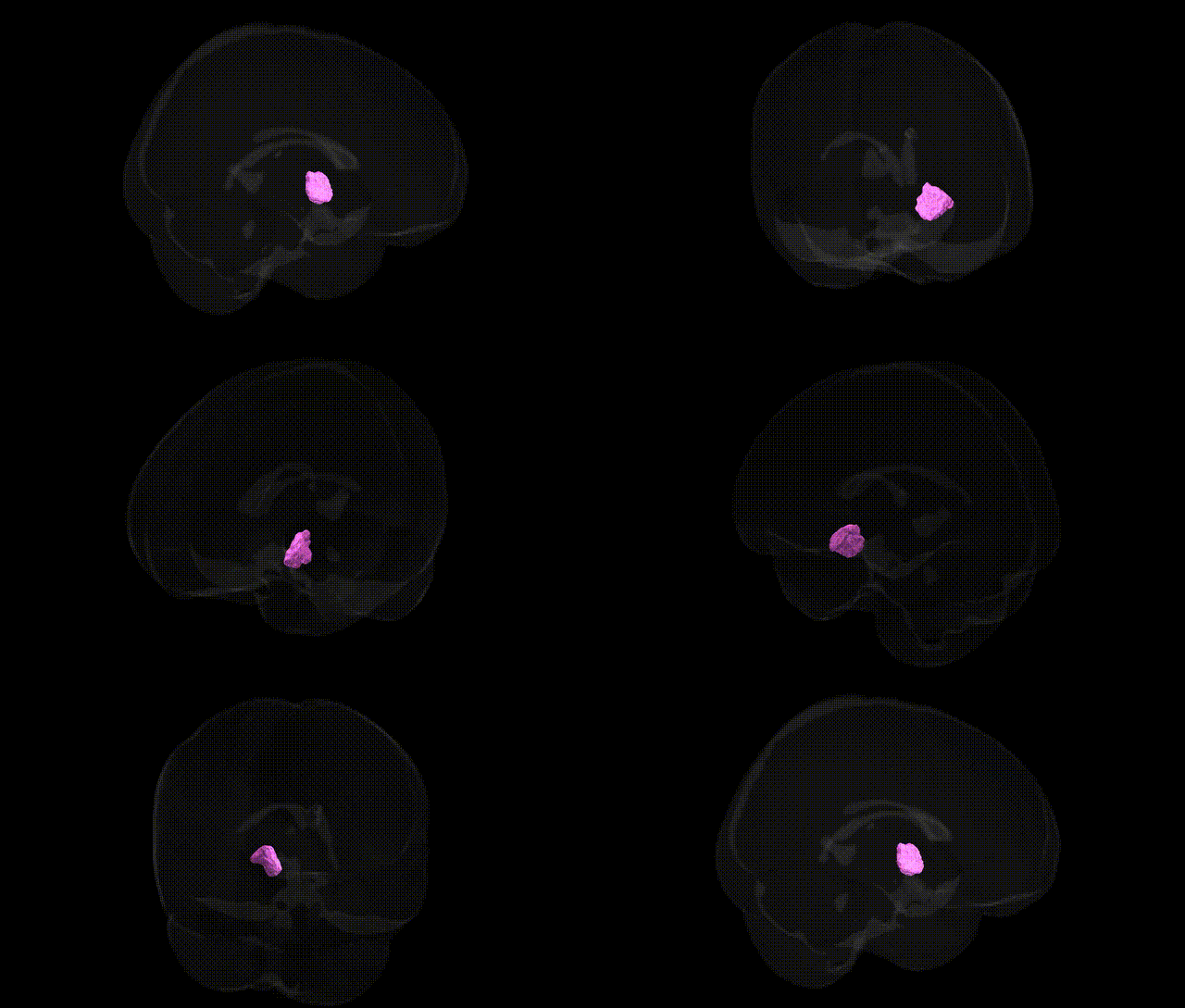
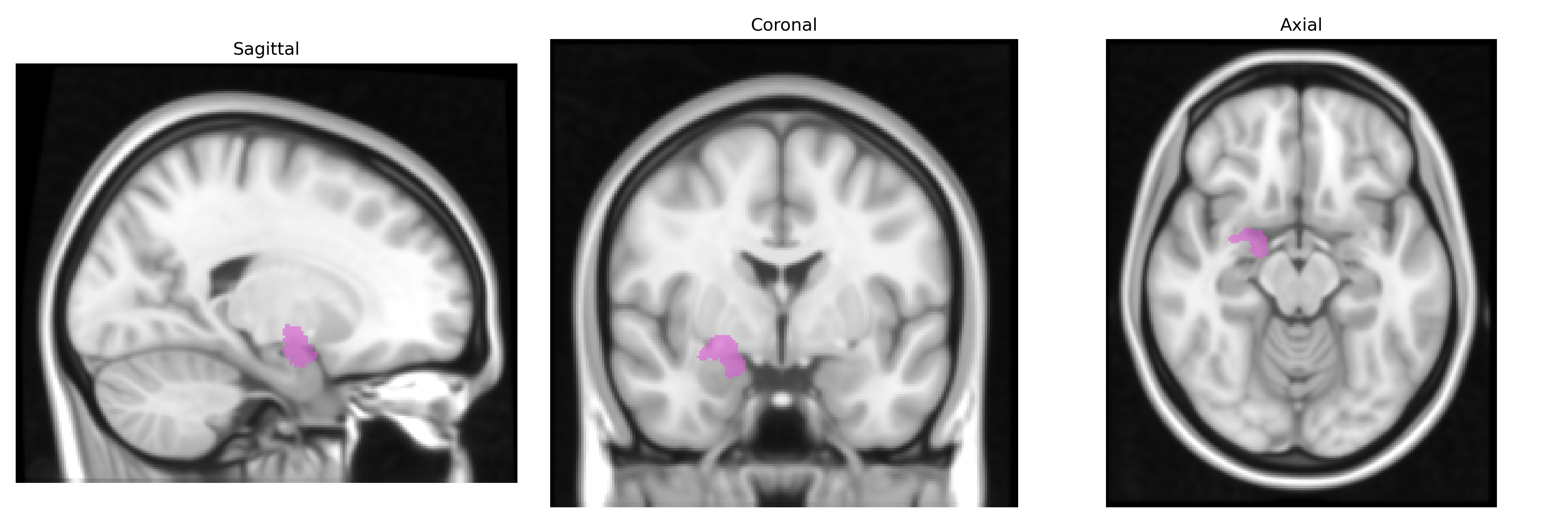
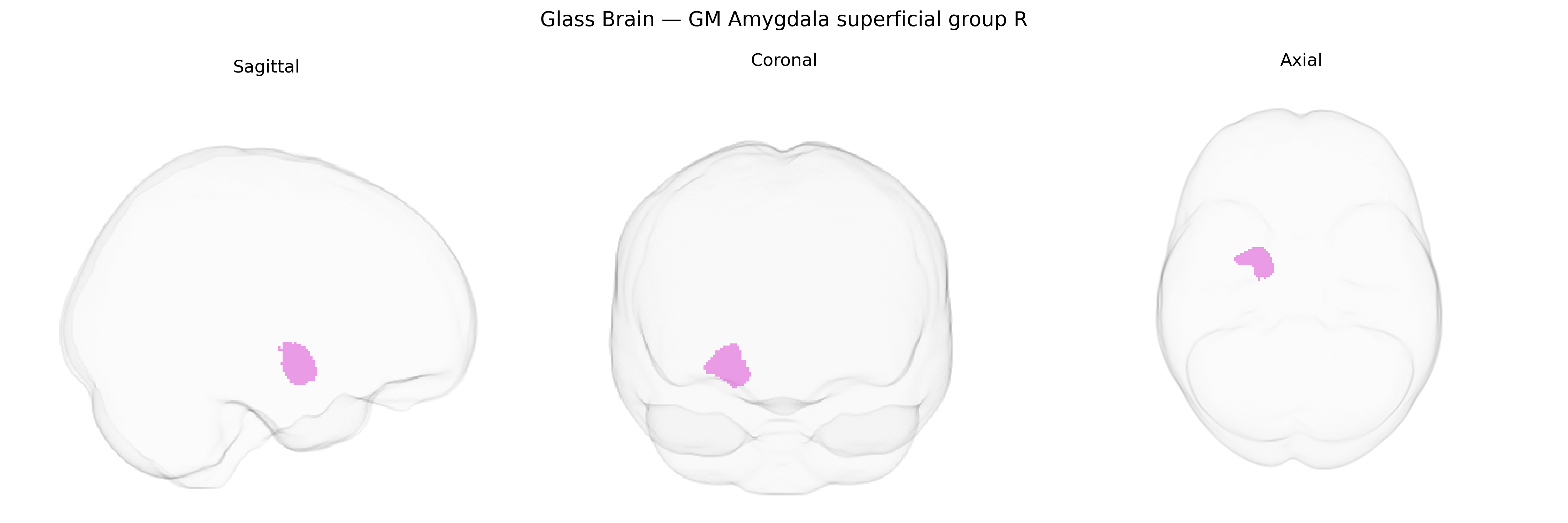
The bilateral GM Amygdala superficial group R in the Juelich maxprob thr25 1mm Atlas refers to the gray matter of the superficial (cortical-like) nuclei of the right amygdala, including structures such as the corticoamygdaloid transition area and adjacent periamygdaloid cortex. These nuclei are phylogenetically related to the olfactory cortex and participate in integrating olfactory and multimodal sensory information with emotional and social processing. Functionally, the superficial group contributes to the evaluation of socio-emotional stimuli, modulation of autonomic responses, and interaction with higher-order limbic and paralimbic regions. Although there is no direct Wikipedia article specifically for the “superficial group” nuclei, they are part of the broader amygdala complex: Amygdala.
The bilateral superficial group of the amygdala (GM Amygdala superficial group R in the Juelich atlas, encompassing corticoamygdaloid areas involved in social–emotional and olfactory processing) has been genetically implicated primarily through imaging genetics and large-scale GWAS of brain structure and function, rather than locus-specific studies. Twin and family studies show high heritability of amygdala volume and reactivity, and multivariate GWAS of subcortical structures (e.g., ENIGMA and UK Biobank-based analyses) have identified common variants, notably in genes related to neurodevelopment (such as SLC39A8, DRD2, and other synaptic and neuroplasticity loci), that influence amygdala size and microstructure, including regions overlapping the superficial group. Variants in serotonin transporter (SLC6A4), BDNF (particularly Val66Met), and stress-response genes (FKBP5, CRHR1) have repeatedly been associated with differences in amygdala reactivity to emotional stimuli and with altered connectivity involving superficial/corticomedial amygdala territories, linking this region to anxiety and mood disorders, post-traumatic stress disorder, and neuroticism. Polygenic risk scores for major depressive disorder, schizophrenia, and bipolar disorder have been associated with structural and functional alterations in the amygdala, and social-behavior and personality GWAS (e.g., for extraversion, social anxiety, and aggression) report amygdala-related endophenotypes that include the superficial group’s networks. Overall, current genetic evidence supports a role for common neurodevelopmental, synaptic, and stress-response variants in shaping the structure and responsivity of the superficial amygdala group, contributing to vulnerability for affective and stress-related psychopathology, though fine-grained region-specific GWAS targeting this Juelich-defined parcel remain limited.
Overview generated by GPT-4o (2026).
Region ID: 12
Hemisphere: bilateral
Atlas: Juelich maxprob thr25 1mm
Full Quality Version: Download MP4
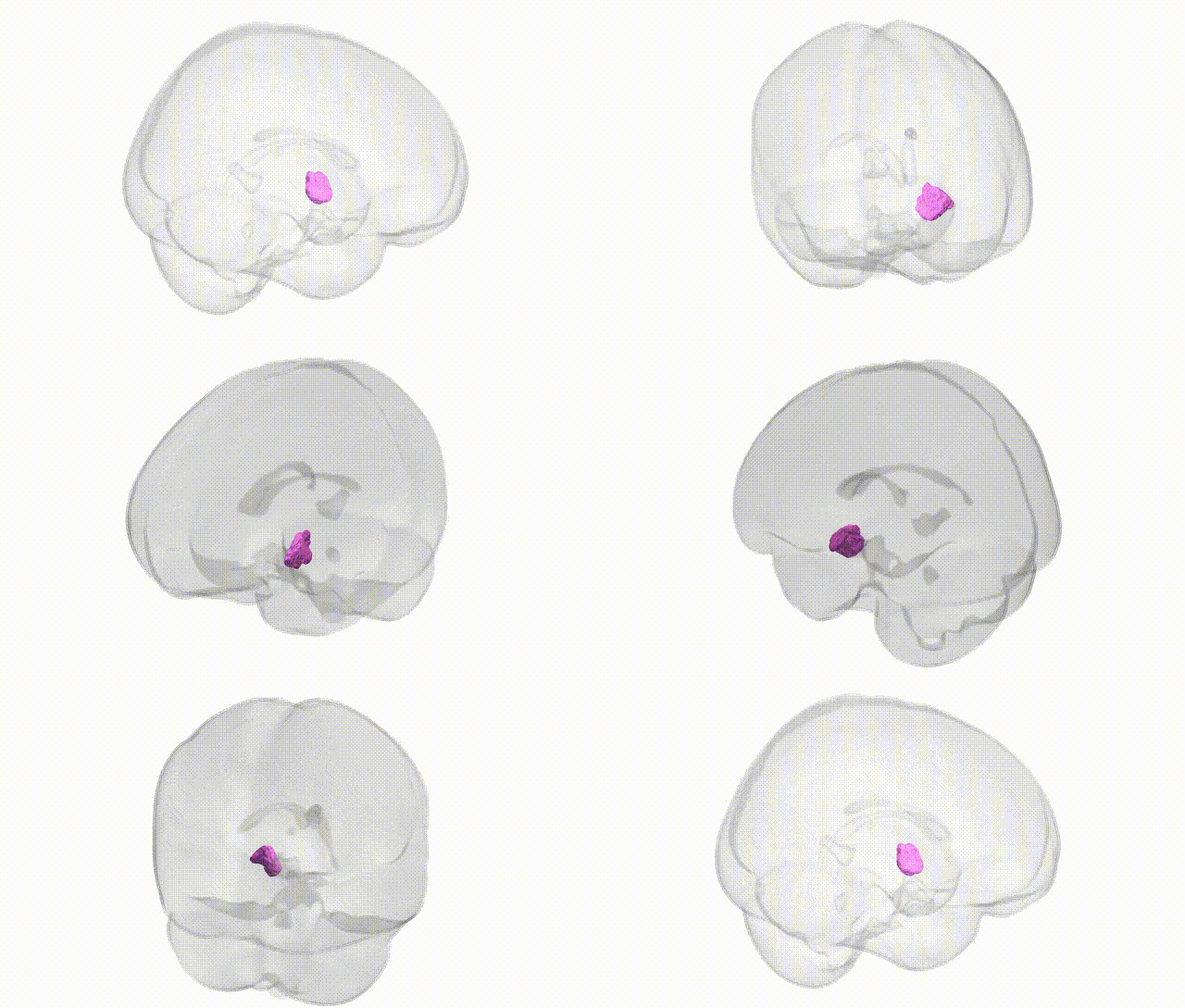
Full Quality Version: Download MP4
Wali Sidiqyar*, Gaurav Rudravaram*, Elyssa M. McMaster, Trent M. Schwartz, Adam M. Saunders, Kurt G. Schilling, Bennett A. Landman "Introducing SPINS: A Shared Public Visualization Library of Neuroanatomical Structures." Medical Imaging with Deep Learning- short paper
This resource is licensed under CC0 1.0 Universal (Public Domain).