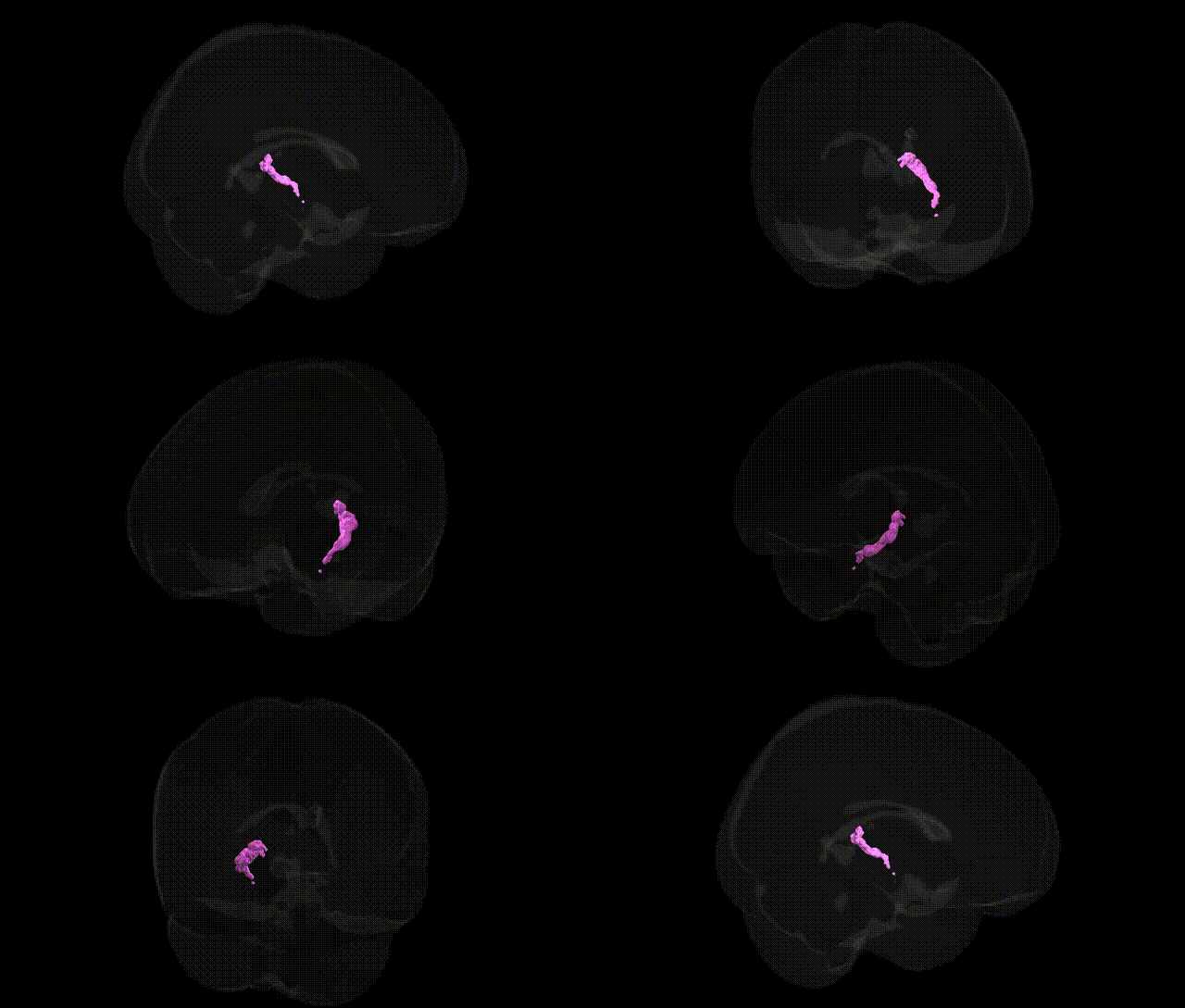
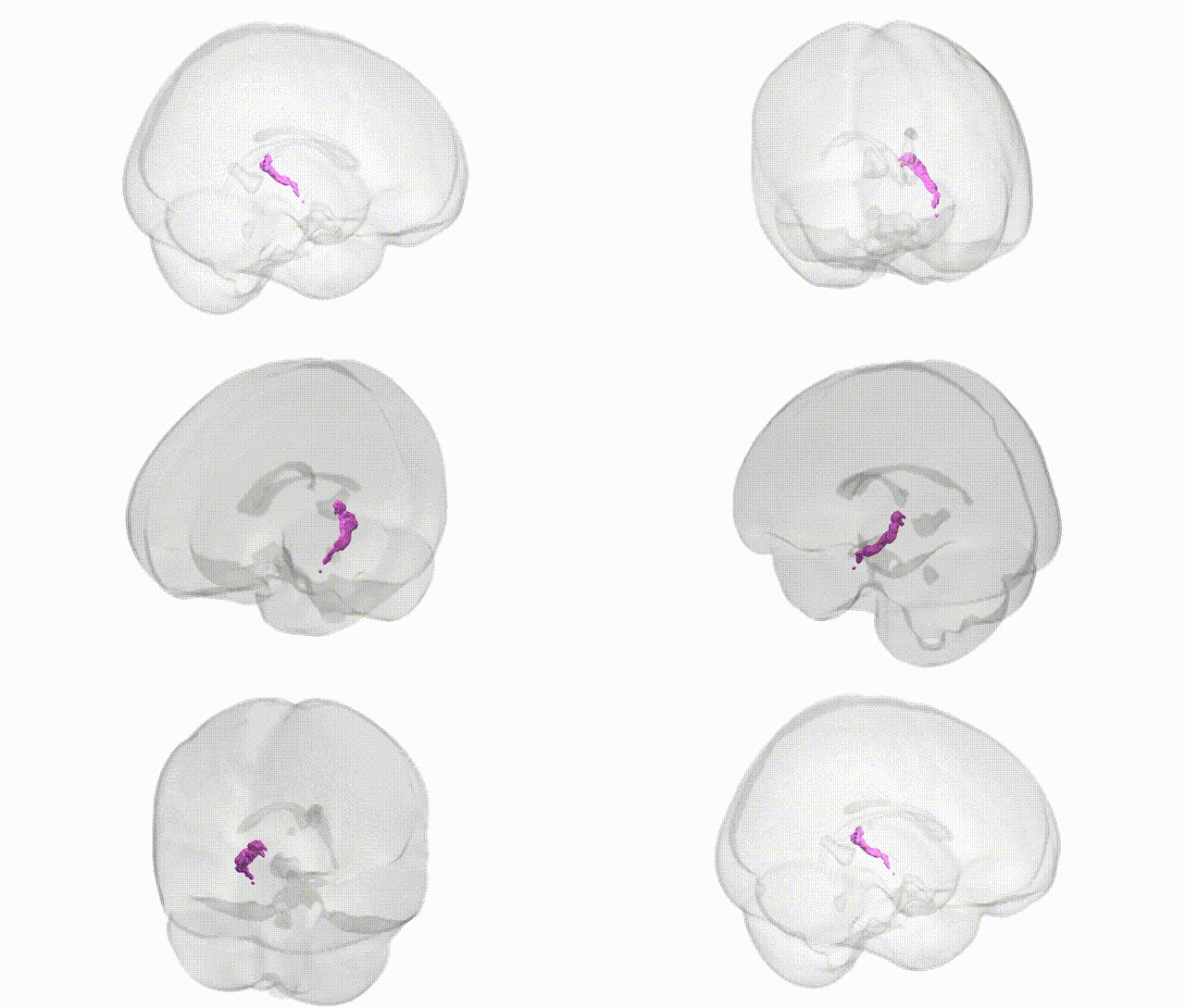
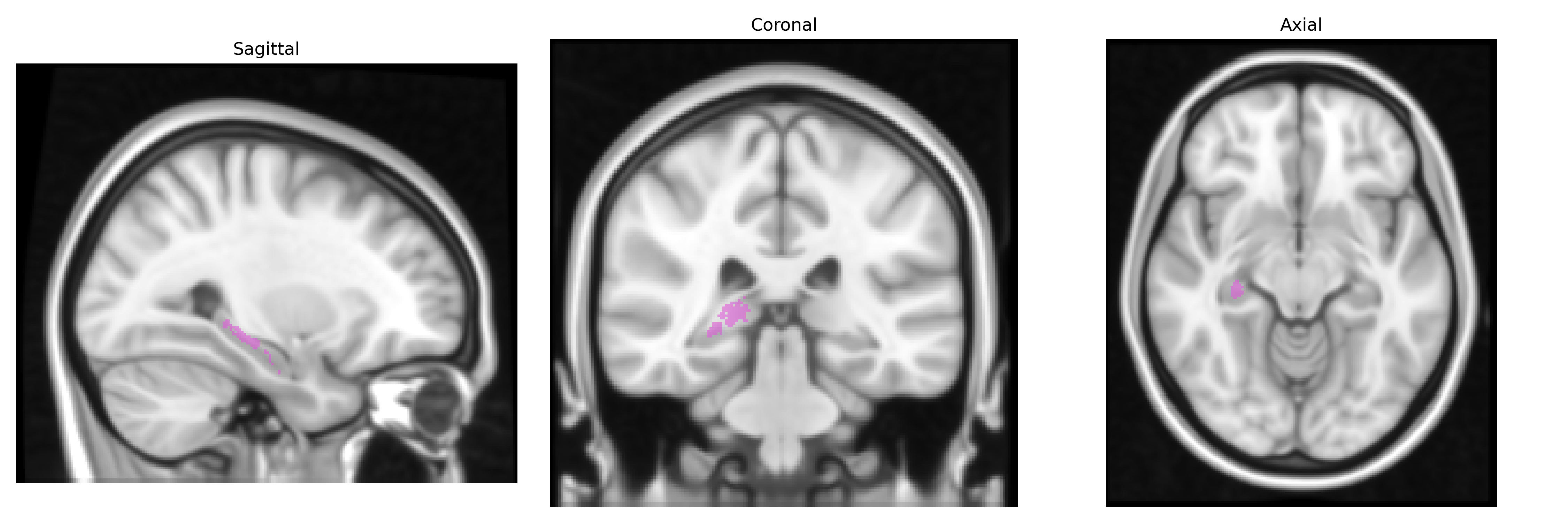
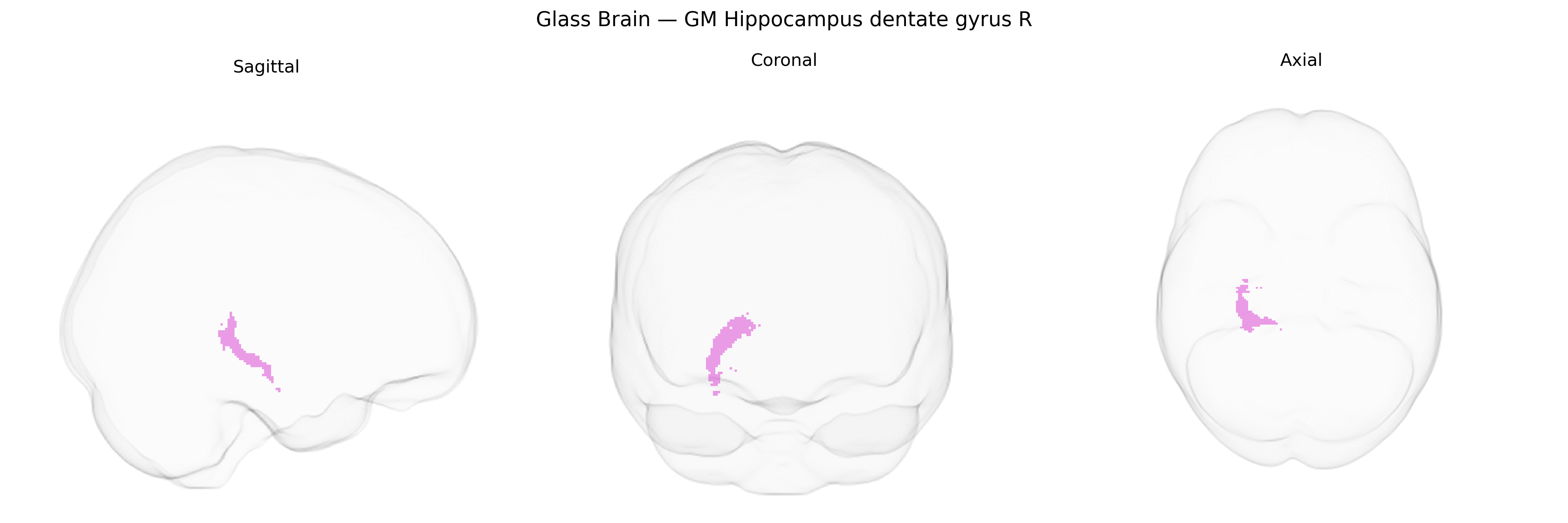
The bilateral gray matter hippocampus dentate gyrus (right) in the Juelich maxprob thr25 1 mm atlas refers to the lamellar, C‑shaped granule cell layer and associated neuropil that forms the primary input gateway of the hippocampal formation. Situated in the medial temporal lobe within the hippocampal formation, the dentate gyrus receives afferent input mainly from the entorhinal cortex via the perforant path and relays this information to CA3 pyramidal neurons through mossy fibers. It is critically involved in pattern separation, episodic memory encoding, spatial navigation, and adult neurogenesis, with granule cells continuing to be generated throughout life in many mammals. Structurally, the dentate gyrus is organized into the molecular, granule cell, and polymorphic (hilus) layers and is tightly interconnected with other limbic structures, forming a core node of hippocampal circuitry implicated in learning, stress responses, and temporal lobe epilepsy. Dentate gyrus
Genetic studies implicate the right dentate gyrus of the hippocampus in a range of polygenic influences on hippocampal structure, cognition, and neuropsychiatric risk, although few findings isolate this subfield specifically. Large-scale GWAS of hippocampal volume and subfield morphology (e.g., ENIGMA, UK Biobank) show that common variants in genes involved in neuronal development, synaptic plasticity, and neurogenesis—such as SLC4A10, DPP4, ASTN2, and MSRB3—contribute to variation in hippocampal and dentate gyrus volume, with additional loci in pathways related to Wnt signaling and neurotrophic processes. The dentate gyrus, as a key site of adult neurogenesis, has been indirectly linked through genetic associations with hippocampal volume and function to major depressive disorder, schizophrenia, bipolar disorder, post-traumatic stress disorder, and Alzheimer’s disease, with risk alleles in genes such as APOE, BDNF, and several schizophrenia- and depression-associated loci influencing hippocampal integrity and pattern separation–related cognition. Polygenic scores for educational attainment, intelligence, and memory performance also correlate with hippocampal and dentate-related measures, suggesting shared genetic architecture between this region’s structure, episodic memory, and broader cognitive traits, though current resolution often does not distinguish right from left or dentate gyrus from adjacent hippocampal subfields in a region-specific manner.
Overview generated by GPT-4o (2026).
Region ID: 22
Hemisphere: bilateral
Atlas: Juelich maxprob thr25 1mm
Full Quality Version: Download MP4
Full Quality Version: Download MP4
Wali Sidiqyar*, Gaurav Rudravaram*, Elyssa M. McMaster, Trent M. Schwartz, Adam M. Saunders, Kurt G. Schilling, Bennett A. Landman "Introducing SPINS: A Shared Public Visualization Library of Neuroanatomical Structures." Medical Imaging with Deep Learning- short paper
This resource is licensed under CC0 1.0 Universal (Public Domain).