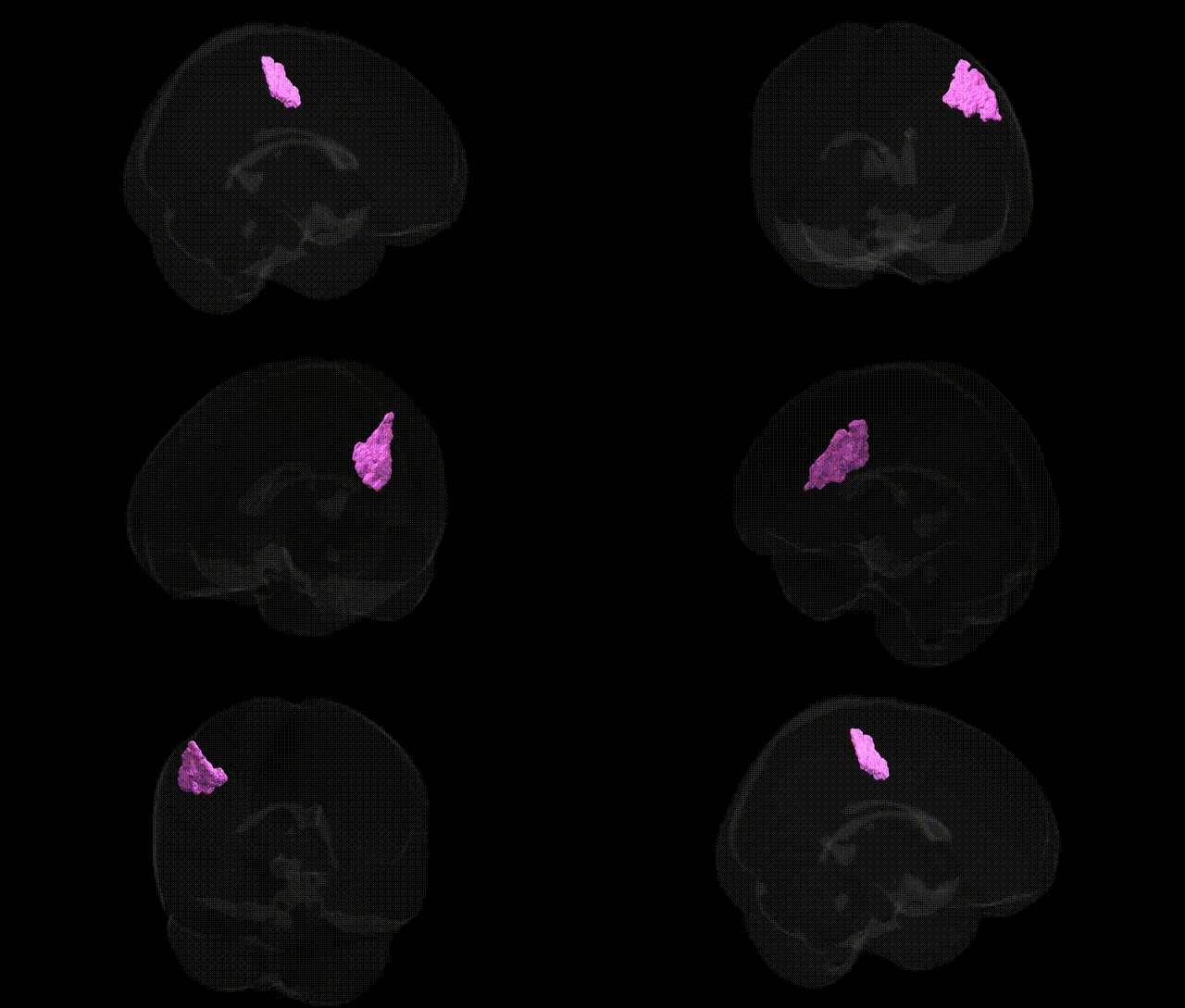
The bilateral GM Inferior parietal lobule PFt R region, as defined in the Juelich maxprob thr25 1mm atlas, corresponds to a cytoarchitectonic subregion within the right inferior parietal lobule (IPL), associated primarily with multimodal integration, attention, and higher-order sensorimotor processing. This area participates in the integration of visual, somatosensory, and auditory information, supporting functions such as spatial awareness, action understanding, and aspects of social cognition. PFt R, located in the supramarginal portion of the IPL, contributes to the transformation of sensory input into motor plans and may also be involved in phonological and language-related processing, particularly in the right hemisphere’s role in prosody and discourse-level comprehension. There is no direct Wikipedia article for PFt R; a related structure is the Inferior parietal lobule.
The bilateral GM Inferior parietal lobule PFt (right hemisphere) region from the Juelich maxprob atlas is part of the inferior parietal cortex implicated in multisensory integration, attention, language, and social cognition, and genetic associations typically derive from imaging‑genetics and GWAS studies targeting broader inferior parietal or supramarginal/angular regions rather than PFt specifically. Large neuroimaging GWAS consortia (e.g., ENIGMA, UK Biobank) have linked cortical thickness and surface area in inferior parietal and supramarginal regions to common variants in genes involved in neuronal development and synaptic function, including loci near genes such as HMGA2, RSPO3, KIAA0586, and others associated with global cortical morphology, although these findings usually reference macro‑parietal parcels rather than the cytoarchitectonic PFt subregion. Genetic studies of language and reading abilities (e.g., dyslexia risk loci such as DCDC2, KIAA0319, ROBO1) and of autism spectrum conditions, schizophrenia, and ADHD have reported case–control or polygenic risk associations with structural and functional alterations in inferior parietal cortex, including the right supramarginal/angular complex overlapping the PFt territory, but without consistent single‑region, single‑variant specificity. GWAS of cognitive traits (general intelligence, educational attainment, working memory) and social cognition have also shown that polygenic scores for these traits predict variation in inferior parietal cortical morphology and task‑related activation, suggesting that many small‑effect variants collectively shape PFt‑adjacent structure and function. Overall, current evidence indicates that genetic influences on the PFt region reflect distributed polygenic effects on parietal and temporoparietal networks rather than well‑replicated, PFt‑specific risk alleles for particular disorders, with associations most robust at the level of broader inferior parietal lobule measures used in large‑scale structural and functional MRI GWAS.
Overview generated by GPT-4o (2026).
Region ID: 36
Hemisphere: bilateral
Atlas: Juelich maxprob thr25 1mm
Full Quality Version: Download MP4
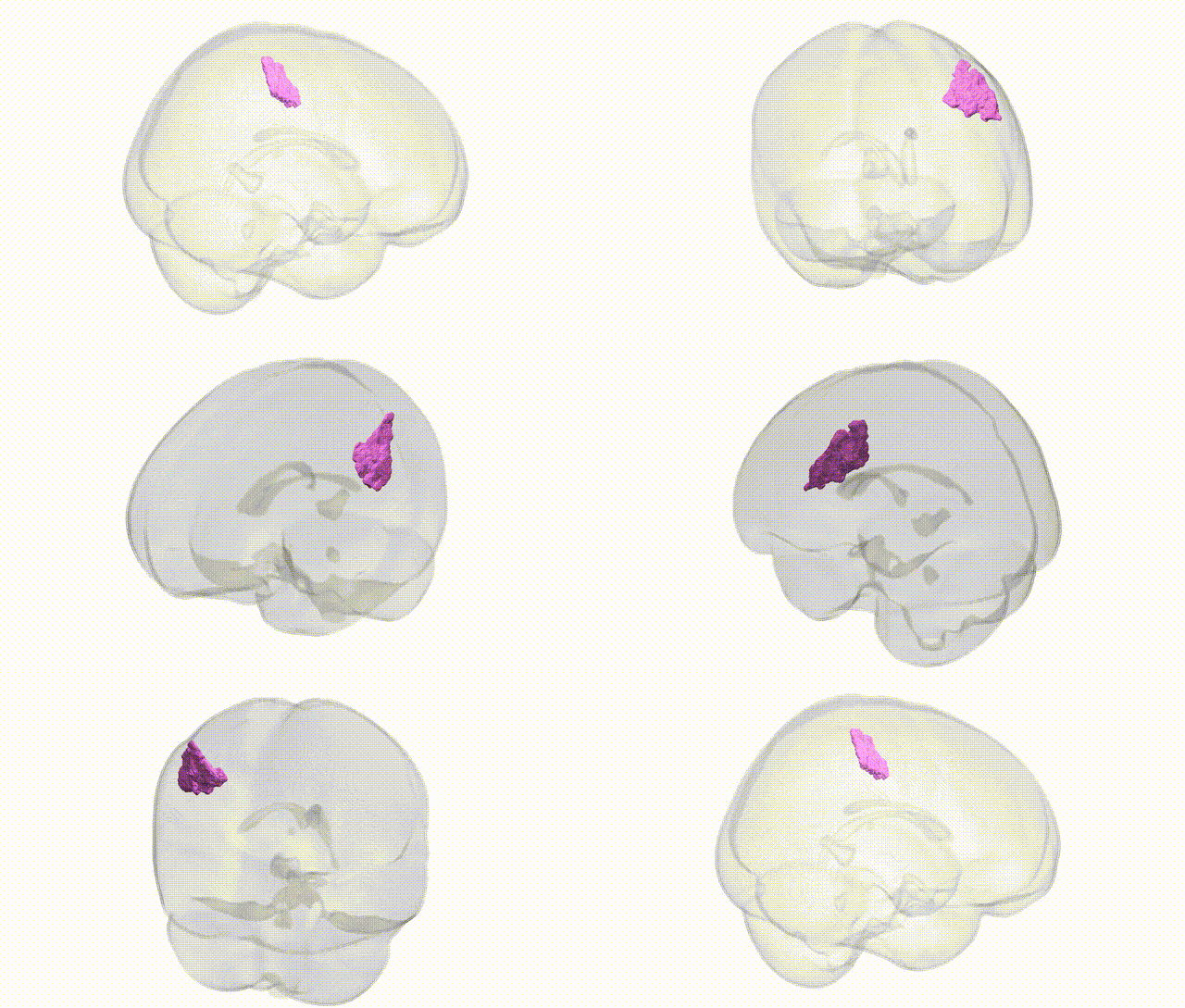
Full Quality Version: Download MP4
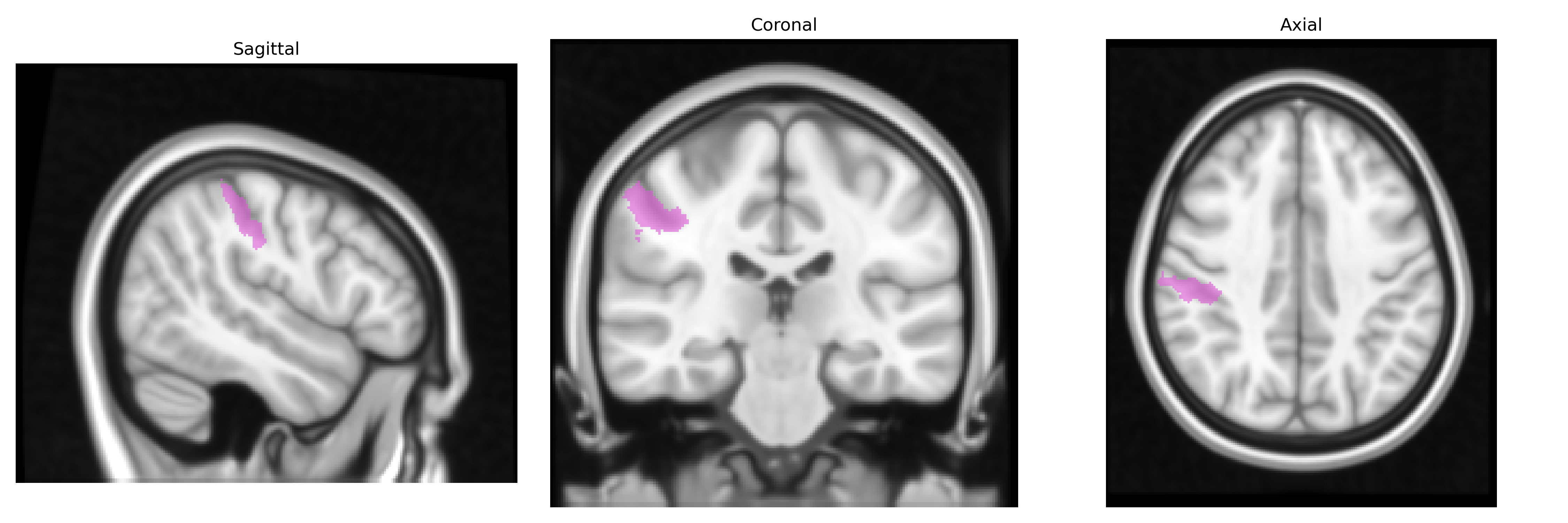
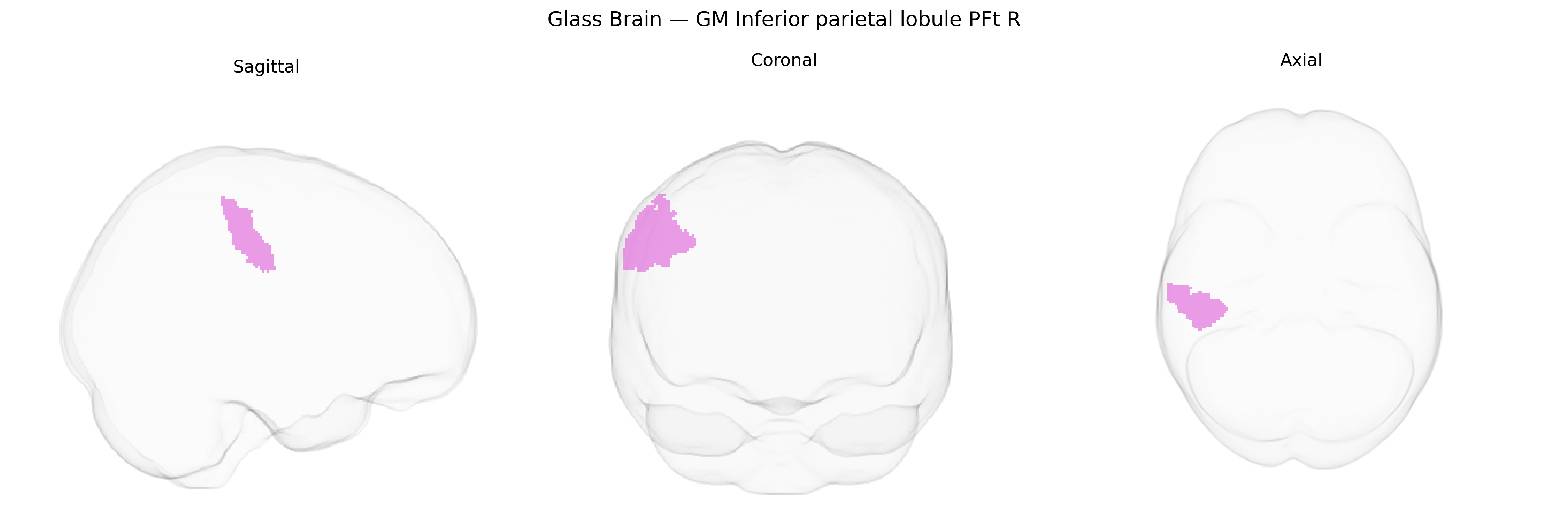
Wali Sidiqyar*, Gaurav Rudravaram*, Elyssa M. McMaster, Trent M. Schwartz, Adam M. Saunders, Kurt G. Schilling, Bennett A. Landman "Introducing SPINS: A Shared Public Visualization Library of Neuroanatomical Structures." Medical Imaging with Deep Learning- short paper
This resource is licensed under CC0 1.0 Universal (Public Domain).