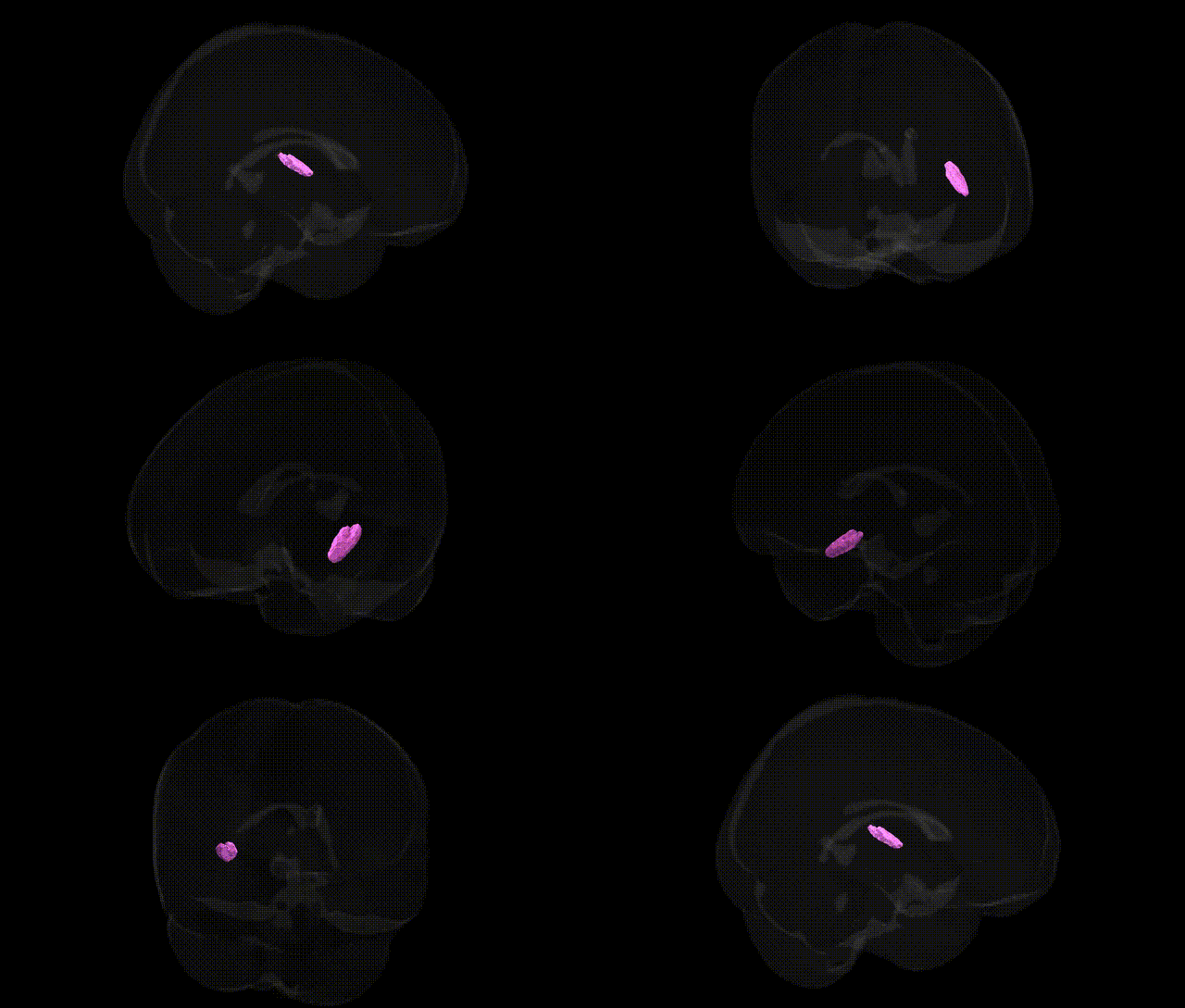
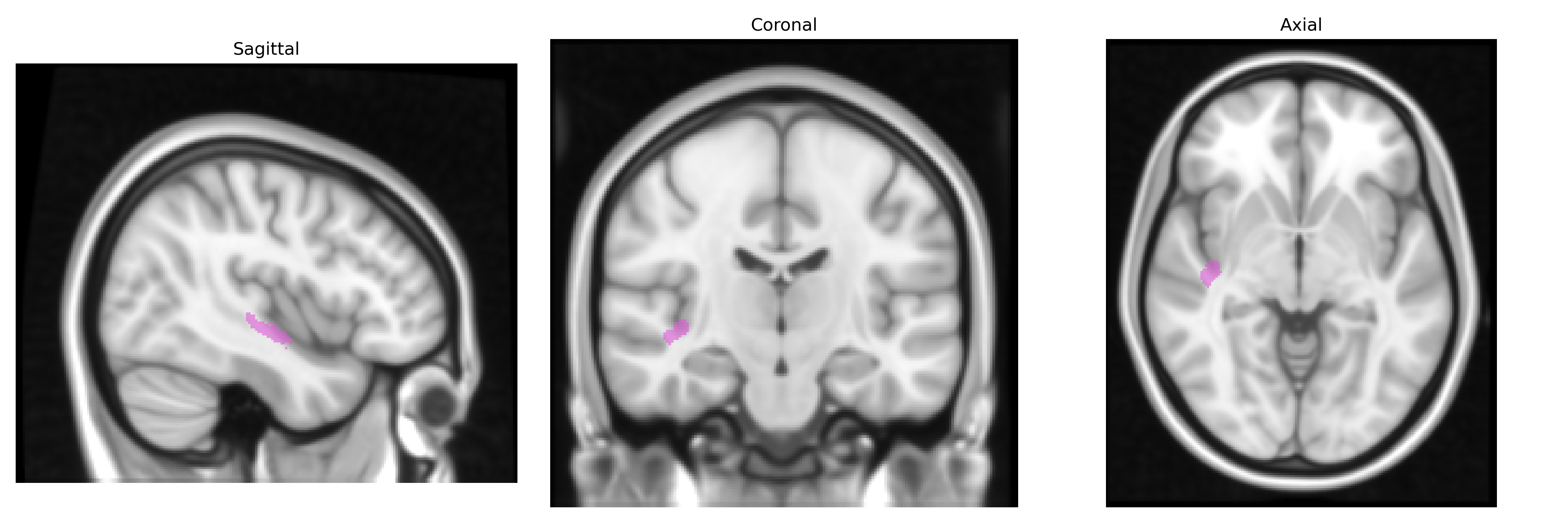
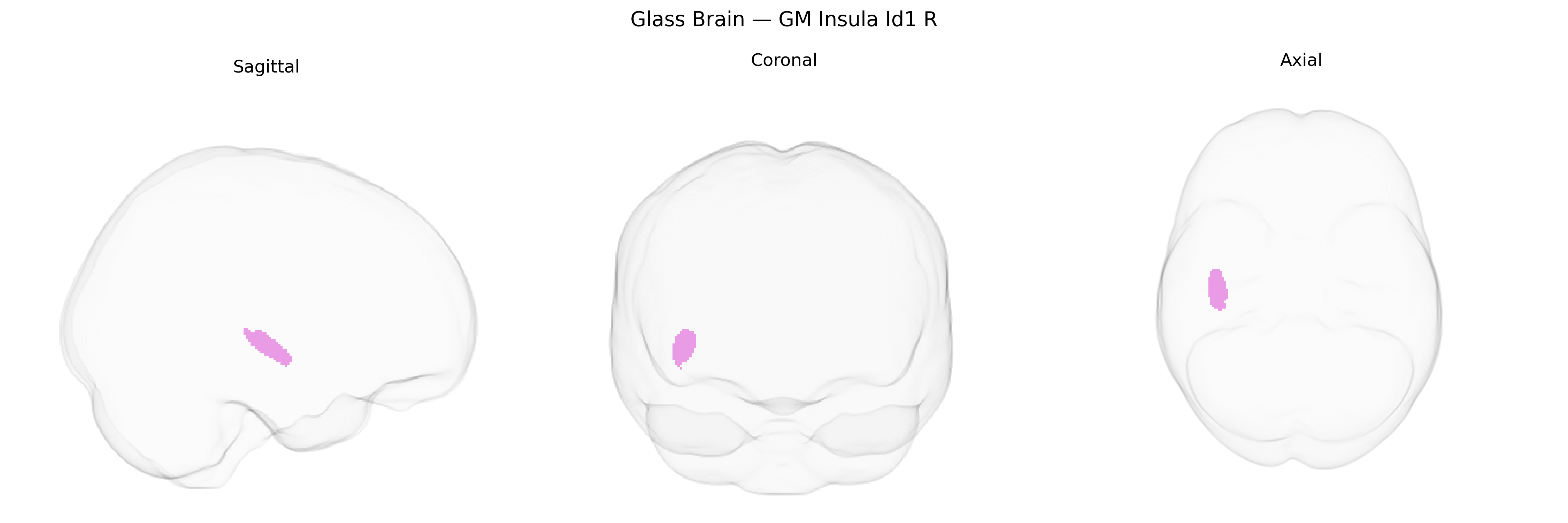
The bilateral GM Insula Id1 R region in the Juelich maxprob thr25 1 mm atlas corresponds to a cytoarchitectonically defined subdivision of the right insular cortex, located deep within the lateral sulcus and covered by portions of the frontal, parietal, and temporal opercula. This granular or dysgranular insular area participates in multimodal integration of interoceptive, somatosensory, visceral, and affective information, and is implicated in processes such as autonomic regulation, pain perception, and emotional awareness. Neuronal organization within Id1 reflects a transition zone between primary sensory territories and higher-order associative fields, supporting its role as a hub linking limbic, frontal, and sensory networks. There is no direct link for “Insula Id1”; a related structure is the Insular cortex.
The bilateral gray-matter insula (Id1, right hemisphere) from the Juelich maxprob thr25 1 mm atlas lies within a broader insular network for which genetic associations have been inferred primarily through imaging–genetics and GWAS of cortical structure and connectivity rather than region-specific loci. Large-scale studies (e.g., ENIGMA and UK Biobank) have implicated common variants near genes involved in neurodevelopment, synaptic function, and axon guidance—such as MIR124-1, TCF4, GRIN2B, and genes in the Wnt and neuregulin–ErbB pathways—in interindividual variation of insular cortical thickness, surface area, and volume. Polygenic risk scores for schizophrenia, bipolar disorder, major depressive disorder, and autism spectrum disorder show associations with structural and functional alterations of the insula, including reduced volume and altered connectivity, consistent with its role in salience processing and interoception. GWAS of traits such as neuroticism, risk-taking behavior, pain sensitivity, and substance use have linked insula-related structural and functional measures to variants in genes regulating stress response, dopaminergic and glutamatergic signaling, and inflammatory pathways. While no major GWAS has isolated variants uniquely specific to the Juelich Id1 subregion, convergent evidence supports a polygenic architecture in which many small-effect variants influence insular morphology and function, thereby contributing to vulnerability for psychiatric and neurological disorders involving salience, emotion, and bodily-awareness networks.
Overview generated by GPT-4o (2026).
Region ID: 117
Hemisphere: bilateral
Atlas: Juelich maxprob thr25 1mm
Full Quality Version: Download MP4
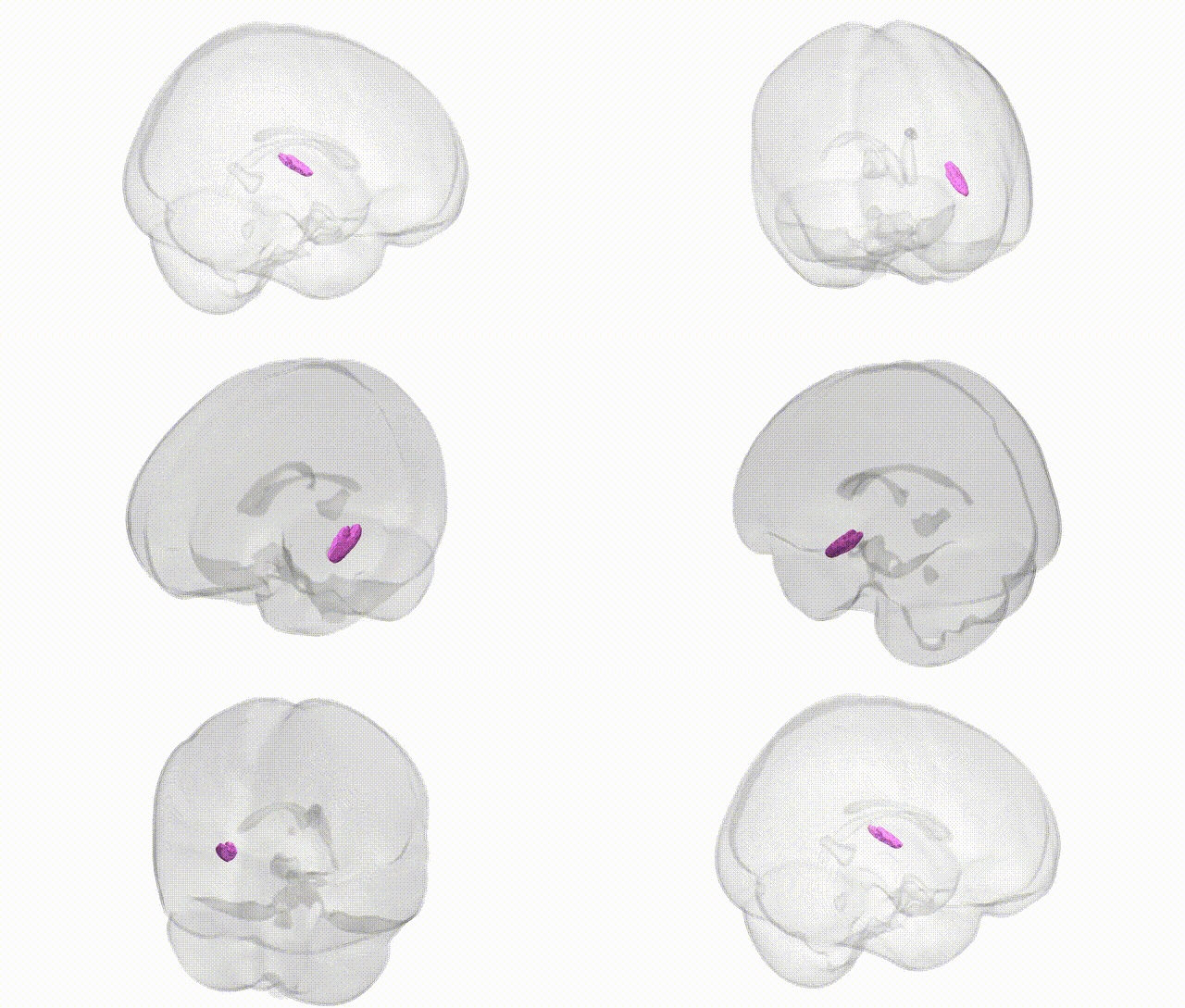
Full Quality Version: Download MP4
Wali Sidiqyar*, Gaurav Rudravaram*, Elyssa M. McMaster, Trent M. Schwartz, Adam M. Saunders, Kurt G. Schilling, Bennett A. Landman "Introducing SPINS: A Shared Public Visualization Library of Neuroanatomical Structures." Medical Imaging with Deep Learning- short paper
This resource is licensed under CC0 1.0 Universal (Public Domain).