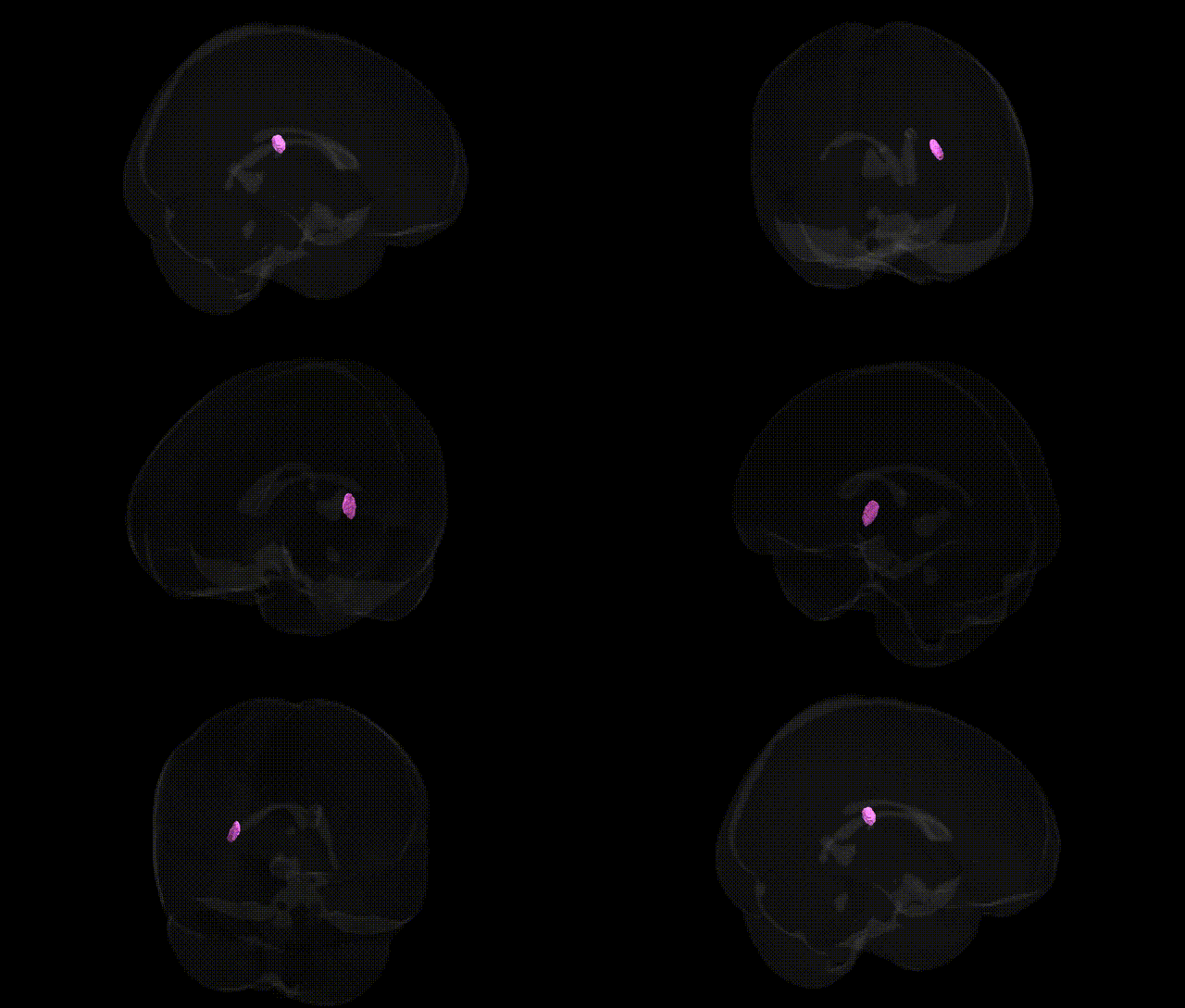
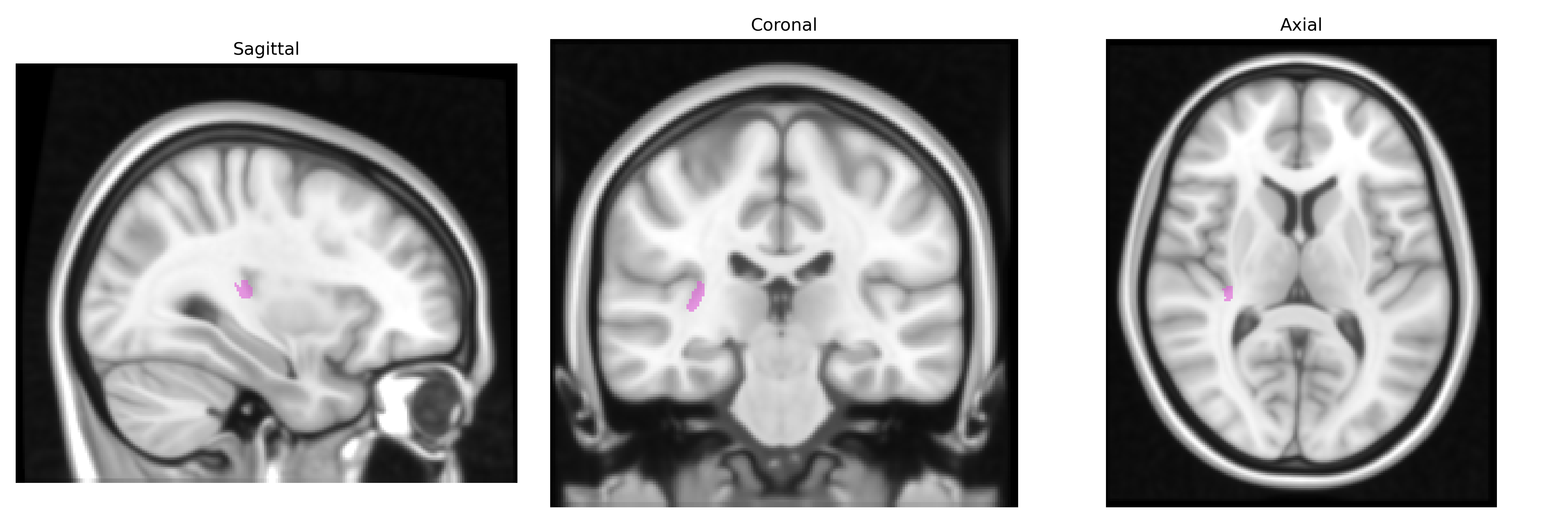
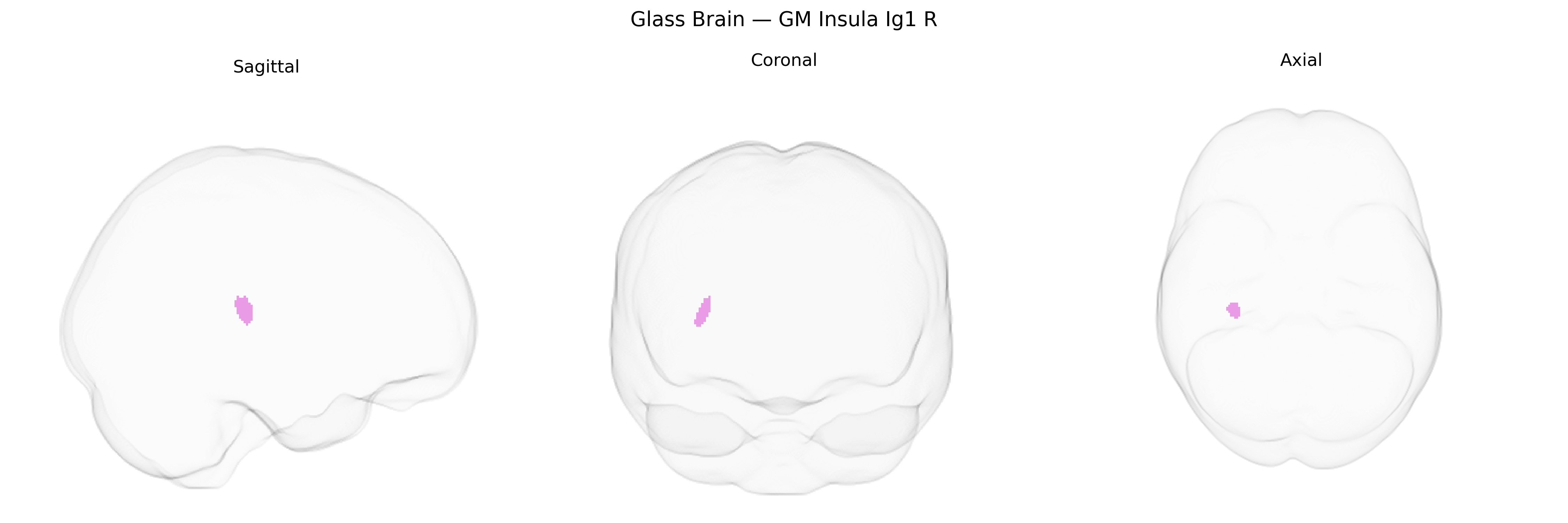
The bilateral GM Insula Ig1 R region, as defined in the Juelich maxprob thr25 1mm Atlas, corresponds to a granular subregion of the right insular cortex involved in multimodal integration of somatosensory, visceral, and nociceptive information, with strong connections to limbic, prefrontal, and sensory association areas. This insular subfield participates in interoception, autonomic regulation, and affective processing, contributing to the representation of internal bodily states and their emotional significance. Cytoarchitectonically, Ig1 is characterized by a prominent granular layer IV and distinct laminar organization compared with agranular and dysgranular insular territories, reflecting its role as a sensory-like integration hub. There is no direct Wikipedia article for “Insula Ig1,” but it is part of the insular cortex: Insular cortex.
The bilateral gray matter insular region labeled Ig1 R in the Jülich maxprob atlas corresponds broadly to anterior-to-mid insula territories implicated in salience processing, interoception, and affect regulation, and genetic associations identified in imaging genetics and GWAS work have largely been indirect, via insula volume, cortical thickness, or functional connectivity rather than Ig1 R specifically. Large-scale ENIGMA and UK Biobank imaging–genetics studies have shown that insular cortical volume and surface area exhibit significant SNP-based heritability and genome-wide associations with variants in genes related to neurodevelopment, synaptic signaling, and cell adhesion (for example in or near genes such as HMGA2, FOXO3, and others whose effects are not exclusive to insula), and polygenic scores for major depression, schizophrenia, and bipolar disorder have been linked to structural and functional alterations in insular cortex. GWAS of psychiatric and neurological disorders—including major depressive disorder, schizophrenia, bipolar disorder, addiction phenotypes, and chronic pain—frequently implicate networks in which the insula is a key hub, and imaging–genetic mediation analyses show that genetic risk for these conditions can partly manifest through insular morphology or connectivity changes. Additional associations involve traits such as anxiety sensitivity, neuroticism, risk-taking, smoking and alcohol use, and autonomic/interoceptive measures, where insula structure or function mediates or correlates with genetic risk, but current literature does not provide region-level GWAS results at the granularity of the Ig1 R subfield, so genetic associations remain best characterized at the level of the broader insular cortex rather than this specific atlas-defined parcel.
Overview generated by GPT-4o (2026).
Region ID: 119
Hemisphere: bilateral
Atlas: Juelich maxprob thr25 1mm
Full Quality Version: Download MP4
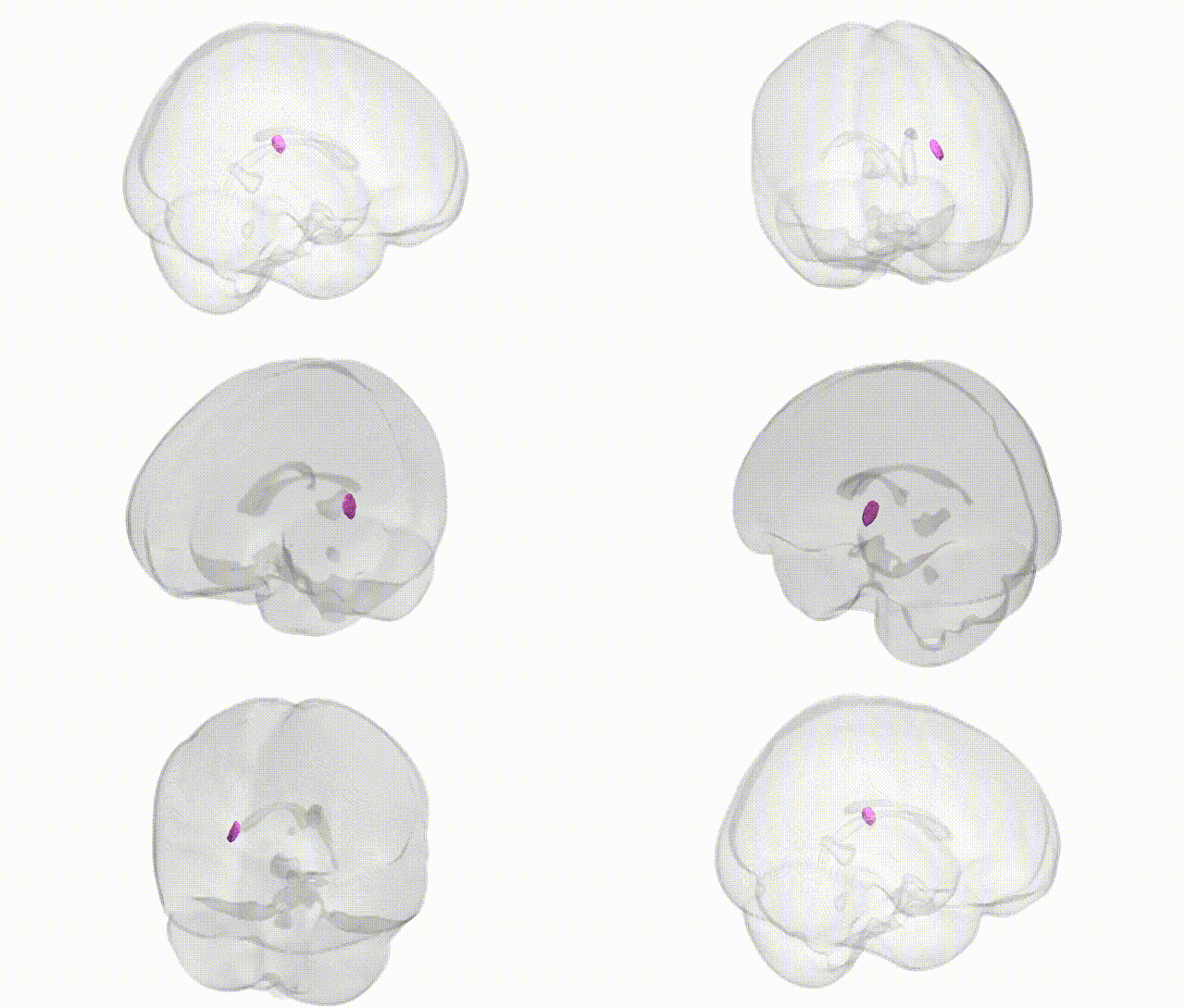
Full Quality Version: Download MP4
Wali Sidiqyar*, Gaurav Rudravaram*, Elyssa M. McMaster, Trent M. Schwartz, Adam M. Saunders, Kurt G. Schilling, Bennett A. Landman "Introducing SPINS: A Shared Public Visualization Library of Neuroanatomical Structures." Medical Imaging with Deep Learning- short paper
This resource is licensed under CC0 1.0 Universal (Public Domain).