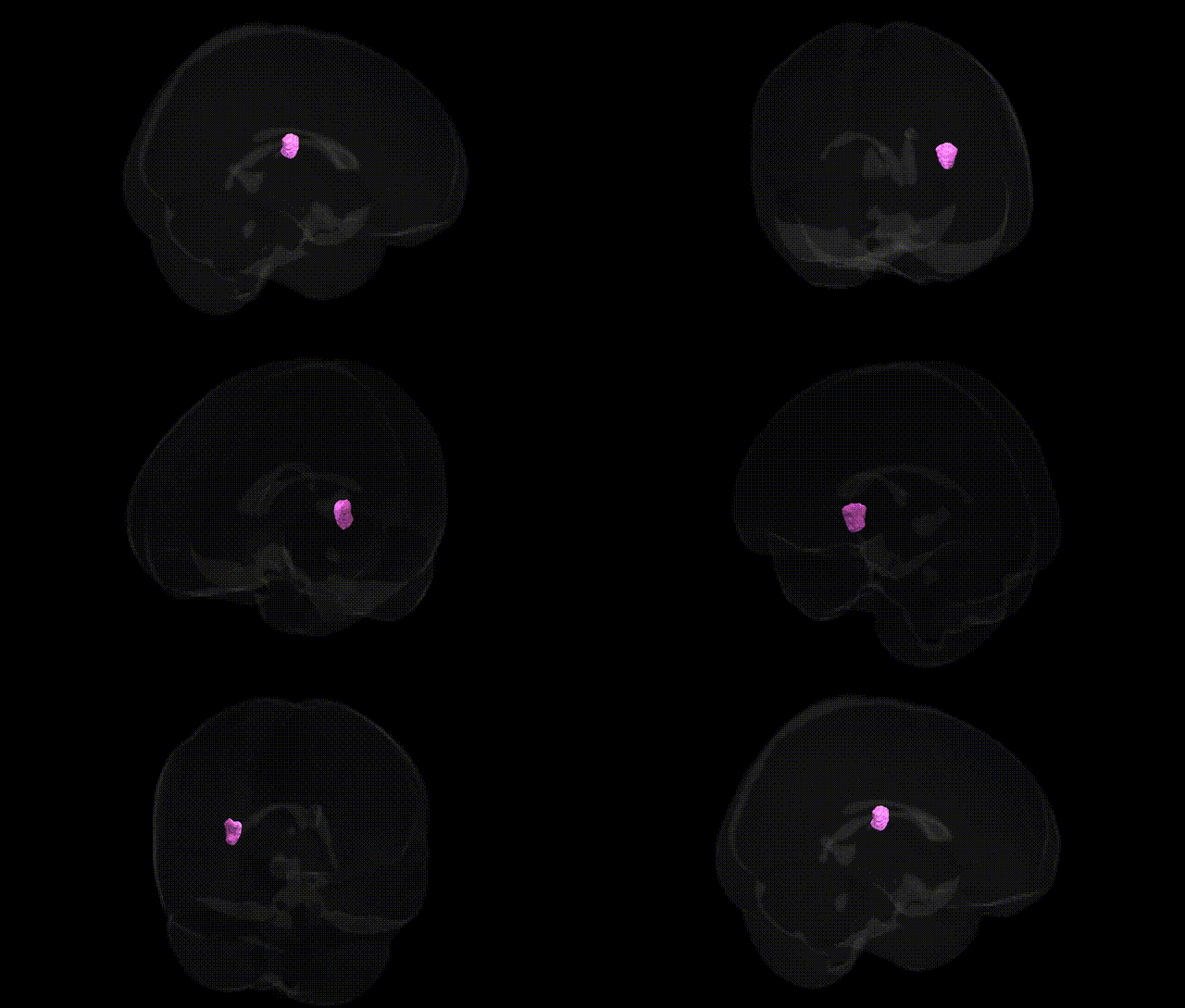
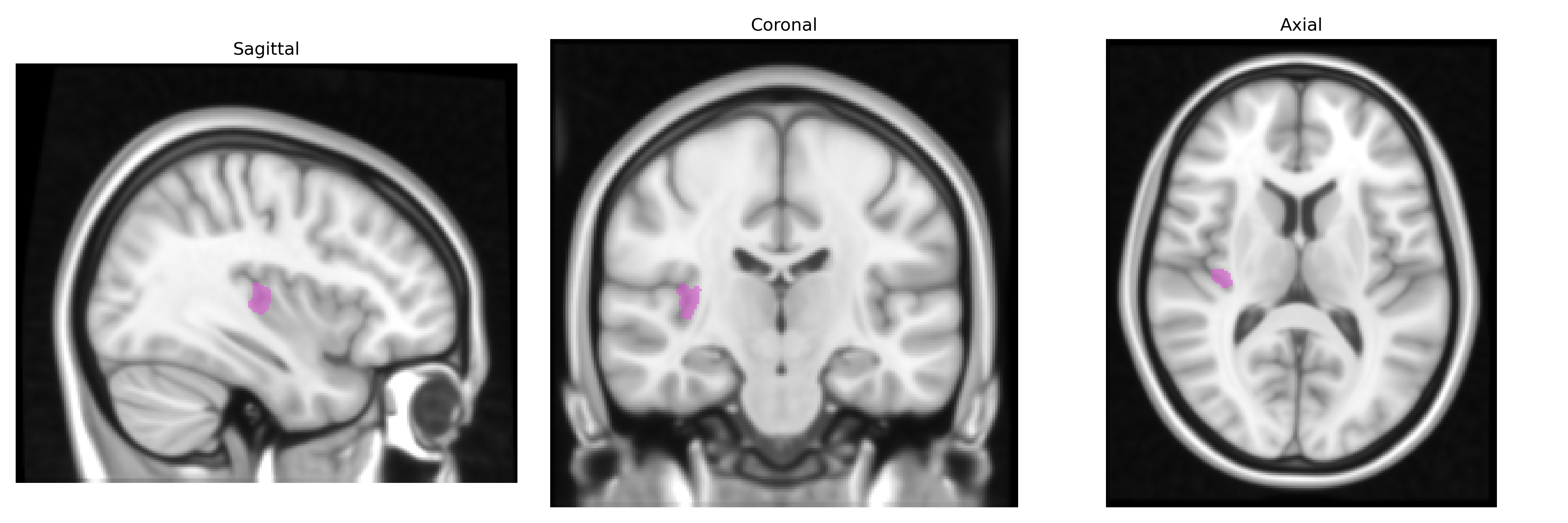
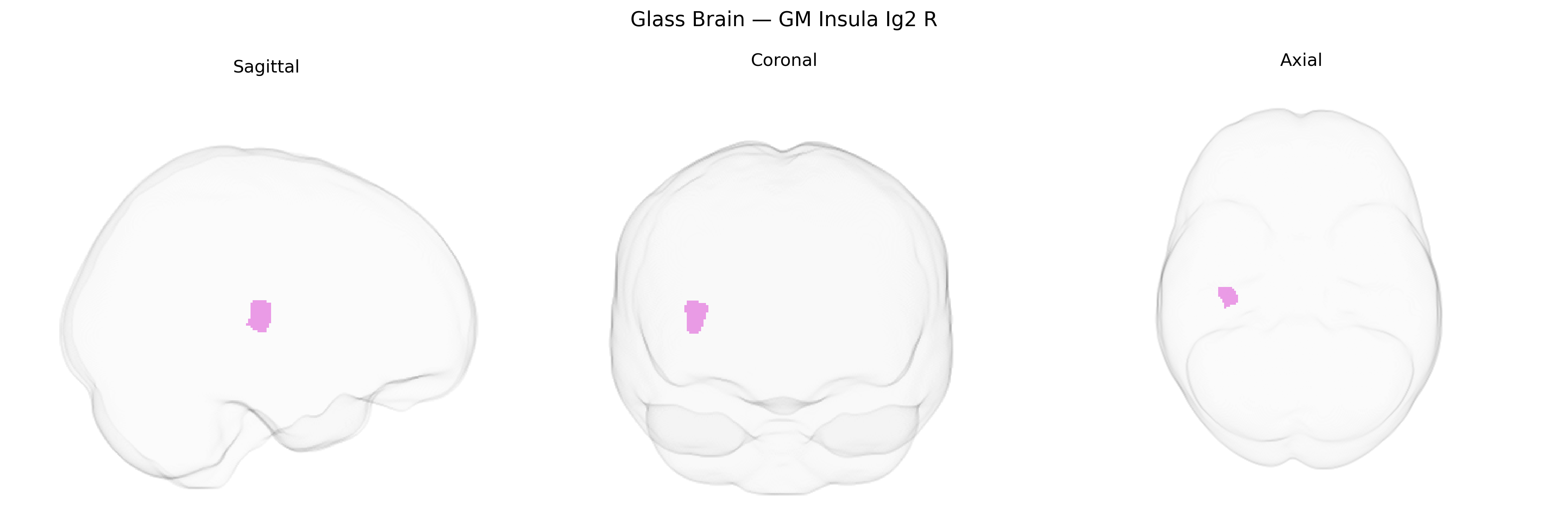
The bilateral GM Insula Ig2 R region in the Juelich maxprob thr25 1mm Atlas corresponds to a granular subdivision of the right insular cortex, typically implicated in sensory integration, interoceptive processing, and multimodal information relay between limbic, somatosensory, and higher-order association areas. Anatomically, this granular insular region lies deep within the lateral sulcus, forming part of the insular lobe buried beneath the frontal, parietal, and temporal opercula, and is characterized by a distinct six-layered neocortical cytoarchitecture compared to adjacent agranular and dysgranular insular fields. Functionally, Ig2 has been associated with processing of bodily states (e.g., visceral and somatosensory inputs), contributing to homeostatic regulation, autonomic control, and aspects of affective and salience-related networks. There is no direct link for “Insula Ig2” as a named region; a related and encompassing structure is the Insular cortex.
The bilateral GM Insula Ig2 R region, corresponding to granular insular cortex involved in interoception, salience processing, and affective integration, has been implicated in several genetic and imaging-genetics studies, although direct, region-specific GWAS hits for the Juelich “Ig2 R” parcel remain limited. Polygenic and SNP-based analyses for cortical thickness, surface area, and subcortical/insular volumes (e.g., from ENIGMA and UK Biobank–based GWAS) have associated insular morphology with common variants in genes such as HMGA2, IGF1, and MAPT, as well as loci near genes involved in neurodevelopment, synaptic plasticity, and neuronal migration. Insular measures show significant genetic correlations and shared polygenic architecture with psychiatric and neurological conditions including major depressive disorder, schizophrenia, bipolar disorder, autism spectrum disorder, and substance use traits, as well as with pain sensitivity and cardiometabolic risk factors that engage interoceptive and autonomic circuits. Some risk variants for anxiety and depressive traits, particularly those influencing corticolimbic networks, have demonstrated effects on insular structure or connectivity, suggesting that genetic liability to these disorders partially manifests through altered insular morphology and function; however, precise mapping of specific loci to the Juelich Ig2 R subdivision remains an ongoing area of research rather than a completed, region-exclusive genetic characterization.
Overview generated by GPT-4o (2026).
Region ID: 121
Hemisphere: bilateral
Atlas: Juelich maxprob thr25 1mm
Full Quality Version: Download MP4
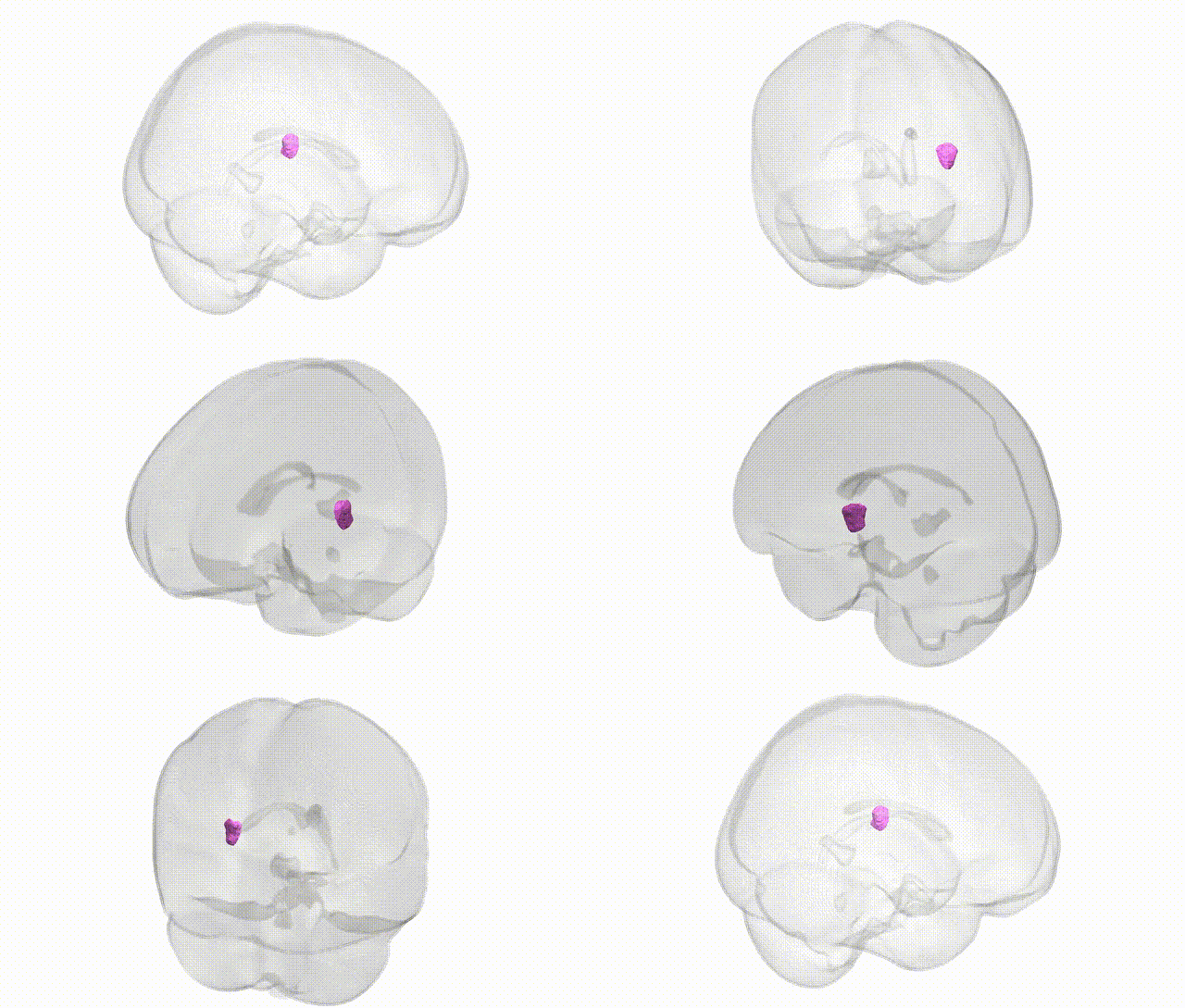
Full Quality Version: Download MP4
Wali Sidiqyar*, Gaurav Rudravaram*, Elyssa M. McMaster, Trent M. Schwartz, Adam M. Saunders, Kurt G. Schilling, Bennett A. Landman "Introducing SPINS: A Shared Public Visualization Library of Neuroanatomical Structures." Medical Imaging with Deep Learning- short paper
This resource is licensed under CC0 1.0 Universal (Public Domain).