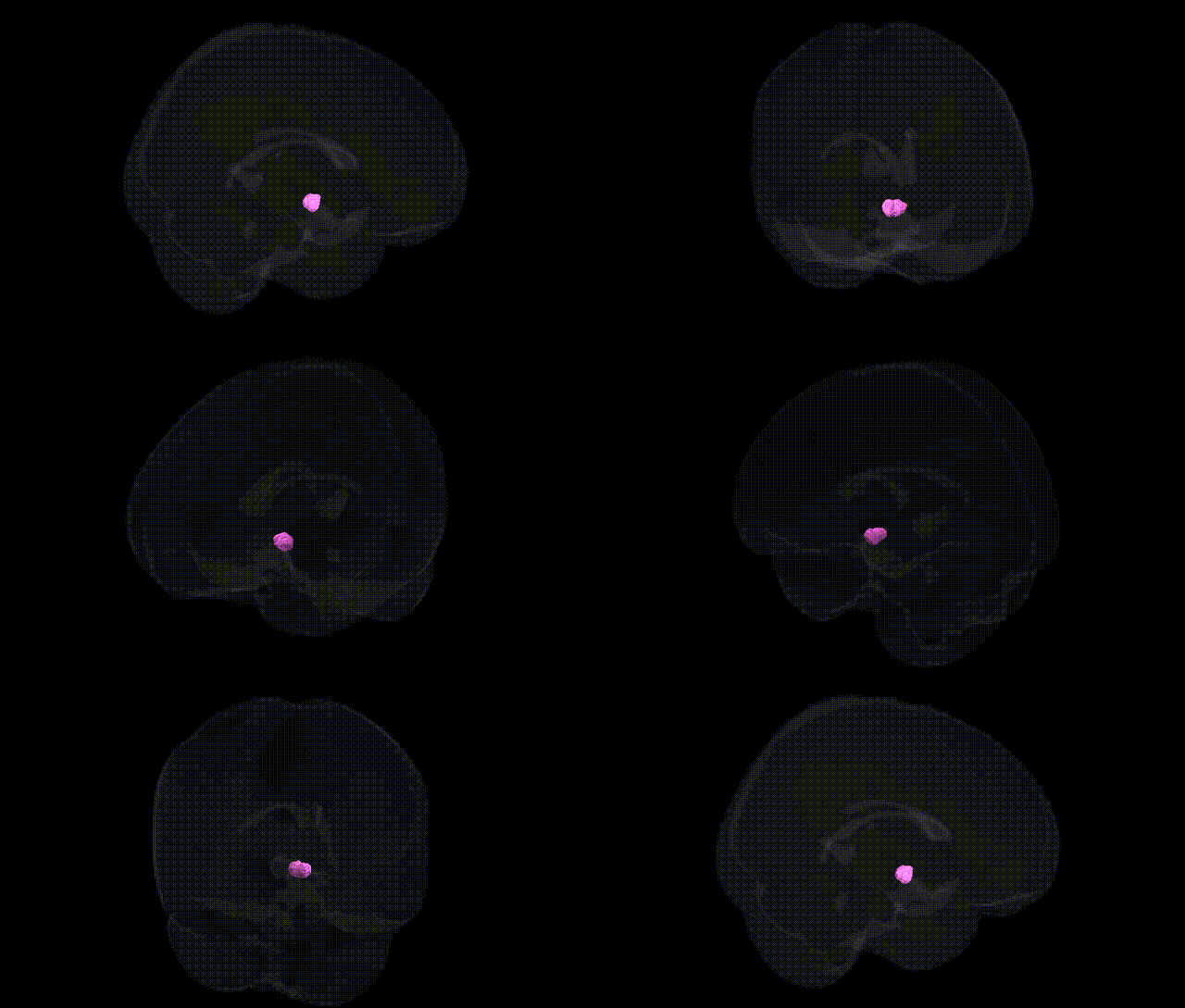
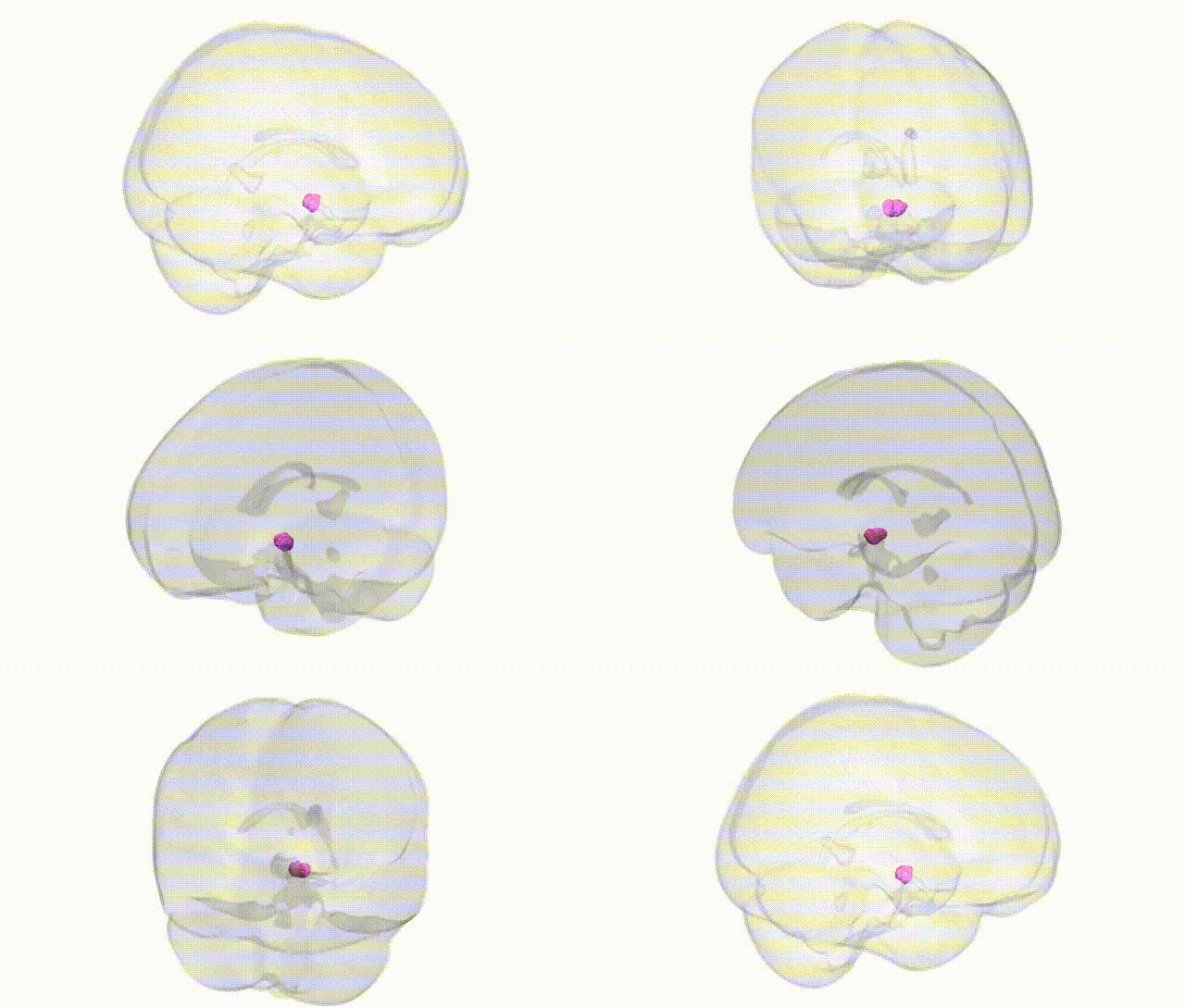
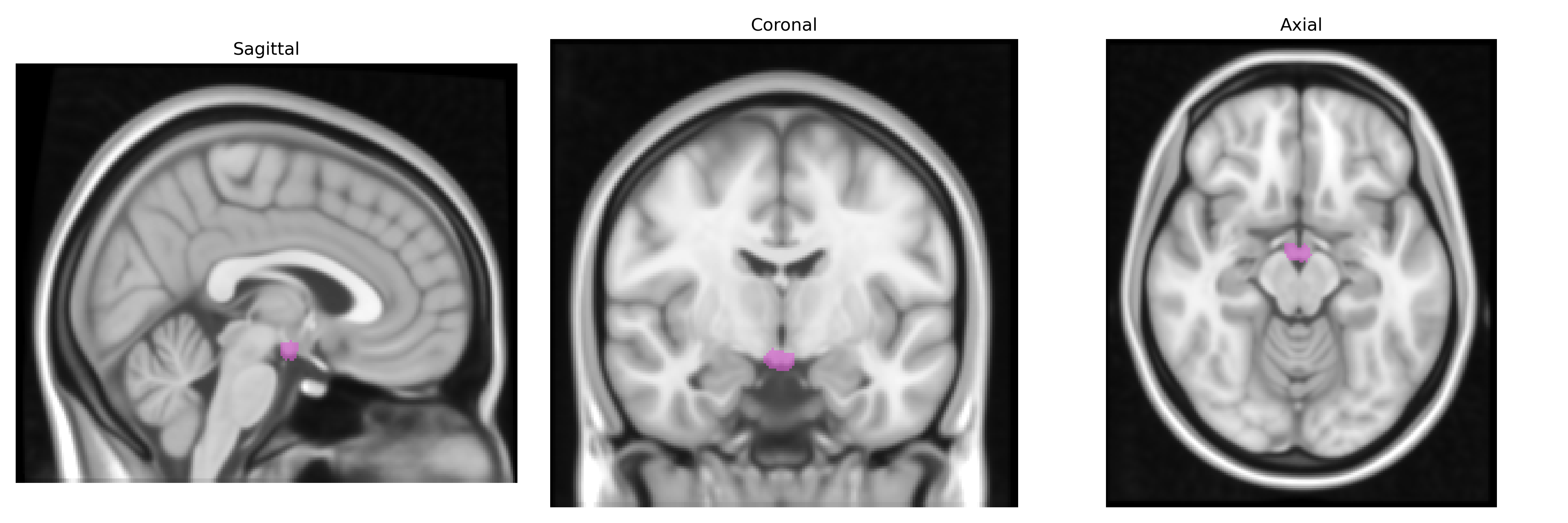
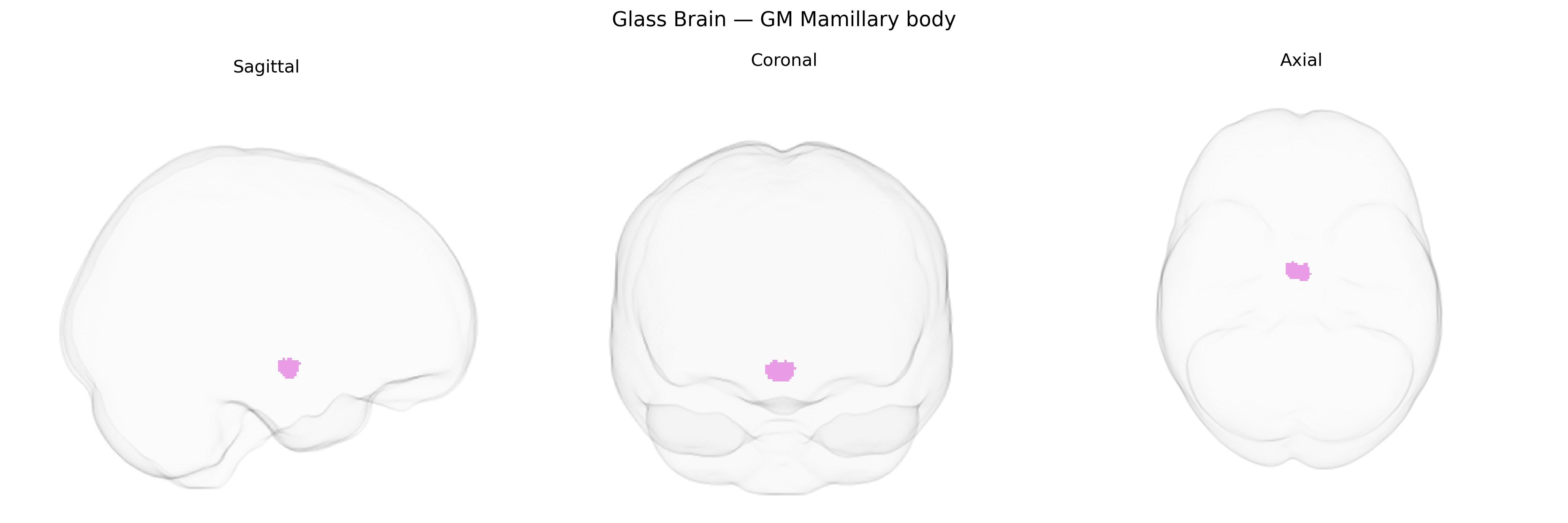
The bilateral GM mamillary body region, as defined in the Juelich maxprob thr25 1 mm atlas, corresponds to the paired mammillary bodies of the hypothalamus, which are small, rounded structures located on the ventral surface of the diencephalon at the posterior end of the hypothalamus. These nuclei are integral components of the limbic system and form a key relay within the Papez circuit, receiving major input from the hippocampal formation via the fornix and projecting predominantly to the anterior thalamic nuclei through the mammillothalamic tract. Functionally, the mammillary bodies are involved in memory processing, particularly recollective and spatial memory, and lesions in this region are classically associated with memory impairment and Wernicke–Korsakoff syndrome. There is no direct Wikipedia article specifically for the “mamillary body” GM region from the Juelich atlas; a closely related and encompassing structure is the hypothalamus: Hypothalamus.
The bilateral mammillary bodies, small hypothalamic structures critical for episodic memory and part of the Papez circuit, have relatively sparse but emerging genetic associations in human studies; most evidence is indirect, as large-scale GWAS and imaging-genetics consortia (e.g., ENIGMA, UK Biobank) typically assess broader limbic or hypothalamic regions rather than the Juelich-defined mammillary nuclei specifically. Variants in genes implicated in diencephalic development and limbic circuitry—such as those affecting Wnt, FGF, and SHH pathways, as well as transcription factors like PAX6 and OTX2—have been associated with midline and hypothalamic malformations that can include mammillary body anomalies, often presenting clinically as memory impairment or diencephalic amnesia. Copy number variants and rare mutations affecting thalamic–hypothalamic networks (e.g., in KIAA1279, TUBB2B, or broader 22q11.2 deletions) occasionally show structural alterations encompassing mammillary and adjacent hypothalamic regions, though these are typically reported at a syndromic rather than region-specific level. GWAS of memory performance, Alzheimer’s disease, and schizophrenia have repeatedly implicated genes involved in synaptic plasticity (e.g., APOE, CLU, BIN1, GRIN2B) and large-scale limbic connectivity, in which the mammillary bodies serve as a relay, but these studies commonly report hippocampal or global limbic associations rather than isolating mammillary volume or function. Overall, genetic influences on the bilateral mammillary bodies are inferred mainly from broader diencephalic, limbic, or hypothalamic genetic findings and from rare developmental or degenerative conditions with structural involvement of this region, while specific GWAS signals tied uniquely to the Juelich bilateral GM mammillary body ROI remain limited or unreported as of current literature.
Overview generated by GPT-4o (2026).
Region ID: 105
Hemisphere: bilateral
Atlas: Juelich maxprob thr25 1mm
Full Quality Version: Download MP4
Full Quality Version: Download MP4
Wali Sidiqyar*, Gaurav Rudravaram*, Elyssa M. McMaster, Trent M. Schwartz, Adam M. Saunders, Kurt G. Schilling, Bennett A. Landman "Introducing SPINS: A Shared Public Visualization Library of Neuroanatomical Structures." Medical Imaging with Deep Learning- short paper
This resource is licensed under CC0 1.0 Universal (Public Domain).