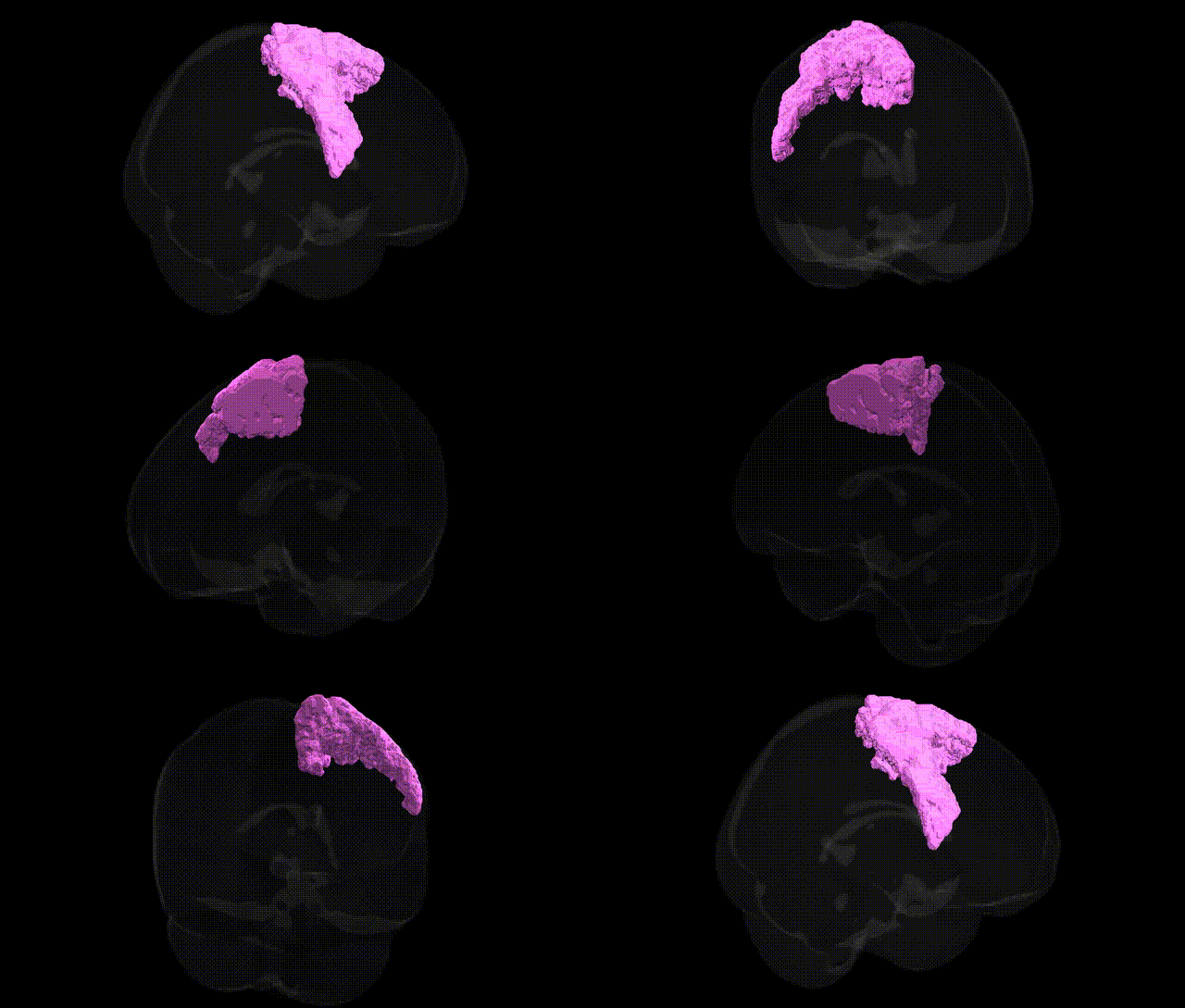
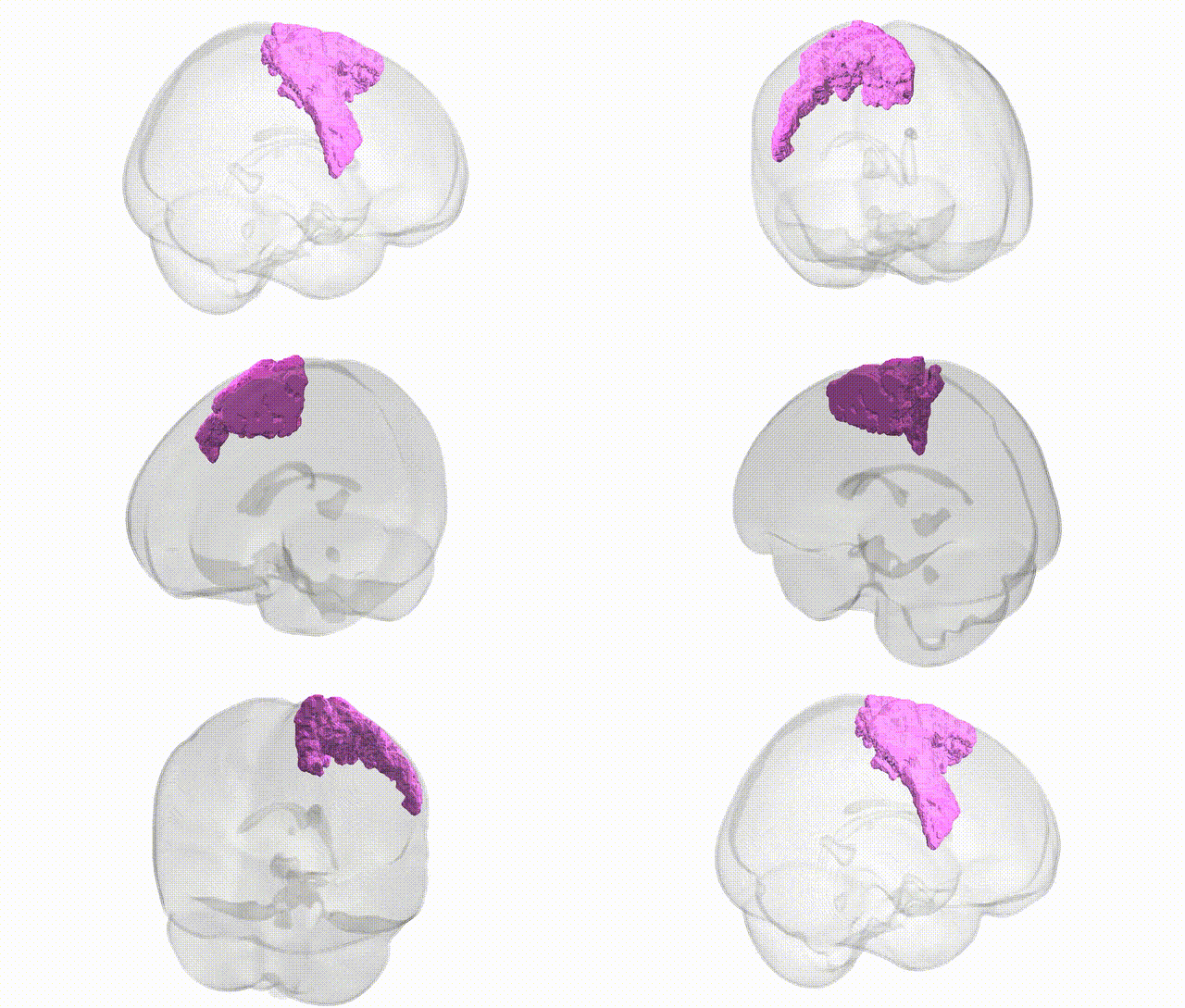
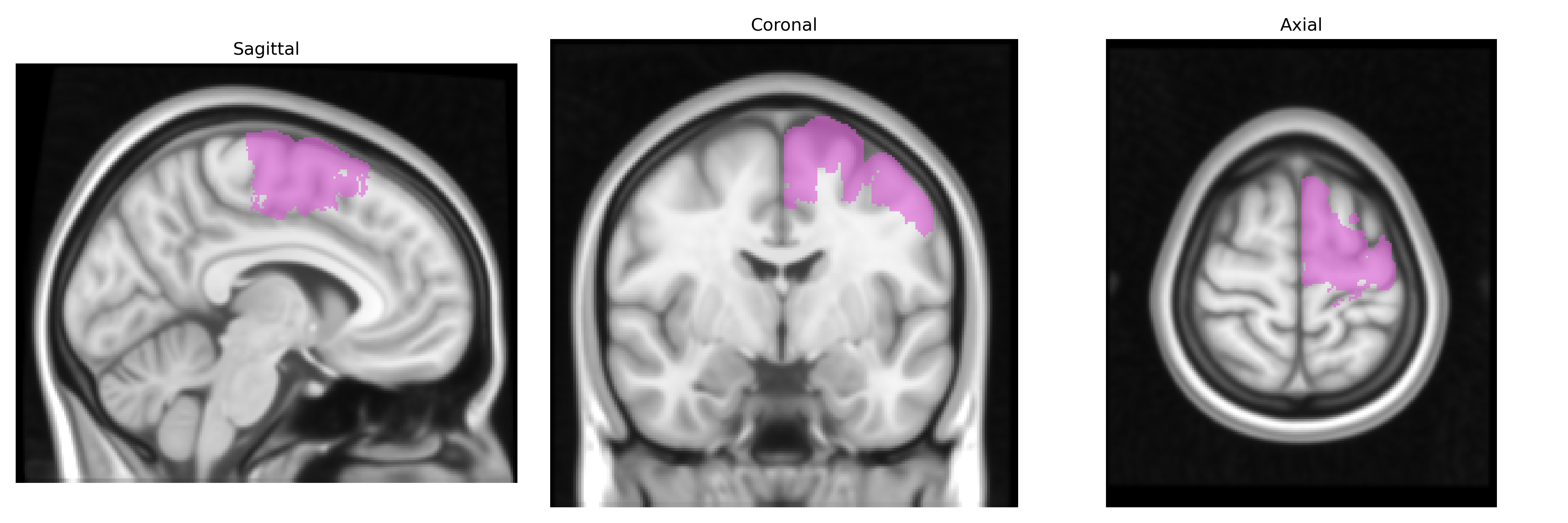
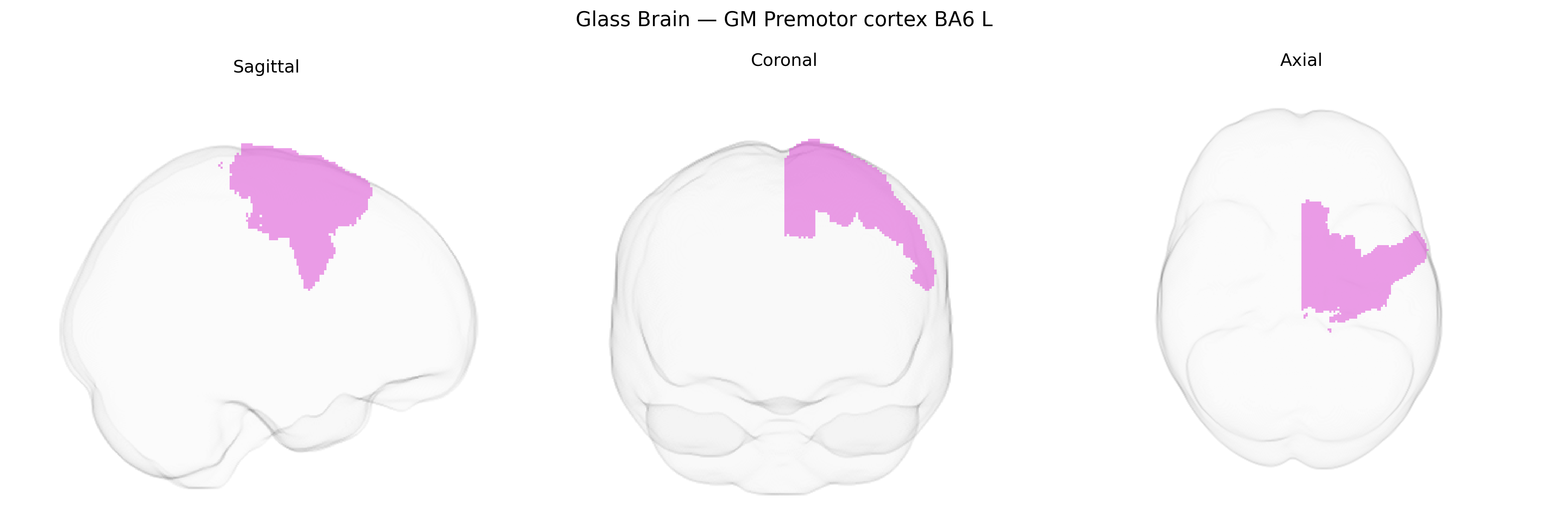
The bilateral GM Premotor cortex BA6 L, as defined in the Juelich maxprob thr25 1 mm atlas, corresponds to the left-hemispheric portion of Brodmann area 6 within the premotor region of the frontal lobe. This area lies anterior to the primary motor cortex (BA4) and is involved in higher-order motor control, including the planning, selection, and preparation of voluntary movements, as well as the integration of sensory information to guide motor output. It contributes to motor sequence organization, motor imagery, and aspects of sensorimotor learning, and is functionally connected with primary motor, parietal, and subcortical motor structures. There is no direct Wikipedia article specifically for “Premotor cortex BA6 L,” but it is part of the broader premotor cortex and Brodmann area 6: Premotor cortex, Brodmann area 6.
The bilateral premotor cortex (Brodmann area 6, left hemisphere) in the Juelich maxprob thr25 atlas has been implicated in several genetic and GWAS-based associations, largely through studies of motor function, neurodevelopmental and psychiatric disorders, and brain structural variation. Imaging–genetics and ENIGMA-type consortia analyses have linked common variants in genes involved in synaptic plasticity, neurodevelopment, and axon guidance (such as BDNF, COMT, and various glutamatergic and GABAergic pathway genes) with premotor cortical thickness, surface area, and activation during motor preparation or sequence learning. Large-scale GWAS of cortical morphology have identified multiple loci—often in genes regulating neuronal proliferation, cortical patterning, and myelination—that show significant effects on BA6 or adjacent frontal motor regions, suggesting polygenic influences on its structure. Functionally, premotor BA6 has emerged in genetic risk mapping for movement-related disorders (including Parkinson’s disease and dystonia) through case–control imaging genetics and polygenic risk score studies that show altered activation or connectivity patterns in carriers of risk alleles. In neurodevelopmental and psychiatric conditions such as autism spectrum disorder, ADHD, and schizophrenia, common risk variants and copy-number variants have been associated with structural and functional abnormalities in premotor and supplementary motor regions, implicating BA6 in deficits of motor planning, imitation, and executive control. Additionally, GWAS of traits like handedness, motor skill learning, and risk-taking or impulsivity have reported associations with frontal motor networks that include BA6, although these effects are distributed and not specific to a single region, underscoring that genetic influences on this premotor area are highly polygenic and shared across broader frontal–motor circuits.
Overview generated by GPT-4o (2026).
Region ID: 91
Hemisphere: bilateral
Atlas: Juelich maxprob thr25 1mm
Full Quality Version: Download MP4
Full Quality Version: Download MP4
Wali Sidiqyar*, Gaurav Rudravaram*, Elyssa M. McMaster, Trent M. Schwartz, Adam M. Saunders, Kurt G. Schilling, Bennett A. Landman "Introducing SPINS: A Shared Public Visualization Library of Neuroanatomical Structures." Medical Imaging with Deep Learning- short paper
This resource is licensed under CC0 1.0 Universal (Public Domain).