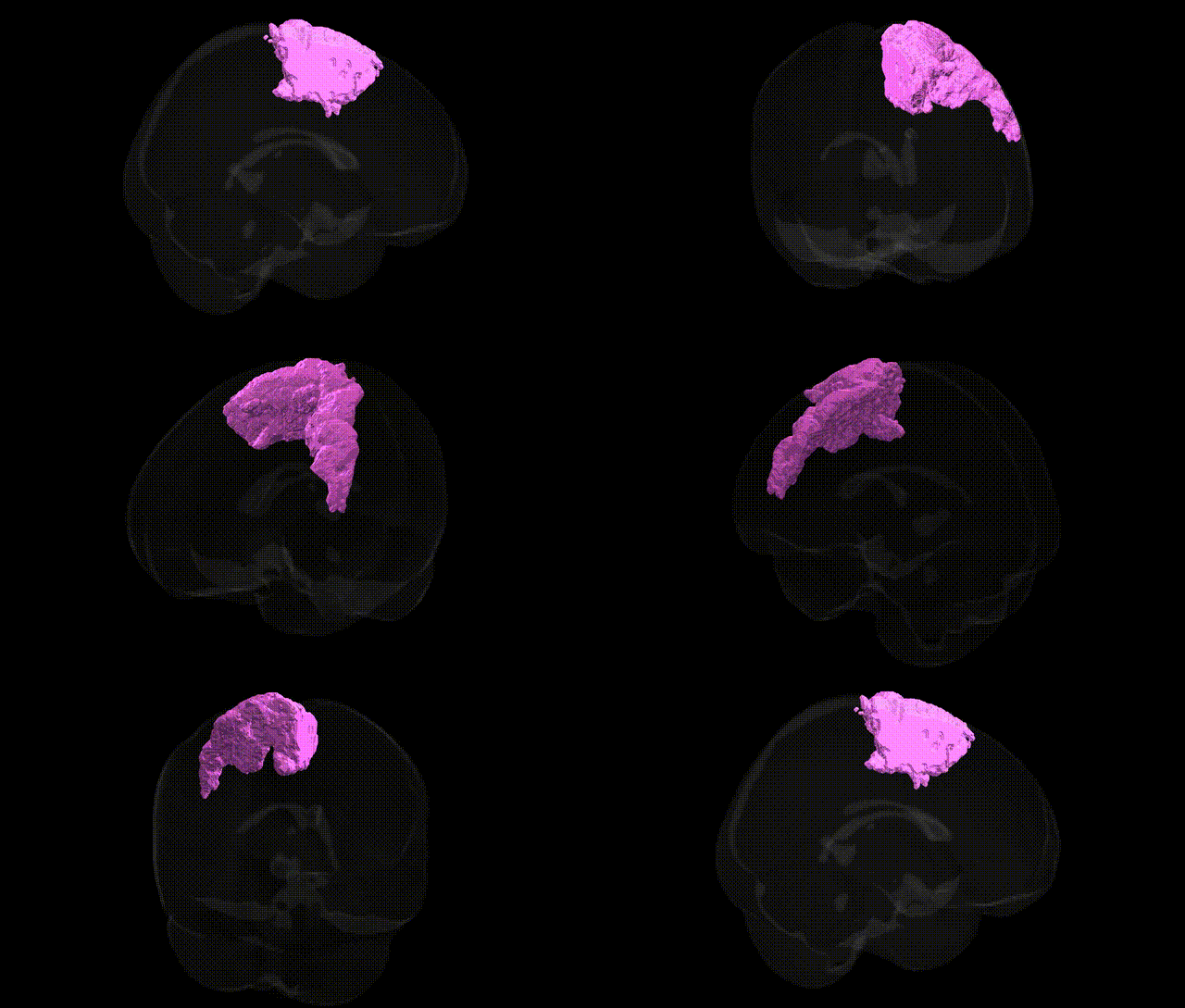
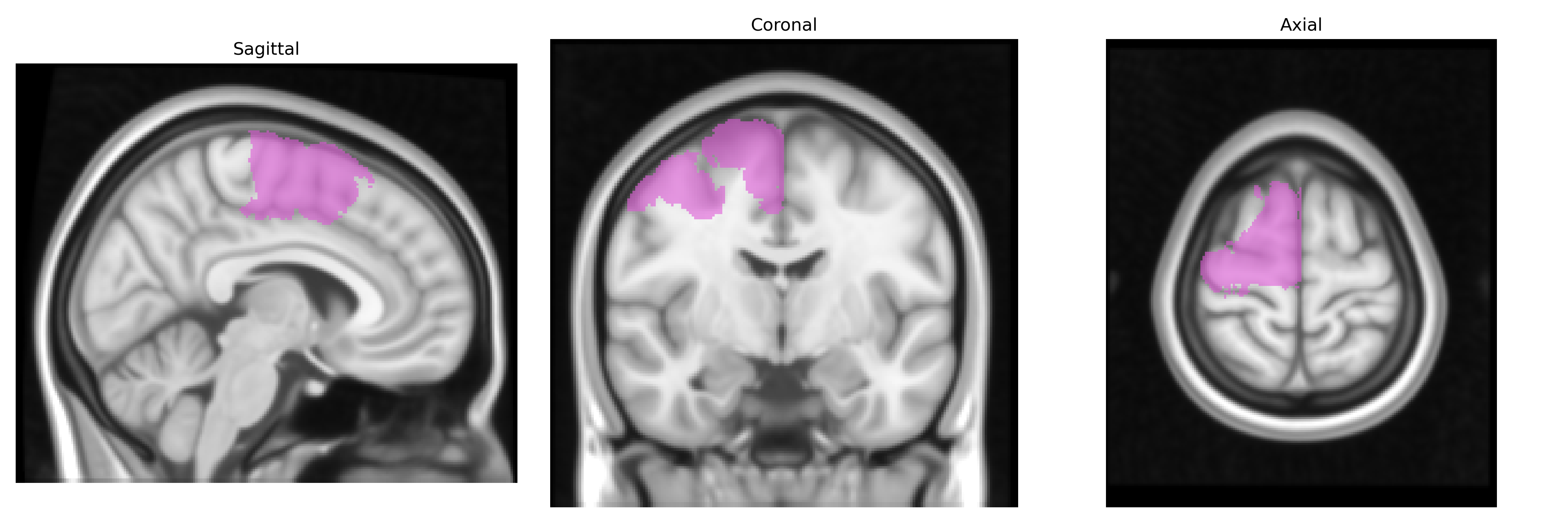
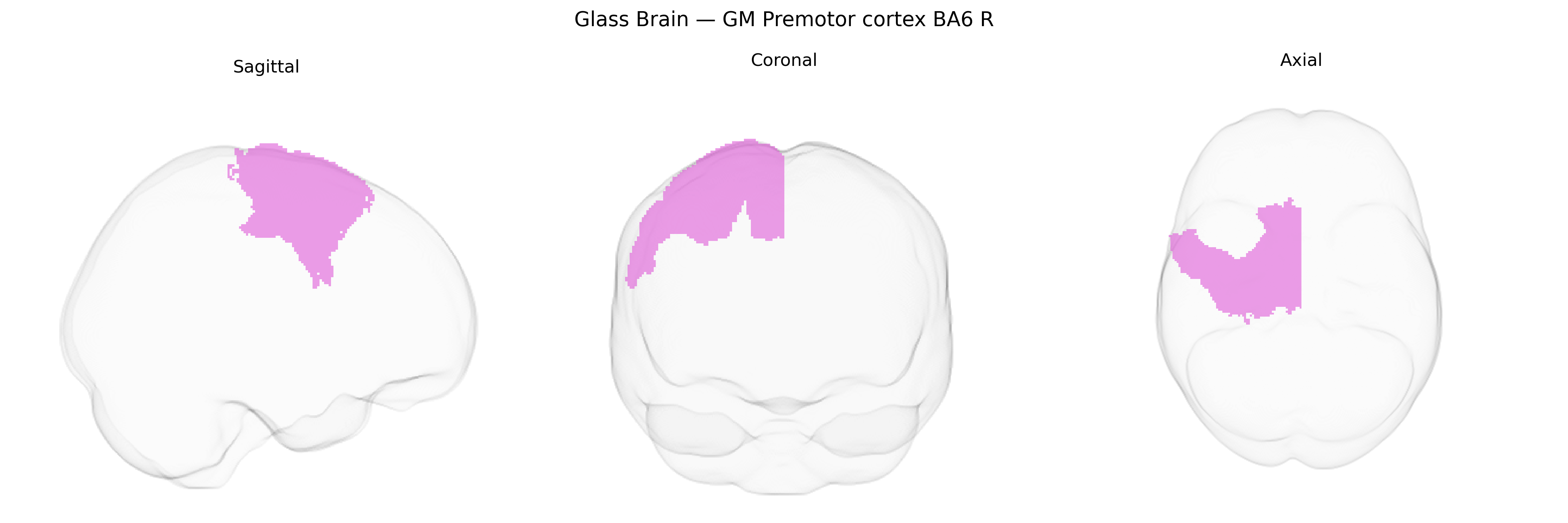
The bilateral GM Premotor cortex BA6 R from the Juelich maxprob thr25 1mm Atlas corresponds to the right-hemispheric portion of Brodmann area 6, a key agranular frontal motor region located anterior to the primary motor cortex (BA4) on the lateral and medial aspects of the precentral gyrus and superior frontal gyrus. This region is classically associated with the premotor cortex and supplementary motor-related areas, integrating sensory, cognitive, and motor information to plan, select, and sequence voluntary movements before execution. It receives multimodal inputs from parietal and prefrontal cortices and projects to primary motor and spinal motor pathways, contributing to motor preparation, posture, and coordination of complex, learned actions, including externally cued movements and bimanual coordination. There is no direct Wikipedia article for “bilateral GM Premotor cortex BA6 R”; a closely related structure is Brodmann area 6.
The bilateral premotor cortex (Brodmann area 6, right-hemisphere–dominant in the Juelich maxprob thr25 1mm atlas) has been implicated in genetic studies primarily through its role in motor control, action planning, and higher-order cognitive–motor integration. Imaging genetics and GWAS-based brain mapping have linked interindividual variation in premotor cortical thickness, surface area, and functional connectivity to common variants in genes involved in neurodevelopment and synaptic plasticity, including components of glutamatergic and GABAergic signaling (e.g., GRIN2B, BDNF-related pathways) and axon guidance or cortical patterning genes (e.g., ROBO/SLIT family and other neurodevelopmental loci), though associations are typically modest and distributed across many regions rather than BA6-specific. Polygenic risk for neuropsychiatric disorders such as schizophrenia, major depressive disorder, bipolar disorder, and autism spectrum disorder has been associated with altered structure and function in premotor and adjacent supplementary motor areas, consistent with GWAS that implicate widespread cortical networks rather than single regions; similar patterns have been reported for attention-deficit/hyperactivity disorder and Tourette syndrome, where genes influencing cortico-striato-thalamo-cortical circuits show effects in premotor territories. Premotor BA6 is also commonly involved in genetic studies of motor and movement-related traits, with structural or functional changes linked to variants associated with Parkinson’s disease and other movement disorders (e.g., LRRK2, SNCA, and broader PD polygenic burden), as well as to complex traits such as motor skill learning, handedness, and physical activity, although these effects arise from highly polygenic architectures with no single gene uniquely or specifically tied to the BA6 premotor region in current GWAS-scale data.
Overview generated by GPT-4o (2026).
Region ID: 92
Hemisphere: bilateral
Atlas: Juelich maxprob thr25 1mm
Full Quality Version: Download MP4
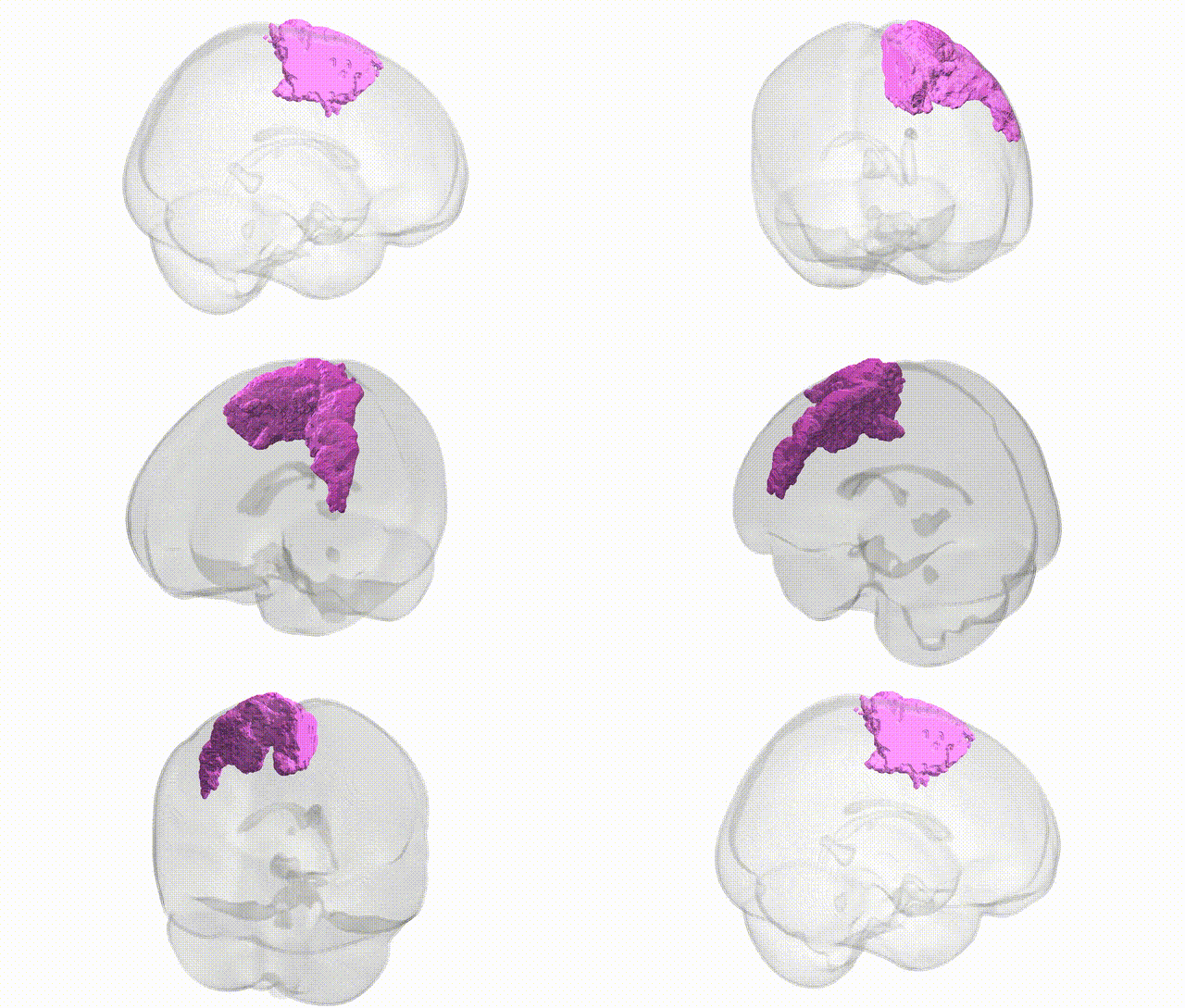
Full Quality Version: Download MP4
Wali Sidiqyar*, Gaurav Rudravaram*, Elyssa M. McMaster, Trent M. Schwartz, Adam M. Saunders, Kurt G. Schilling, Bennett A. Landman "Introducing SPINS: A Shared Public Visualization Library of Neuroanatomical Structures." Medical Imaging with Deep Learning- short paper
This resource is licensed under CC0 1.0 Universal (Public Domain).