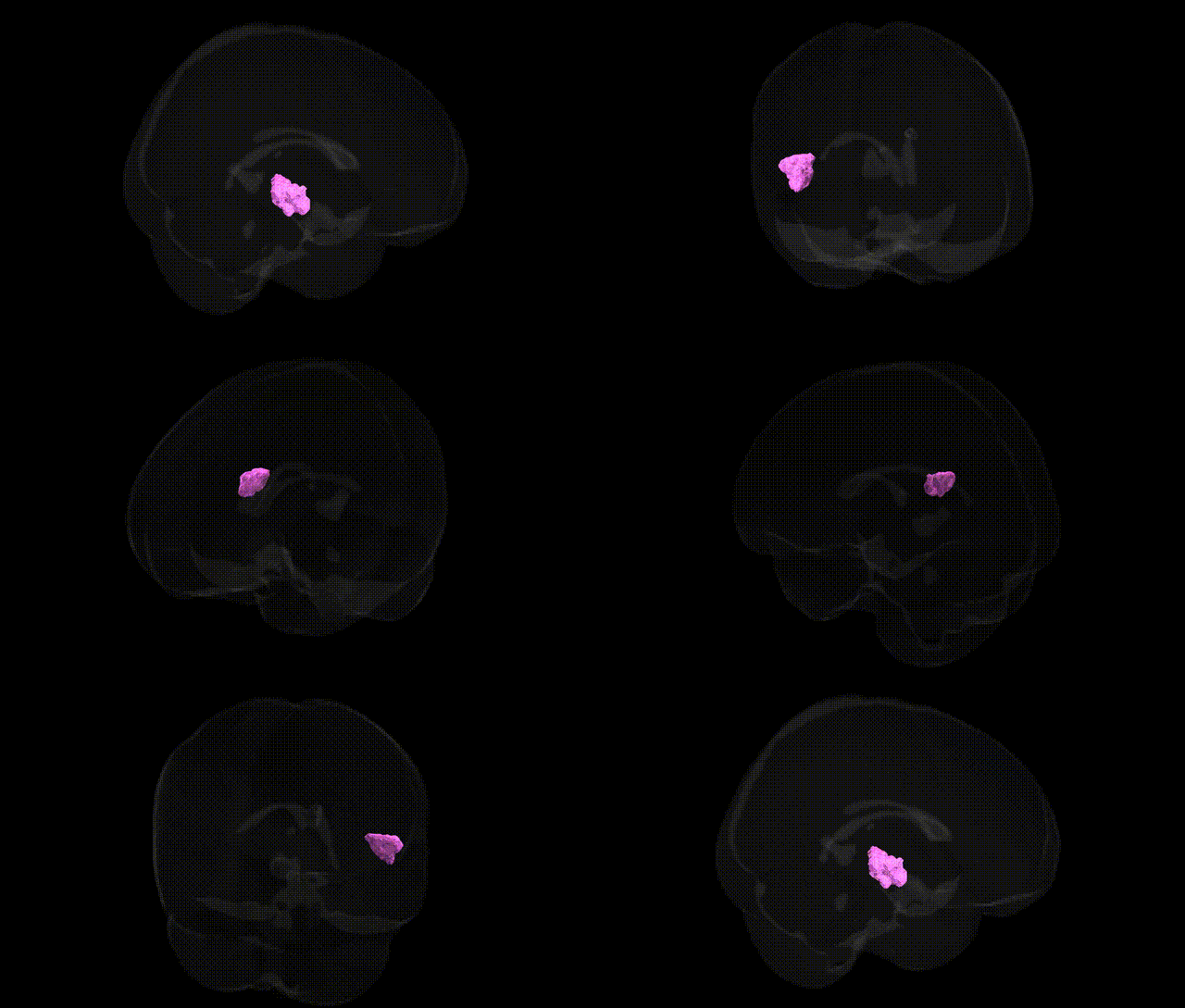
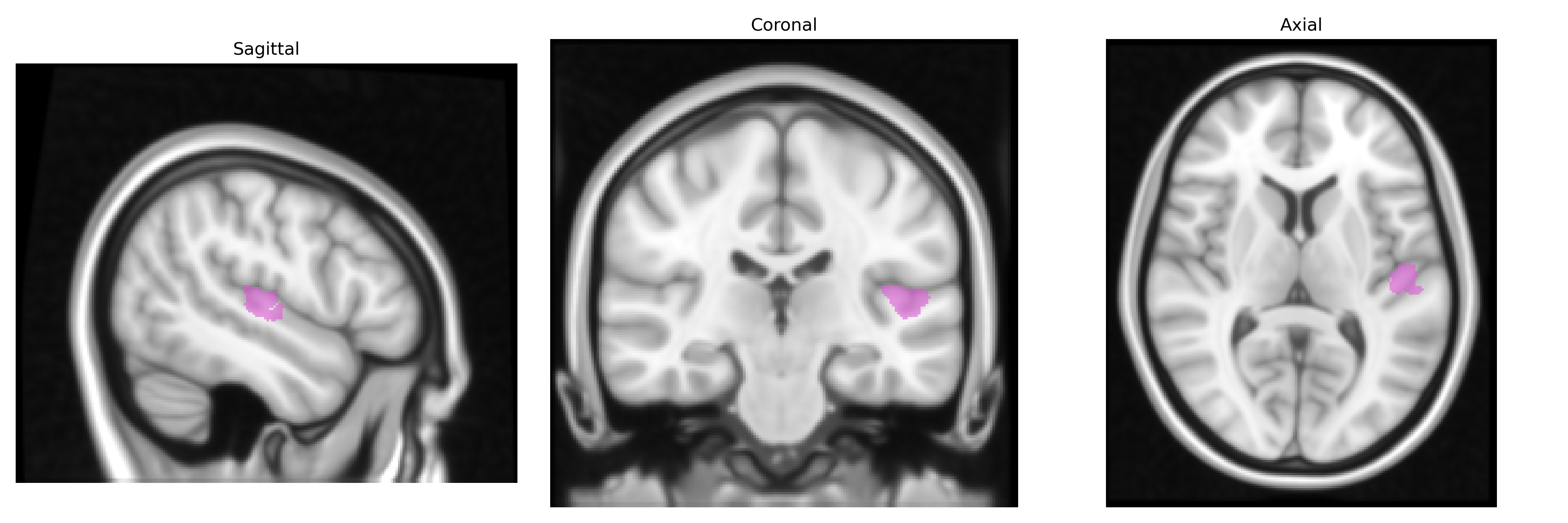
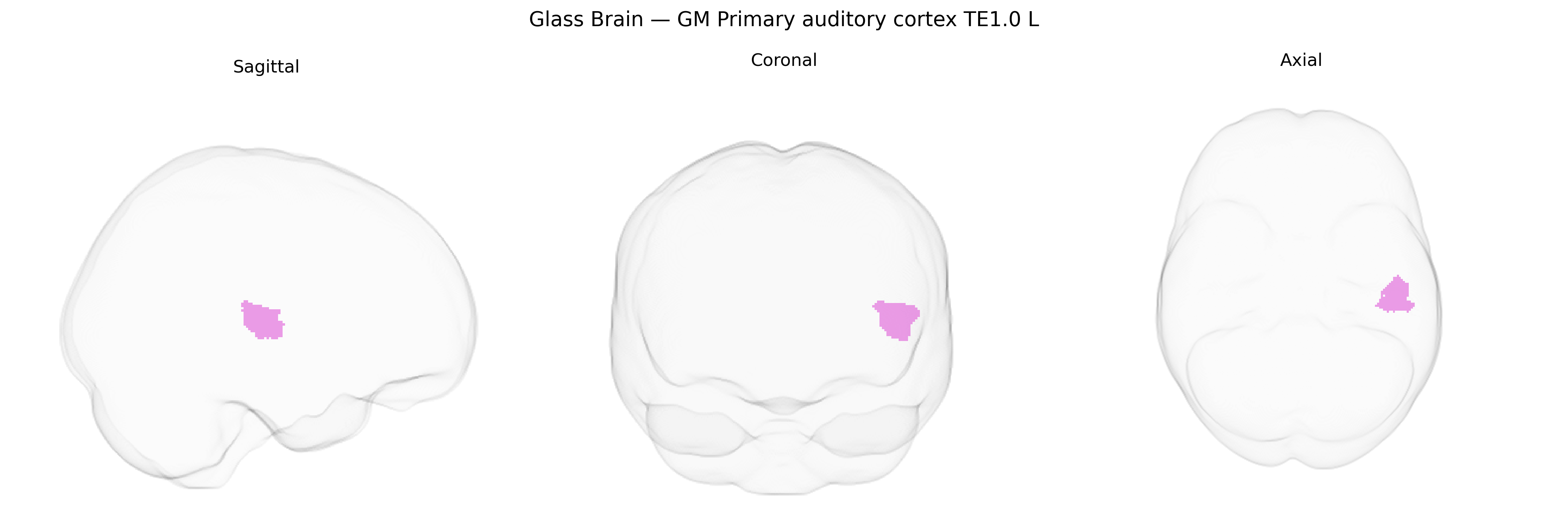
The bilateral GM Primary auditory cortex TE1.0 L from the Juelich maxprob thr25 1 mm atlas corresponds to the core primary auditory cortex located on the transverse temporal (Heschl’s) gyrus within the superior temporal plane, predominantly buried in the lateral sulcus. This region contains a granular isocortex with dense thalamocortical input from the ventral division of the medial geniculate body and is organized tonotopically, supporting precise encoding of basic acoustic features such as sound frequency, intensity, and temporal patterns. TE1.0 represents the central core field of the auditory cortex, flanked by adjacent core and belt fields (e.g., TE1.1 and TE1.2), and participates in early-stage auditory processing that provides the foundation for more complex perceptual, linguistic, and auditory-object representations in surrounding temporal and frontal association cortices. No direct Wikipedia article exists for TE1.0; a related structure is the Primary auditory cortex.
The bilateral GM Primary auditory cortex TE1.0 L from the Juelich maxprob thr25 1mm Atlas corresponds to core auditory cortex, and convergent imaging–genetics work has linked this region to several genetically influenced traits and disorders. Large GWAS of brain structure have shown heritable variation in superior temporal and Heschl’s gyrus volume and cortical thickness, with associated loci in genes involved in neurodevelopment and synaptic function (e.g., PACRG/ PARK2, FOXP2, DCDC2, GRIN2A, CNTNAP2), some of which also influence language and reading abilities. Imaging genetics studies report that risk variants for schizophrenia, bipolar disorder, and autism spectrum disorder, including alleles in complement pathway (C4), calcium-channel (CACNA1C), and synaptic genes (NRG1, DISC1), are associated with altered gray matter or activation in primary and secondary auditory cortex, consistent with auditory hallucinations and social–communication deficits. GWAS of musical aptitude, rhythmic ability, and speech-in-noise perception have implicated variants in genes related to auditory pathway development and plasticity (e.g., PCDH gene clusters, ROBO1, KIAA0319), which show expression in superior temporal auditory regions including TE1.0. In tinnitus and hyperacusis, candidate-gene and GWAS findings in oxidative stress and ion-channel genes (such as KCNE1, GDNF-related pathways) have been linked to functional and structural changes in primary auditory cortex. Overall, TE1.0 L emerges as a genetically modulated hub for basic sound processing whose morphology and function reflect polygenic influences shared with language, musical traits, psychosis risk, and auditory perceptual disorders, although most associations are at the level of broader auditory cortex rather than this cytoarchitectonic parcel specifically.
Overview generated by GPT-4o (2026).
Region ID: 41
Hemisphere: bilateral
Atlas: Juelich maxprob thr25 1mm
Full Quality Version: Download MP4
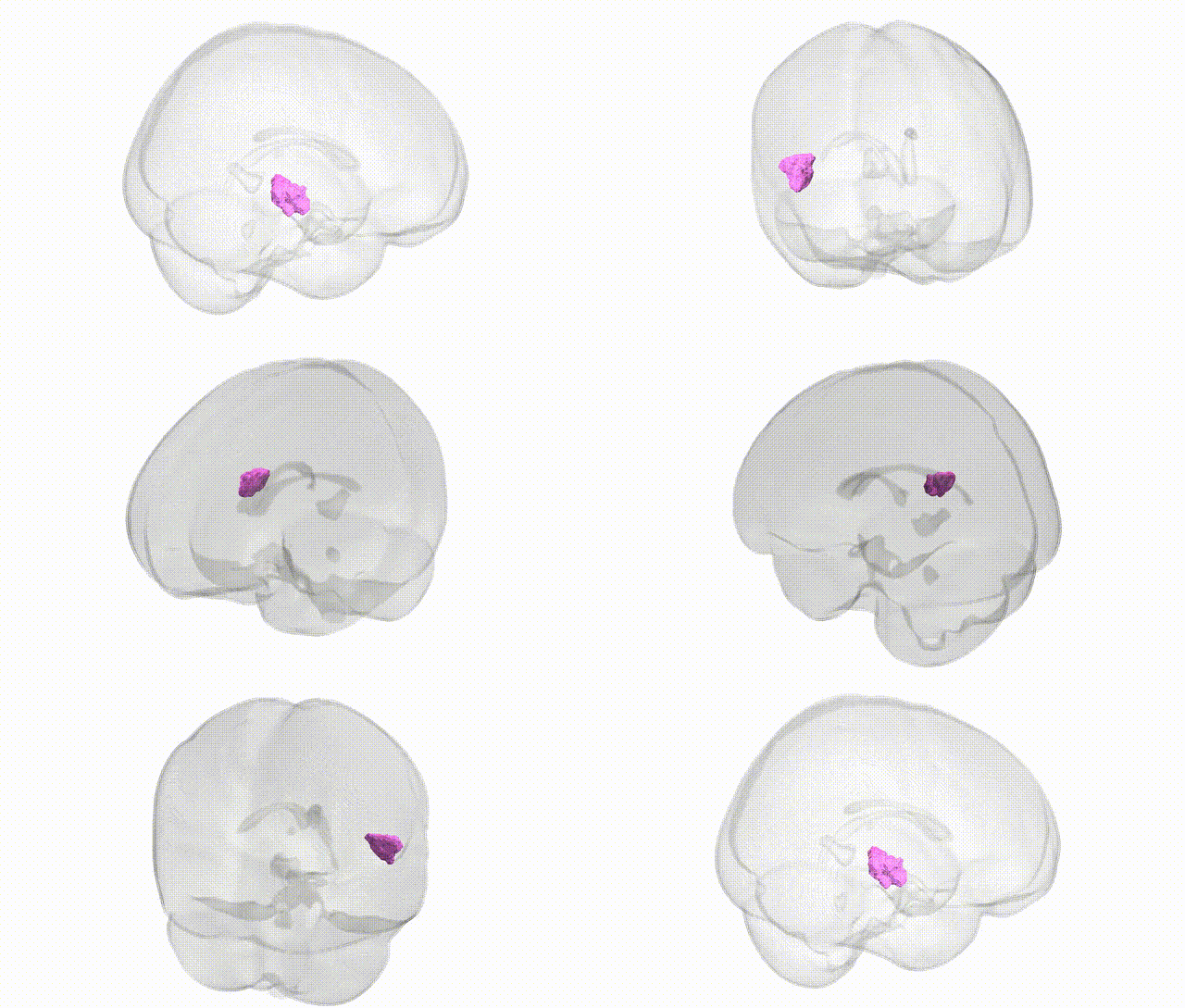
Full Quality Version: Download MP4
Wali Sidiqyar*, Gaurav Rudravaram*, Elyssa M. McMaster, Trent M. Schwartz, Adam M. Saunders, Kurt G. Schilling, Bennett A. Landman "Introducing SPINS: A Shared Public Visualization Library of Neuroanatomical Structures." Medical Imaging with Deep Learning- short paper
This resource is licensed under CC0 1.0 Universal (Public Domain).