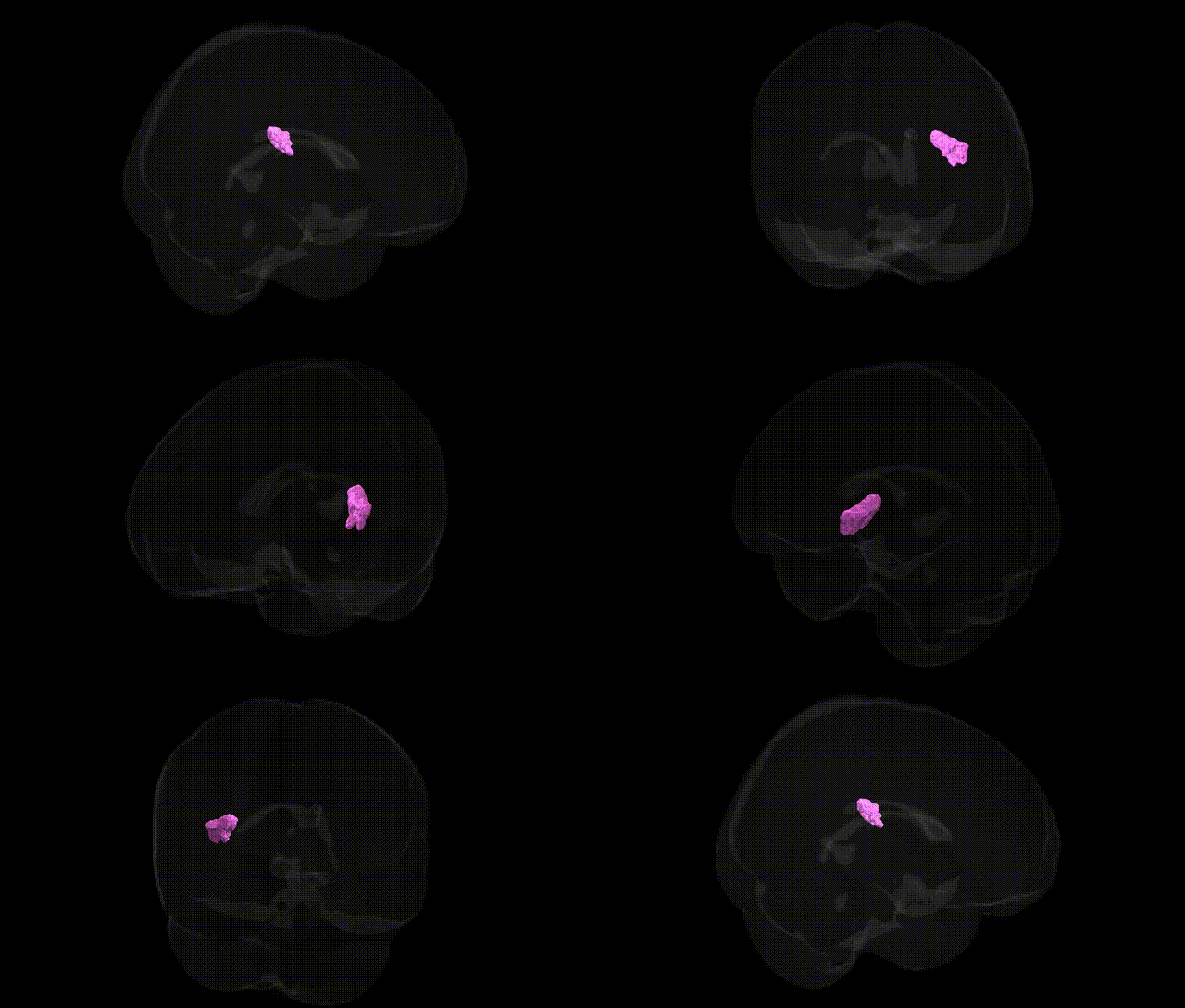
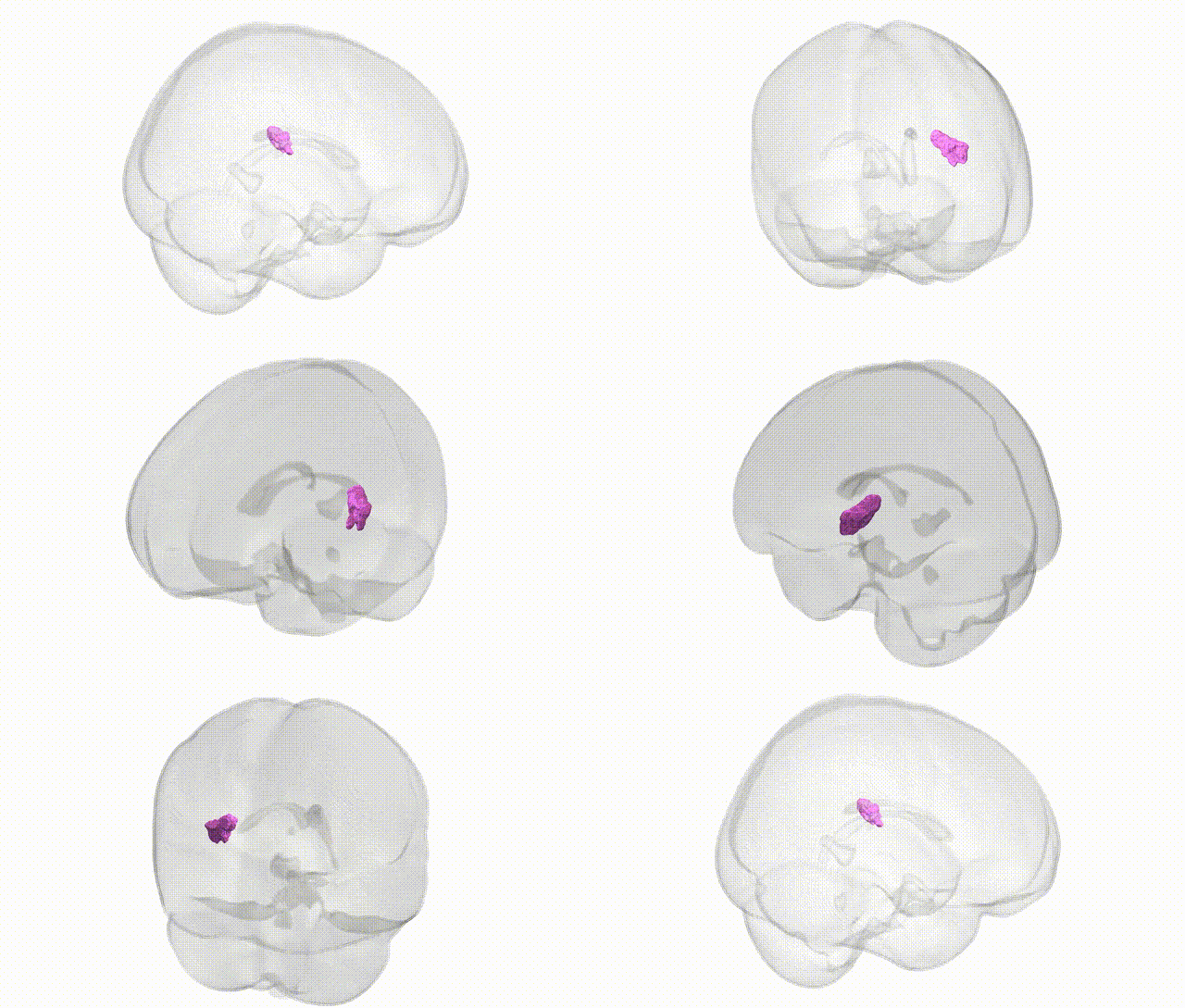
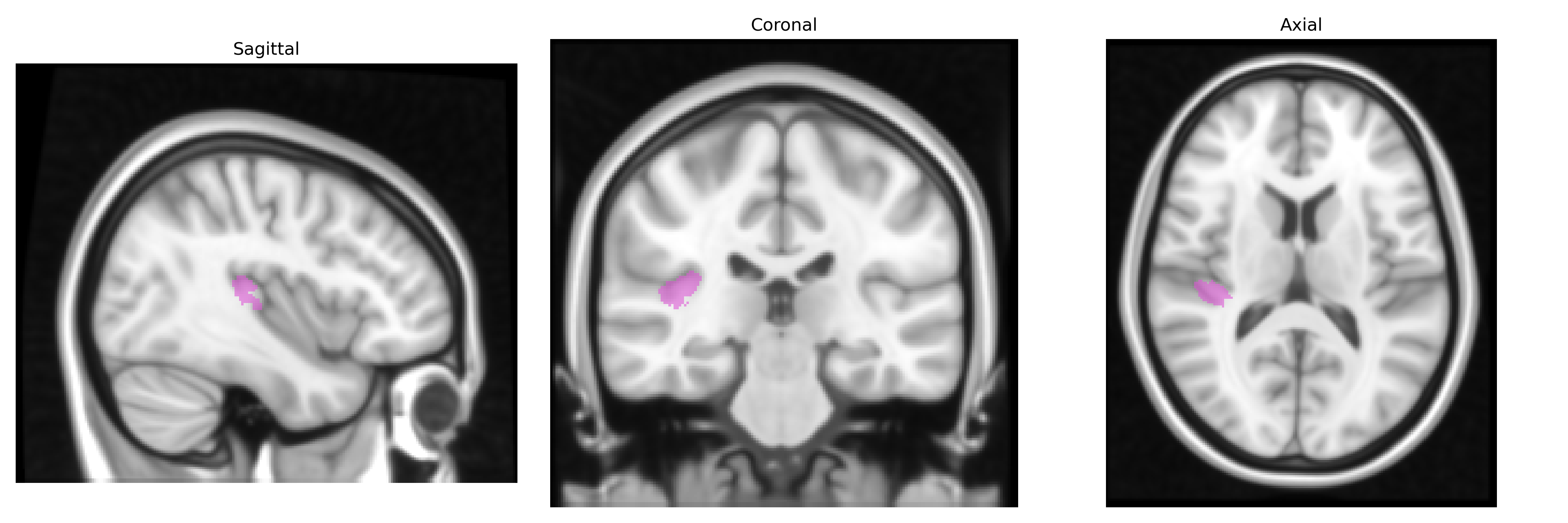
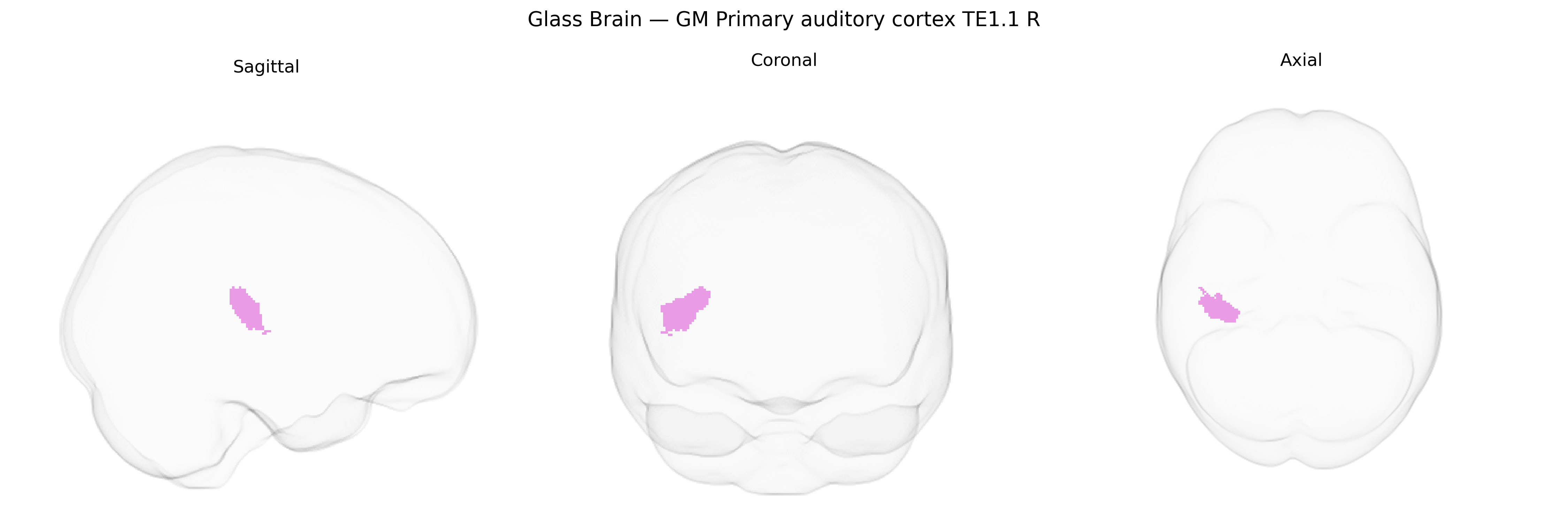
The bilateral GM Primary auditory cortex TE1.1 R, as defined in the Juelich maxprob thr25 1mm Atlas, corresponds to a cytoarchitectonically characterized subregion of the primary auditory cortex located along Heschl’s gyrus in the temporal lobe. This area is part of the core auditory cortex and is involved in the early cortical processing of acoustic information, including sound frequency, intensity, and timing, forming the basis for more complex auditory perception in surrounding belt and parabelt regions. TE1.1 exhibits dense granular layers and strong thalamocortical input from the medial geniculate nucleus, consistent with its role as a primary sensory recipient area. As a probabilistic atlas parcel, TE1.1 R (right hemisphere) represents the region with maximal probability of primary auditory cytoarchitecture within Heschl’s gyrus, contributing to hemispheric specialization in auditory functions such as spectral analysis and aspects of sound localization. There is no direct Wikipedia article for TE1.1; see the related structure Primary auditory cortex.
Genetic associations specifically resolved to the bilateral primary auditory cortex TE1.1 (Juelich maxprob thr25 1 mm) are limited, but converging imaging–genetics and GWAS evidence implicates this region and adjacent Heschl’s gyrus in several traits and disorders. Variants in FOXP2, CNTNAP2, KIAA0319, DCDC2, and other language‐ and reading‐related loci have been linked to structural and functional differences in primary auditory cortex, consistent with findings in developmental dyslexia and specific language impairment. Large-scale imaging GWAS (e.g., ENIGMA and UK Biobank) report SNPs in genes influencing cortical thickness and surface area of superior temporal and Heschl’s regions—such as variants near MIR137, GRIN2A, and complement pathway genes—some of which also confer risk for schizophrenia and autism spectrum disorder, where altered primary auditory cortex morphology and auditory processing abnormalities are common. Additional associations involve tinnitus, where candidate and GWAS studies implicate genes related to synaptic transmission and glutamatergic signaling (e.g., GRM7, KCNE1/3), and age-related hearing loss, where multiple loci (e.g., in GIPC3, PCDH15, EYA4) affect peripheral hearing but have downstream consequences for primary auditory cortex plasticity and reorganization. Overall, current genetic evidence links TE1.1 and neighboring core auditory areas to language and reading disorders, psychotic and neurodevelopmental conditions, and auditory perception phenotypes, primarily through imaging–genetic correlations and systems-level traits rather than region-specific GWAS hits.
Overview generated by GPT-4o (2026).
Region ID: 44
Hemisphere: bilateral
Atlas: Juelich maxprob thr25 1mm
Full Quality Version: Download MP4
Full Quality Version: Download MP4
Wali Sidiqyar*, Gaurav Rudravaram*, Elyssa M. McMaster, Trent M. Schwartz, Adam M. Saunders, Kurt G. Schilling, Bennett A. Landman "Introducing SPINS: A Shared Public Visualization Library of Neuroanatomical Structures." Medical Imaging with Deep Learning- short paper
This resource is licensed under CC0 1.0 Universal (Public Domain).