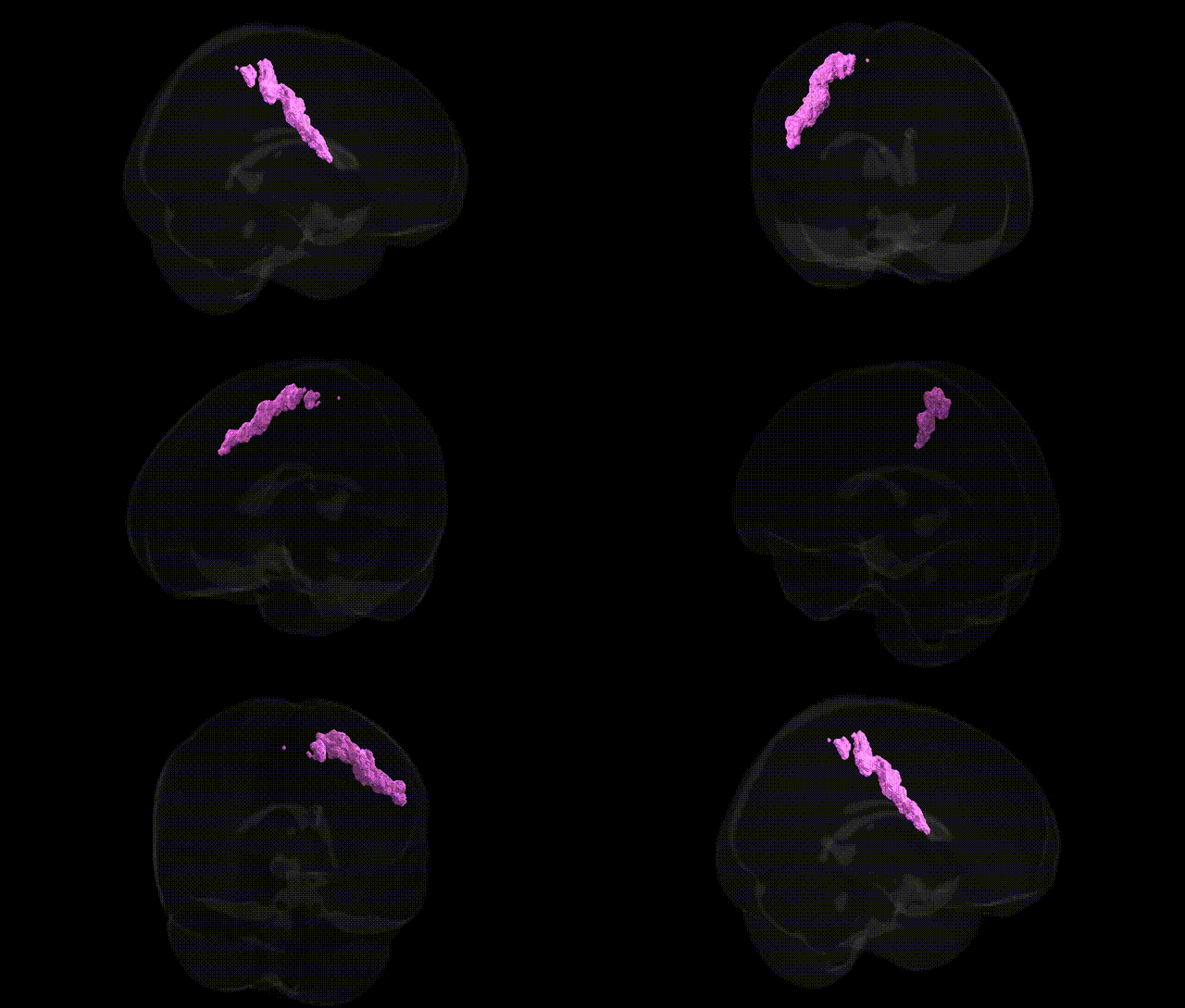
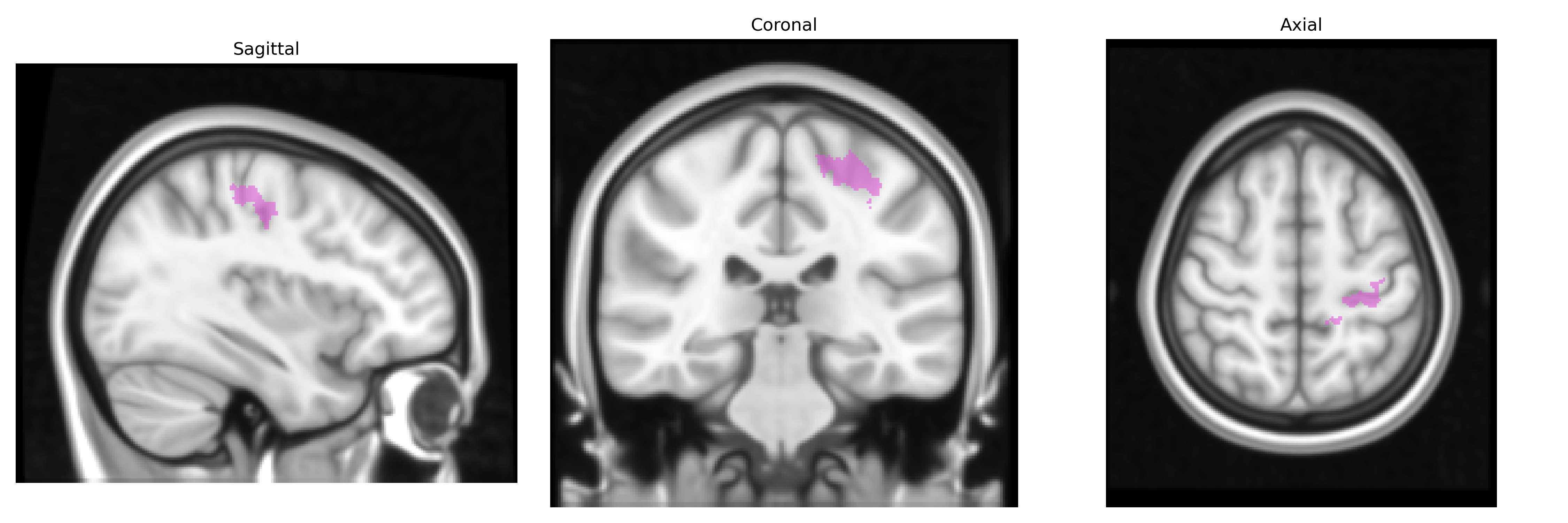
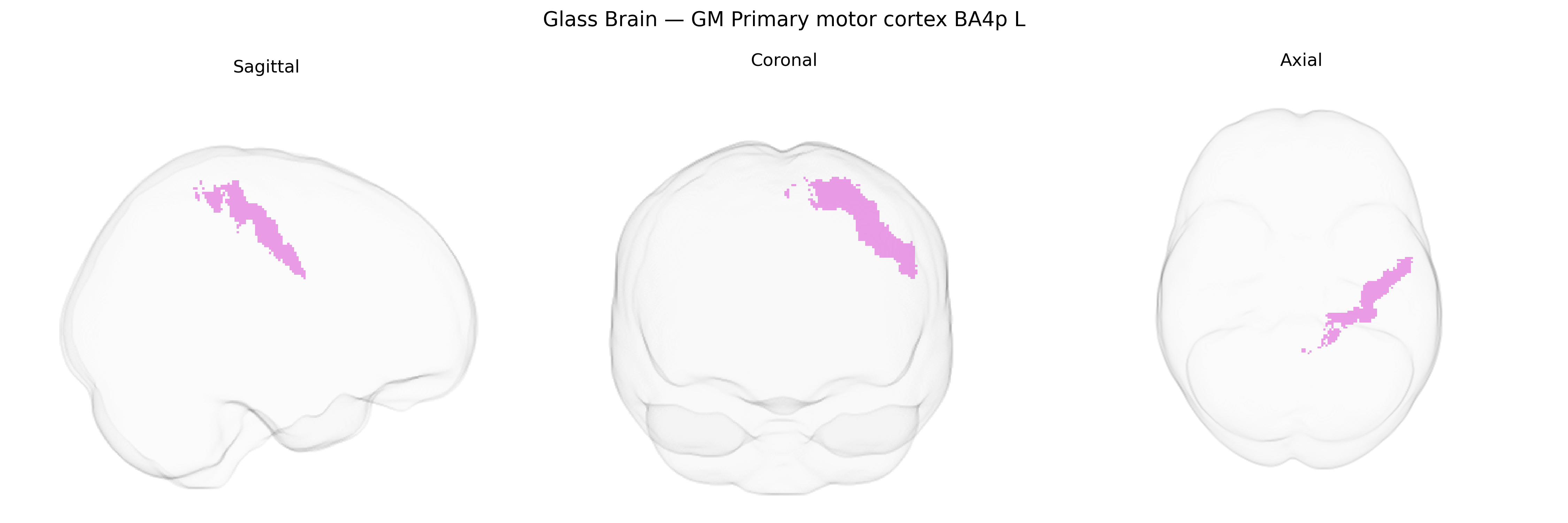
The bilateral GM Primary motor cortex BA4p L, derived from the Juelich maxprob thr25 1mm atlas, corresponds to the posterior (pars posterior) subdivision of Brodmann area 4 within the precentral gyrus and forms a core component of the primary motor cortex. It is characterized by a thick agranular cortex, dense Betz cells in layer V, and strong corticospinal projections that subserve fine voluntary motor control, particularly of contralateral distal musculature (e.g., hand and finger movements). Functionally, BA4p is implicated in the execution of skilled movements, sensorimotor integration, and the precise timing and scaling of motor output, and it shows somatotopic organization consistent with the classical motor homunculus. While there is no Wikipedia article specifically for BA4p, it is a subregion of the Primary motor cortex.
Genetic associations involving the bilateral GM Primary motor cortex BA4p (Juelich maxprob thr25 1mm Atlas) primarily reflect its role in voluntary motor control and corticospinal output, with evidence coming mostly from imaging genetics and disorder-related GWAS rather than region-specific genome-wide screens. Variants influencing cortical surface area and thickness in motor regions, including BA4p, have been linked to loci near genes such as HMGA2, TESC, and C15orf54 in large neuroimaging GWAS (e.g., ENIGMA and UK Biobank-based studies), suggesting polygenic influences on motor cortex morphology. Motor cortex BA4p is implicated in Mendelian motor neuron disorders (e.g., ALS-associated genes like C9orf72, SOD1, TARDBP, FUS), where neuroimaging and neuropathological studies consistently show involvement of the primary motor cortex, as well as in hereditary spastic paraplegia and dystonia, though these links are usually at the system level rather than BA4p specifically. GWAS of Parkinson’s disease, essential tremor, and cerebral palsy have identified risk loci affecting motor circuitry and corticospinal pathways, with functional and connectivity analyses frequently implicating primary motor cortex regions, while imaging-genetics work in schizophrenia, ADHD, and autism has reported associations between polygenic risk scores and altered motor cortex structure or activation. Overall, BA4p emerges as part of a broader motor network influenced by numerous common and rare variants, but highly specific GWAS pinpointing this exact cytoarchitectonic field remain limited, and most genetic links are inferred from structural and functional changes in the primary motor cortex more generally.
Overview generated by GPT-4o (2026).
Region ID: 49
Hemisphere: bilateral
Atlas: Juelich maxprob thr25 1mm
Full Quality Version: Download MP4
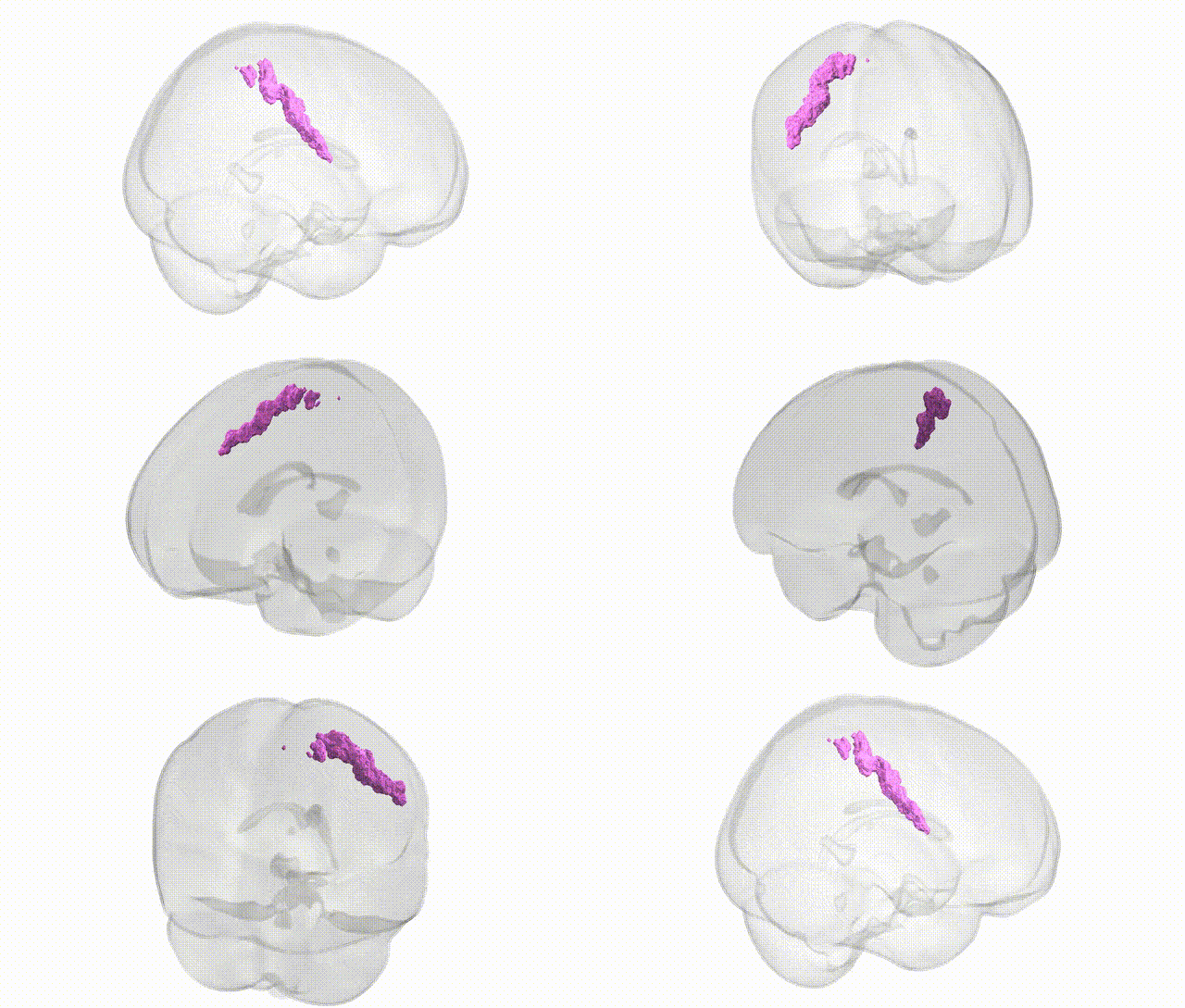
Full Quality Version: Download MP4
Wali Sidiqyar*, Gaurav Rudravaram*, Elyssa M. McMaster, Trent M. Schwartz, Adam M. Saunders, Kurt G. Schilling, Bennett A. Landman "Introducing SPINS: A Shared Public Visualization Library of Neuroanatomical Structures." Medical Imaging with Deep Learning- short paper
This resource is licensed under CC0 1.0 Universal (Public Domain).