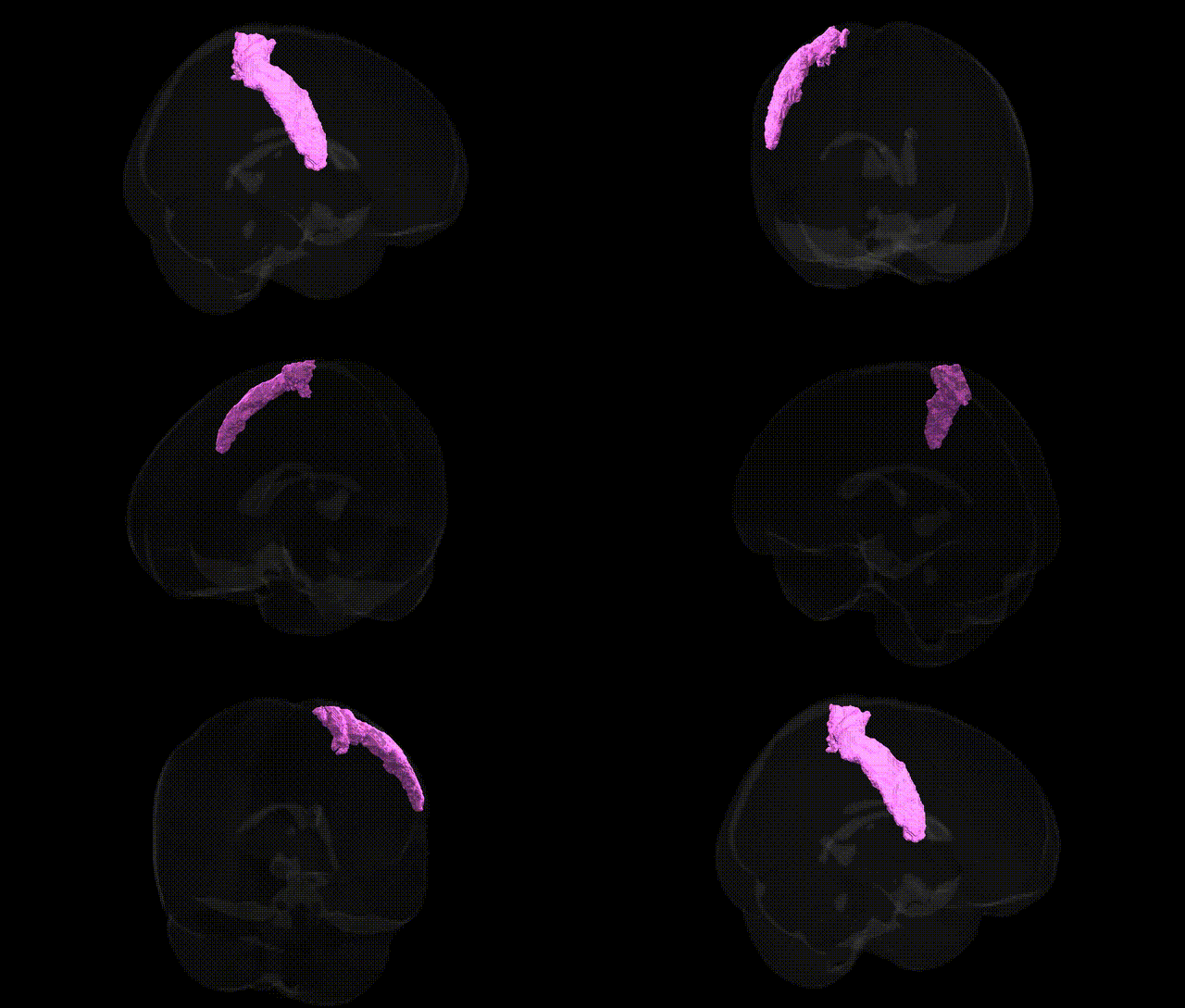
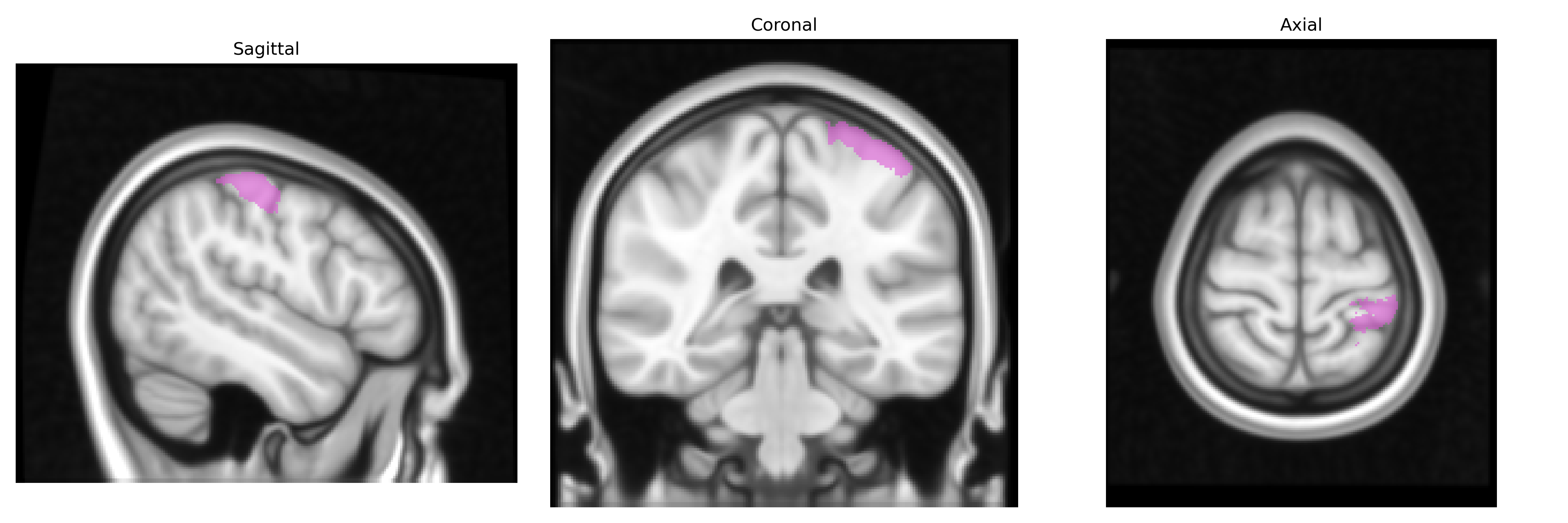
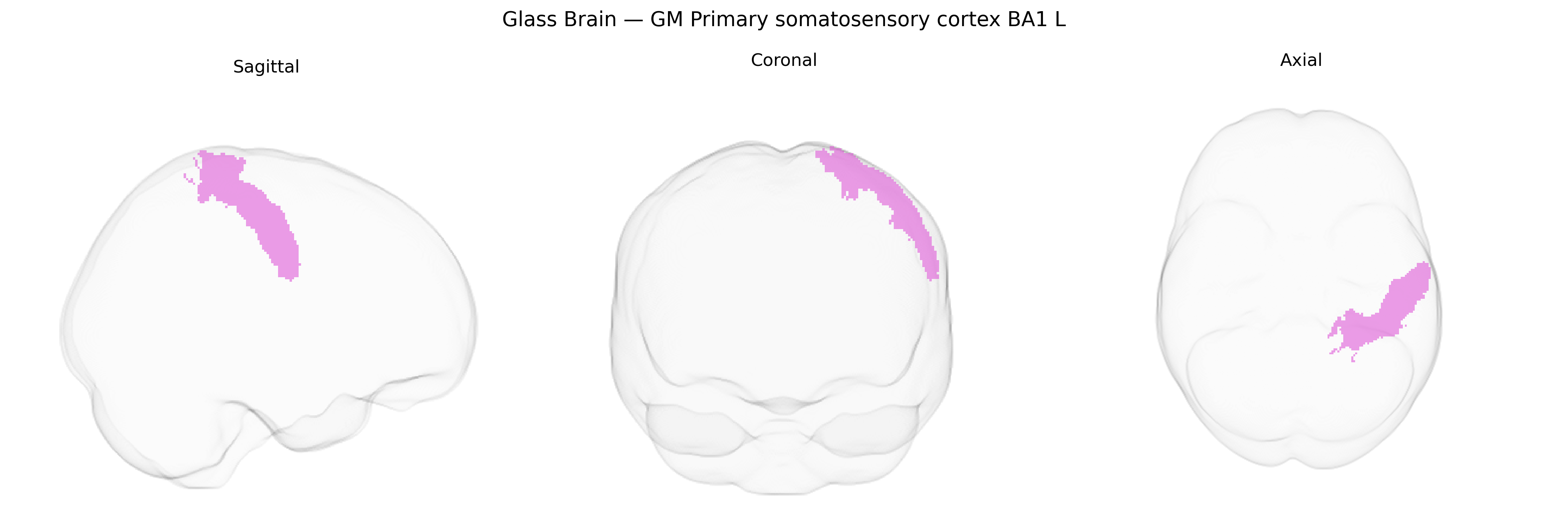
The bilateral GM Primary somatosensory cortex BA1 L, as defined in the Juelich maxprob thr25 1 mm atlas, corresponds to Brodmann area 1 within the postcentral gyrus of the parietal lobe, localized between BA3 and BA2 and predominantly involved in processing cutaneous somatosensory input such as texture and fine tactile discrimination. This region receives highly processed thalamocortical and intracortical inputs from BA3 and projects to BA2 and other higher-order somatosensory and multimodal association areas, contributing to conscious perception of touch and integration of spatial and modality-specific information. Neuronal architecture is characterized by a well-developed granular layer IV and a columnar organization that supports topographic representation (somatotopy) of the body surface, with left-hemisphere fields representing contralateral (right) body regions. Functionally, BA1 participates in sensorimotor integration, supporting actions requiring precise tactile feedback, and is implicated in plastic reorganization following peripheral or cortical lesions. Primary somatosensory cortex
Genetic associations involving the bilateral GM Primary somatosensory cortex BA1 L (Juelich maxprob thr25 1mm Atlas) are largely inferred from broader studies of somatosensory cortical thickness, surface area, and functional connectivity rather than BA1-specific GWAS. Large neuroimaging-genetics consortia (e.g., ENIGMA, UK Biobank) have identified multiple loci—particularly near genes involved in neurodevelopment, synaptic formation, and axon guidance (such as variants in genes related to glutamatergic signaling, cell adhesion molecules, and transcription factors regulating cortical patterning)—that influence structure and function in somatosensory regions encompassing BA1. These genetic variants have been linked to interindividual differences in sensory perception, pain sensitivity, and tactile processing, and are enriched among risk loci for neurodevelopmental and psychiatric conditions with known somatosensory abnormalities, including autism spectrum disorder, attention-deficit/hyperactivity disorder, schizophrenia, and dyslexia, as well as chronic pain disorders (e.g., migraine, fibromyalgia) and movement disorders (e.g., Tourette syndrome) that show altered activation or cortical thickness in primary somatosensory areas. Polygenic risk scores for several of these conditions correlate with morphometric and connectivity measures in the somatosensory cortex, suggesting shared genetic architectures, although explicit GWAS conducted at the fine-grained BA1 L parcel level remain limited and findings are typically reported at coarser regional or network scales.
Overview generated by GPT-4o (2026).
Region ID: 51
Hemisphere: bilateral
Atlas: Juelich maxprob thr25 1mm
Full Quality Version: Download MP4
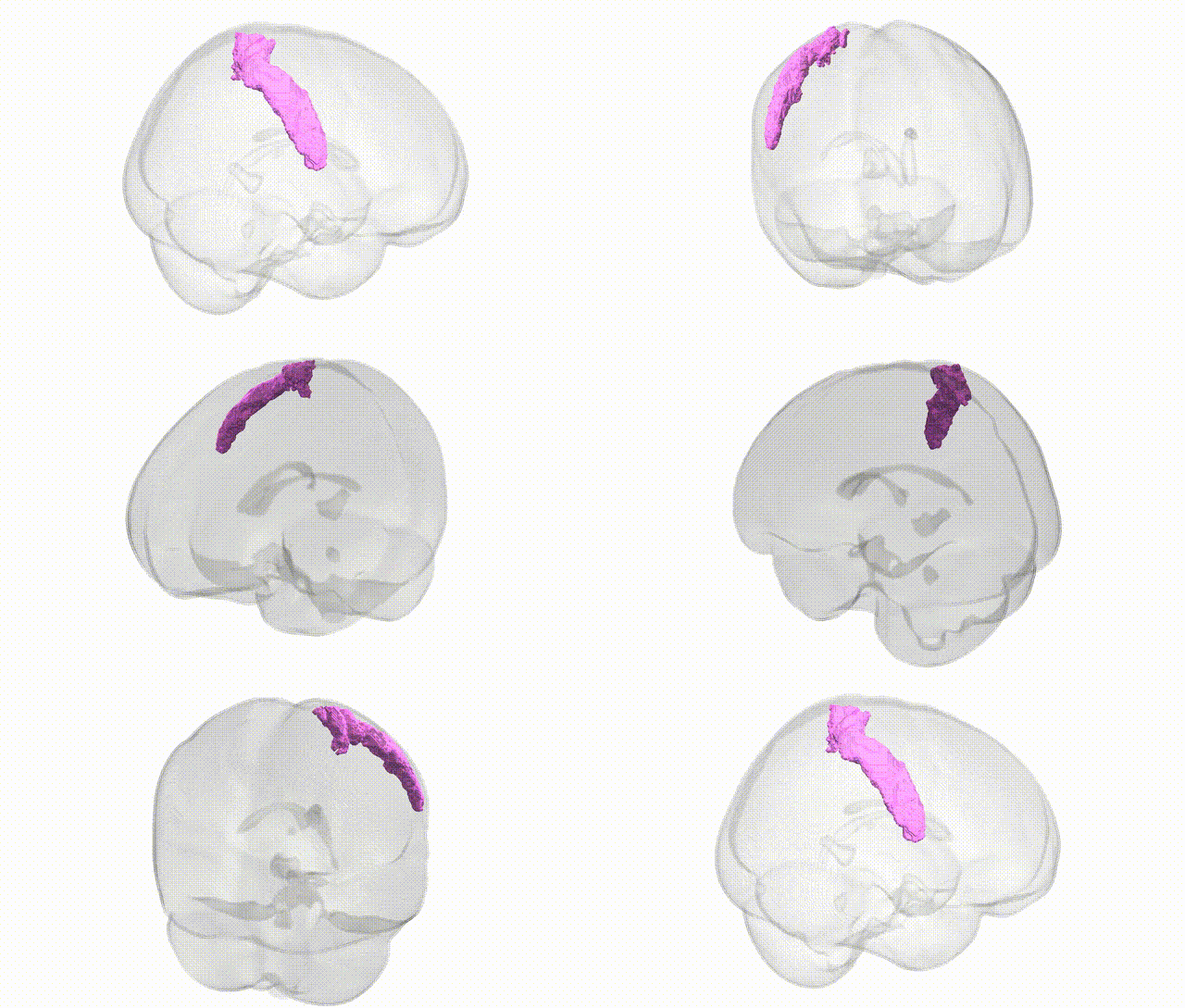
Full Quality Version: Download MP4
Wali Sidiqyar*, Gaurav Rudravaram*, Elyssa M. McMaster, Trent M. Schwartz, Adam M. Saunders, Kurt G. Schilling, Bennett A. Landman "Introducing SPINS: A Shared Public Visualization Library of Neuroanatomical Structures." Medical Imaging with Deep Learning- short paper
This resource is licensed under CC0 1.0 Universal (Public Domain).