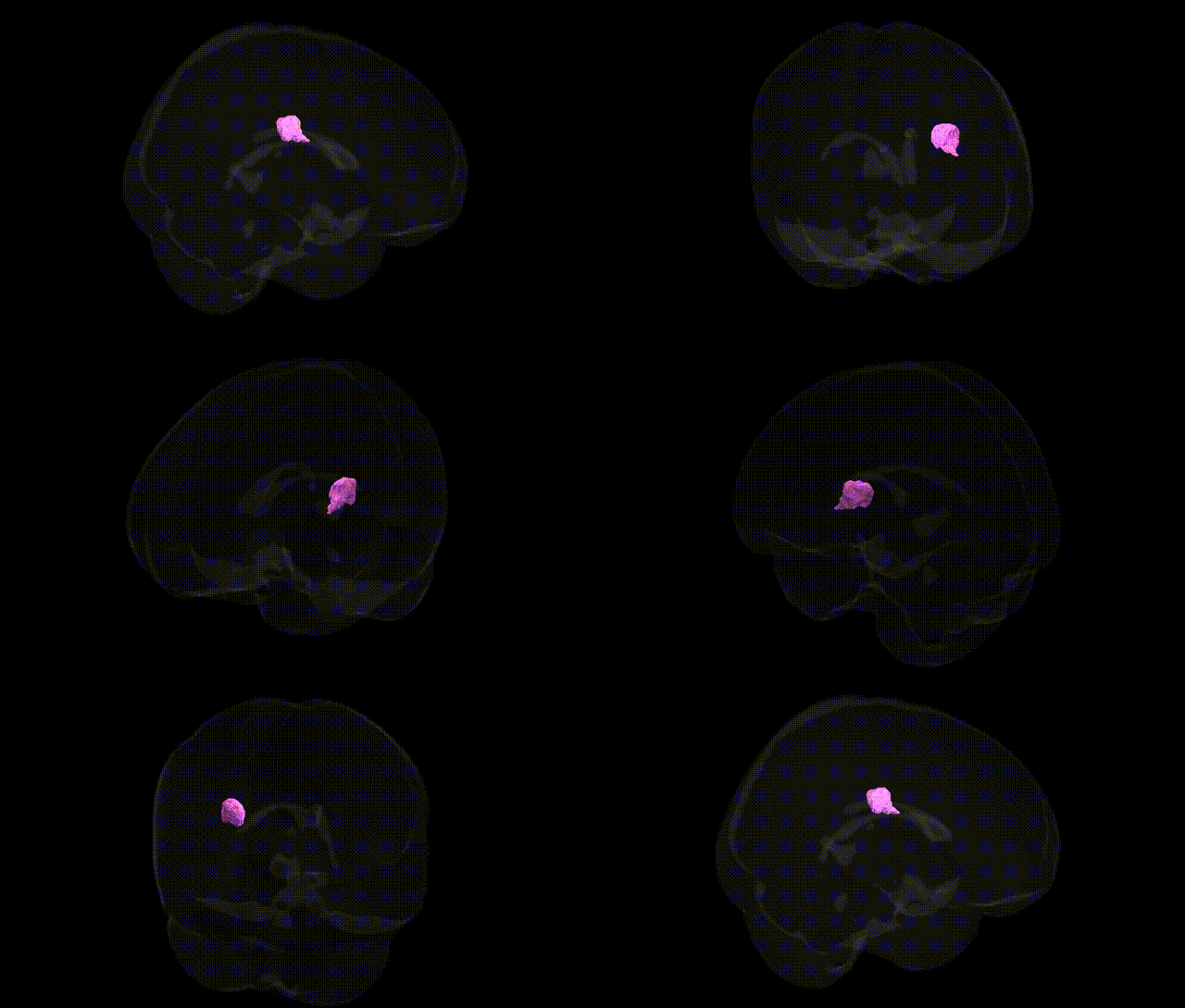
The bilateral GM Secondary somatosensory cortex Parietal operculum OP2 R, as defined in the Juelich maxprob thr25 1 mm atlas, corresponds to a cytoarchitectonically defined subdivision of the parietal operculum that forms part of the human secondary somatosensory cortex (S2) and adjacent insular–opercular regions. OP2 is situated overlying the upper bank of the lateral sulcus, posterior to the insular cortex and inferior to the inferior parietal lobule, and is implicated in higher-order somatosensory processing, including integration of tactile, proprioceptive, and nociceptive inputs as well as multimodal sensory interaction. This region participates in bilateral sensorimotor networks and contributes to functions such as somatosensory discrimination, body perception, and aspects of sensorimotor integration relevant to complex hand and body movements. There is no direct link for OP2 specifically; a closely related structure in which it is contained is the Parietal operculum.
The bilateral GM secondary somatosensory cortex in the parietal operculum, including OP2 R as defined in the Juelich maxprob thr25 1 mm atlas, is part of a broader parietal opercular and posterior insular territory that has been implicated in genetic studies primarily through imaging–genetics and imaging–GWAS work rather than single-gene associations specific to OP2. Large-scale GWAS of brain structure (e.g., UK Biobank–based studies) have identified loci in genes involved in neuronal development, synaptic signaling, and myelination (such as variants near genes like MAPT, KIAA0586, and others) that influence cortical thickness and surface area in perisylvian and parietal opercular regions, encompassing secondary somatosensory areas. Polygenic risk for chronic pain, migraine, and somatosensory hypersensitivity has been linked to altered structure or activation of secondary somatosensory and opercular cortices, suggesting shared genetic architecture with pain-processing networks. In neuropsychiatric genetics, parietal opercular and adjacent posterior insular regions, including OP2, have shown structural and functional alterations related to polygenic risk scores for schizophrenia, autism spectrum disorder, and major depression, although these findings generally implicate distributed networks rather than OP2 alone. Moreover, imaging–genetic work in vestibular and balance disorders, as well as functional vestibular phenotypes, has associated genetic variation affecting vestibular and sensorimotor integration circuits with altered activation in OP2—consistent with the role of OP2 as a human vestibular/visuo-vestibular hub—yet no single gene or variant has been robustly and uniquely assigned to OP2 R itself. Overall, current genetic associations point to polygenic influences on parietal opercular structure and function that intersect with pain, vestibular processing, and neuropsychiatric traits, but region-specific genetic determinants for OP2 R remain incompletely resolved.
Overview generated by GPT-4o (2026).
Region ID: 62
Hemisphere: bilateral
Atlas: Juelich maxprob thr25 1mm
Full Quality Version: Download MP4
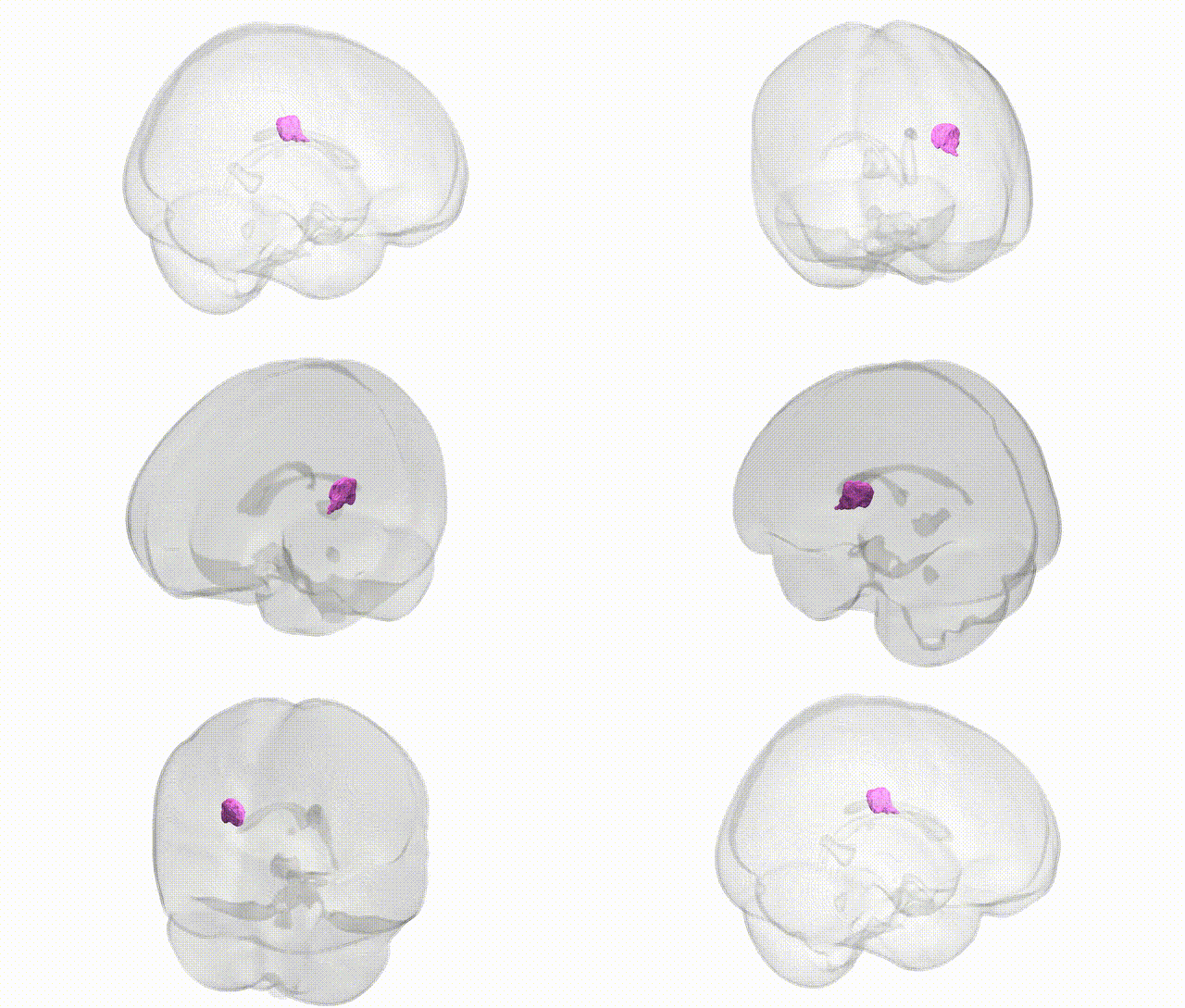
Full Quality Version: Download MP4
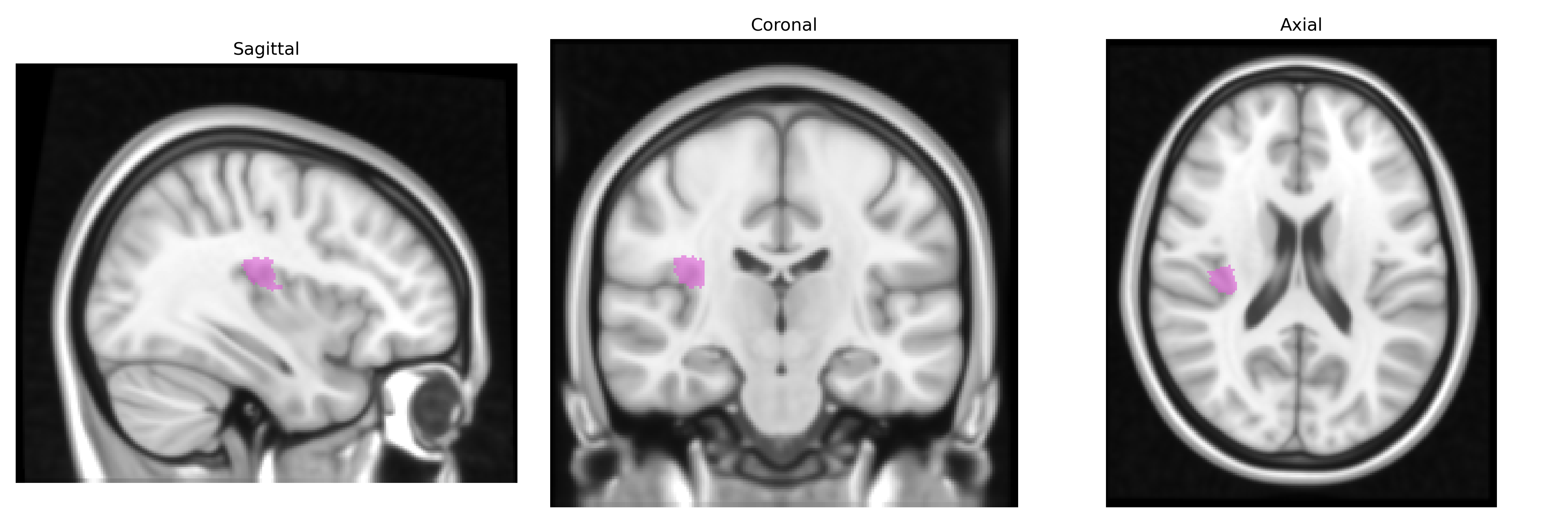
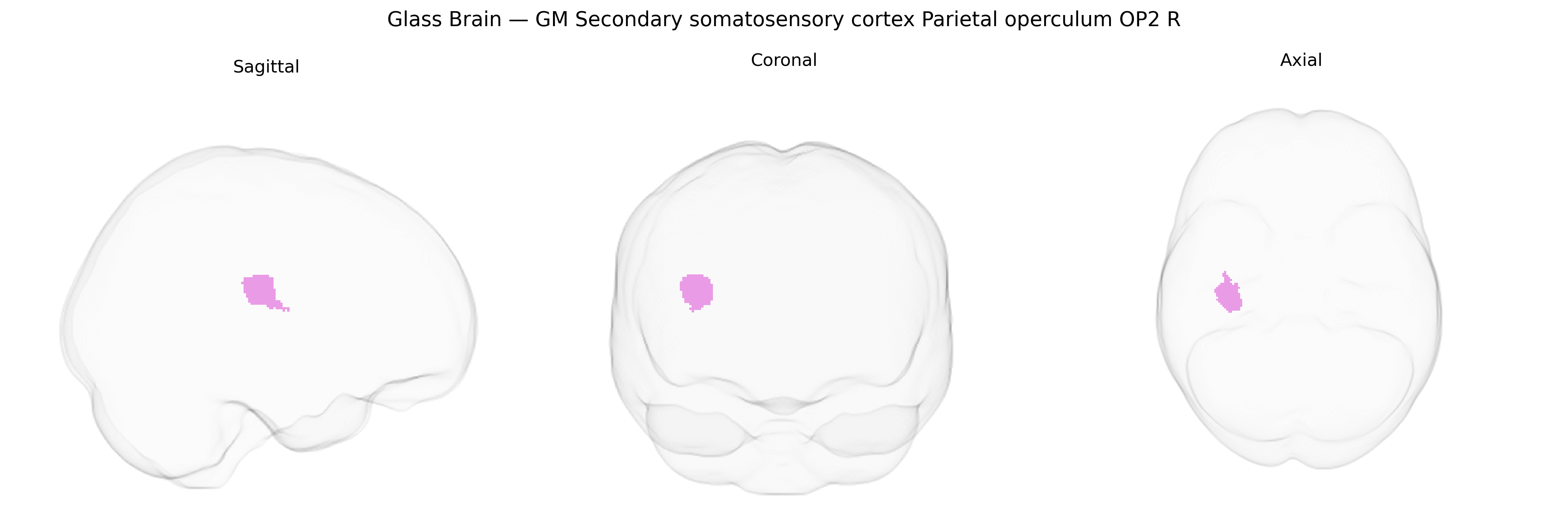
Wali Sidiqyar*, Gaurav Rudravaram*, Elyssa M. McMaster, Trent M. Schwartz, Adam M. Saunders, Kurt G. Schilling, Bennett A. Landman "Introducing SPINS: A Shared Public Visualization Library of Neuroanatomical Structures." Medical Imaging with Deep Learning- short paper
This resource is licensed under CC0 1.0 Universal (Public Domain).