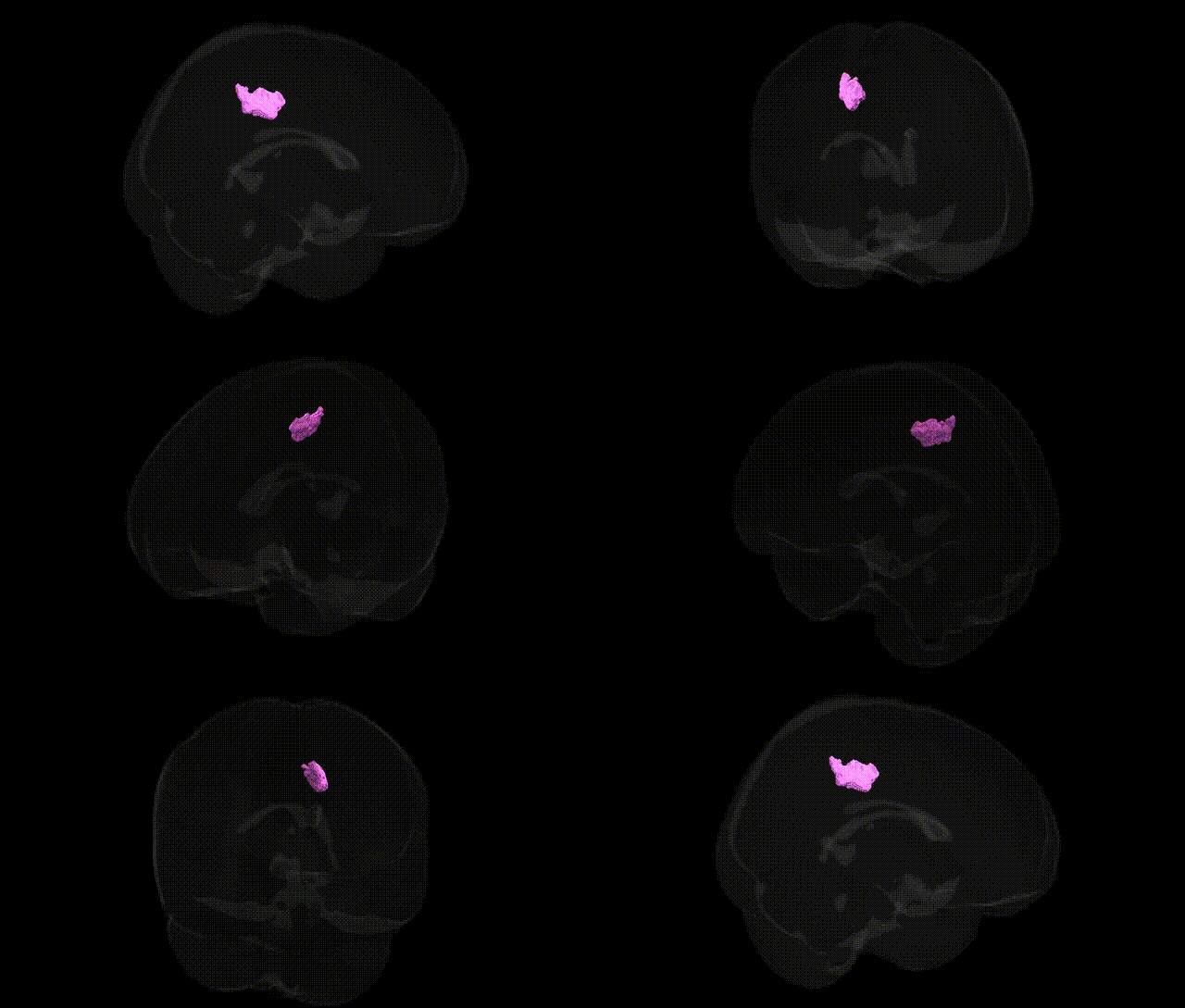
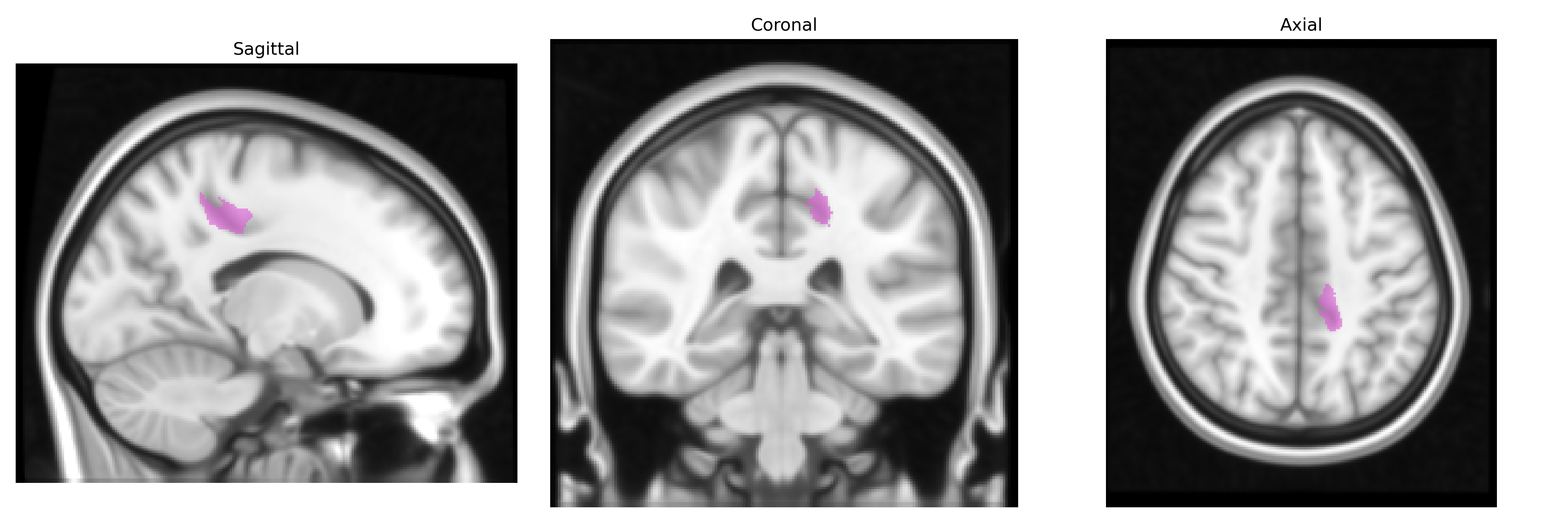
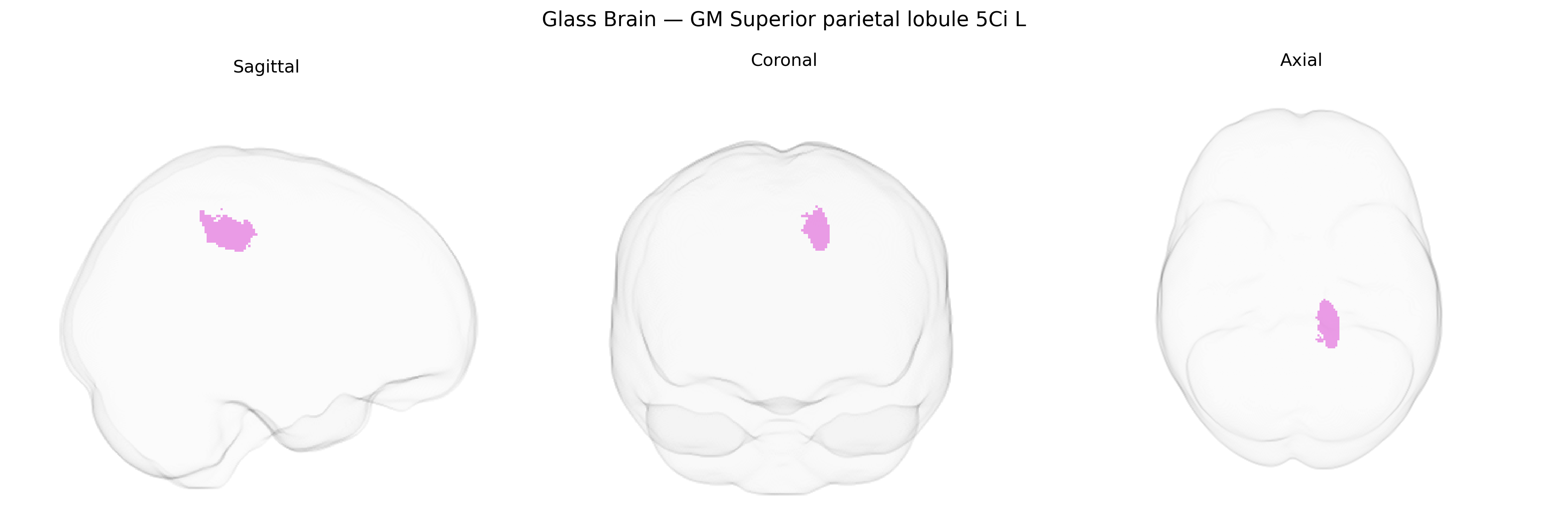
The bilateral GM Superior parietal lobule 5Ci L, as defined in the Juelich maxprob thr25 1 mm atlas, corresponds to a cytoarchitectonic subregion of Brodmann area 5 located in the superior parietal lobule of the left hemisphere, with its “Ci” designation indicating an internal (cingulate/medial-adjacent) subdivision characterized by distinct laminar organization and connectivity profiles. This region lies posterior to the primary somatosensory cortex (areas 3, 1, 2) and contributes to higher-order somatosensory integration, visuospatial processing, and sensorimotor coordination, including the transformation of sensory information into motor commands for reaching and grasping. Neuronal populations in 5Ci exhibit multimodal responses, integrating tactile, proprioceptive, and visual signals to support body-centered representations and attentive spatial mapping required for goal-directed actions. There is no direct Wikipedia article for “Superior parietal lobule 5Ci L”; a related structure in which it is embedded is the Superior parietal lobule.
The bilateral GM Superior parietal lobule 5Ci L (as defined in the Juelich maxprob thr25 1 mm atlas) corresponds to a cytoarchitectonic subregion of the superior parietal cortex implicated in visuomotor integration, spatial attention, and sensorimotor coordination, and genetic associations to this area have largely been inferred from imaging genetics and GWAS of cortical structure and function rather than from region-specific locus studies. Large-scale GWAS of cortical thickness and surface area (e.g., ENIGMA and UK Biobank cohorts) have identified multiple common variants influencing superior parietal morphology, including loci near genes involved in neuronal development and synaptic signaling (such as CENPW, RSPO3, and TGF-β pathway–related genes), though these findings typically map to broader parietal regions rather than specifically to 5Ci. Imaging genetics studies linking polygenic scores to brain structure suggest that polygenic risk for schizophrenia, bipolar disorder, and major depression can be associated with altered superior parietal cortex volume or thickness, while ADHD and autism spectrum disorder GWAS and follow-up imaging work have reported functional and structural differences in superior parietal areas related to attention, cognitive control, and social cognition. In addition, GWAS of cognitive traits—particularly general cognitive ability, working memory, and visuospatial skills—have shown that variants in neurodevelopmental genes (for example, those involved in axon guidance and synaptic plasticity) are associated with activation or morphology in parietal regions that include 5Ci. However, no major GWAS has yet provided robust, replicated, locus-specific associations uniquely and exclusively tied to the 5Ci L subregion; instead, genetic findings currently support a broader pattern in which polygenic variation affecting neurodevelopment, synaptic function, and cortical organization contributes to interindividual differences in superior parietal structure and function, with downstream relevance for neurodevelopmental and psychiatric disorders and cognitive traits.
Overview generated by GPT-4o (2026).
Region ID: 67
Hemisphere: bilateral
Atlas: Juelich maxprob thr25 1mm
Full Quality Version: Download MP4
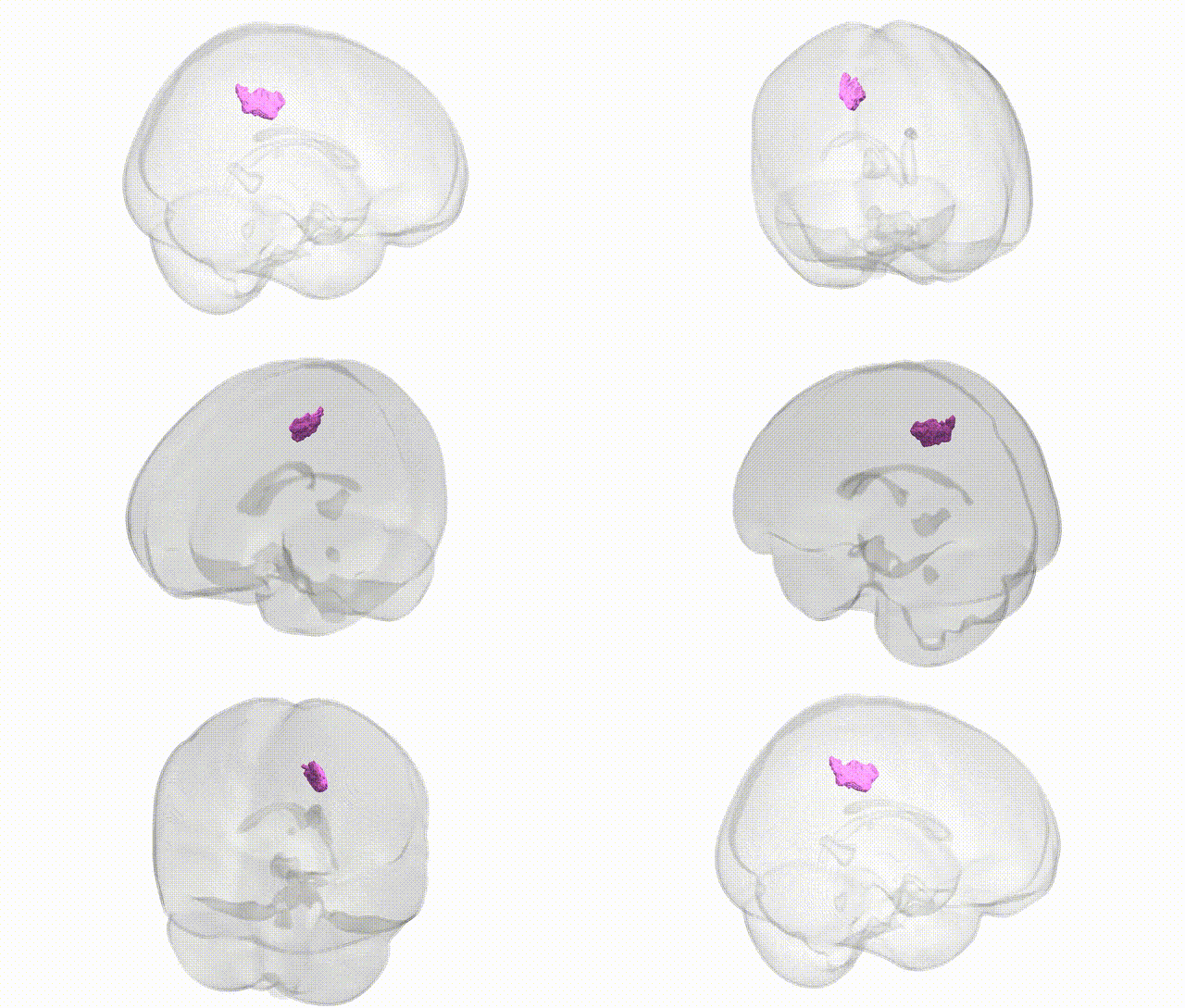
Full Quality Version: Download MP4
Wali Sidiqyar*, Gaurav Rudravaram*, Elyssa M. McMaster, Trent M. Schwartz, Adam M. Saunders, Kurt G. Schilling, Bennett A. Landman "Introducing SPINS: A Shared Public Visualization Library of Neuroanatomical Structures." Medical Imaging with Deep Learning- short paper
This resource is licensed under CC0 1.0 Universal (Public Domain).