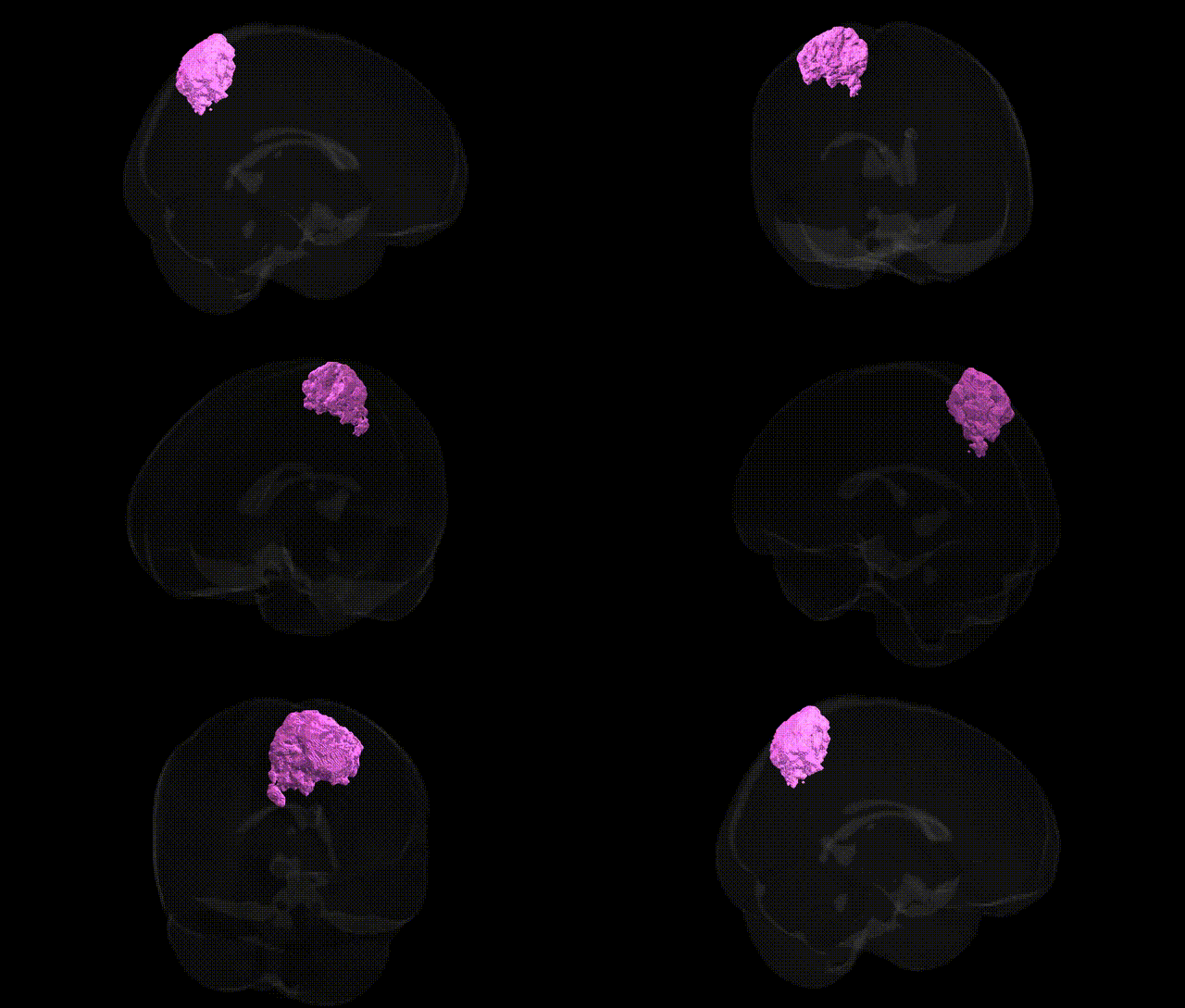
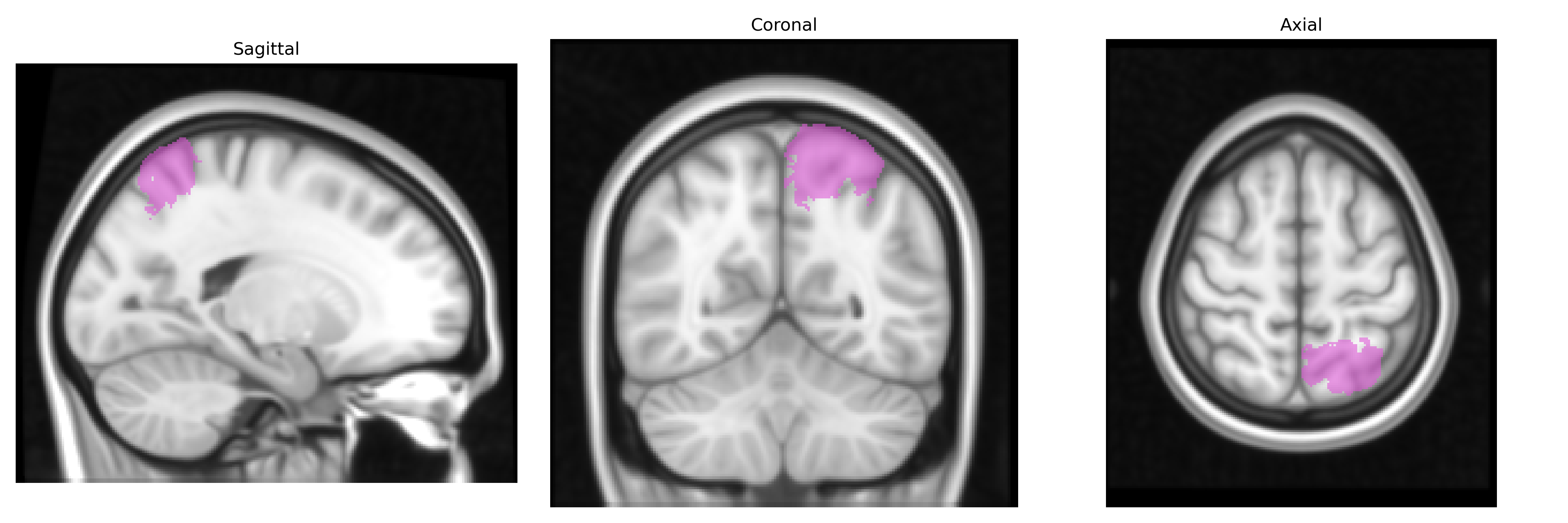
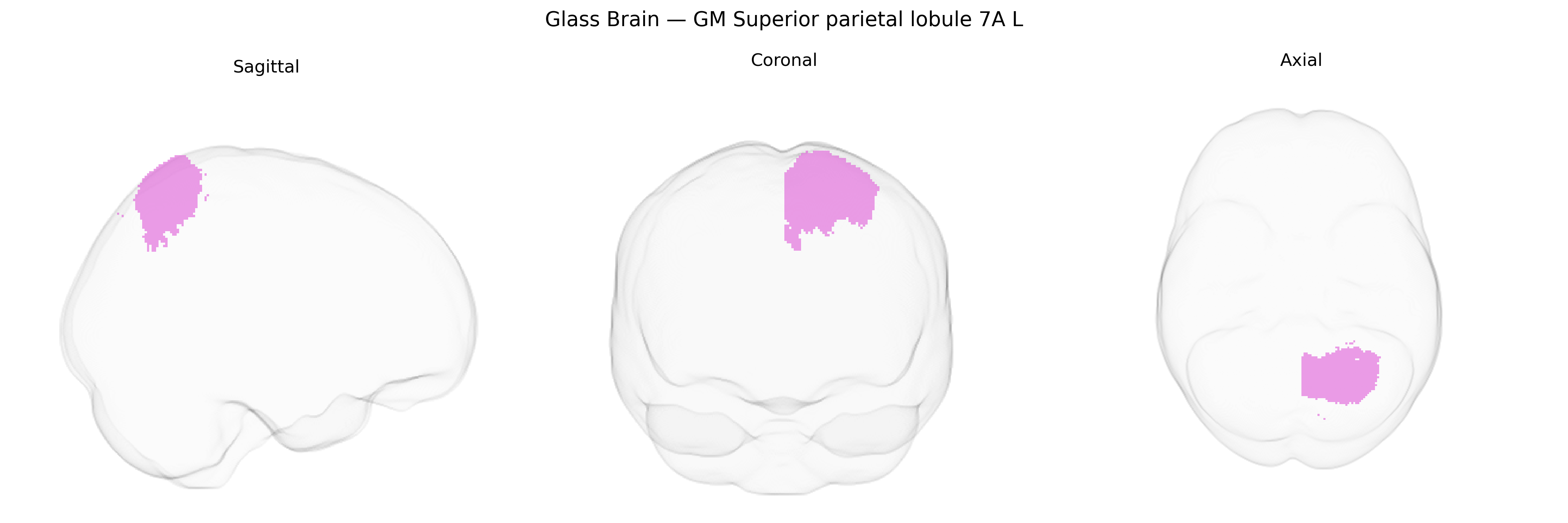
The bilateral GM Superior parietal lobule 7A L (from the Juelich maxprob thr25 1mm Atlas) corresponds to a cytoarchitectonic subdivision of Brodmann area 7 located in the superior parietal lobule of the left hemisphere, with bilateral gray-matter characterization referring to its homologous presence across both hemispheres. Functionally, area 7A is implicated in higher-order visuospatial processing, integration of somatosensory and visual information, spatial attention, and the guidance of goal-directed movements, particularly in coordinating eye–hand interactions and body-centered spatial representations. It contributes to sensorimotor transformations required for object-directed actions and is involved in aspects of spatial working memory and navigation. Although there is no direct Wikipedia article for “Superior parietal lobule 7A,” the region lies within the Superior parietal lobule.
Genetic associations specific to the bilateral GM Superior parietal lobule 7A L (as defined in the Juelich maxprob thr25 1mm atlas) are not extensively characterized at the fine-grained parcel level, but converging evidence from imaging genetics and GWAS of cortical structure and function implicates this region in several heritable traits and disorders. Large-scale GWAS of cortical surface area and thickness (e.g., ENIGMA, UK Biobank) have identified multiple loci (including variants near genes such as HMGA2, MIR3142HG, KCNK2, and others involved in neurodevelopment, synaptic signaling, and cell adhesion) that influence parietal cortical morphology, within which 7A lies, supporting substantial heritability of its volume and thickness. Functional imaging genetics studies link common variants in genes related to attention and executive control (such as COMT and DAT1/SLC6A3) and default mode/frontoparietal network genes (including those in glutamatergic and GABAergic pathways) to altered activation in superior parietal areas during tasks requiring visuospatial attention, working memory, and motor planning. GWAS and polygenic risk studies for attention-deficit/hyperactivity disorder, schizophrenia, autism spectrum disorder, and Alzheimer’s disease repeatedly show structural and functional alterations in superior parietal lobule regions, suggesting that risk variants affecting large-scale networks (frontoparietal and dorsal attention networks) also modulate 7A function, though typically reported at the lobular or network level rather than the specific 7A parcel. Additionally, GWAS of cognitive traits such as general intelligence, educational attainment, and visuospatial ability have identified genetic variants that map to parietal cortical measures (and parietal-involving functional networks), indirectly linking the 7A region to the genetic architecture of higher-order cognition, attention, and sensorimotor integration.
Overview generated by GPT-4o (2026).
Region ID: 73
Hemisphere: bilateral
Atlas: Juelich maxprob thr25 1mm
Full Quality Version: Download MP4
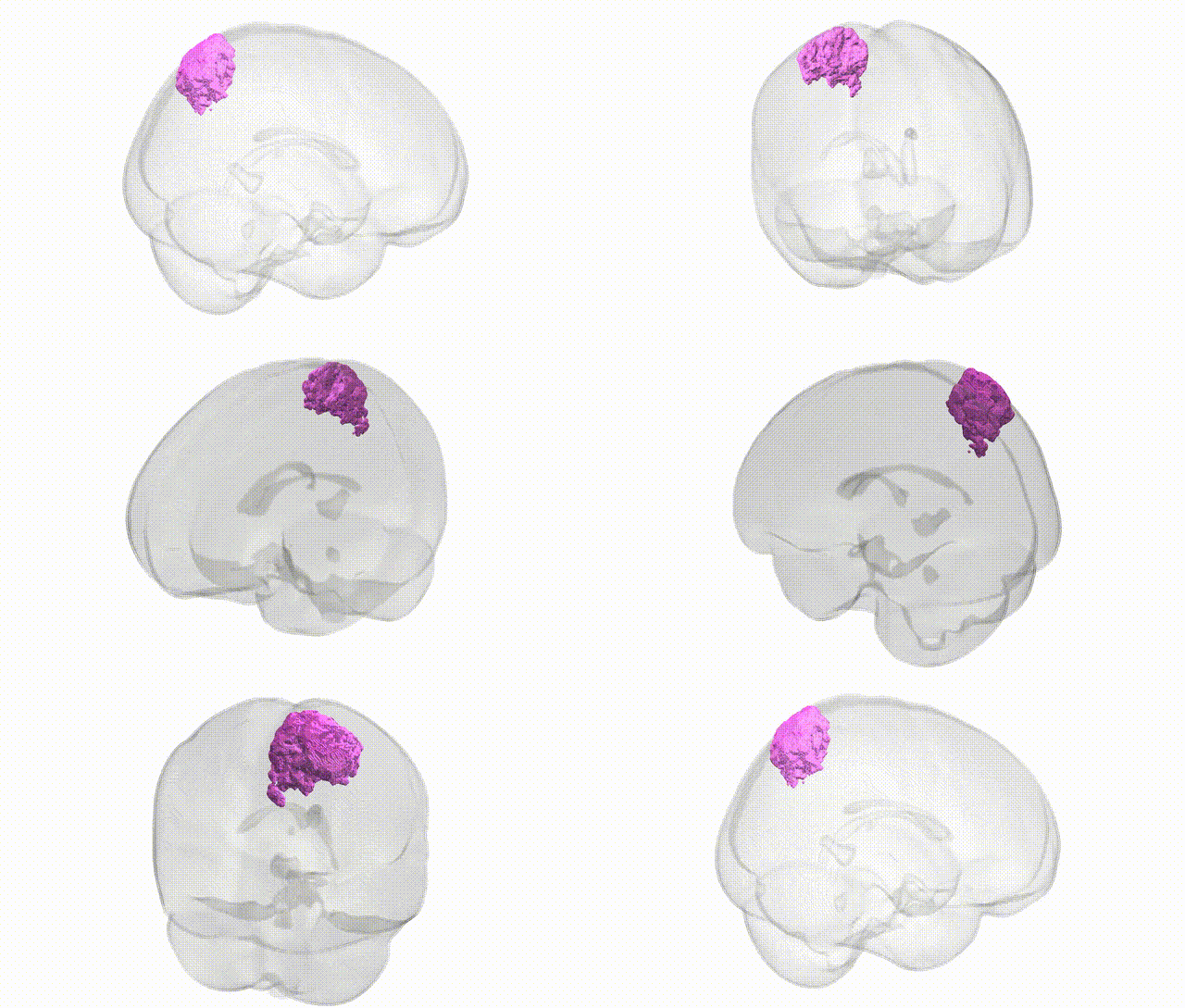
Full Quality Version: Download MP4
Wali Sidiqyar*, Gaurav Rudravaram*, Elyssa M. McMaster, Trent M. Schwartz, Adam M. Saunders, Kurt G. Schilling, Bennett A. Landman "Introducing SPINS: A Shared Public Visualization Library of Neuroanatomical Structures." Medical Imaging with Deep Learning- short paper
This resource is licensed under CC0 1.0 Universal (Public Domain).