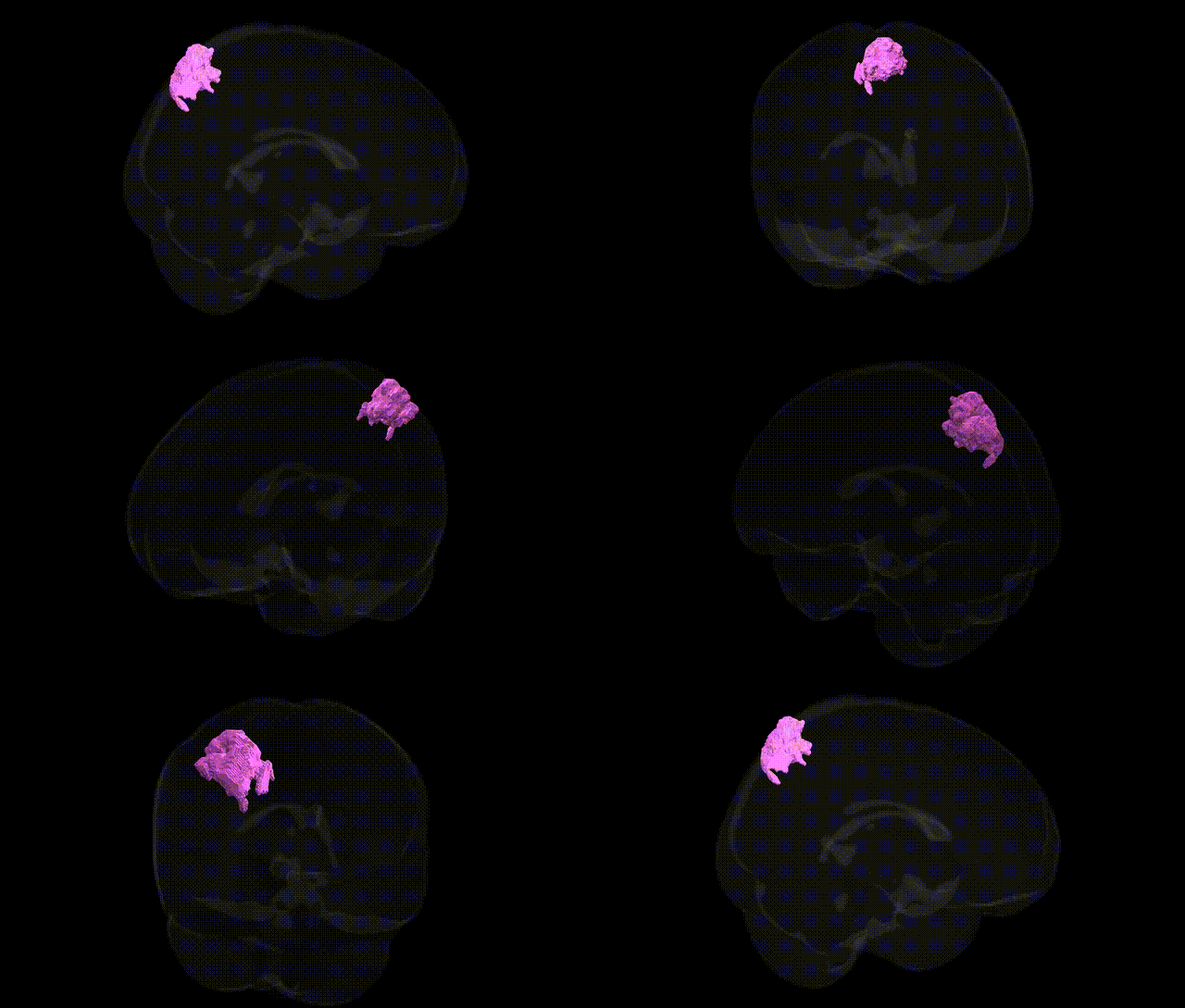
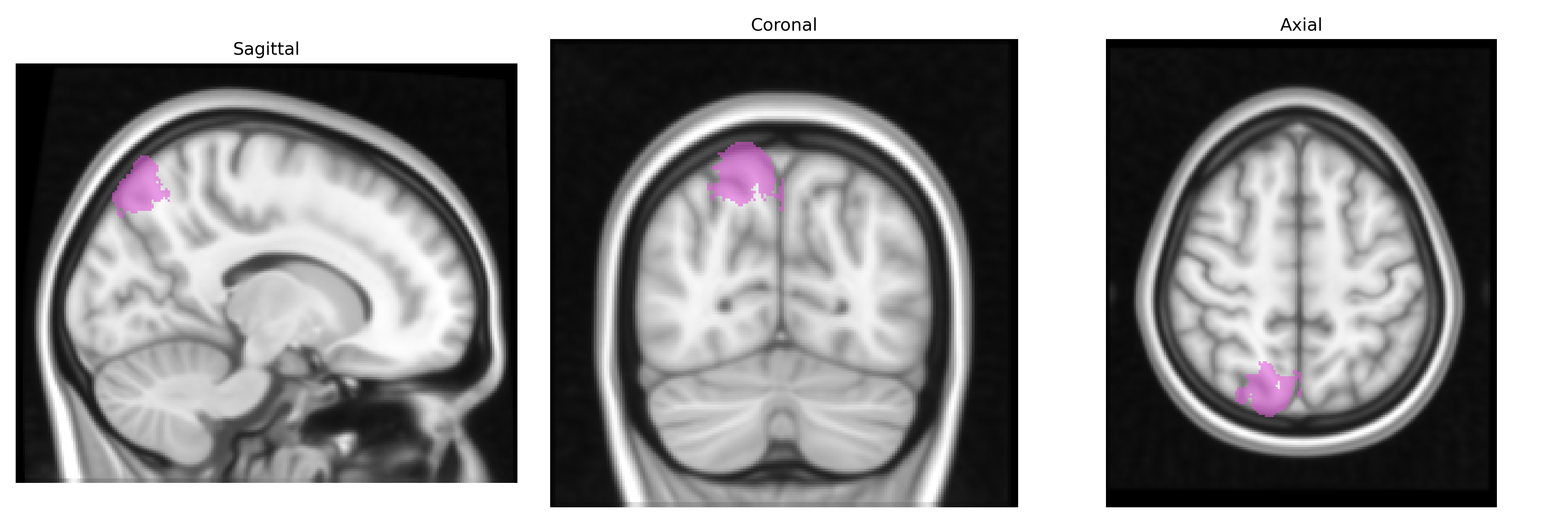
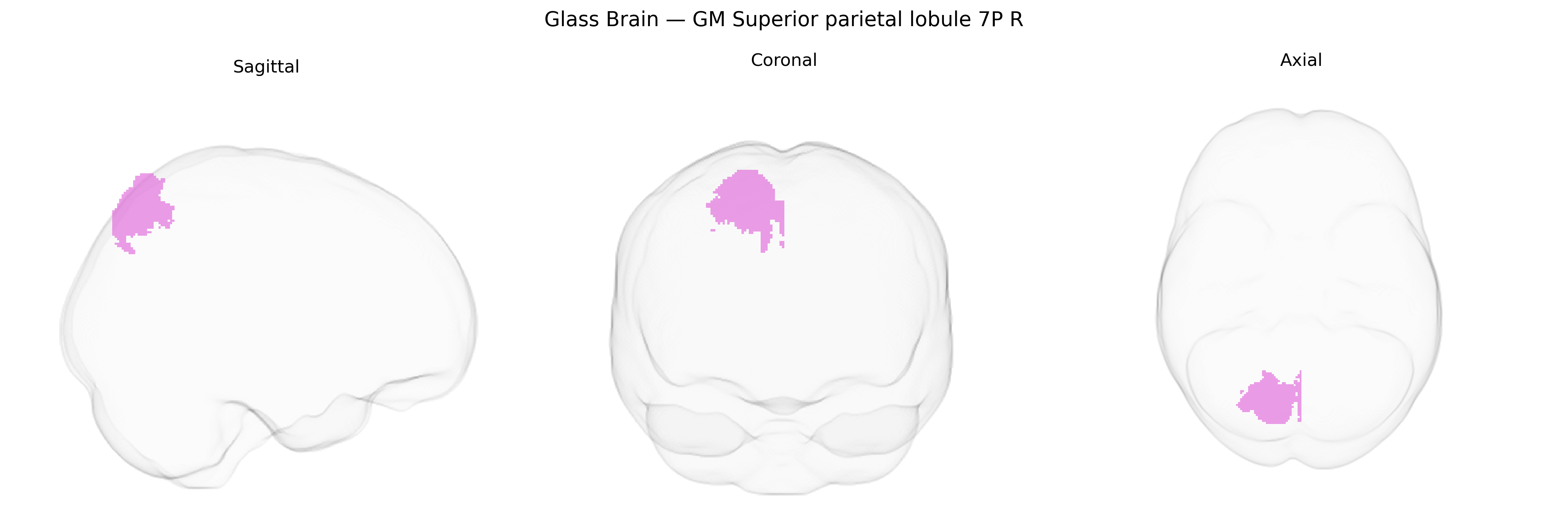
The bilateral GM Superior parietal lobule 7P R, as defined in the Juelich maxprob thr25 1mm atlas, corresponds to a cytoarchitectonically characterized subregion of Brodmann area 7 within the superior parietal lobule of the right hemisphere, implicated in higher-order somatosensory integration and visuospatial processing. This region contributes to the transformation of sensory input into coordinated actions, supporting functions such as spatial attention, sensorimotor integration, and aspects of body representation and mental rotation. Neuronal populations within 7P exhibit connectivity with premotor, motor, and visual association cortices, forming part of dorsal stream networks that underlie goal-directed behavior and eye–hand coordination. There is no direct link for area 7P; a related structure is the Superior parietal lobule.
The bilateral GM Superior Parietal Lobule (SPL), including area 7P (right hemisphere) in the Juelich maxprob atlas, has been repeatedly implicated in genetic and GWAS-based studies of higher-order cognition, visuospatial processing, and neurodevelopmental and psychiatric conditions, although findings typically reference the broader SPL or superior parietal cortex rather than 7P specifically. Twin and SNP-based heritability studies show that cortical thickness, surface area, and gyrification of superior parietal regions are moderately to highly heritable, with common variants in genes involved in synaptic function, neurodevelopment, and axon guidance (e.g., BDNF, CNTNAP2, DISC1, and multiple polygenic loci) contributing to inter-individual differences in parietal morphology and activation during working memory and attention tasks. Large-scale GWAS of brain structure (such as ENIGMA and UK Biobank) have identified numerous loci associated with cortical metrics in parietal areas, including variants near genes involved in neuronal proliferation and myelination, and polygenic scores for intelligence, educational attainment, and general cognitive ability often show robust associations with superior parietal thickness and surface area. Genetic liability for schizophrenia, major depressive disorder, autism spectrum disorder, ADHD, and Alzheimer’s disease has been associated with structural or functional alterations in the superior parietal cortex, including area 7P’s network territory, with risk variants in pathways related to synaptic plasticity, immune signaling (e.g., complement system), and tau/amyloid processing indirectly linked to altered parietal connectivity and atrophy patterns. GWAS of visuospatial ability, working memory, and mathematical skills also show overlapping polygenic architectures with SPL structure and activity, suggesting that the genetic influences on this region contribute to a shared biological basis for attentional control, sensorimotor integration, and higher-order cognitive performance, but current evidence does not isolate unique, well-replicated SNPs or genes specific solely to the Juelich-defined 7P R subregion.
Overview generated by GPT-4o (2026).
Region ID: 80
Hemisphere: bilateral
Atlas: Juelich maxprob thr25 1mm
Full Quality Version: Download MP4
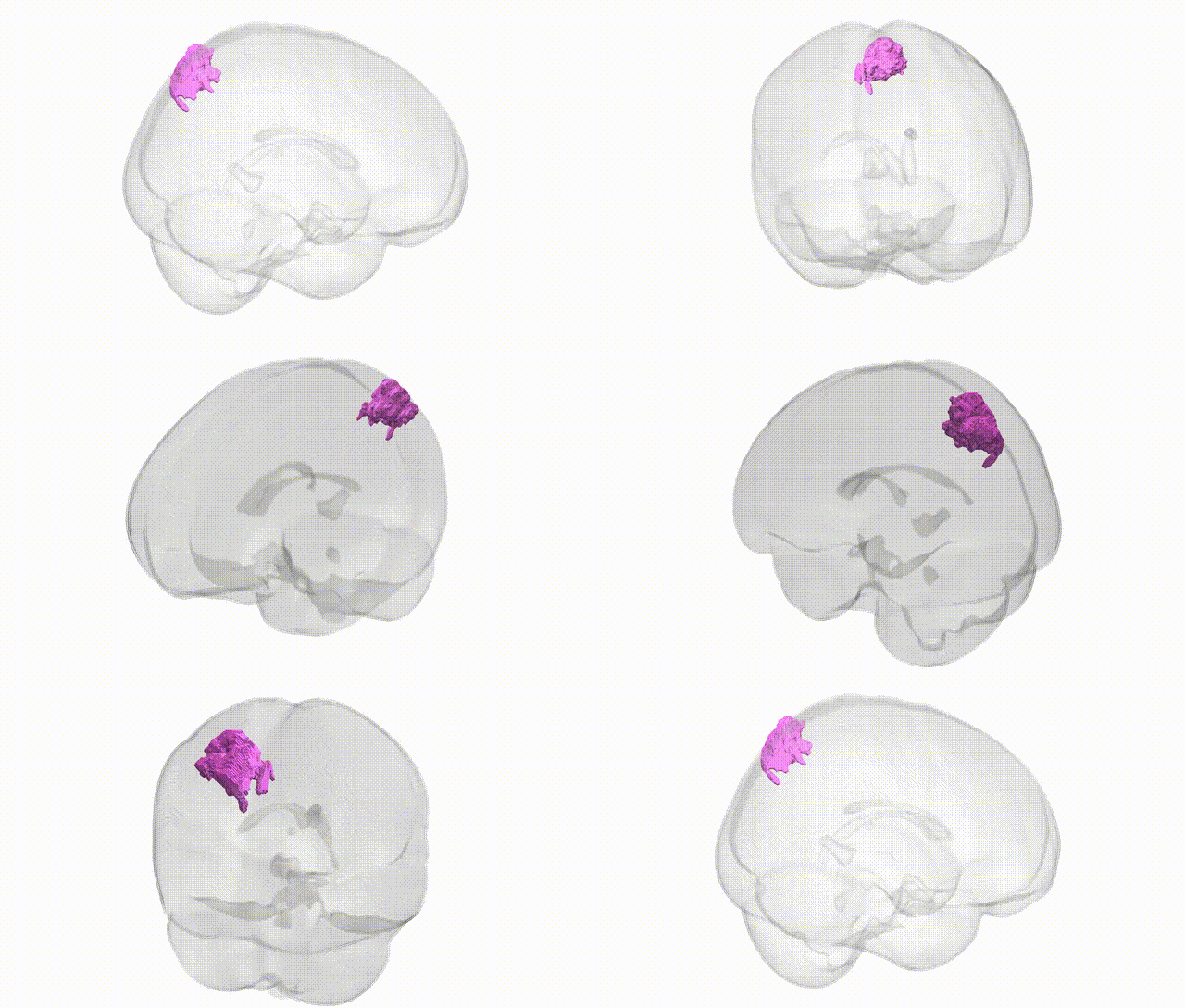
Full Quality Version: Download MP4
Wali Sidiqyar*, Gaurav Rudravaram*, Elyssa M. McMaster, Trent M. Schwartz, Adam M. Saunders, Kurt G. Schilling, Bennett A. Landman "Introducing SPINS: A Shared Public Visualization Library of Neuroanatomical Structures." Medical Imaging with Deep Learning- short paper
This resource is licensed under CC0 1.0 Universal (Public Domain).