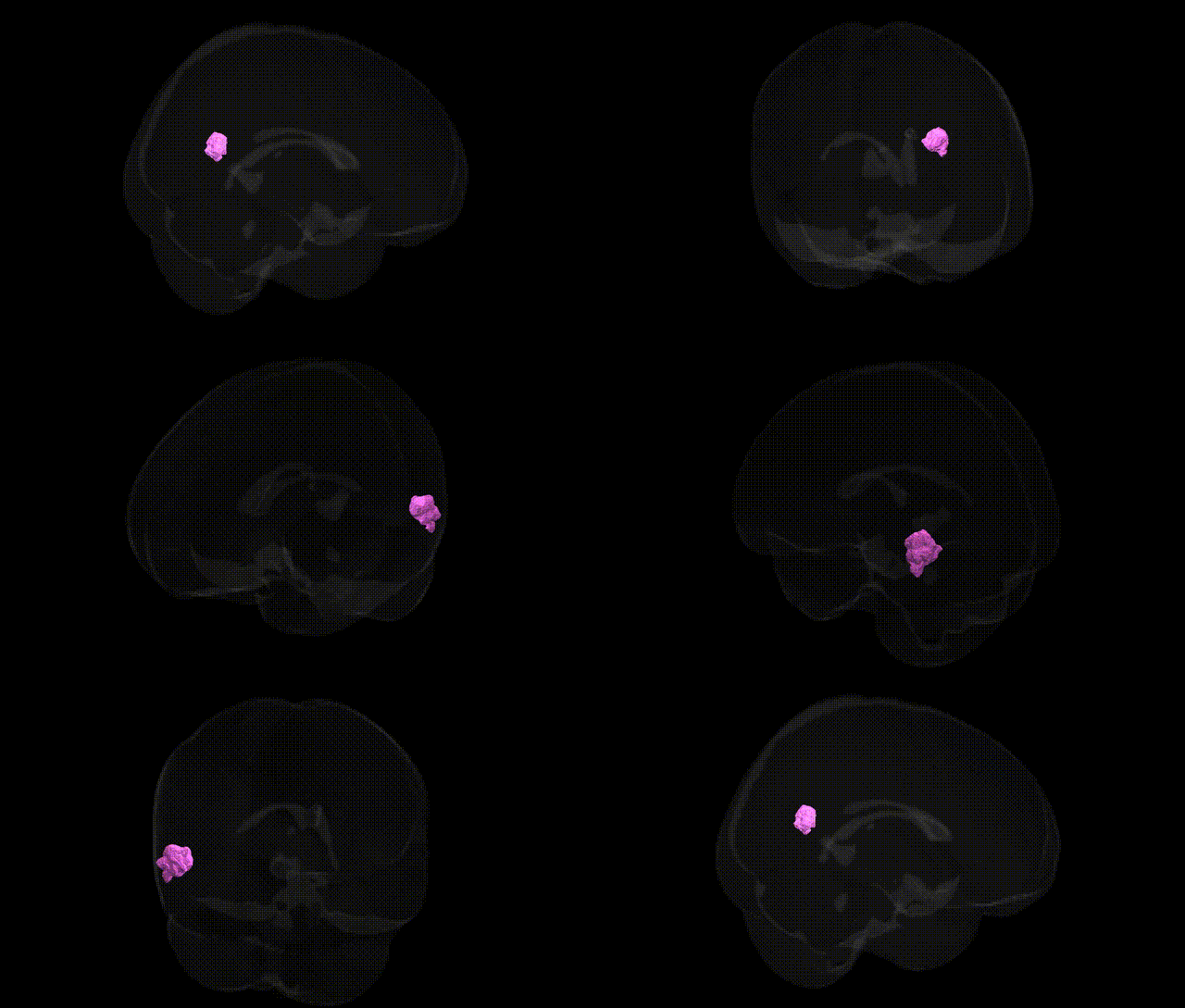
The bilateral GM visual cortex V5 R, as defined in the Juelich maxprob thr25 1mm atlas, refers to the cytoarchitectonically and functionally delineated right-hemispheric portion of the human middle temporal visual area (often termed MT/V5) located in the lateral occipitotemporal cortex. This region is specialized for processing visual motion, including direction and speed, and contributes critically to motion perception, optic flow analysis, and the integration of motion cues for object tracking and visuomotor behavior. Neurons in V5/MT exhibit strong direction-selective responses and are organized in columnar patterns encoding specific motion attributes. Functionally, V5 interacts with early visual areas (e.g., V1/V2) and dorsal stream regions (parietal cortex) to support spatial orientation and visually guided actions, and lesions here can lead to selective motion perception deficits such as akinetopsia. There is no direct Wikipedia article for “visual cortex V5 R” as a Juelich-defined region; a closely related structure is Visual area MT.
The right visual cortex V5 (MT) region in the Juelich maxprob atlas has been implicated in several genetic and neuroimaging-genetics findings, although most results concern broader visual or occipitotemporal networks rather than V5 alone. Twin and SNP-based heritability studies indicate that motion-sensitive extrastriate areas, including V5/MT, show moderate heritability of cortical thickness and surface area, often linked to common variants in genes governing neurodevelopment, synaptic function, and myelination (for example, pathways involving NMDA receptor signaling, axon guidance, and neurotrophins). Large-scale GWAS of brain structure and function (e.g., ENIGMA, UK Biobank imaging genetics) have associated polymorphisms in genes such as MAPT, BDNF, and various loci on chromosomes 3, 6, and 17 with occipital and lateral temporal cortical metrics that encompass or border V5/MT, although these associations are not usually region-specific. Functionally, genetic variants implicated in schizophrenia, autism spectrum disorder, and dyslexia have been linked to altered motion perception and abnormalities in dorsal visual stream regions that include V5/MT, while migraine and visual aura GWAS highlight genes affecting vascular and excitability properties that may influence visual motion areas indirectly. Overall, evidence points to polygenic influences on the structure and function of the V5/MT complex, but no single gene or variant has been robustly and specifically tied to the bilateral GM Visual cortex V5 R region in the Juelich atlas, and most associations derive from broader visual cortex or dorsal-stream phenotypes rather than finely parcellated V5-focused analyses.
Overview generated by GPT-4o (2026).
Region ID: 90
Hemisphere: bilateral
Atlas: Juelich maxprob thr25 1mm
Full Quality Version: Download MP4
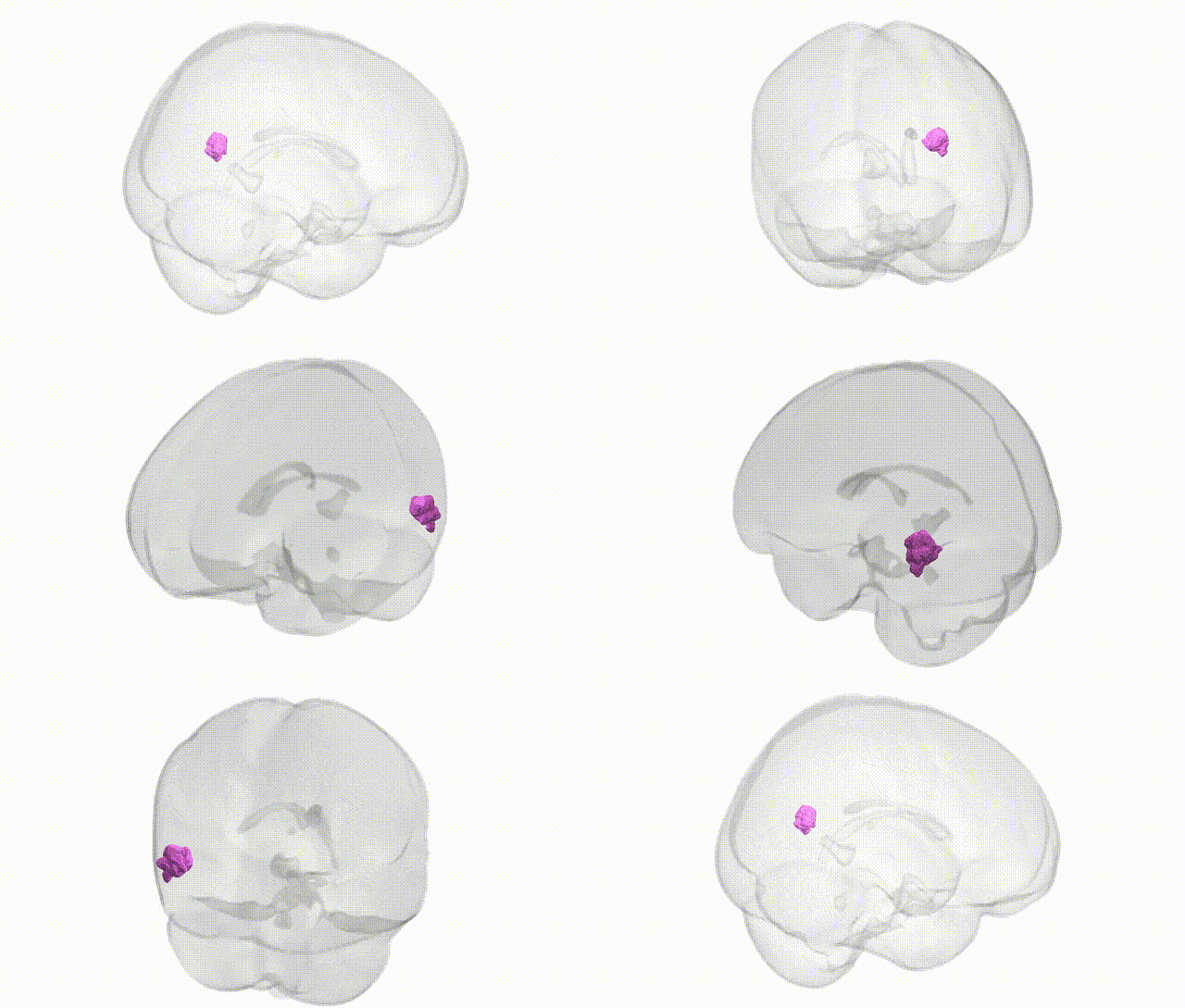
Full Quality Version: Download MP4
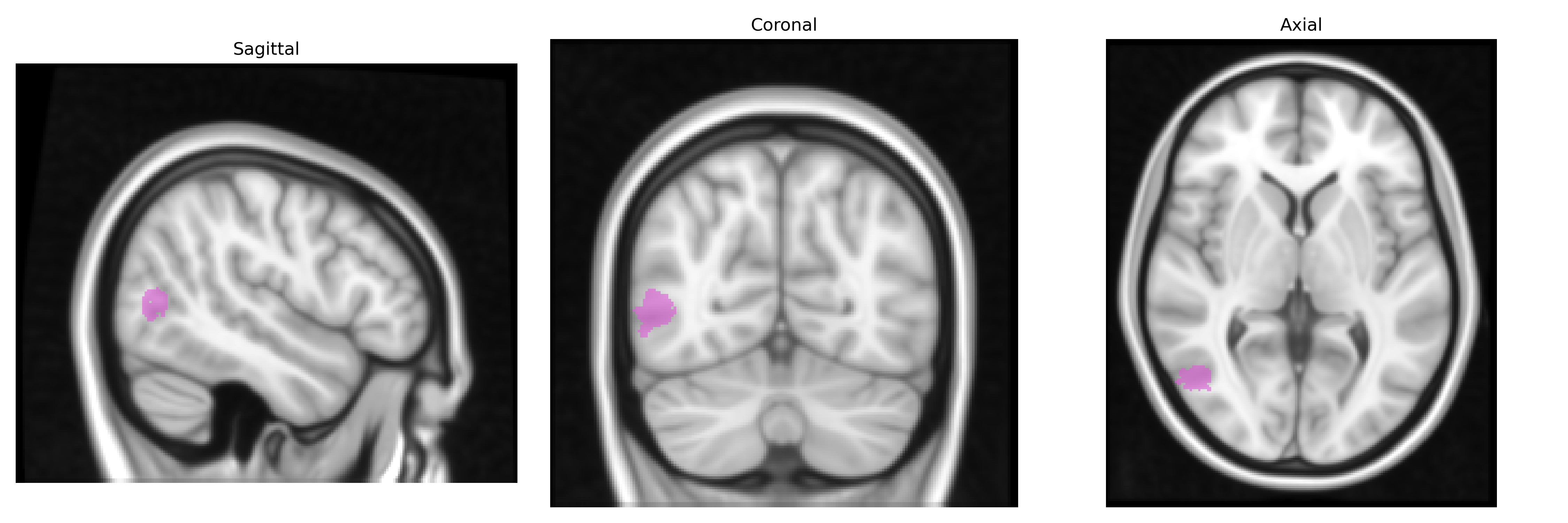
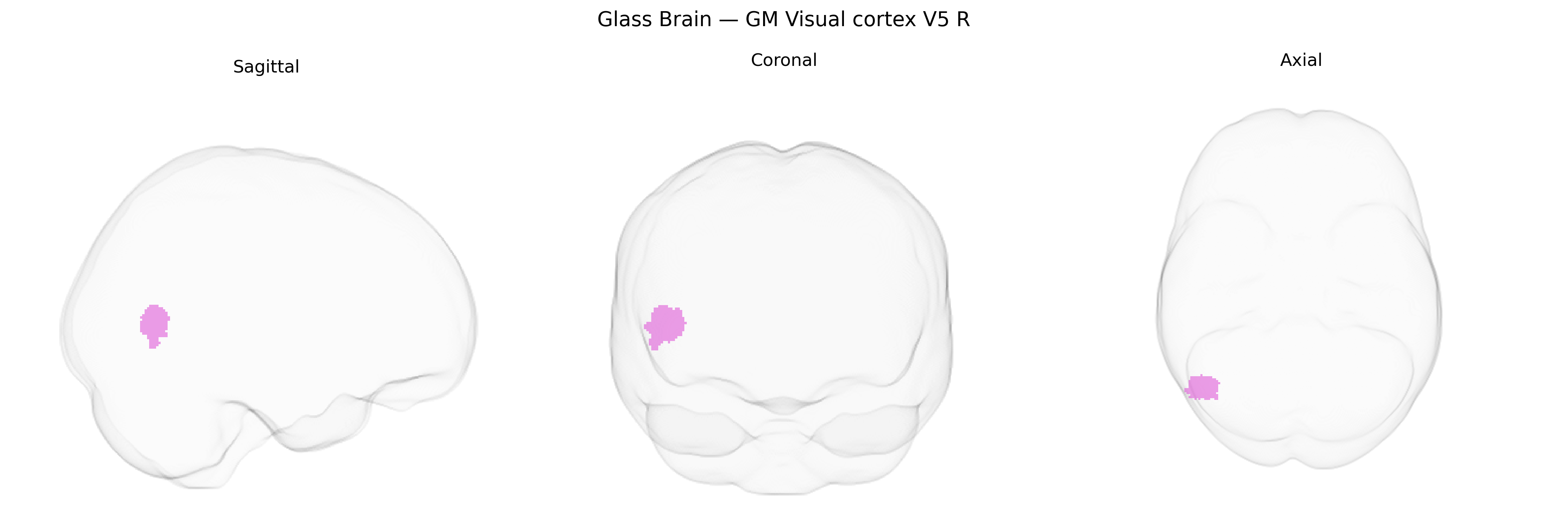
Wali Sidiqyar*, Gaurav Rudravaram*, Elyssa M. McMaster, Trent M. Schwartz, Adam M. Saunders, Kurt G. Schilling, Bennett A. Landman "Introducing SPINS: A Shared Public Visualization Library of Neuroanatomical Structures." Medical Imaging with Deep Learning- short paper
This resource is licensed under CC0 1.0 Universal (Public Domain).