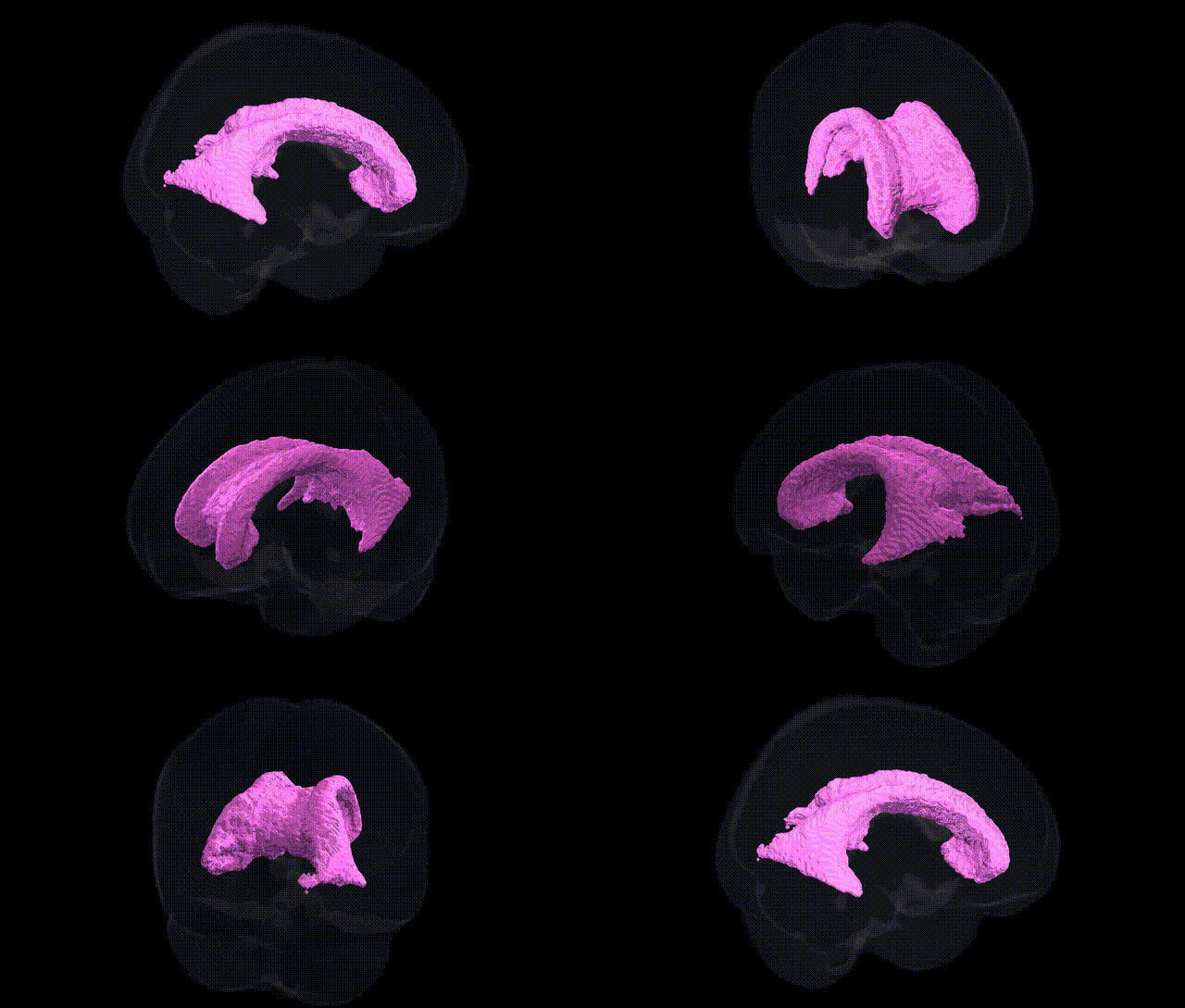
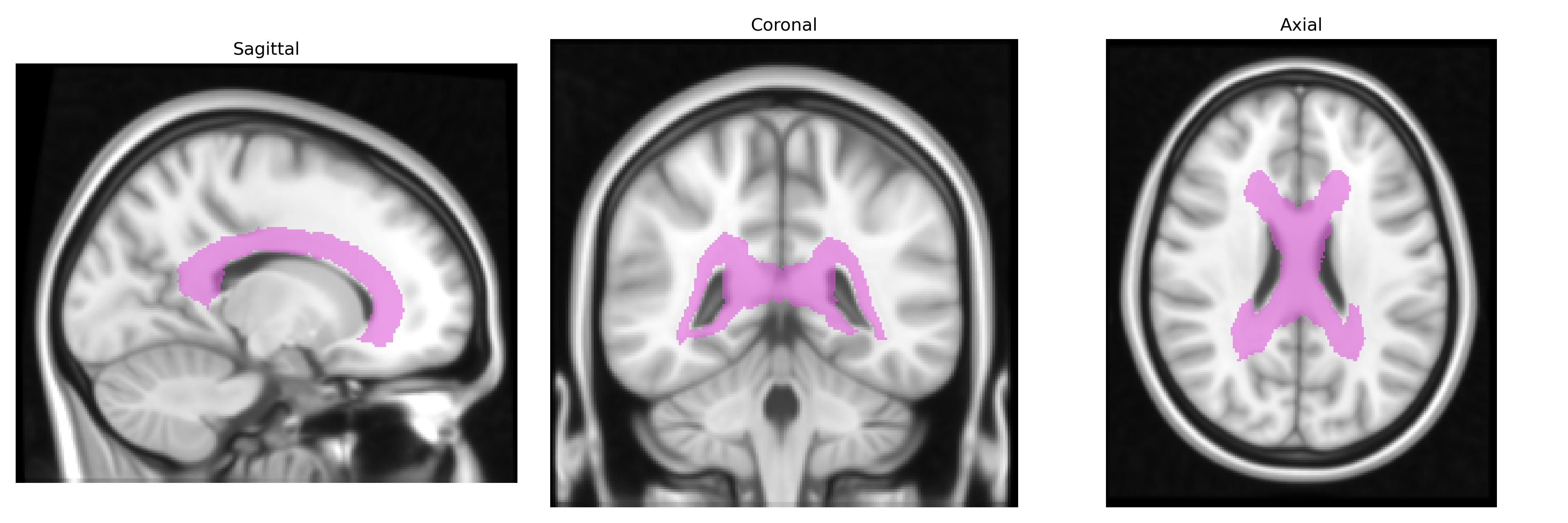
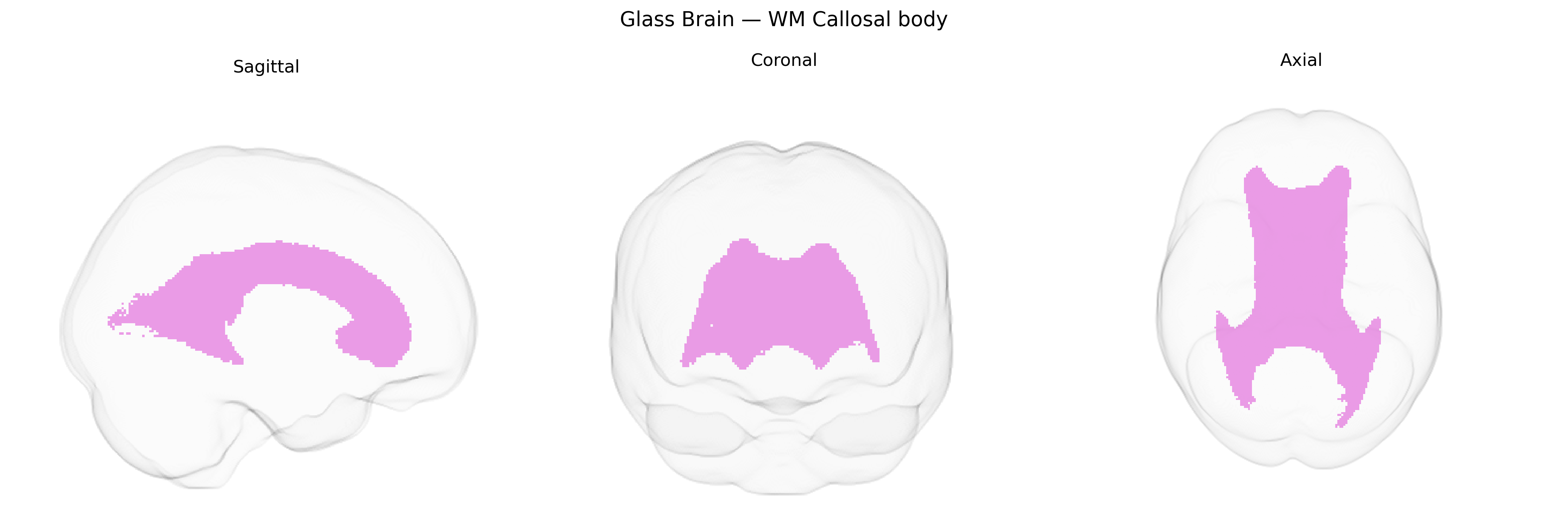
The bilateral WM Callosal body, as defined in the Juelich maxprob thr25 1mm Atlas, corresponds to the central portion of the corpus callosum composed primarily of dense myelinated commissural fibers connecting homologous regions of the cerebral hemispheres, especially premotor, supplementary motor, and primary motor cortices. This white matter tract plays a key role in interhemispheric transfer of sensorimotor and associative information, supporting coordinated bimanual movements, integration of bilateral somatosensory inputs, and higher-order cognitive processes that require synchronization between hemispheres. Structurally, the callosal body lies between the genu anteriorly and the splenium posteriorly and contains topographically organized fiber bundles, with more anterior fibers generally linking frontal regions and more posterior fibers linking parietal areas. There is no direct Wikipedia article for “WM Callosal body”; a closely related structure is the Corpus callosum.
Genetic associations involving the bilateral WM Callosal body, a major interhemispheric white matter tract, largely emerge from imaging genetics and GWAS of white matter microstructure rather than region-specific studies of the Juelich atlas label itself. Large consortia such as ENIGMA and UK Biobank have identified multiple loci where common variants influence callosal fractional anisotropy, volume, or integrity, including genes related to axon guidance, myelination, and neurodevelopment (e.g., variants near CNTN4, DCC, and myelin-associated genes), with downstream links to cognitive performance and brain connectivity measures. Callosal microstructure metrics show genetic correlations with neurodevelopmental and psychiatric conditions—particularly schizophrenia, bipolar disorder, major depressive disorder, autism spectrum disorder, and ADHD—where risk alleles are associated with altered callosal integrity, suggesting that part of the heritable risk for these disorders is mediated through disruptions in interhemispheric connectivity. GWAS of intelligence, processing speed, and educational attainment also report polygenic influences on callosal structure, indicating that genetic determinants of cognitive traits partly operate via this tract. Additionally, rare mutations affecting callosal development (e.g., in L1CAM, ARX, and other genes implicated in corpus callosum agenesis) highlight a more extreme variant of the same biological axis—genes regulating axon growth, guidance, and myelination—whose common variants contribute subtly to normal variability in the bilateral WM Callosal body.
Overview generated by GPT-4o (2026).
Region ID: 95
Hemisphere: bilateral
Atlas: Juelich maxprob thr25 1mm
Full Quality Version: Download MP4
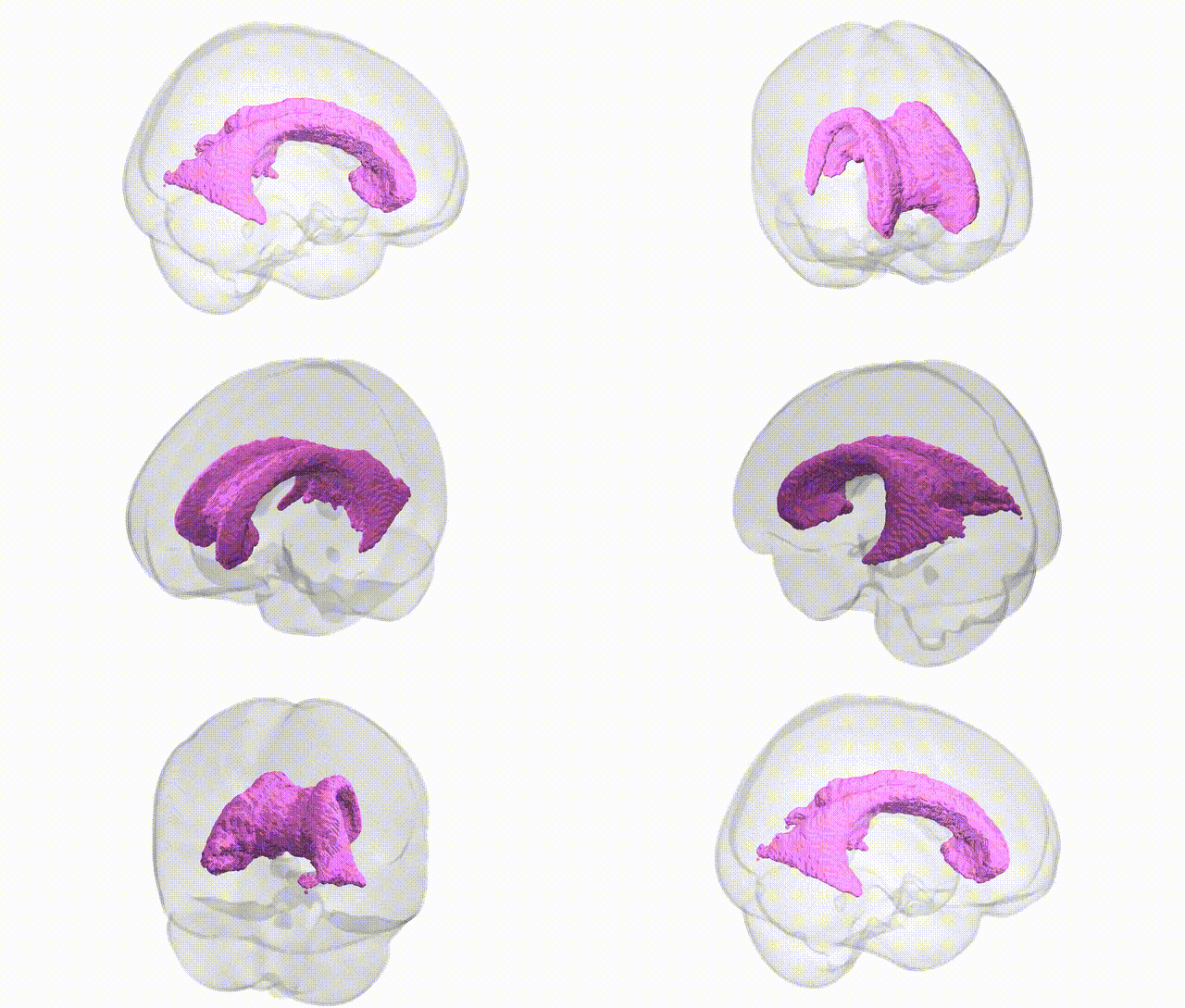
Full Quality Version: Download MP4
Wali Sidiqyar*, Gaurav Rudravaram*, Elyssa M. McMaster, Trent M. Schwartz, Adam M. Saunders, Kurt G. Schilling, Bennett A. Landman "Introducing SPINS: A Shared Public Visualization Library of Neuroanatomical Structures." Medical Imaging with Deep Learning- short paper
This resource is licensed under CC0 1.0 Universal (Public Domain).