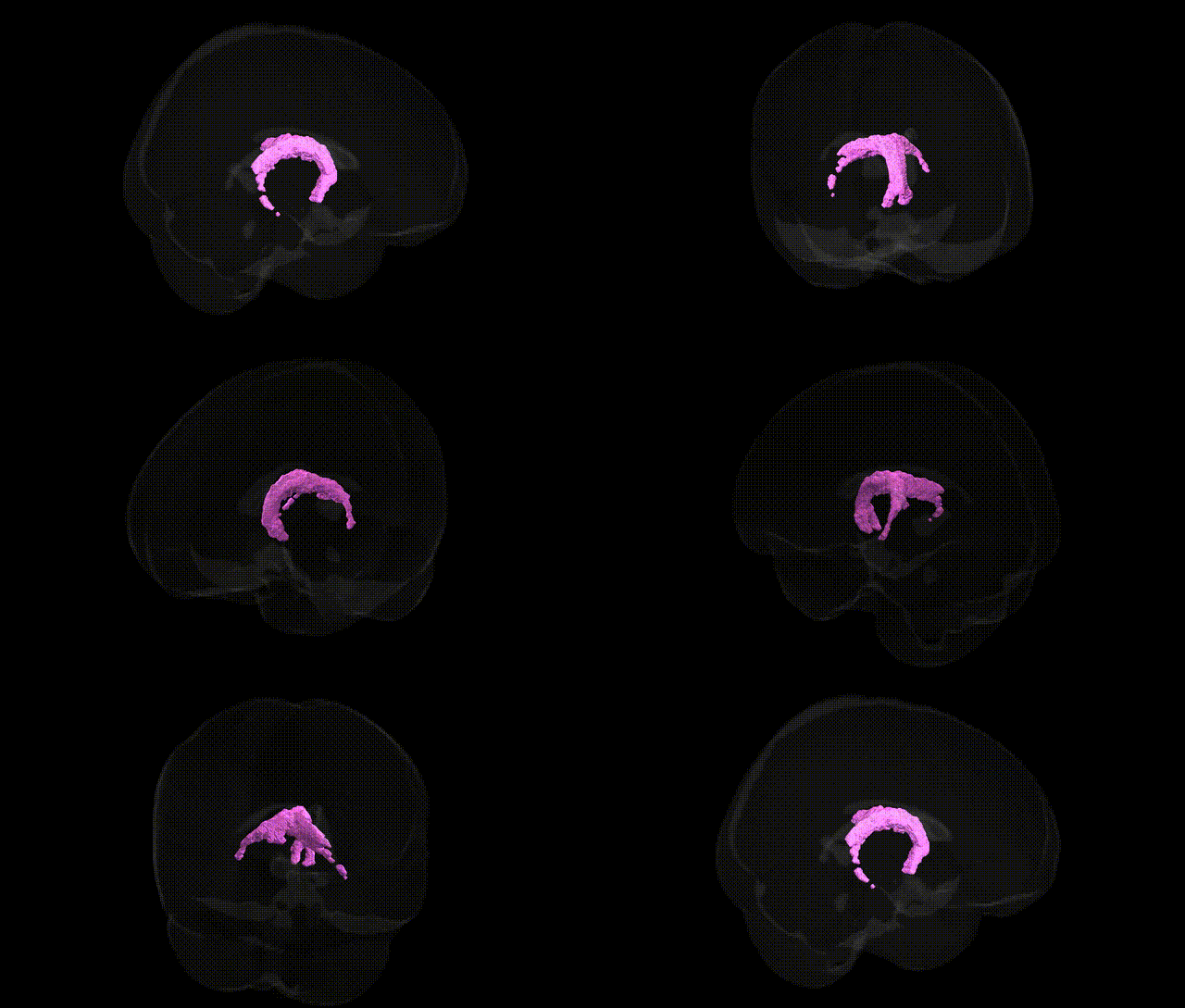
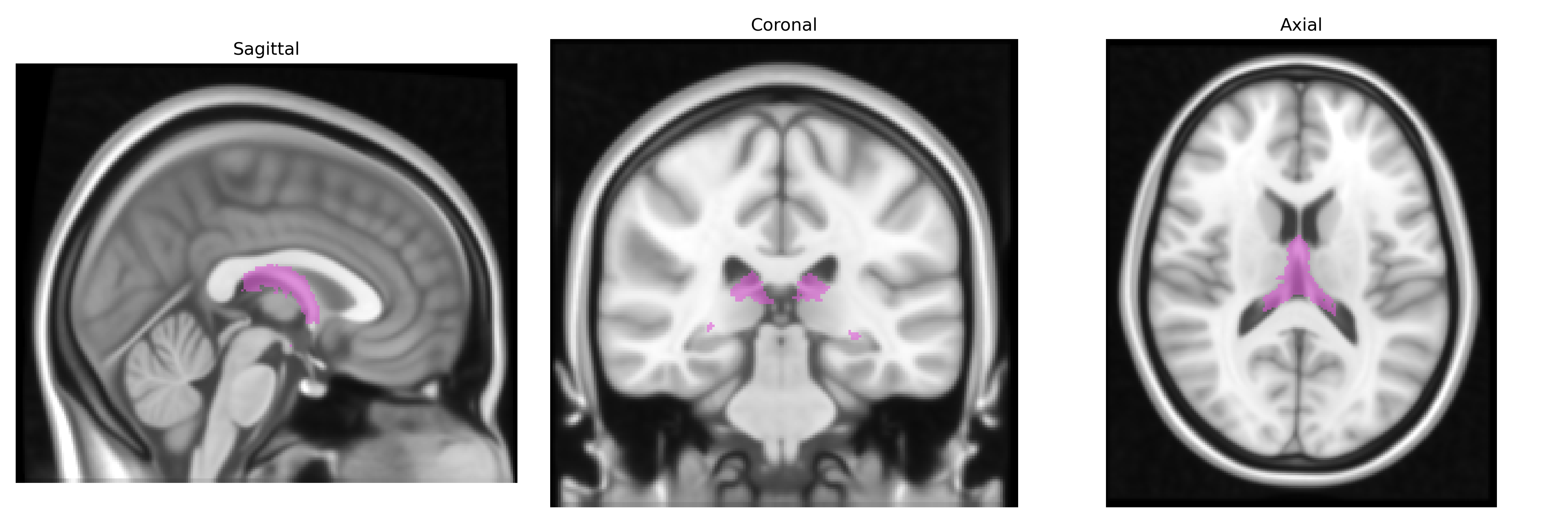
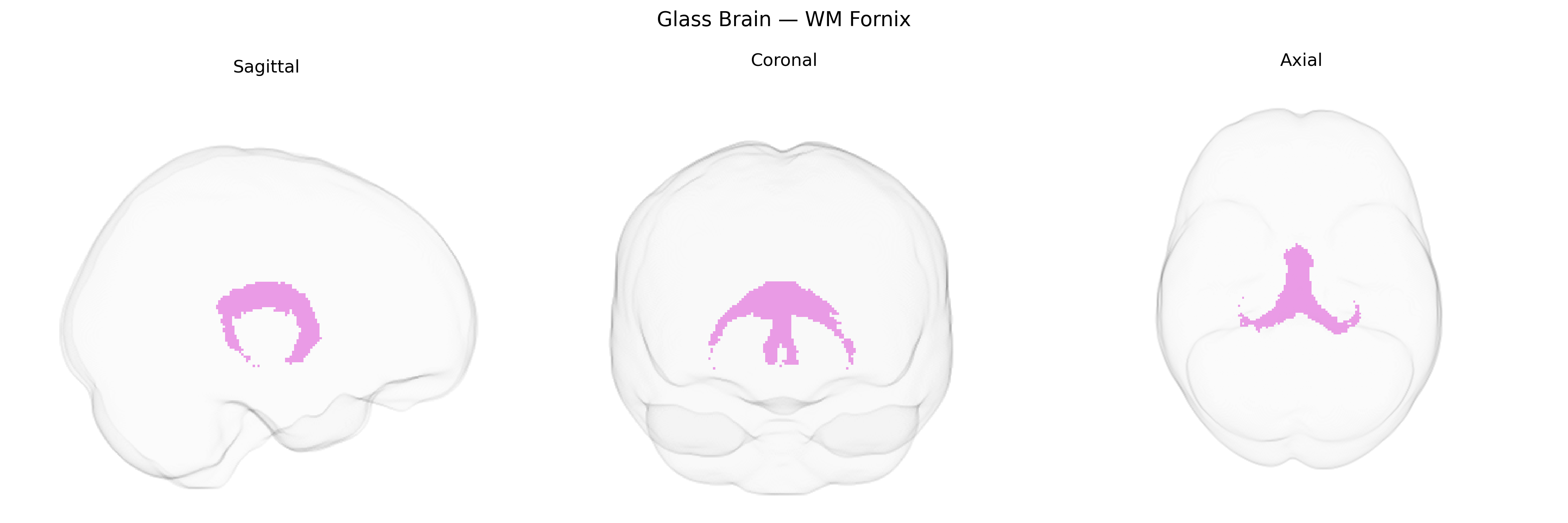
The bilateral WM Fornix in the Juelich maxprob thr25 1 mm atlas represents the principal white-matter tract of the fornix, a C-shaped fiber bundle that constitutes the major efferent pathway of the hippocampal formation. Arising primarily from hippocampal pyramidal neurons (especially in the subiculum and CA1), its fibers arch anteromedially, forming the fimbria and crura of the fornix, then converge into the body and columns that project predominantly to the mammillary bodies, septal nuclei, and other components of the limbic system. Functionally, this tract is crucial for episodic memory and spatial navigation, mediating hippocampal communication with diencephalic and basal forebrain structures; lesions or degeneration of the fornix are associated with memory impairment and disconnection syndromes in limbic circuitry. Fornix (brain)
The bilateral WM fornix, a key white-matter tract connecting the hippocampus with subcortical structures and represented in the Juelich maxprob thr25 1 mm atlas, has been implicated in several genetic and GWAS findings largely through its role in memory circuitry and limbic connectivity rather than through tract-specific association studies. Variants in genes related to myelination and axonal integrity (such as MAG, MBP, and PLP1) and broader neurodevelopmental genes (including BDNF, DISC1, and NRG1) have been associated with white-matter microstructure changes in diffusion MRI studies that encompass fornix integrity, often measured via fractional anisotropy. Large neuroimaging GWAS consortia (e.g., ENIGMA, UK Biobank-based studies) have reported polygenic influences on fornix volume and diffusion metrics, identifying loci near genes involved in axon guidance and synaptic plasticity, although individual tract-specific signals are typically modest and embedded in global white-matter architecture. Fornix abnormalities linked to these genetic variants have been repeatedly associated with cognitive traits such as episodic memory performance and general cognitive ability, and with disorders including Alzheimer’s disease, schizophrenia, major depressive disorder, and bipolar disorder, where risk alleles in genes like APOE, CLU, CR1, and COMT correlate with alterations in fornix structure and connectivity as part of broader limbic network changes.
Overview generated by GPT-4o (2026).
Region ID: 100
Hemisphere: bilateral
Atlas: Juelich maxprob thr25 1mm
Full Quality Version: Download MP4
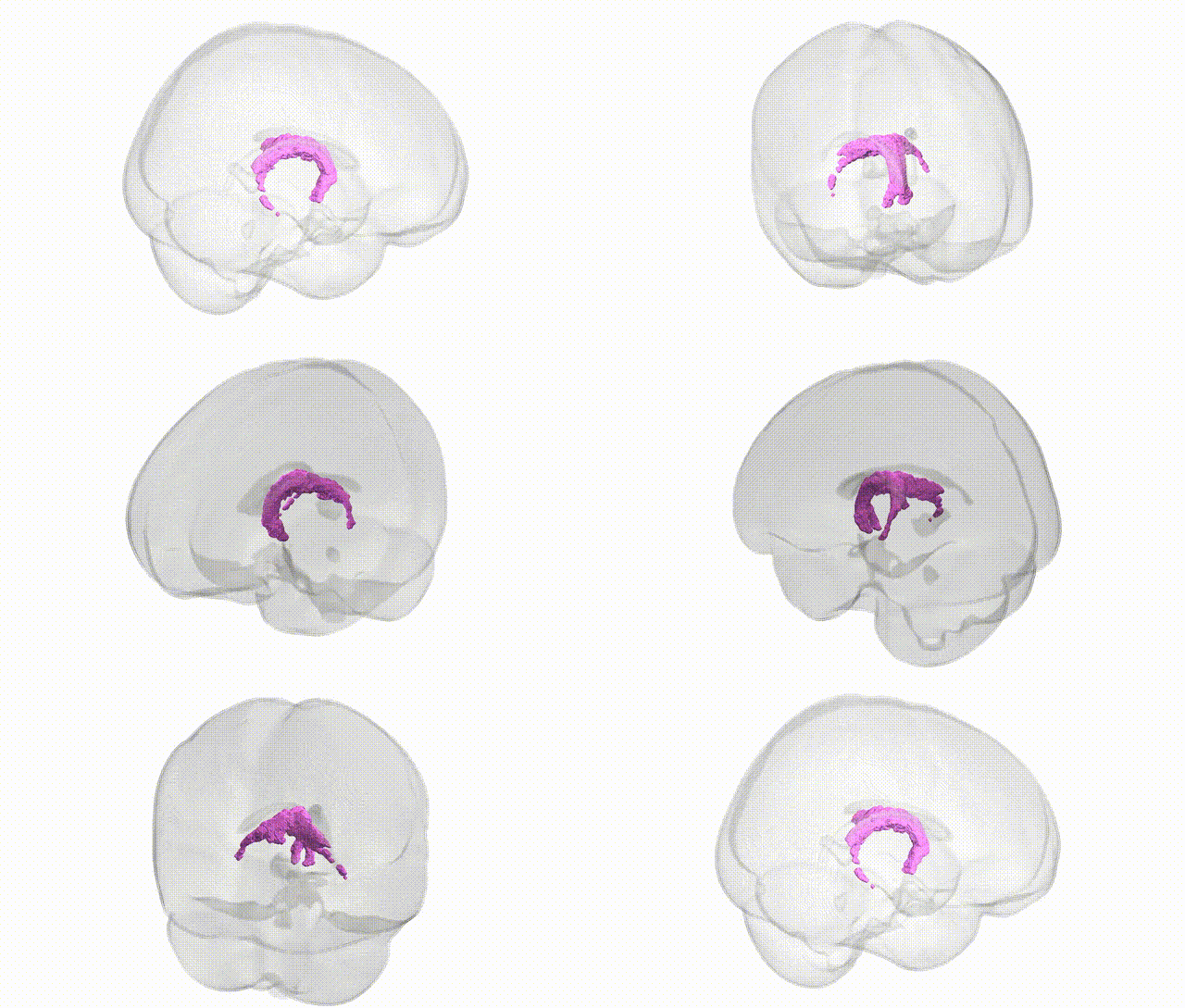
Full Quality Version: Download MP4
Wali Sidiqyar*, Gaurav Rudravaram*, Elyssa M. McMaster, Trent M. Schwartz, Adam M. Saunders, Kurt G. Schilling, Bennett A. Landman "Introducing SPINS: A Shared Public Visualization Library of Neuroanatomical Structures." Medical Imaging with Deep Learning- short paper
This resource is licensed under CC0 1.0 Universal (Public Domain).