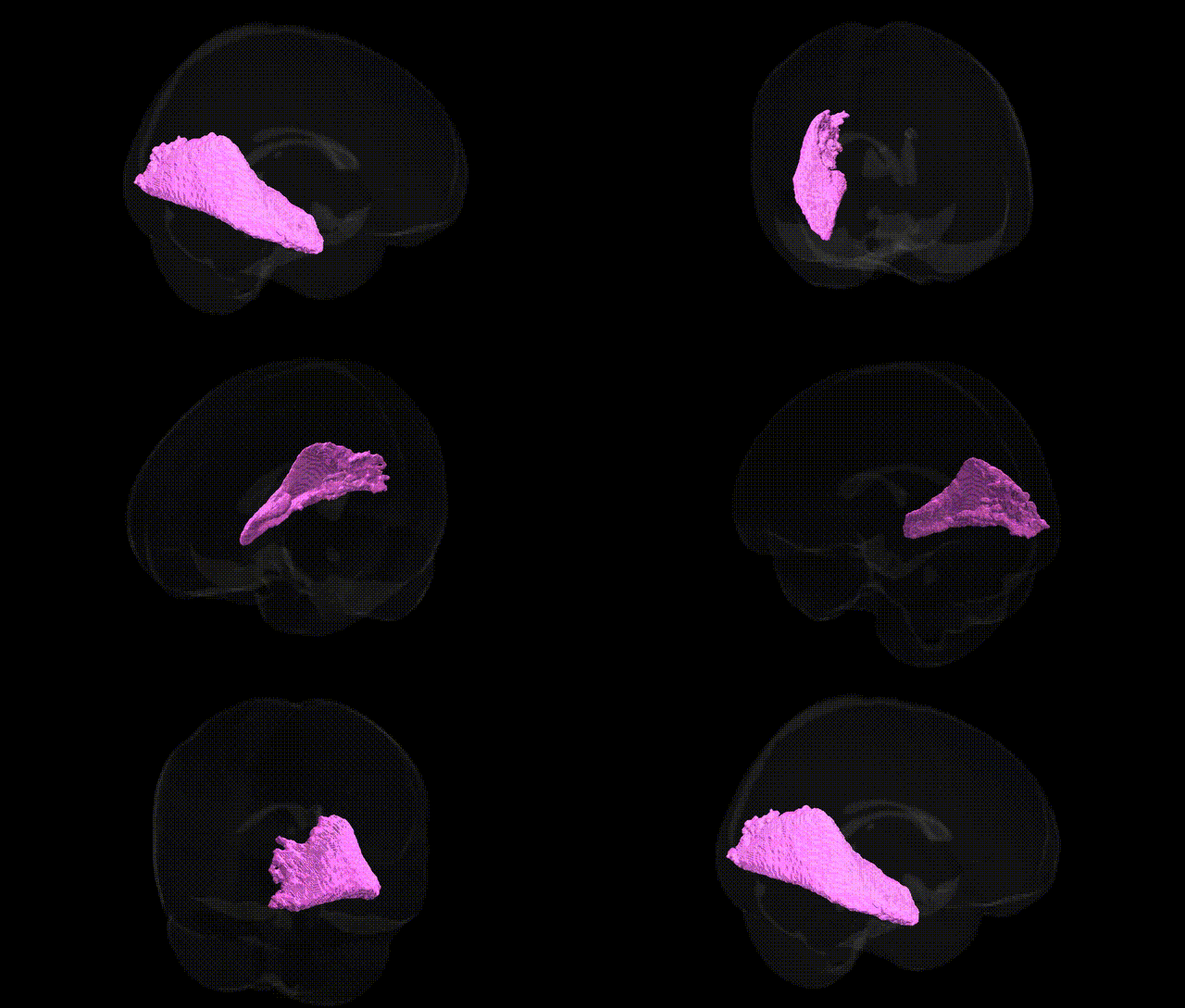
The bilateral WM Optic radiation L, as defined in the Juelich maxprob thr25 1 mm atlas, refers to the left-hemispheric portion of the optic radiation, a major white matter fiber pathway conveying visual information from the lateral geniculate nucleus (LGN) of the thalamus to the primary visual cortex (V1, Brodmann area 17) in the occipital lobe. These myelinated projection fibers follow a characteristic course through the temporal and parietal lobes, including the anteriorly arching Meyer’s loop, and are topographically organized to maintain retinotopic mapping of the visual field. Functionally, the optic radiation is critical for conscious visual perception, transmitting signals that encode basic features such as contrast, orientation, and motion, which are then further processed along dorsal and ventral visual streams. Lesions affecting the left optic radiation can lead to characteristic contralateral (right) visual field defects such as homonymous hemianopia or quadrantanopia, depending on the specific portion of the tract involved. There is no direct Wikipedia article for “Optic radiation (Juelich, bilateral WM Optic radiation L),” but the structure corresponds to the classical Optic radiation.
The bilateral white matter (WM) optic radiation in the left hemisphere, as defined in the Juelich maxprob thr25 1mm atlas, has been implicated in several genetic and neuroimaging-genetic studies that link variants affecting white matter integrity, visual pathways, and broader neurodevelopmental processes. Diffusion MRI GWAS (e.g., ENIGMA, UK Biobank) have identified common variants—in or near genes such as DTNBP1, ZNF804A, NTRK1/2, and multiple loci on chromosomes 1, 3, 6, and 17—associated with fractional anisotropy and mean diffusivity in optic radiations, reflecting microstructural properties relevant to visual signal transmission. Polygenic scores and specific risk alleles for schizophrenia, bipolar disorder, and major depression have been associated with reduced integrity or altered connectivity of the optic radiation, consistent with broader white matter disruption in these disorders. Variants in genes involved in myelination and axonal guidance (e.g., MAG, NRXN1, ROBO1, and other oligodendrocyte-related or axon pathfinding genes) contribute to interindividual differences in optic radiation structure and are implicated in disorders such as multiple sclerosis, neurodevelopmental disorders, and hereditary leukoencephalopathies that affect posterior visual pathways. GWAS of visual traits (including visual acuity, refractive error, and amblyopia-related measures) and brain structural traits (global and regional white matter metrics) also highlight loci influencing optic radiation morphology and integrity, although most findings point to polygenic, distributed effects rather than single region-specific genes.
Overview generated by GPT-4o (2026).
Region ID: 109
Hemisphere: bilateral
Atlas: Juelich maxprob thr25 1mm
Full Quality Version: Download MP4
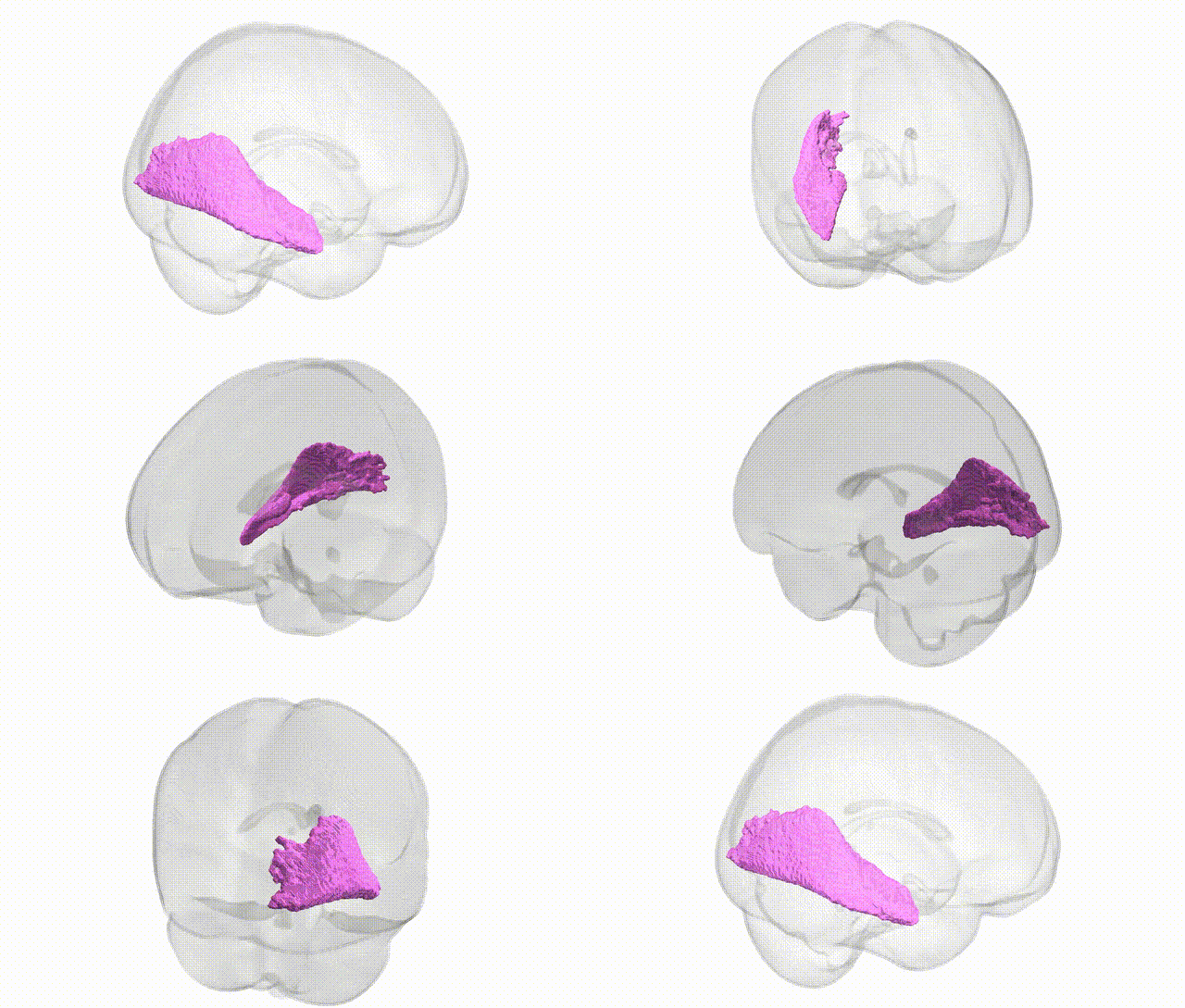
Full Quality Version: Download MP4
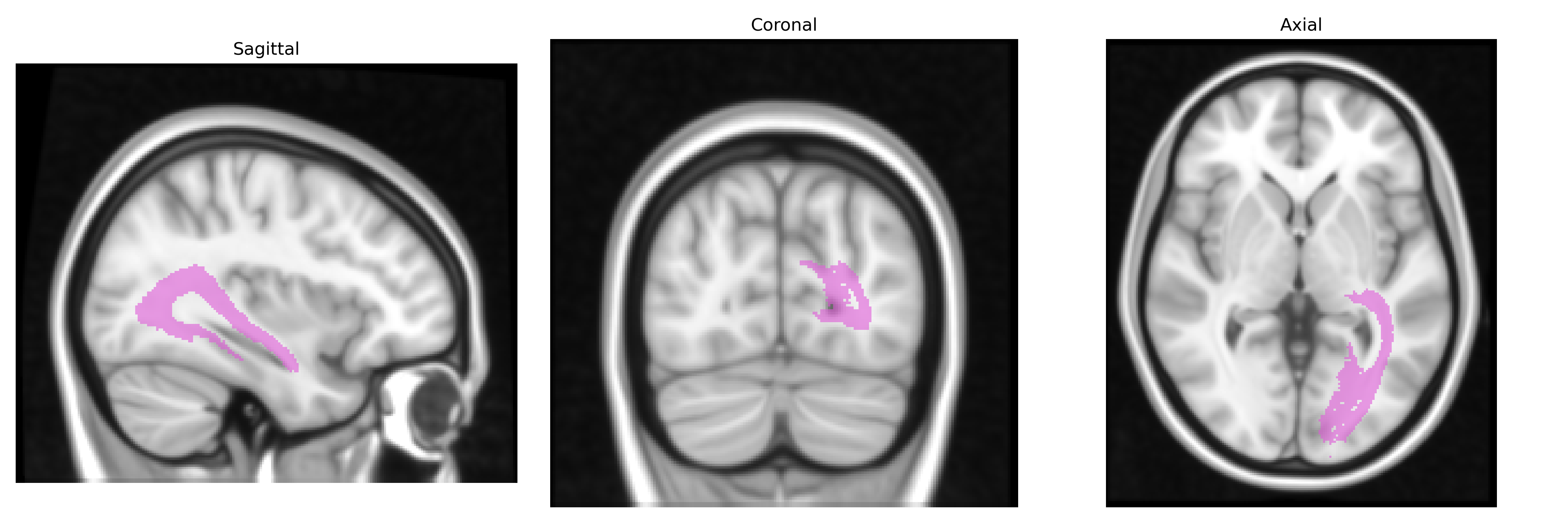
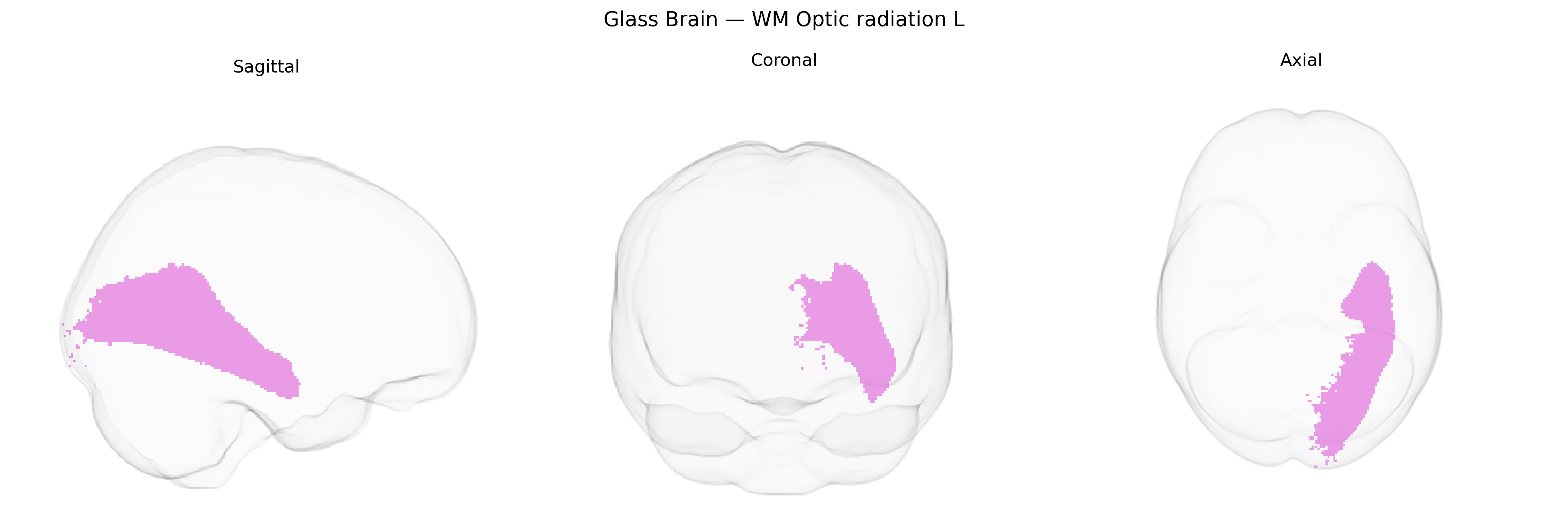
Wali Sidiqyar*, Gaurav Rudravaram*, Elyssa M. McMaster, Trent M. Schwartz, Adam M. Saunders, Kurt G. Schilling, Bennett A. Landman "Introducing SPINS: A Shared Public Visualization Library of Neuroanatomical Structures." Medical Imaging with Deep Learning- short paper
This resource is licensed under CC0 1.0 Universal (Public Domain).