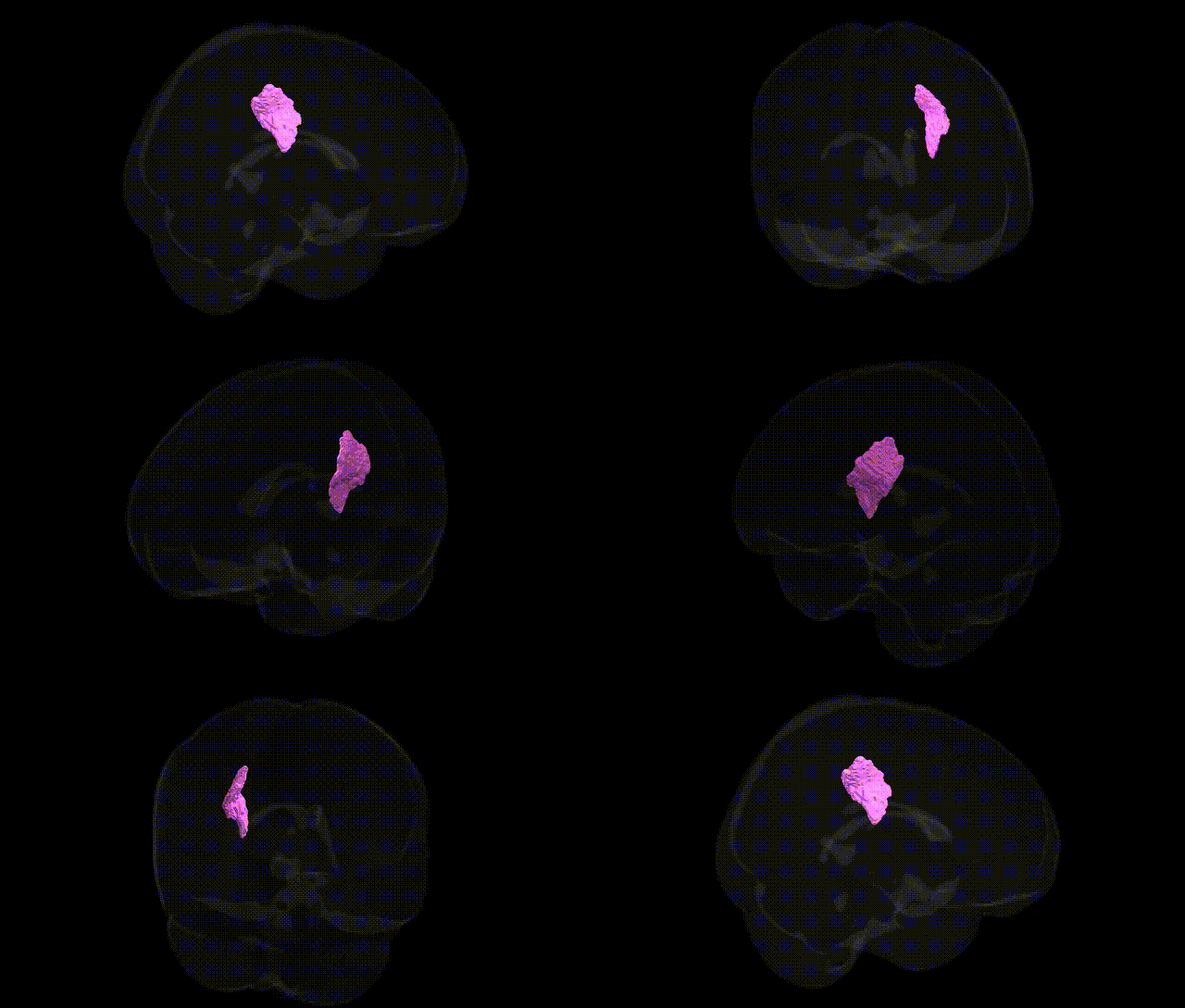
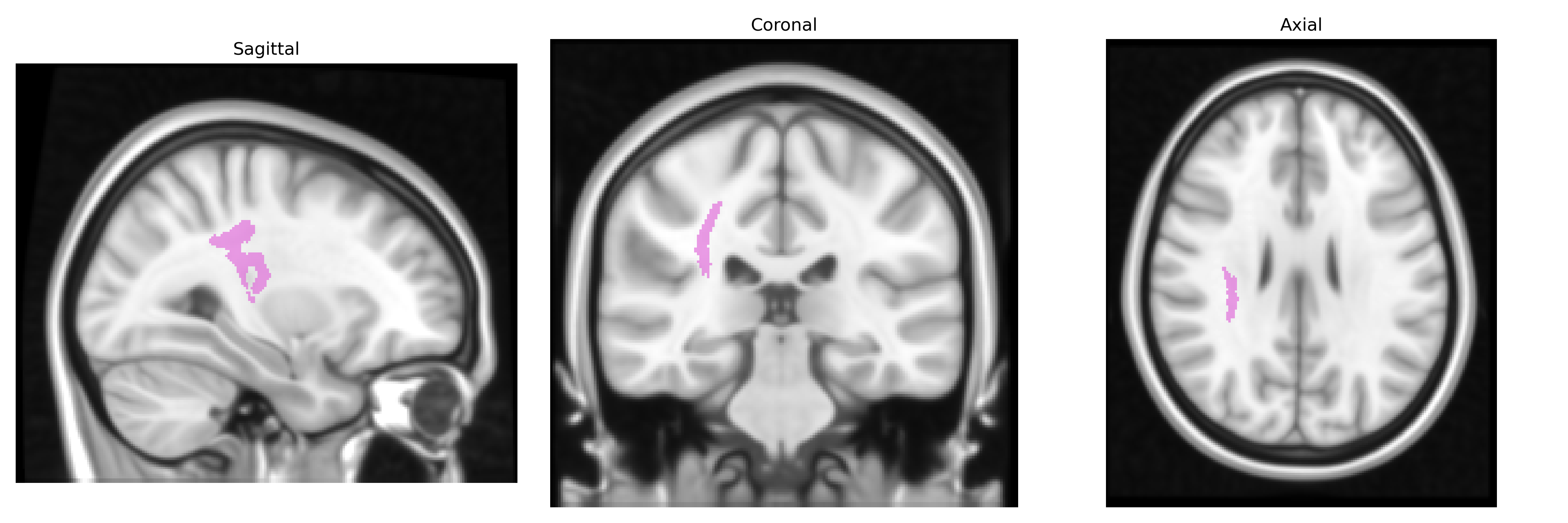
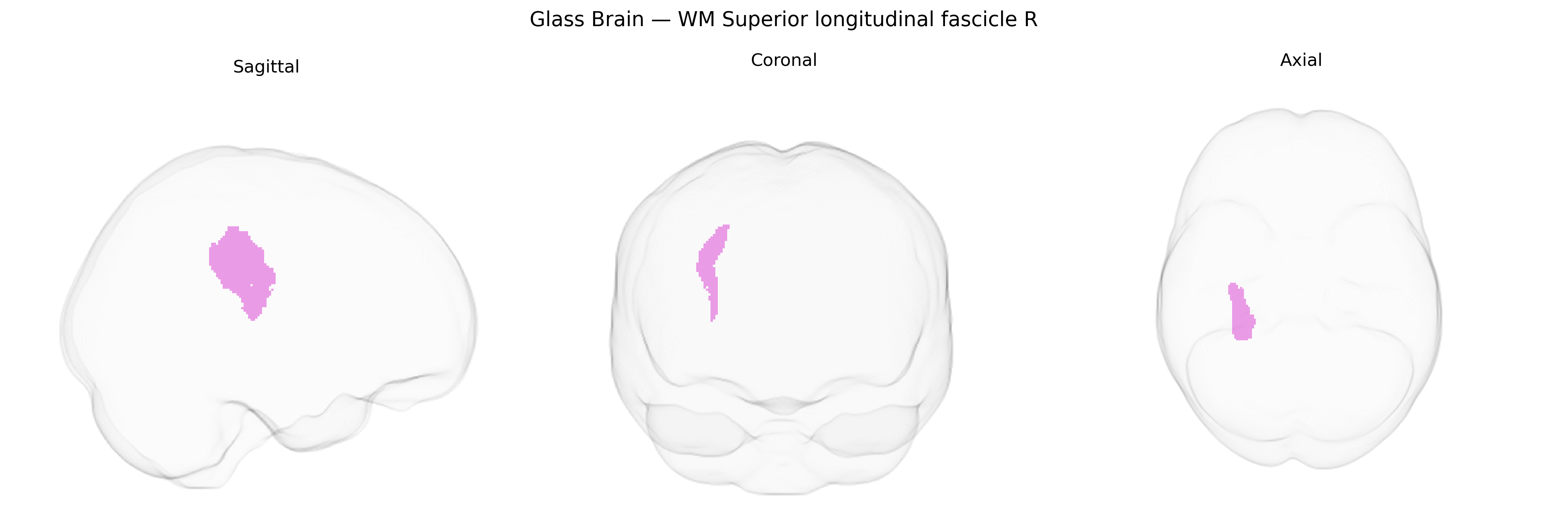
The bilateral WM Superior longitudinal fascicle R, as defined in the Juelich maxprob thr25 1 mm atlas, corresponds to the right-hemispheric component of the superior longitudinal fasciculus (SLF), a major associative white matter tract that interconnects frontal, parietal, temporal, and occipital regions. Composed of long-range myelinated fibers, the SLF plays a key role in integrating multimodal sensory information with higher-order cognitive and motor functions, including spatial attention, language processing, and working memory. It is typically subdivided into distinct segments (e.g., SLF I, II, III, and the arcuate component) with partially segregated cortical terminations and functional specializations. The SLF’s right-lateralized components are particularly implicated in visuospatial attention and hemispatial neglect syndromes. There is no direct Wikipedia article for this exact atlas label; a related structure and overview are provided here: Superior longitudinal fasciculus.
The bilateral superior longitudinal fascicle (SLF), a major white matter tract implicated in language, attention, and working memory, has been linked by imaging–genetics and GWAS-based studies to variants affecting neurodevelopmental, myelination, and connectivity-related pathways rather than to a single specific gene. Large-scale diffusion MRI GWAS consortia (e.g., ENIGMA, UK Biobank analyses) have reported associations between SLF microstructure (fractional anisotropy, mean diffusivity) and common variants in genes involved in axon guidance (e.g., ROBO1/ROBO2, CNTN4), cytoskeletal and synaptic organization (e.g., MAPT region, NCAM1), and oligodendrocyte/myelin biology (e.g., genes near PLP1 and ERBB4), as well as polygenic scores for cognitive performance. Altered SLF integrity has been repeatedly observed in schizophrenia, bipolar disorder, ADHD, autism spectrum disorder, and major depression, with several of these disorders showing convergent genetic overlap in GWAS (e.g., shared polygenic risk influencing frontoparietal white matter tracts). SLF microstructure is also associated with genetic risk for language/reading-related traits, including dyslexia and specific language impairment, though the evidence is stronger at the level of imaging phenotypes and polygenic scores than direct single-variant hits. While the Juelich maxprob thr25 1 mm atlas provides an anatomical label (WM Superior longitudinal fascicle R) rather than gene-level annotation, current data indicate that interindividual variability in this tract’s structure is moderately heritable and influenced by distributed common variants that partly overlap with the genetic architecture of cognition, psychiatric disorders, and neurodevelopmental traits.
Overview generated by GPT-4o (2026).
Region ID: 110
Hemisphere: bilateral
Atlas: Juelich maxprob thr25 1mm
Full Quality Version: Download MP4
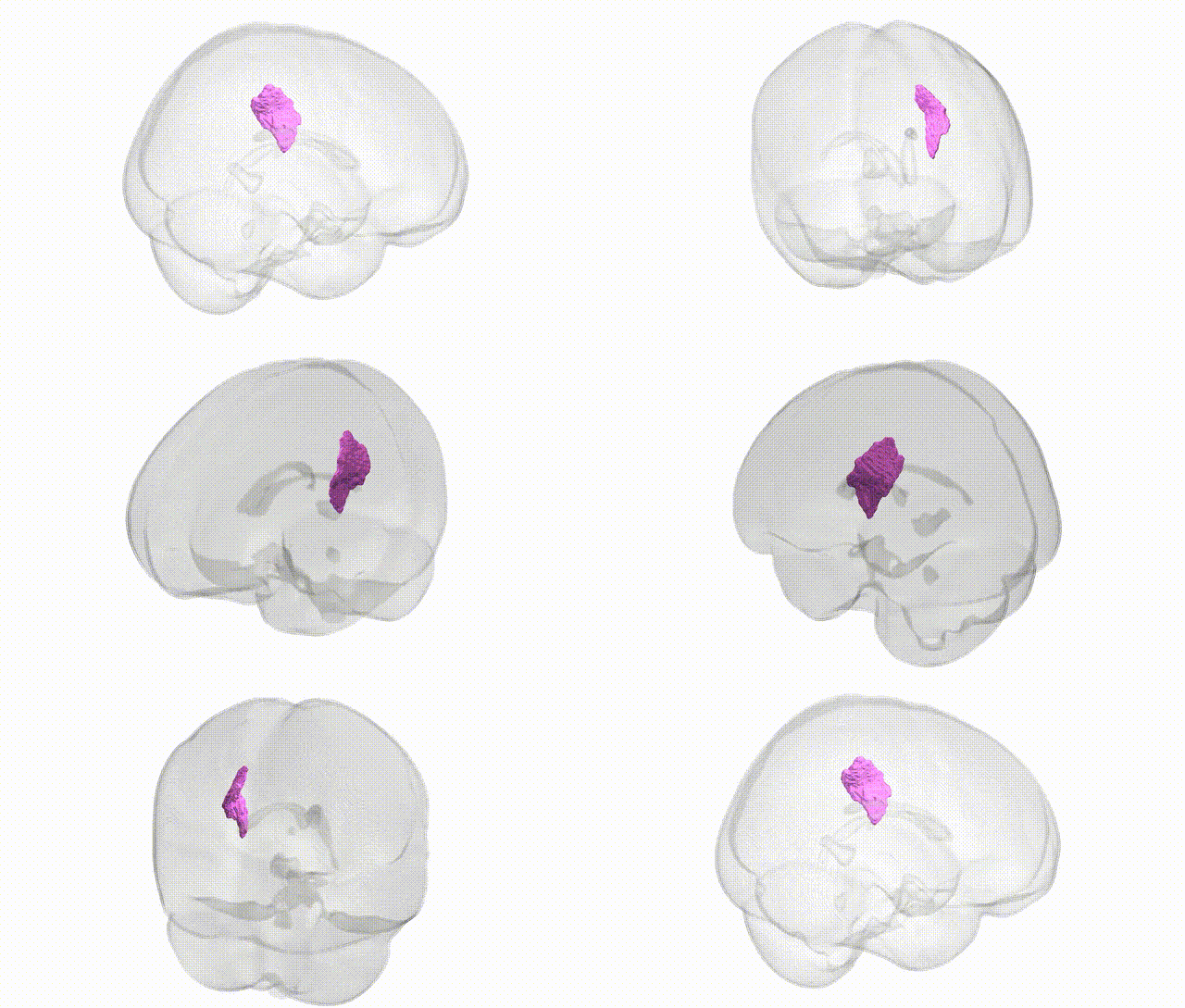
Full Quality Version: Download MP4
Wali Sidiqyar*, Gaurav Rudravaram*, Elyssa M. McMaster, Trent M. Schwartz, Adam M. Saunders, Kurt G. Schilling, Bennett A. Landman "Introducing SPINS: A Shared Public Visualization Library of Neuroanatomical Structures." Medical Imaging with Deep Learning- short paper
This resource is licensed under CC0 1.0 Universal (Public Domain).