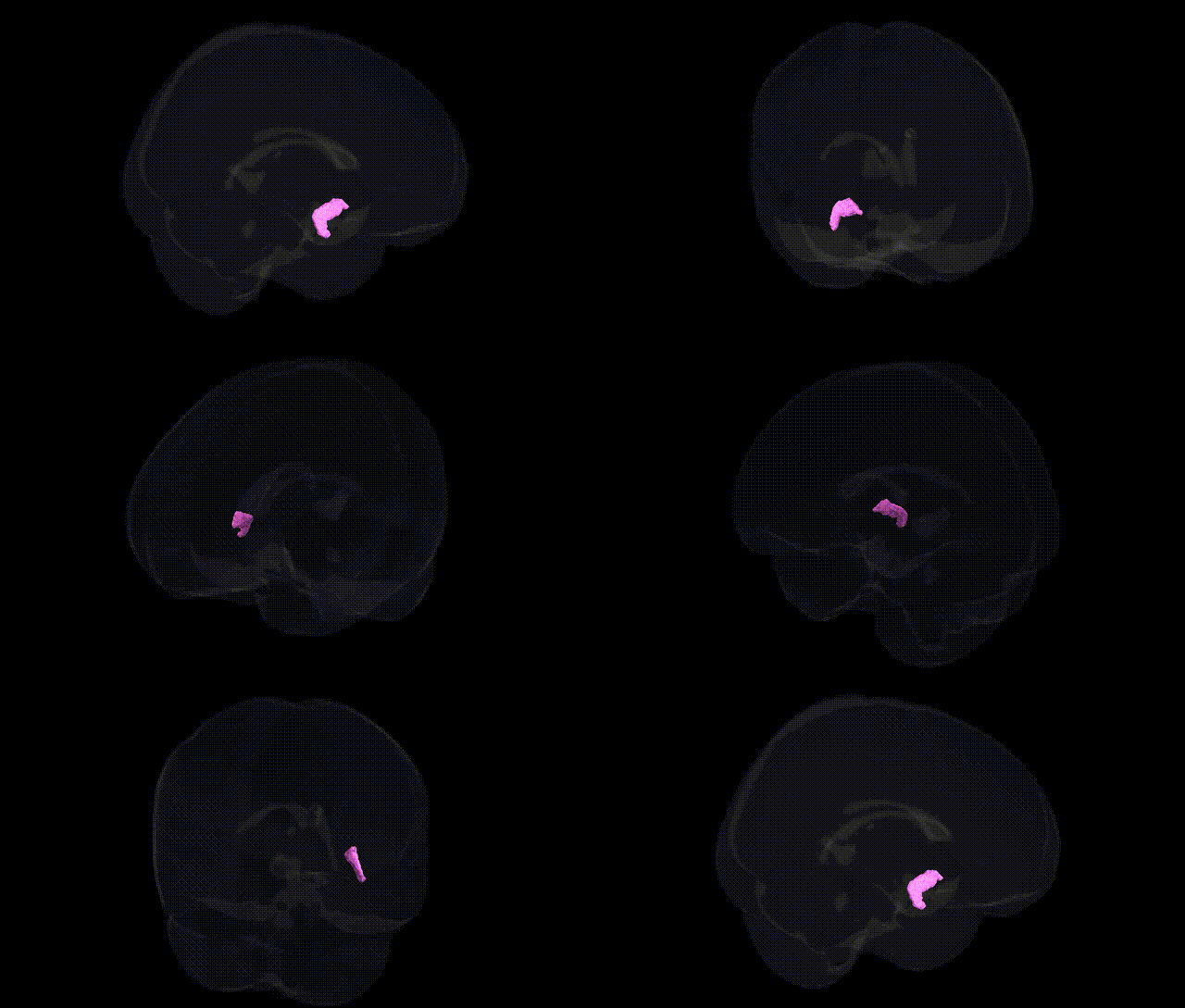
The bilateral WM Uncinate fascicle L, as defined in the Juelich maxprob thr25 1 mm atlas, corresponds to the left-lateralized portion of the uncinate fasciculus, a hook-shaped association fiber tract of white matter that links anterior temporal lobe regions (including parts of the temporal pole and amygdala) with orbitofrontal and ventromedial prefrontal cortices. This tract courses medially around the Sylvian fissure and through the anterior temporal stem, carrying limbic and multimodal associative information critical for emotion processing, social cognition, and aspects of episodic memory and semantic integration. It is also implicated in language-related functions, particularly those involving the integration of emotional and contextual information with higher-order decision-making, and is frequently studied in the context of psychiatric and neurodegenerative disorders. There is no direct Wikipedia entry for “Uncinate fascicle,” but it is encompassed within the Uncinate fasciculus.
The bilateral uncinate fasciculus, as defined in the Juelich maxprob thr25 1mm atlas (WM Uncinate fascicle L), is a frontotemporal association pathway whose microstructural variation has been linked in GWAS and imaging-genetics studies to multiple neuropsychiatric and cognitive traits. Common variants affecting axonal development, myelination, and synaptic function—particularly in genes related to neurodevelopment (e.g., NRG1/ERBB signaling, axon guidance pathways such as ROBO/SLIT and semaphorin/plexin families) and oligodendrocyte biology—have been associated with diffusion MRI measures (FA, MD) in this tract. The uncinate fasciculus has repeatedly emerged in genetic studies of schizophrenia, bipolar disorder, and major depressive disorder, where polygenic risk scores and disorder-related loci often correlate with reduced structural integrity or altered connectivity between the anterior temporal lobe and orbitofrontal cortex. GWAS of anxiety-related traits, neuroticism, and stress reactivity, as well as autism spectrum conditions, have implicated this region indirectly via genes influencing frontotemporal connectivity and emotional regulation. In addition, large-scale imaging GWAS consortia (e.g., ENIGMA, UK Biobank–based analyses) have identified heritable variation in uncinate fasciculus microstructure that overlaps with loci associated with general cognitive ability, educational attainment, and risk-taking, supporting a role for genetically driven differences in this tract in social-emotional processing, decision-making, and vulnerability to psychiatric disorders.
Overview generated by GPT-4o (2026).
Region ID: 115
Hemisphere: bilateral
Atlas: Juelich maxprob thr25 1mm
Full Quality Version: Download MP4
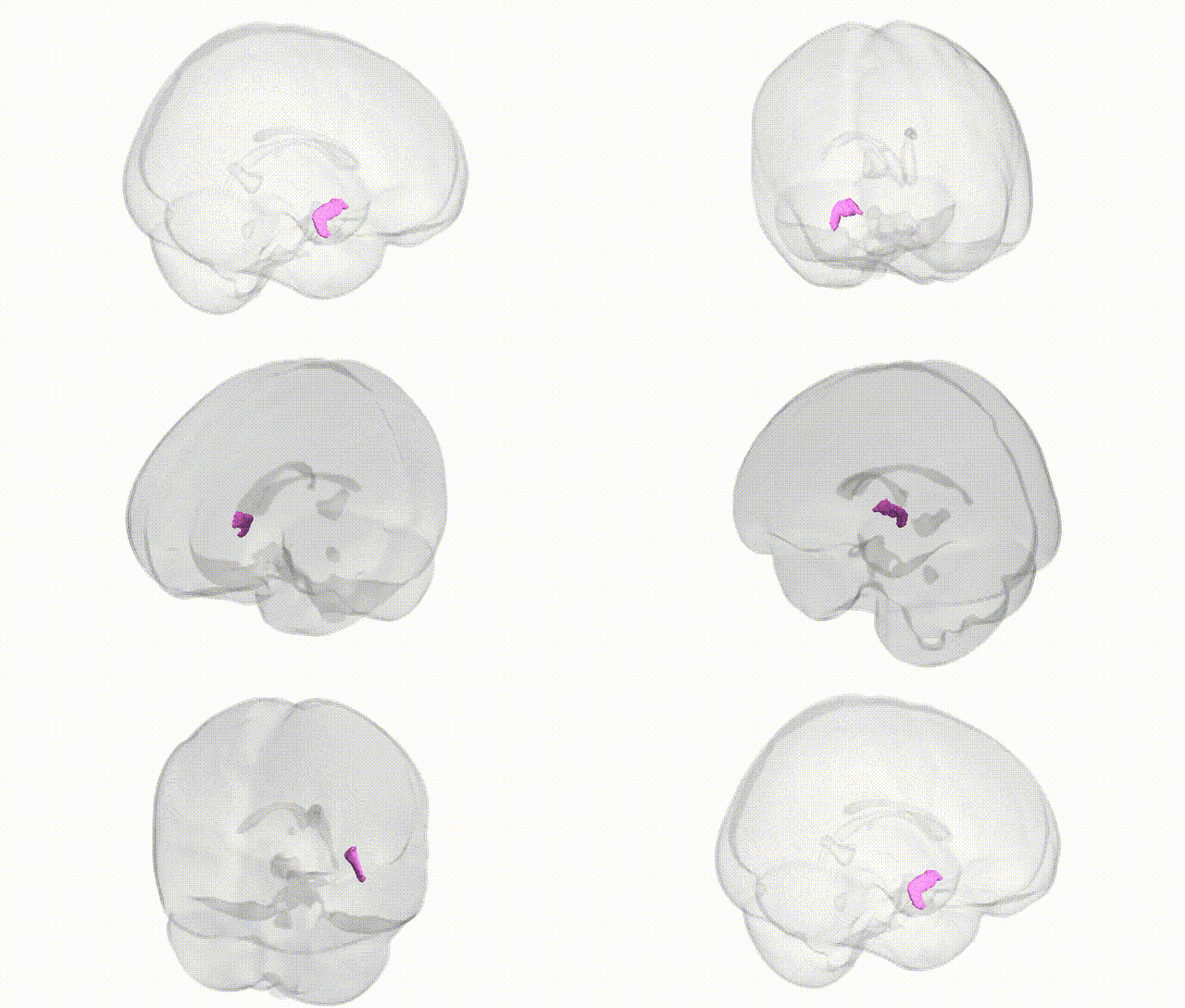
Full Quality Version: Download MP4
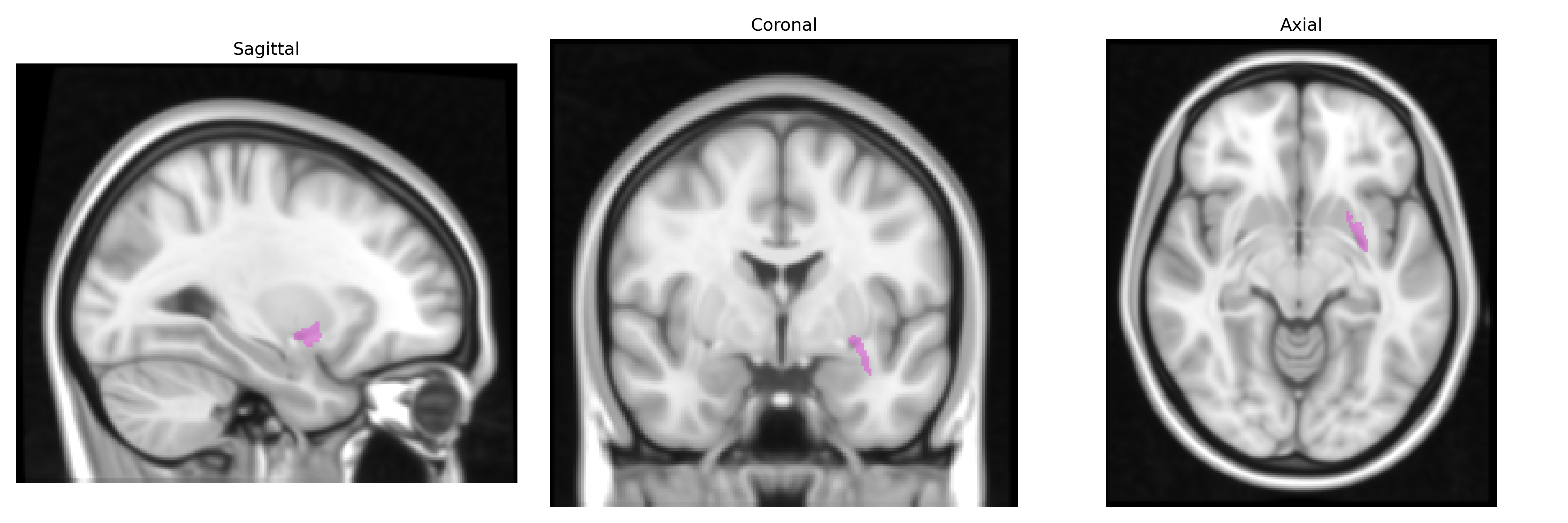
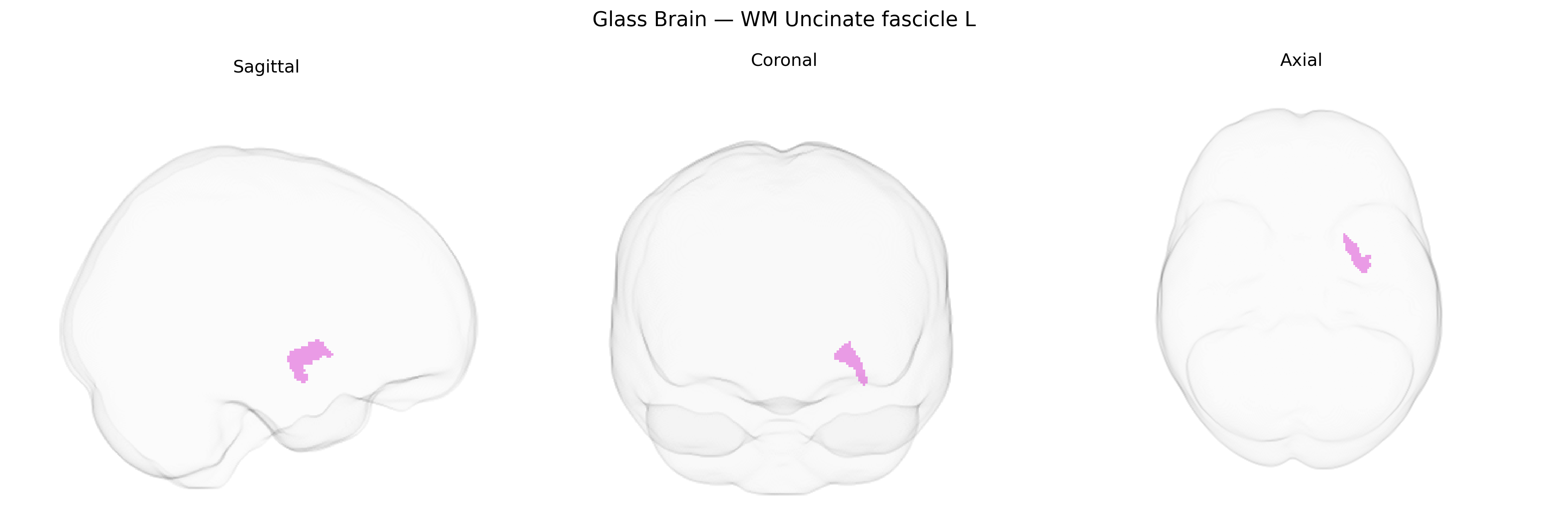
Wali Sidiqyar*, Gaurav Rudravaram*, Elyssa M. McMaster, Trent M. Schwartz, Adam M. Saunders, Kurt G. Schilling, Bennett A. Landman "Introducing SPINS: A Shared Public Visualization Library of Neuroanatomical Structures." Medical Imaging with Deep Learning- short paper
This resource is licensed under CC0 1.0 Universal (Public Domain).