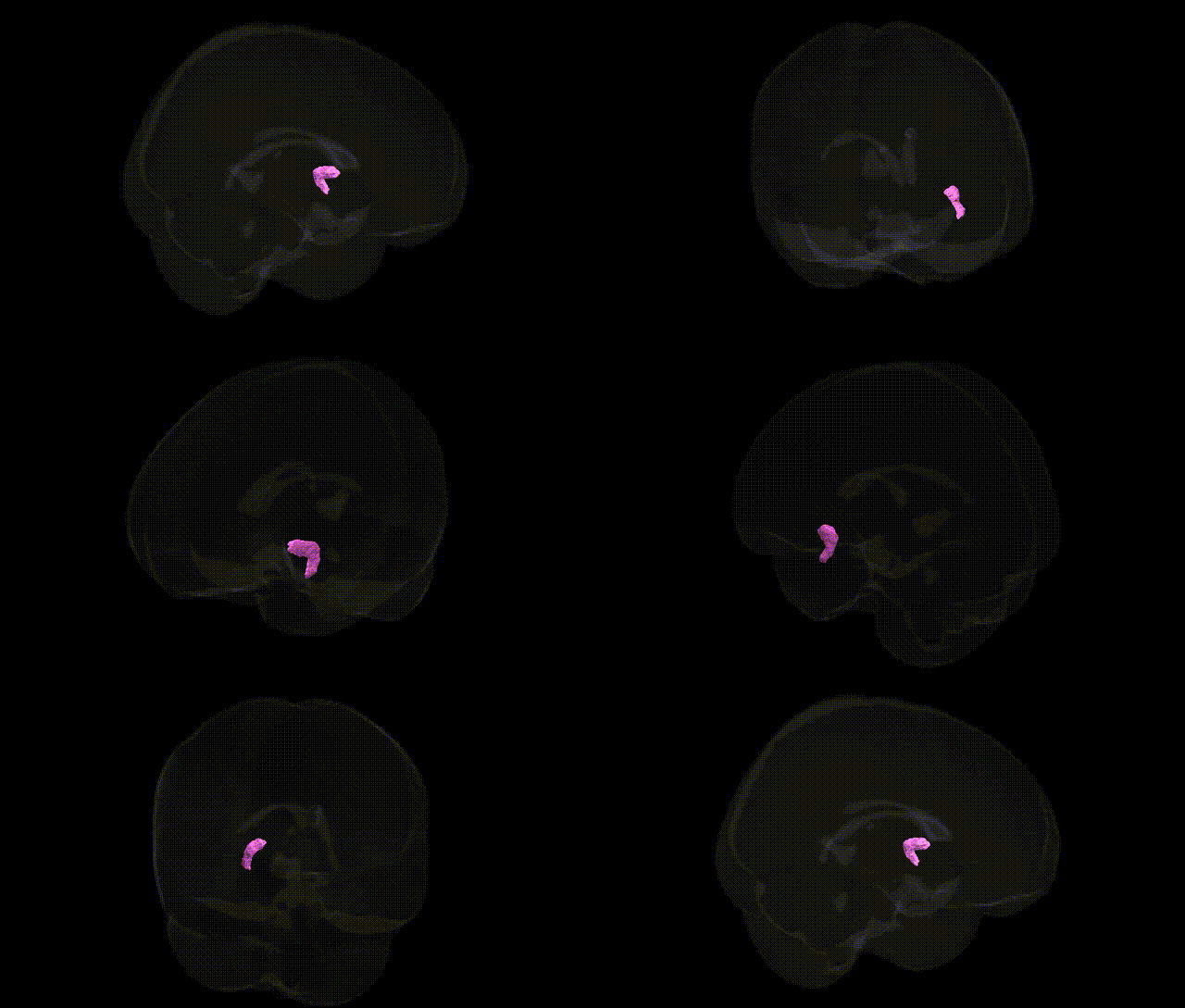
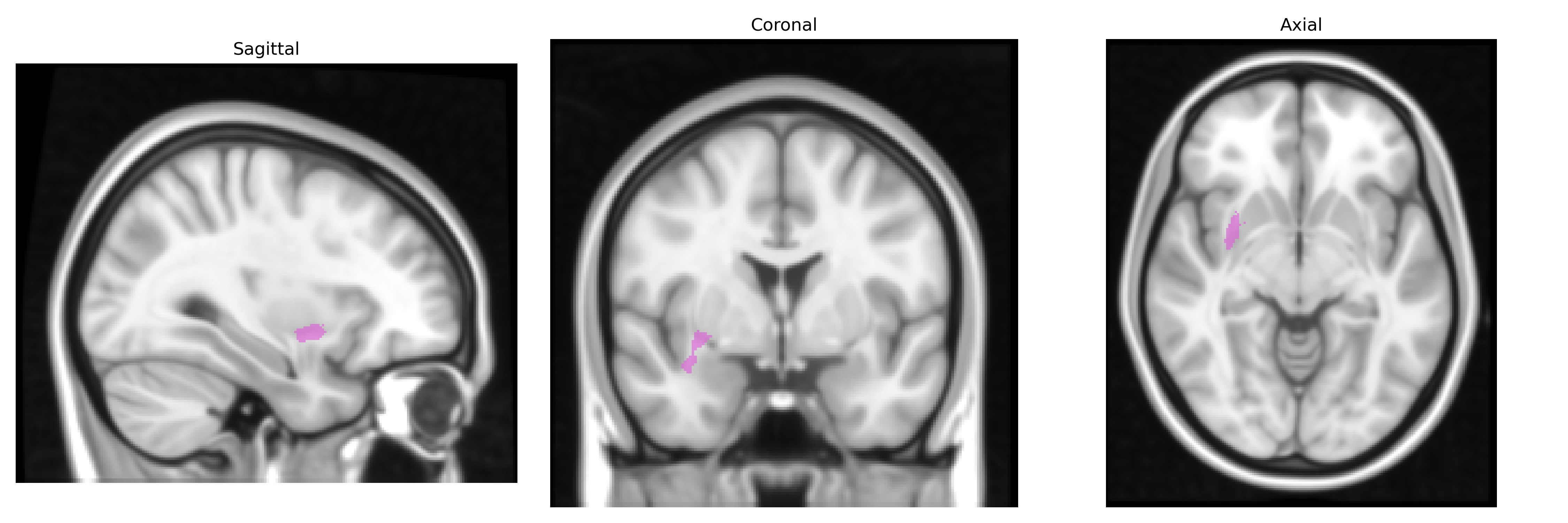
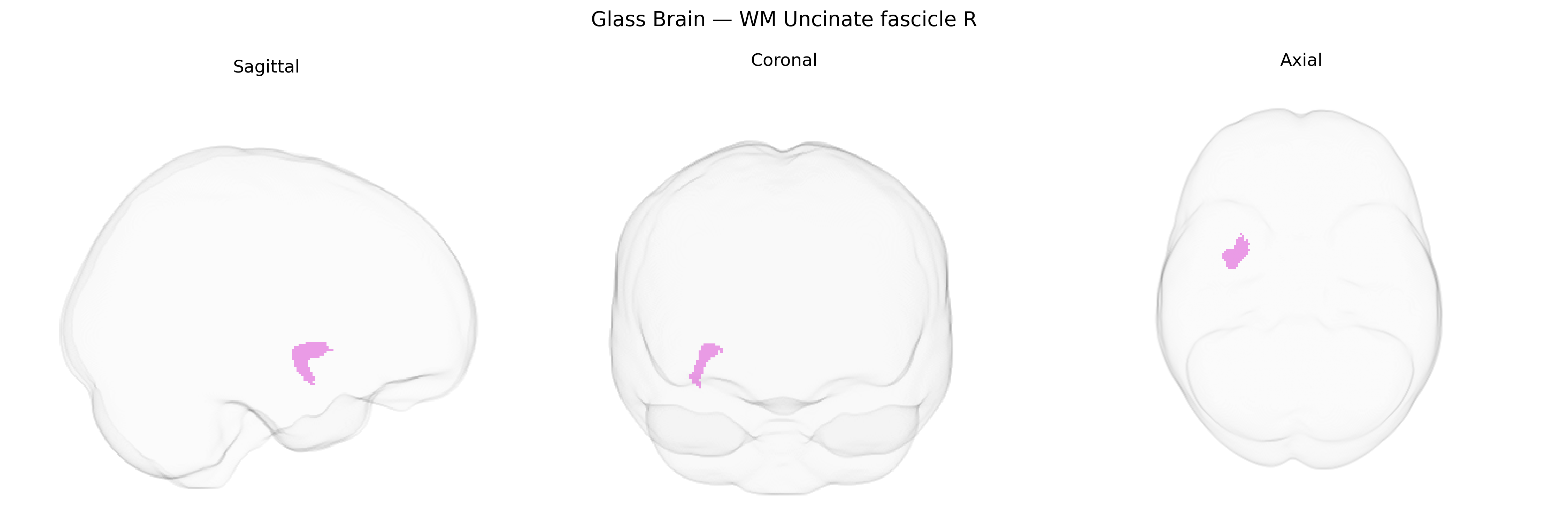
The bilateral WM Uncinate fascicle R, as defined in the Juelich maxprob thr25 1mm Atlas, corresponds to the right-lateralized portion of the uncinate fasciculus, a long association white matter tract that links anterior temporal lobe structures (including parts of the amygdala and temporal pole) with the orbitofrontal cortex and ventromedial prefrontal regions. This fascicle traverses the anterior temporal stem and passes medially beneath the insula, forming a crucial pathway for integrating limbic emotional and mnemonic information with higher-order executive and social-cognitive processing in the frontal lobe. Functionally, the uncinate fasciculus has been implicated in emotional regulation, semantic memory, and aspects of social behavior, and alterations in its microstructure are associated with psychiatric and neurological conditions such as depression, anxiety disorders, temporal lobe epilepsy, and frontotemporal dementia. There is no direct Wikipedia article for “WM Uncinate fascicle R”; a related entry is: Uncinate fasciculus.
The uncinate fasciculus, represented in the Juelich maxprob thr25 1 mm atlas (with right-hemisphere labels often used bilaterally in imaging genetics), has been implicated in multiple genetic and GWAS-based associations involving white matter microstructure, psychiatric and neurodevelopmental disorders, and cognitive traits. Imaging–genetics and large-scale diffusion MRI GWAS (for example, UK Biobank analyses) have shown that variants in genes related to axon guidance, myelination, and neurodevelopment (including but not limited to NTRK1/2, CNTN4, ROBO and SLIT pathway genes, and various oligodendrocyte- and myelin-associated loci) are associated with fractional anisotropy and other diffusion metrics in the uncinate fasciculus. Altered uncinate fasciculus integrity has been repeatedly linked, through polygenic risk and candidate-gene studies, to major depressive disorder, bipolar disorder, schizophrenia, anxiety disorders, and autism spectrum disorder, as well as to traits such as neuroticism, impulsivity, and cognitive/emotional control, though individual variants often show small effects and limited region specificity. Some GWAS of brain connectivity and structural covariance also suggest that genetic factors influencing frontotemporal networks and limbic circuitry contribute to interindividual variation in uncinate fasciculus structure, reinforcing its role as a genetically modulated conduit between temporal limbic regions and the prefrontal cortex.
Overview generated by GPT-4o (2026).
Region ID: 114
Hemisphere: bilateral
Atlas: Juelich maxprob thr25 1mm
Full Quality Version: Download MP4
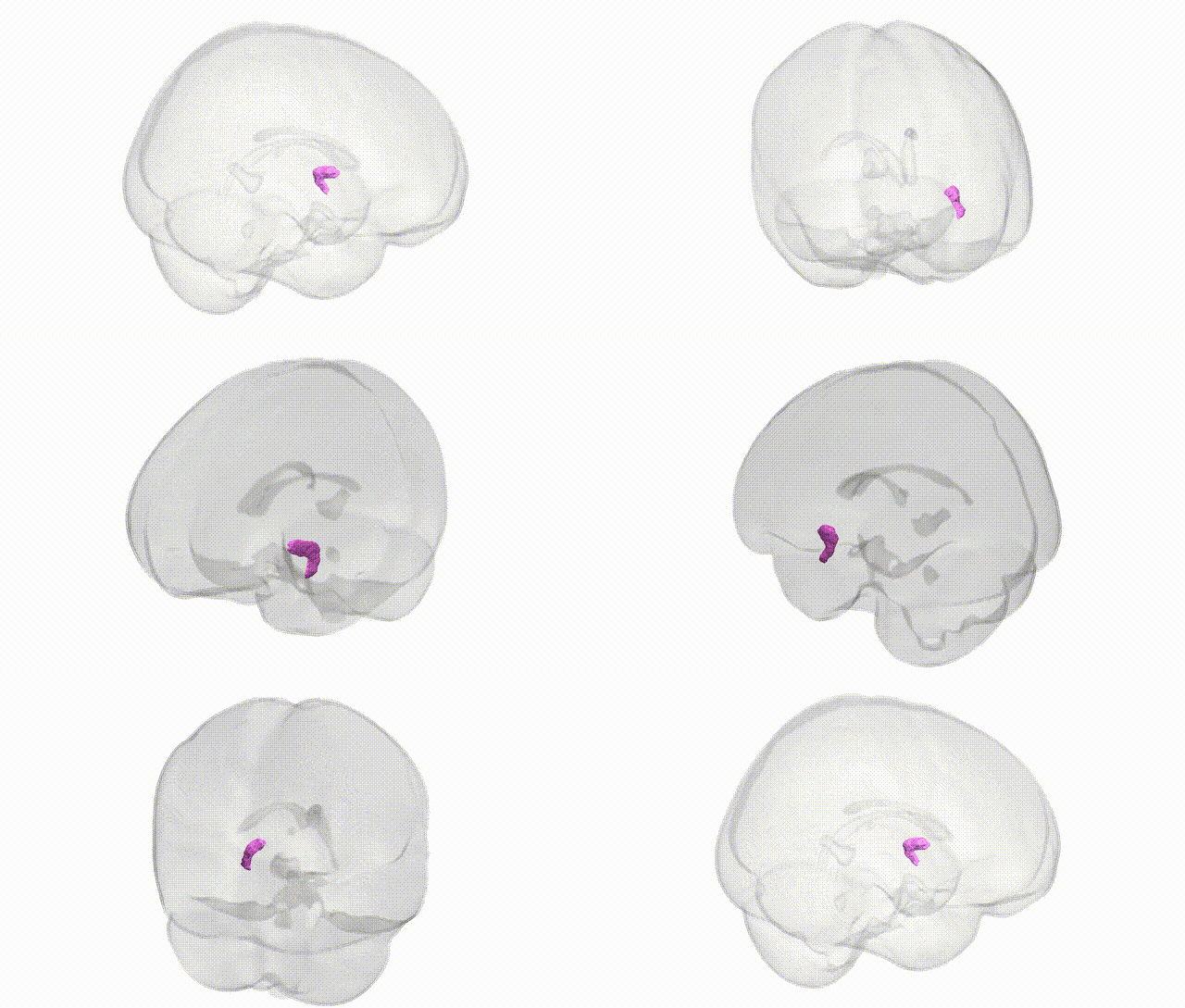
Full Quality Version: Download MP4
Wali Sidiqyar*, Gaurav Rudravaram*, Elyssa M. McMaster, Trent M. Schwartz, Adam M. Saunders, Kurt G. Schilling, Bennett A. Landman "Introducing SPINS: A Shared Public Visualization Library of Neuroanatomical Structures." Medical Imaging with Deep Learning- short paper
This resource is licensed under CC0 1.0 Universal (Public Domain).