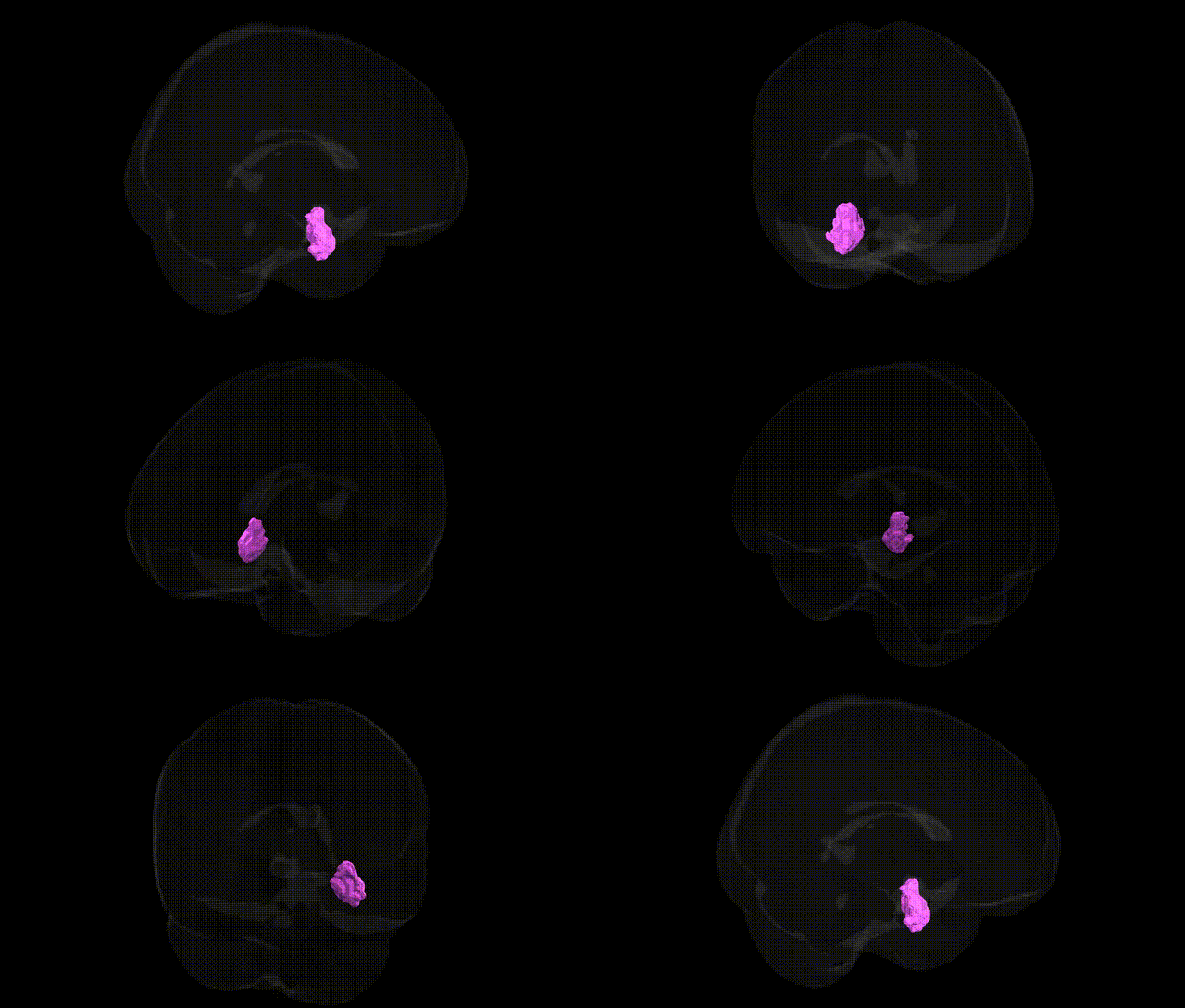
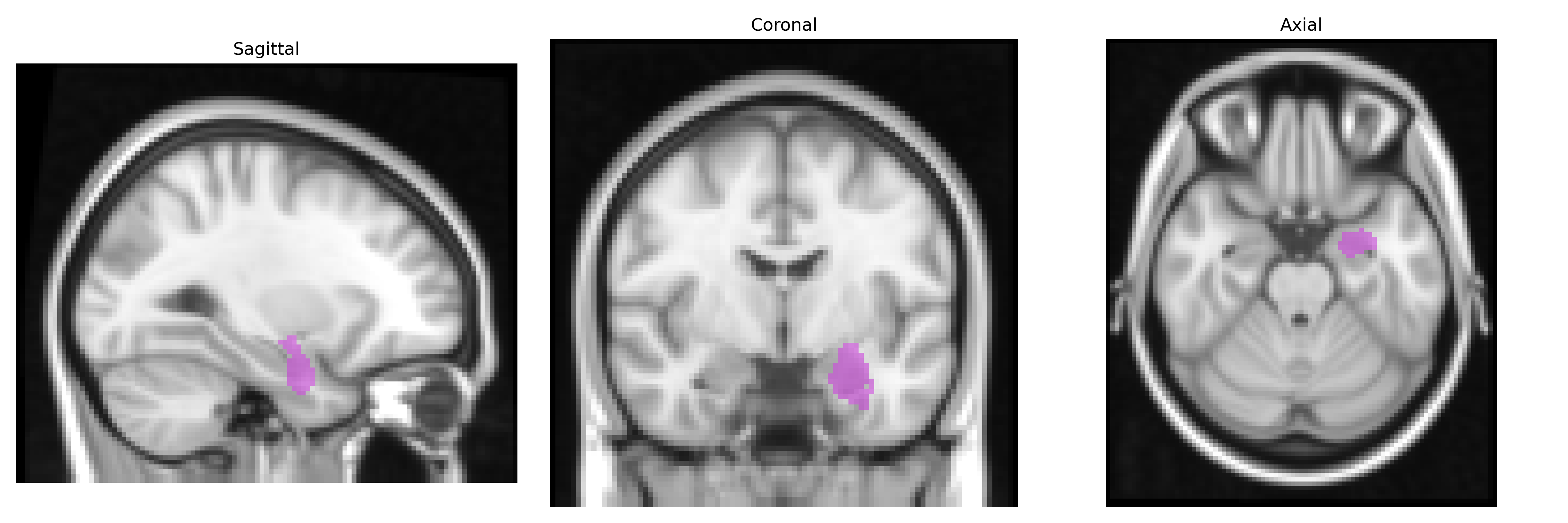
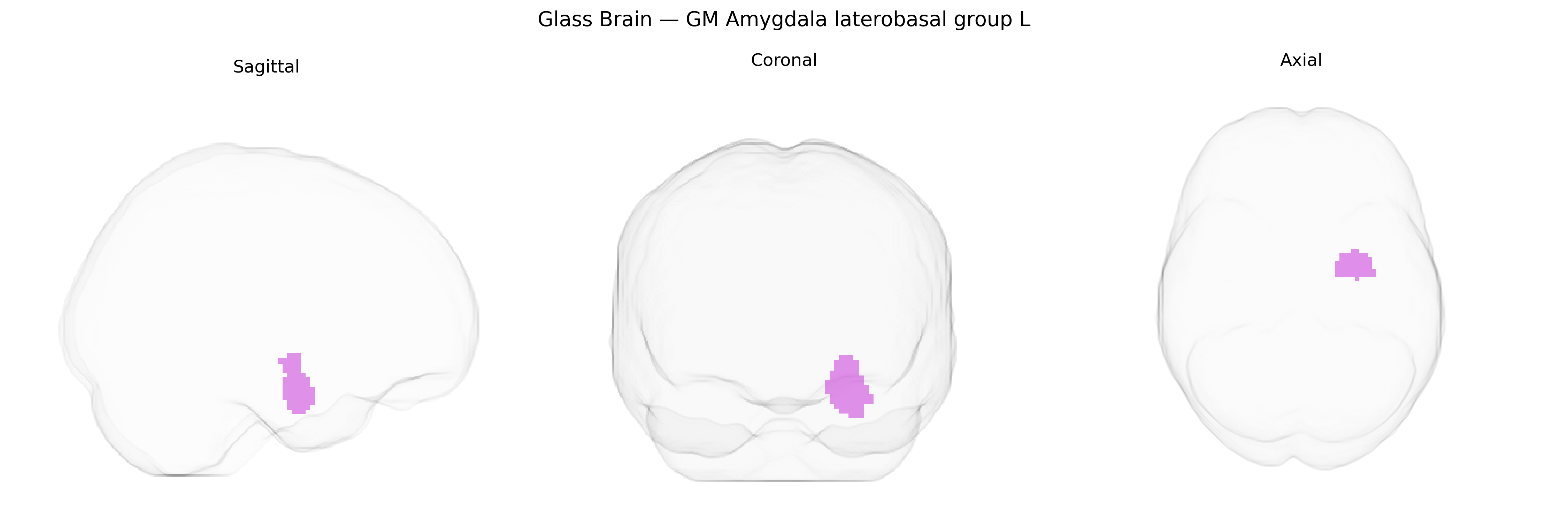
The bilateral GM Amygdala laterobasal group L in the Juelich maxprob thr25 2mm Atlas corresponds primarily to the lateral and basal (basolateral) nuclei of the left amygdala, a key component of the medial temporal lobe involved in emotional processing, associative learning, and memory modulation. This laterobasal complex receives extensive sensory input from cortical and thalamic regions and projects to other amygdaloid nuclei and widespread cortical and subcortical targets, enabling integration of multimodal sensory information with affective significance. Functionally, it plays a central role in fear conditioning, appraisal of emotionally salient stimuli, and the formation of emotional memories, and it interacts closely with the hippocampus and prefrontal cortex in regulating stress responses and decision-making under emotional contexts. No direct Wikipedia article exists for this specific laterobasal grouping; a related entry is Amygdala.
The bilateral laterobasal amygdala, as defined in the Juelich maxprob thr25 2mm atlas, has been implicated in multiple genetic and GWAS findings through its roles in emotional processing, threat detection, and social cognition. Large-scale imaging genetics consortia such as ENIGMA and UK Biobank have identified heritable variation in amygdala volume and microstructure, with common variants in genes related to neurodevelopment, synaptic plasticity, and stress response (including BDNF, SLC6A4, FKBP5, and CRHR1) associated with structural measures in this region and nearby amygdalar nuclei. GWAS of brain morphology have linked loci in neurodevelopmental and axon guidance genes (e.g., variants near DCC, MEF2C, and others) to amygdala volume, while polygenic risk scores for major depressive disorder, anxiety, schizophrenia, bipolar disorder, and autism spectrum disorder have been associated with altered laterobasal amygdala structure and functional connectivity. Genetic variants in serotonin and dopamine signaling pathways (such as DRD2 and COMT) have been related to differential activation of the basolateral amygdala in fear conditioning, reward processing, and emotion regulation tasks. In addition, GWAS of traits including neuroticism, stress reactivity, impulsivity, and social behavior often show intermediate neural endophenotypes involving the basolateral/laterobasal amygdala, supporting a genetically influenced pathway from common variants to psychiatric and personality outcomes via this region’s circuits.
Overview generated by GPT-4o (2026).
Region ID: 9
Hemisphere: bilateral
Atlas: Juelich maxprob thr25 2mm
Full Quality Version: Download MP4
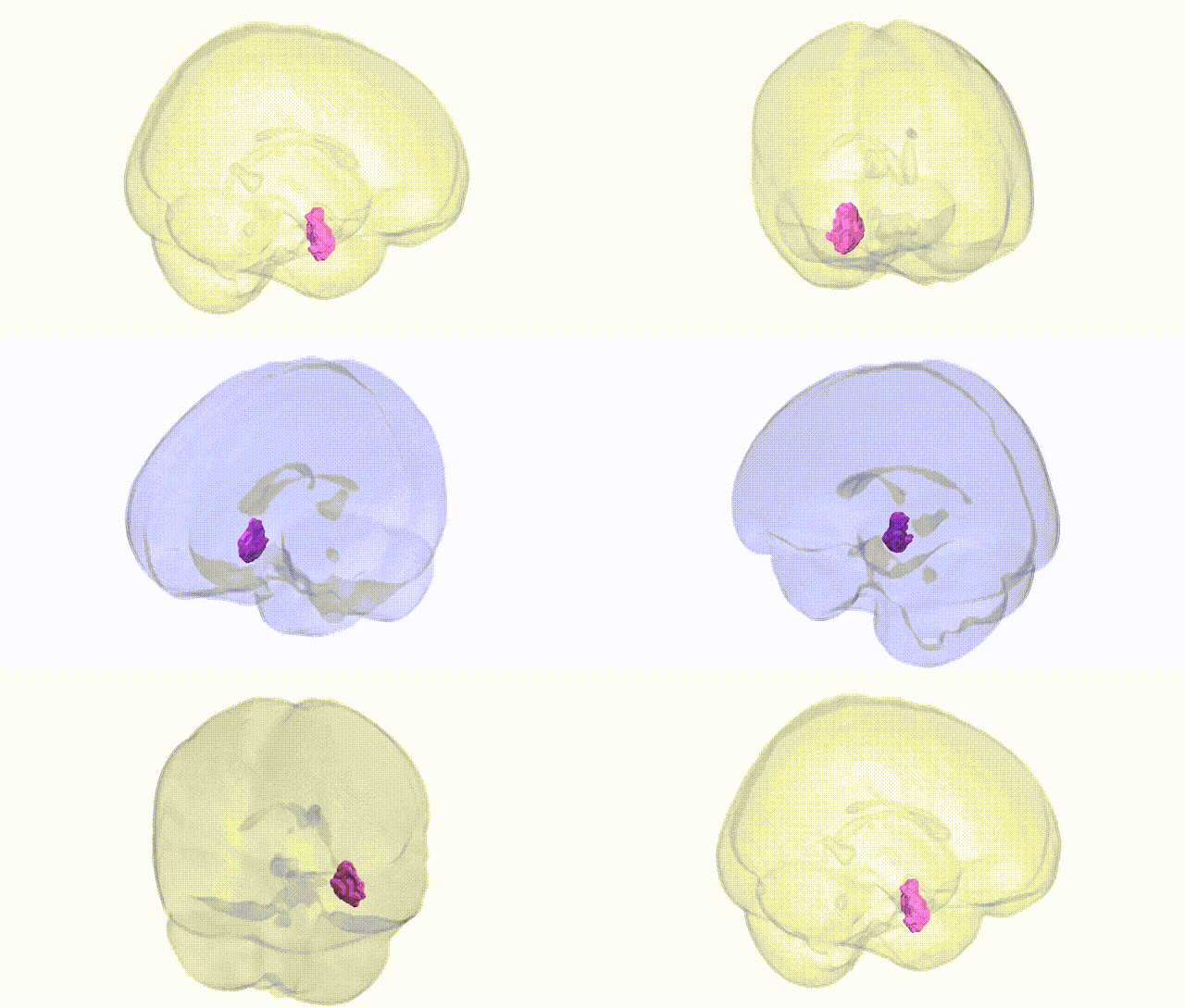
Full Quality Version: Download MP4
Wali Sidiqyar*, Gaurav Rudravaram*, Elyssa M. McMaster, Trent M. Schwartz, Adam M. Saunders, Kurt G. Schilling, Bennett A. Landman "Introducing SPINS: A Shared Public Visualization Library of Neuroanatomical Structures." Medical Imaging with Deep Learning- short paper
This resource is licensed under CC0 1.0 Universal (Public Domain).