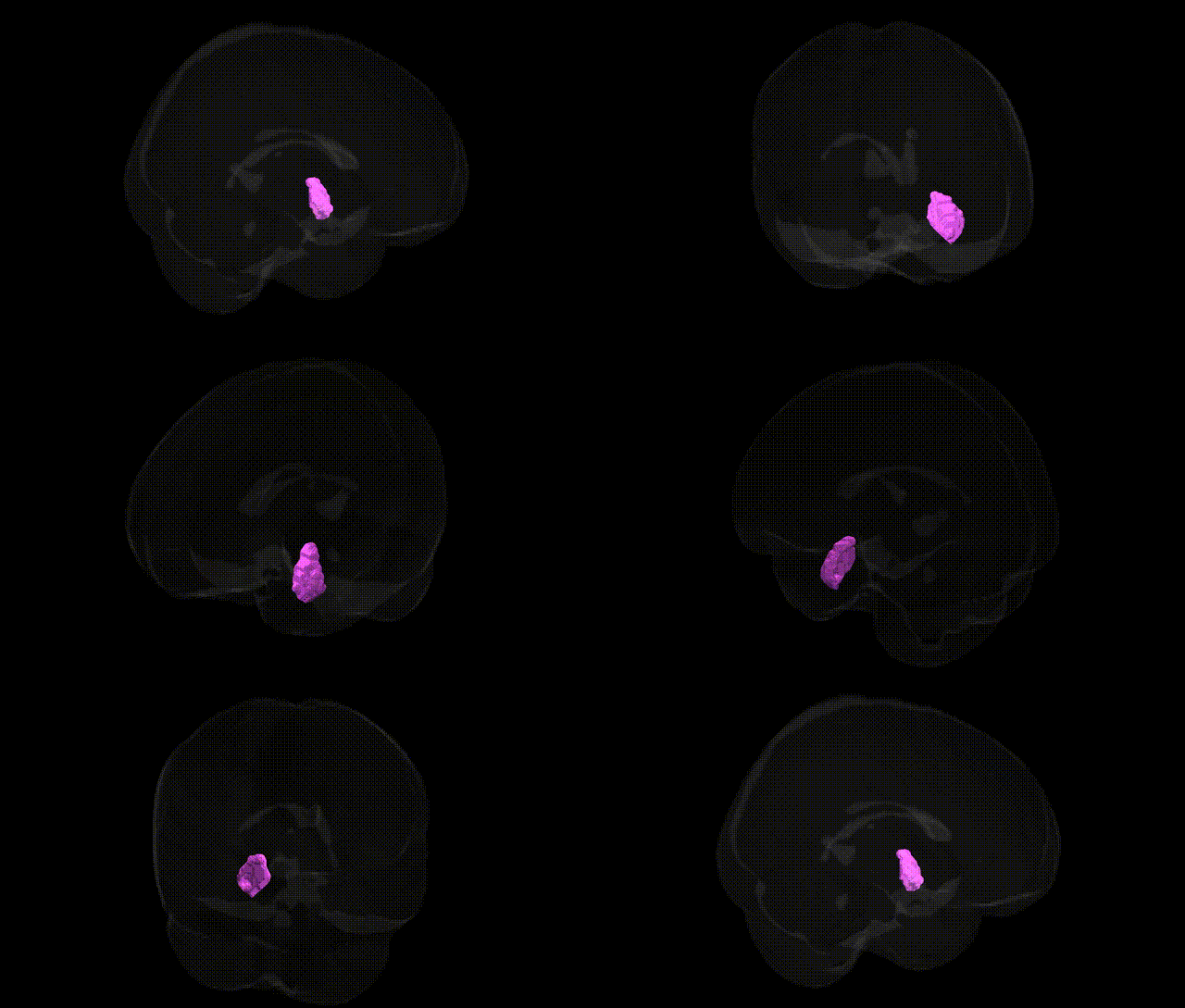
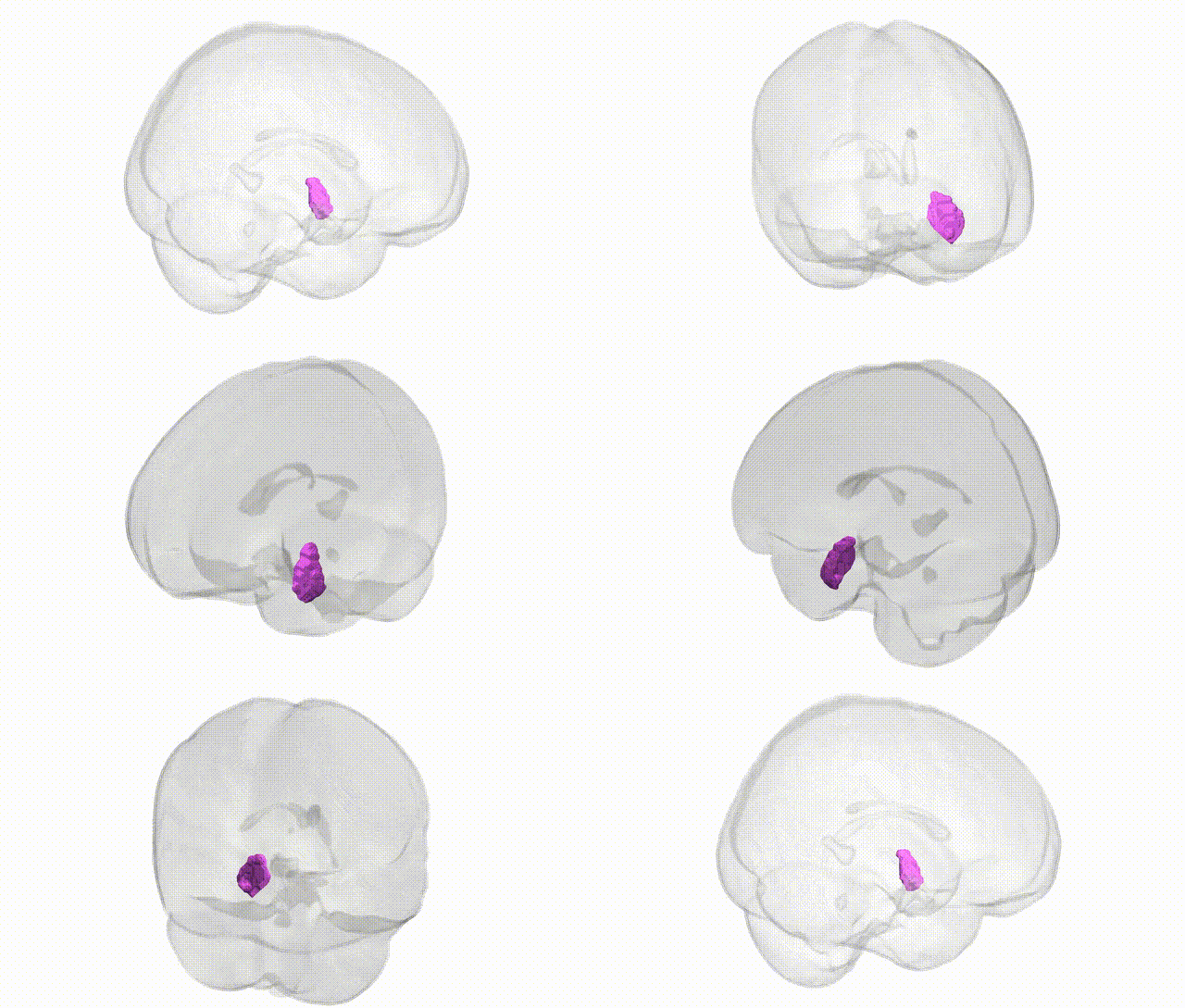
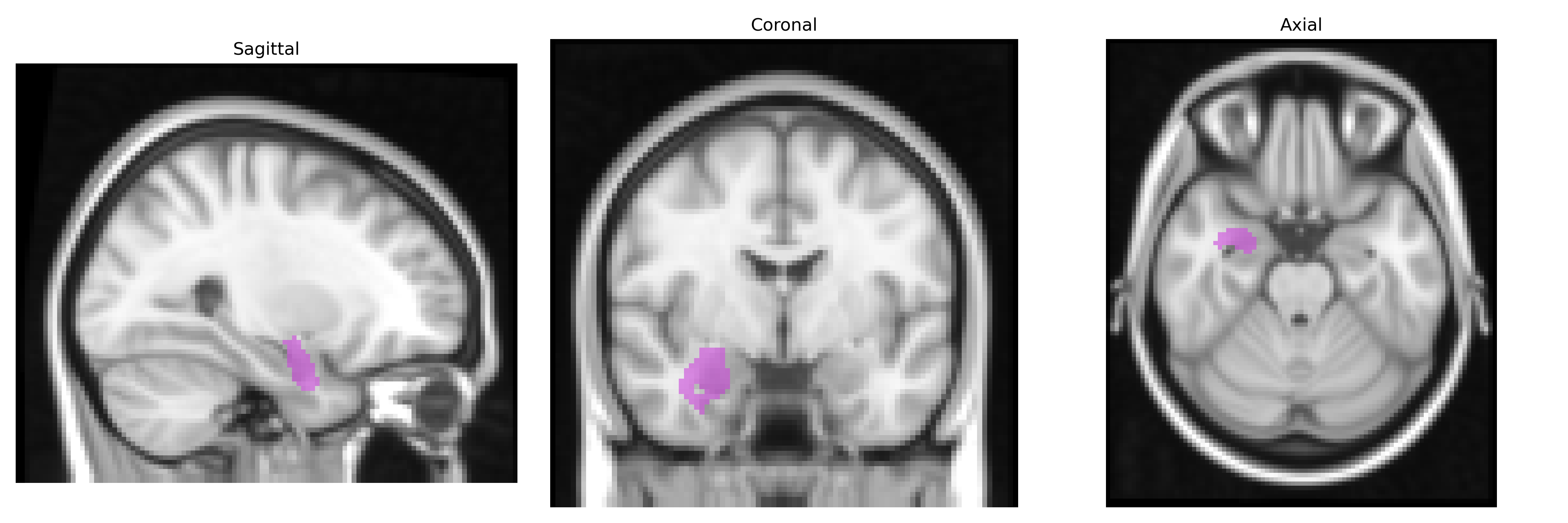
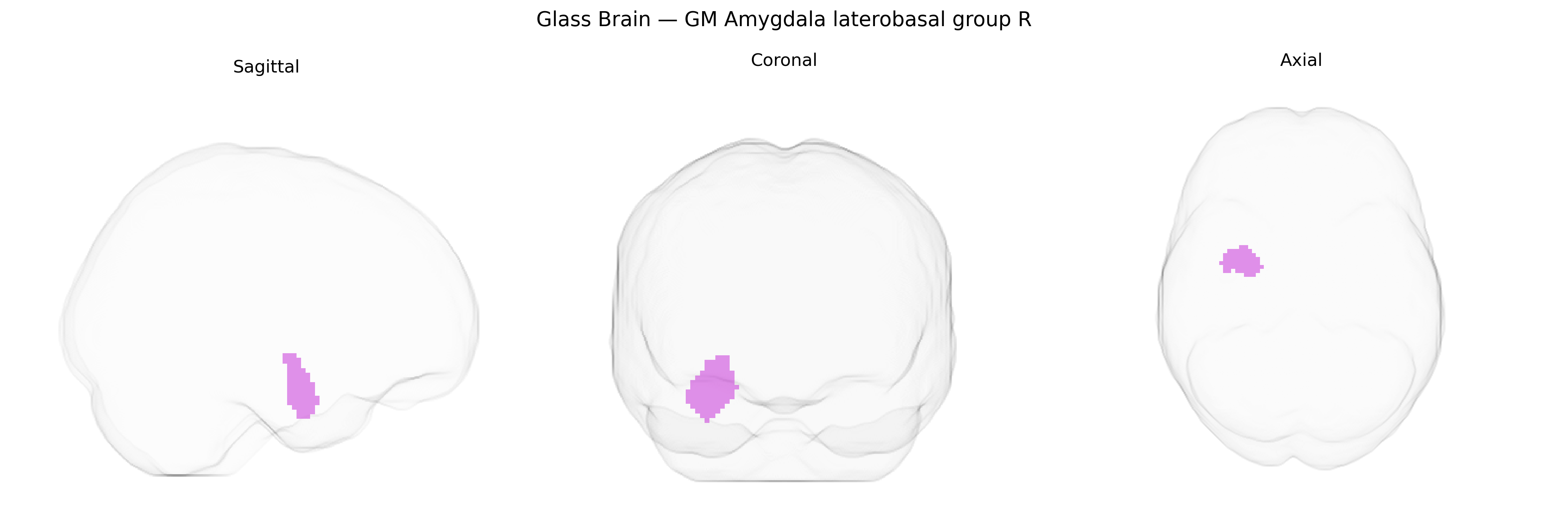
The bilateral GM Amygdala laterobasal group R, as defined in the Juelich maxprob thr25 2mm Atlas, corresponds to the right-sided gray matter of the laterobasal (also termed basolateral) nuclear complex of the amygdala. This group comprises primarily the lateral and basal nuclei, which receive extensive multimodal sensory input from cortical and subcortical regions and project to both cortical association areas and limbic structures. Functionally, the laterobasal complex is critically involved in emotional learning and memory, especially in the formation and retrieval of fear- and reward-related associations, as well as in the evaluation of affective significance of sensory stimuli. Through its connections with the prefrontal cortex, hippocampus, and hypothalamus, it contributes to modulation of autonomic responses, decision-making under emotional contexts, and integration of emotional information with declarative memory. There is no direct link for “Amygdala laterobasal group,” but it is part of the Amygdala.
The bilateral gray-matter amygdala laterobasal group, as defined in the Juelich maxprob thr25 2 mm atlas, corresponds largely to the basolateral/latelobasal amygdala complex, a hub for emotion processing, fear learning, and affective regulation that has been repeatedly implicated in genetic and genome-wide association studies (GWAS) of brain structure and psychiatric traits. Twin and imaging-genetics studies show high heritability of amygdala volume, with common variants in genes such as SLC6A4 (serotonin transporter), BDNF (notably Val66Met), APOE, and COMT repeatedly associated with structural and functional variability in this region. Large-scale GWAS of subcortical volumes (e.g., ENIGMA, UK Biobank) have identified multiple loci—often in or near genes involved in neurodevelopment, synaptic plasticity, and cell-adhesion pathways—associated with amygdala volume, though these studies typically treat the amygdala as a whole rather than isolating the laterobasal group. Genetically influenced differences in this region have been linked to risk for major depressive disorder, generalized anxiety, post-traumatic stress disorder, bipolar disorder, schizophrenia, and autism spectrum disorder, with studies showing that polygenic risk scores for these conditions can correlate with alterations in amygdala volume or reactivity. In addition, GWAS and candidate-gene work connect amygdala structural and functional variation to personality traits (e.g., neuroticism, extraversion), stress reactivity, impulsivity, and behavioral phenotypes such as aggression and addiction-related behaviors, suggesting that the laterobasal amygdala serves as a key neural substrate through which diverse genetic risk factors influence emotional and social behavior.
Overview generated by GPT-4o (2026).
Region ID: 10
Hemisphere: bilateral
Atlas: Juelich maxprob thr25 2mm
Full Quality Version: Download MP4
Full Quality Version: Download MP4
Wali Sidiqyar*, Gaurav Rudravaram*, Elyssa M. McMaster, Trent M. Schwartz, Adam M. Saunders, Kurt G. Schilling, Bennett A. Landman "Introducing SPINS: A Shared Public Visualization Library of Neuroanatomical Structures." Medical Imaging with Deep Learning- short paper
This resource is licensed under CC0 1.0 Universal (Public Domain).