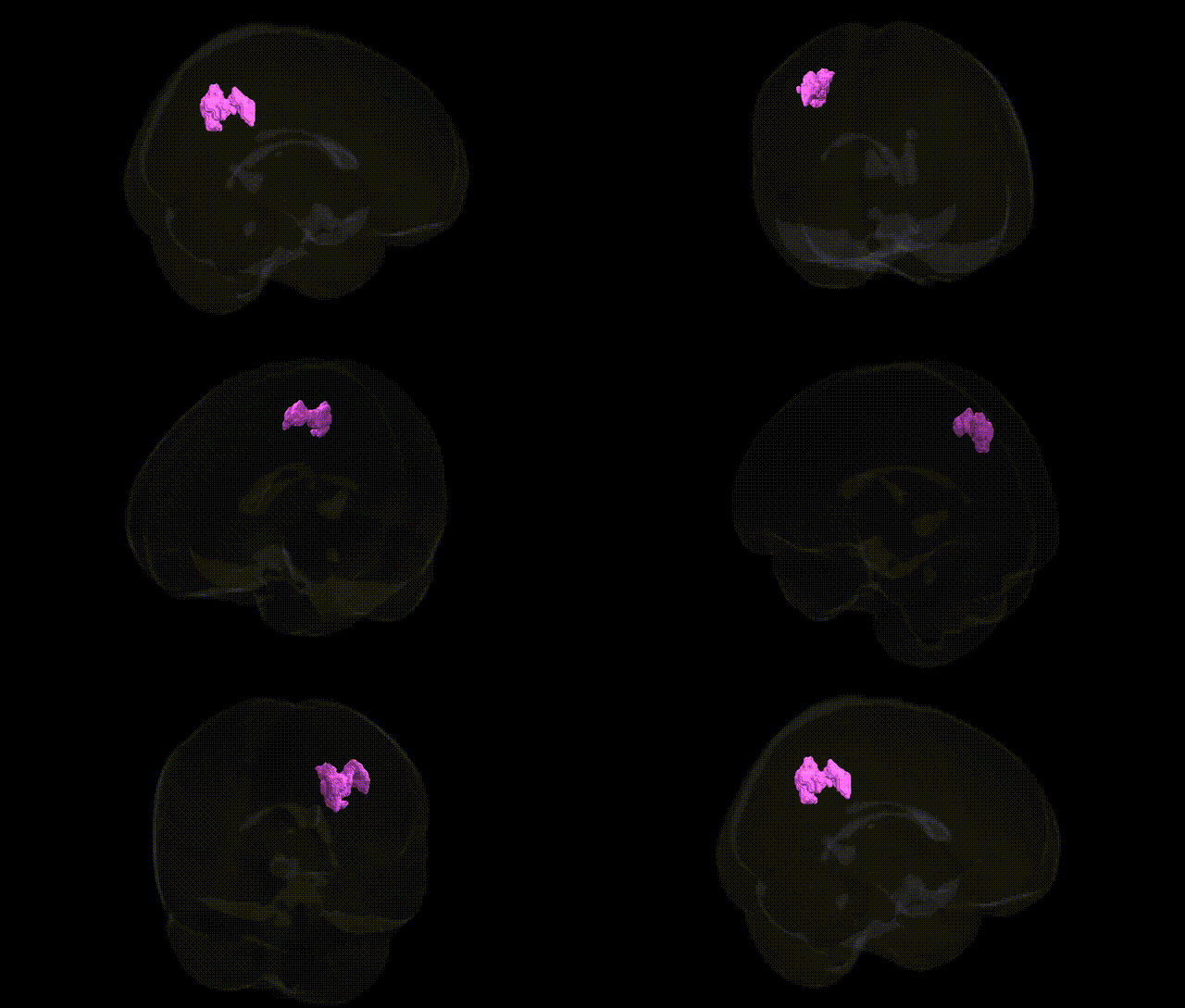
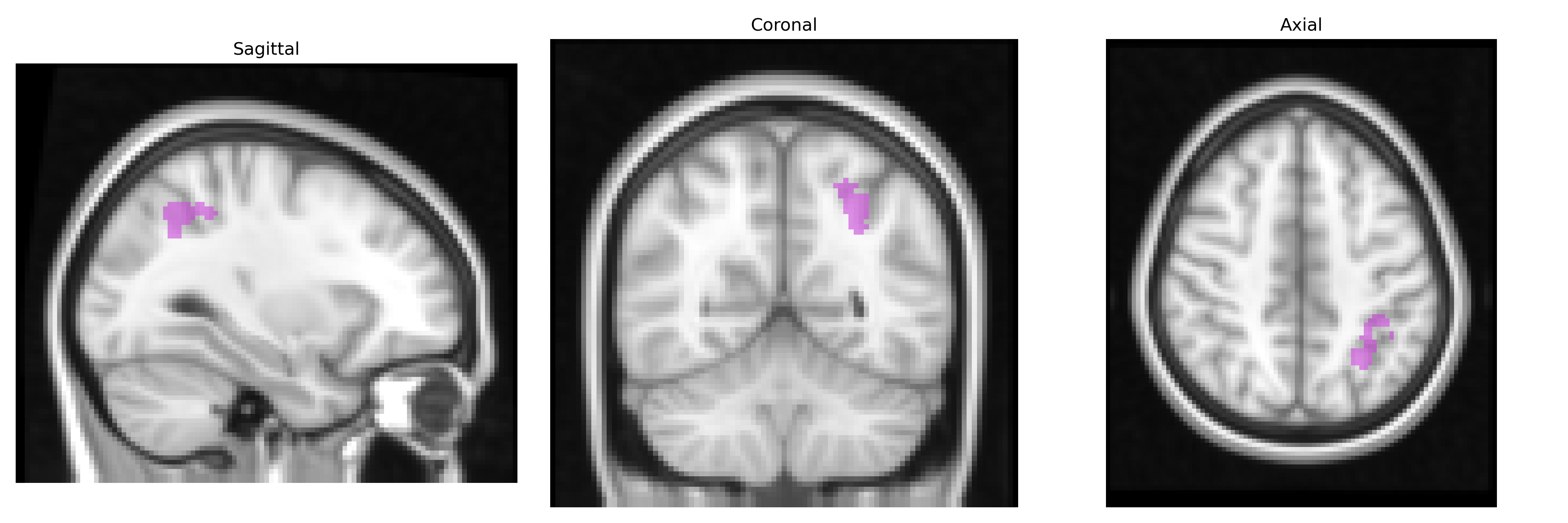
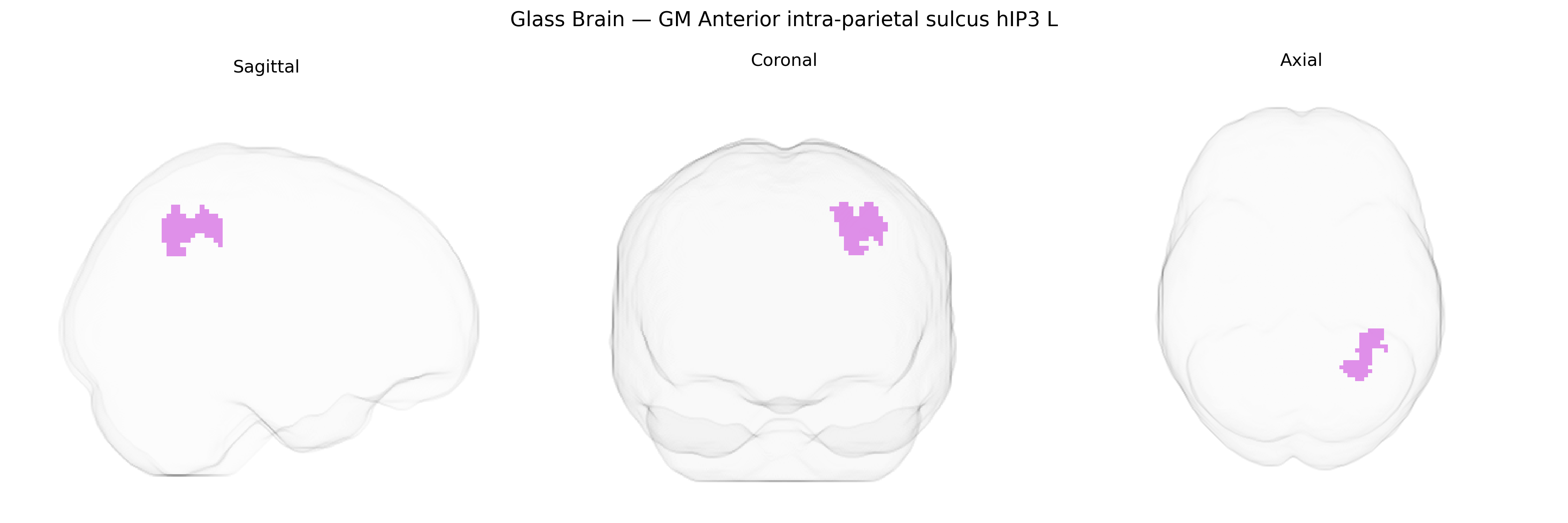
The bilateral GM Anterior intra-parietal sulcus hIP3 L, as defined in the Juelich maxprob thr25 2mm Atlas, corresponds to a cytoarchitectonically and functionally characterized subregion within the human intraparietal sulcus of the posterior parietal cortex. This area is implicated in higher-order visuomotor integration, particularly in processes such as attention allocation, spatial perception, and the coordination of eye and hand movements during goal-directed actions. It forms part of the broader intraparietal network involved in transforming visual information into motor commands and contributes to object-directed manipulation and sensorimotor decision-making. There is no direct Wikipedia article for hIP3; a closely related structure is the intraparietal sulcus: Intraparietal sulcus.
The GM Anterior intra-parietal sulcus hIP3 L region, as defined in the Juelich maxprob thr25 2mm atlas, lies within the broader intraparietal sulcus (IPS) network that has been implicated in genetic studies of visuospatial attention, numerical cognition, and sensorimotor integration, although hIP3-specific findings remain sparse and typically reported at the level of IPS or parietal cortex rather than this subregion. Large-scale GWAS of cortical structure (e.g., ENIGMA, UK Biobank) have identified multiple loci—such as variants near genes involved in neurodevelopment (e.g., MAPT, MEF2C, CHD8, and others) and synaptic signaling—that influence parietal cortical thickness, surface area, and gyrification, with IPS showing heritable variability that overlaps with genetic factors for general cognitive ability, educational attainment, and working memory. IPS/parietal activation patterns involving regions overlapping hIP3 have also been connected, via imaging-genetics and polygenic score approaches, to schizophrenia, ADHD, autism spectrum traits, and dyscalculia, where risk variants and polygenic load for these disorders correlate with altered parietal structure or task-related activity. In addition, GWAS of mathematical ability and numeracy have repeatedly implicated parietal/IPS circuitry, suggesting that common genetic variation affecting neurodevelopmental and synaptic pathways may modulate function in areas including hIP3, but no robust, replicated GWAS signal has yet been uniquely attributed to the bilateral GM hIP3 L parcel as distinguished in the Juelich atlas.
Overview generated by GPT-4o (2026).
Region ID: 5
Hemisphere: bilateral
Atlas: Juelich maxprob thr25 2mm
Full Quality Version: Download MP4
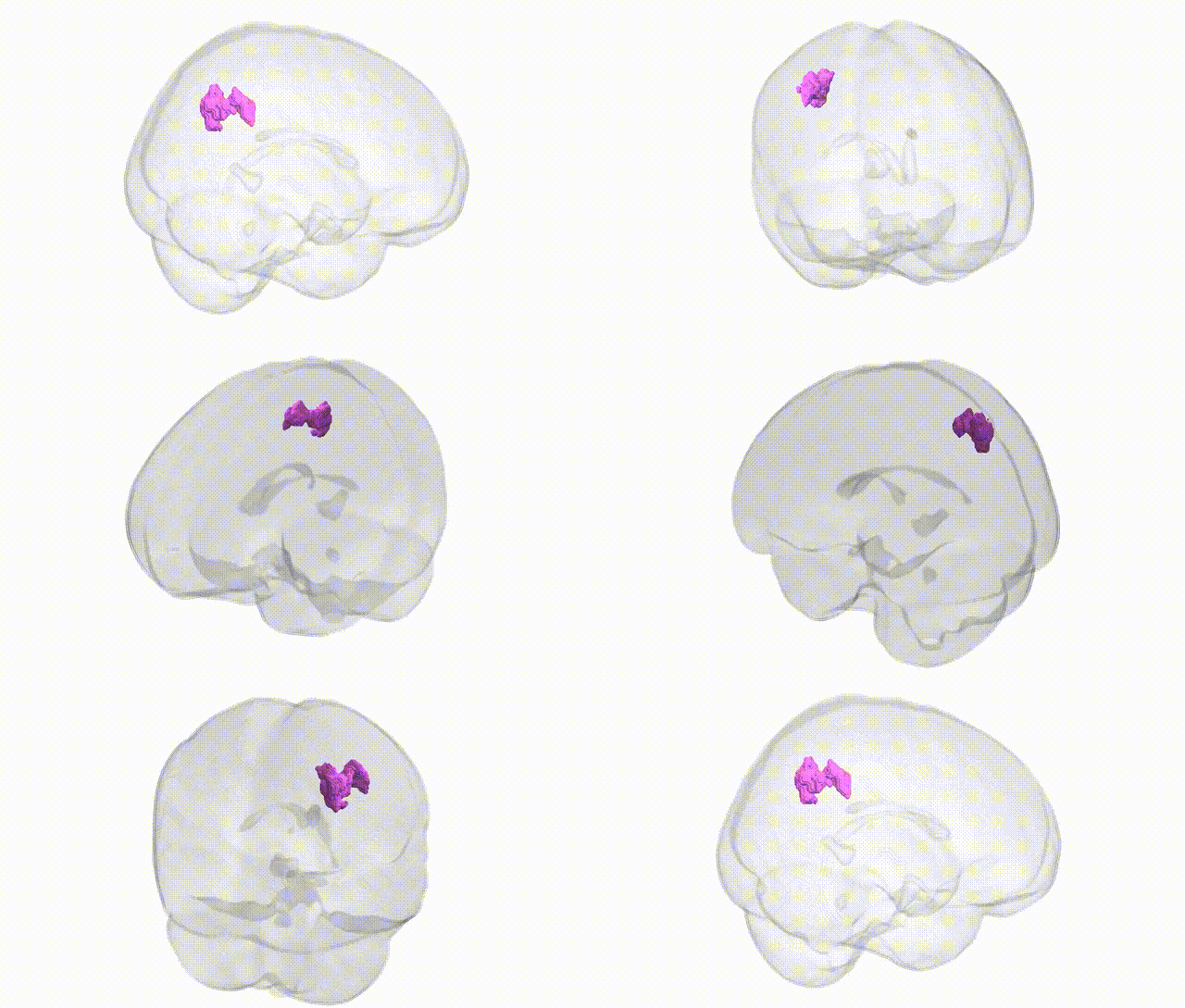
Full Quality Version: Download MP4
Wali Sidiqyar*, Gaurav Rudravaram*, Elyssa M. McMaster, Trent M. Schwartz, Adam M. Saunders, Kurt G. Schilling, Bennett A. Landman "Introducing SPINS: A Shared Public Visualization Library of Neuroanatomical Structures." Medical Imaging with Deep Learning- short paper
This resource is licensed under CC0 1.0 Universal (Public Domain).