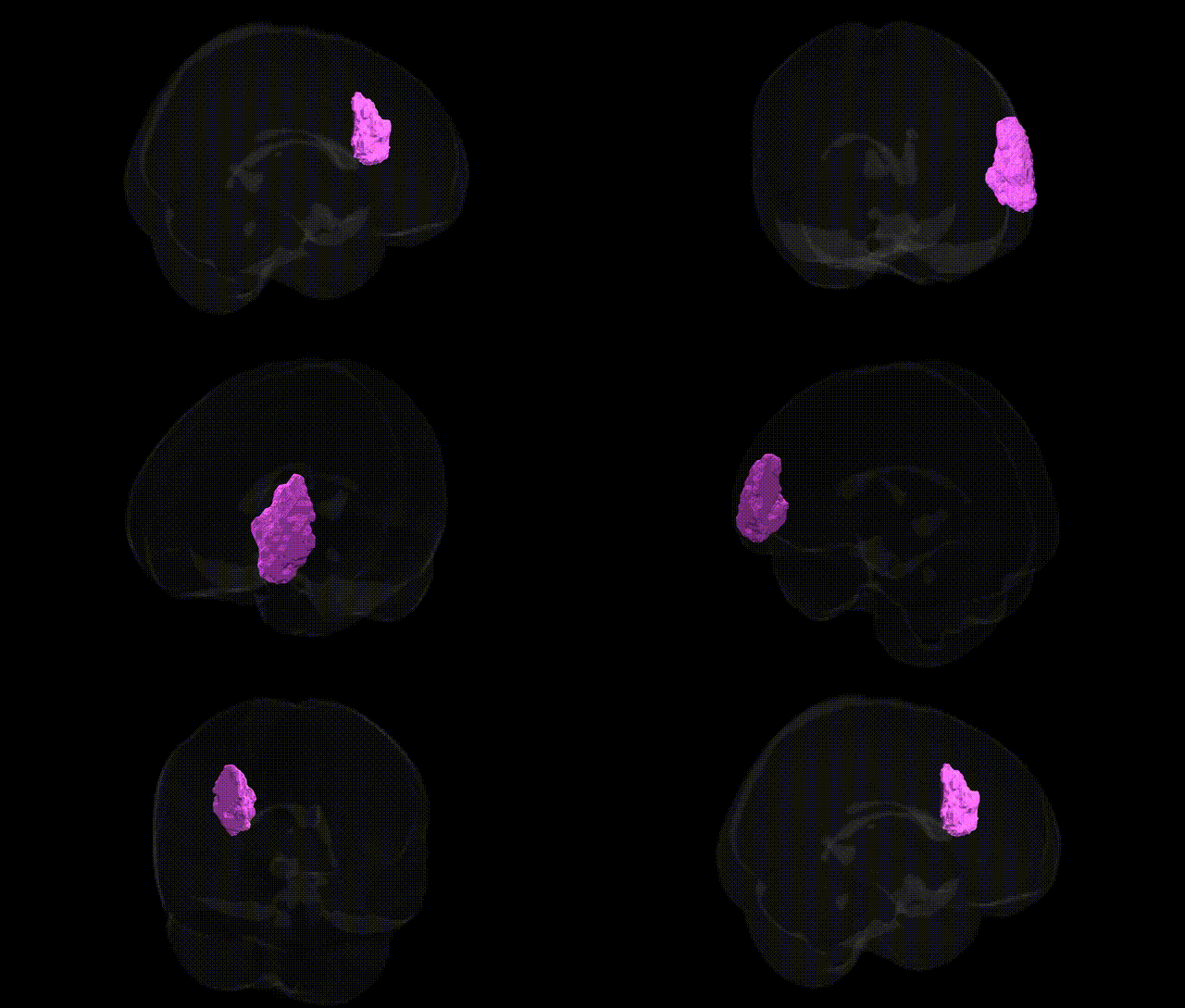
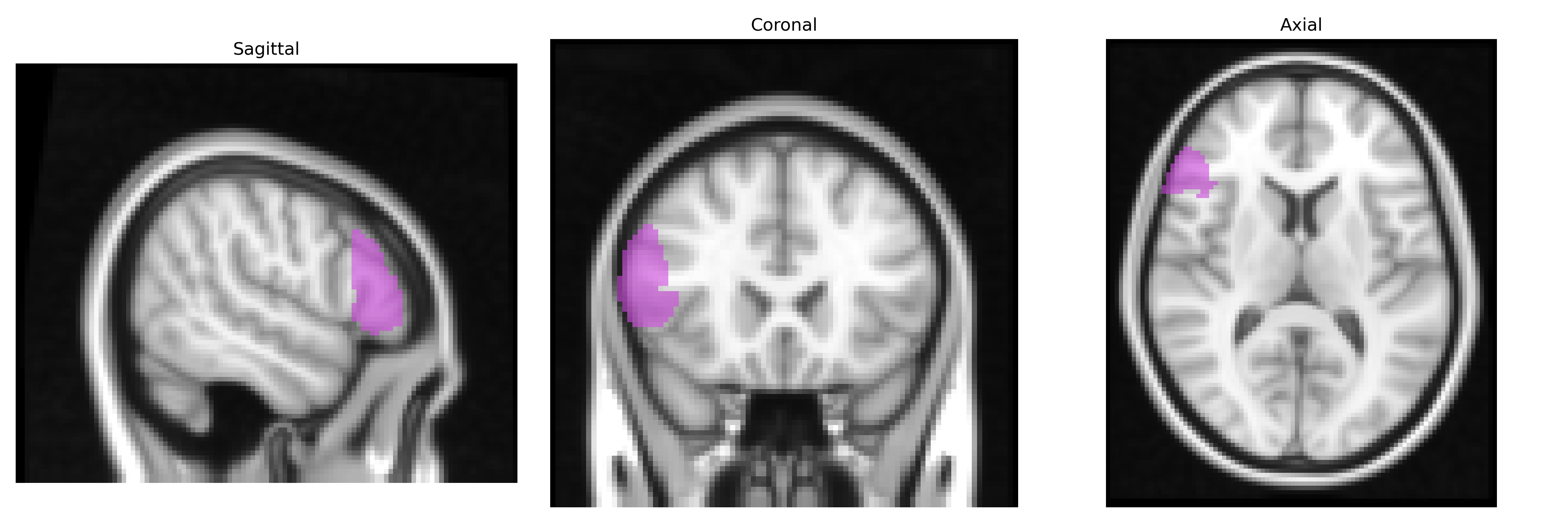
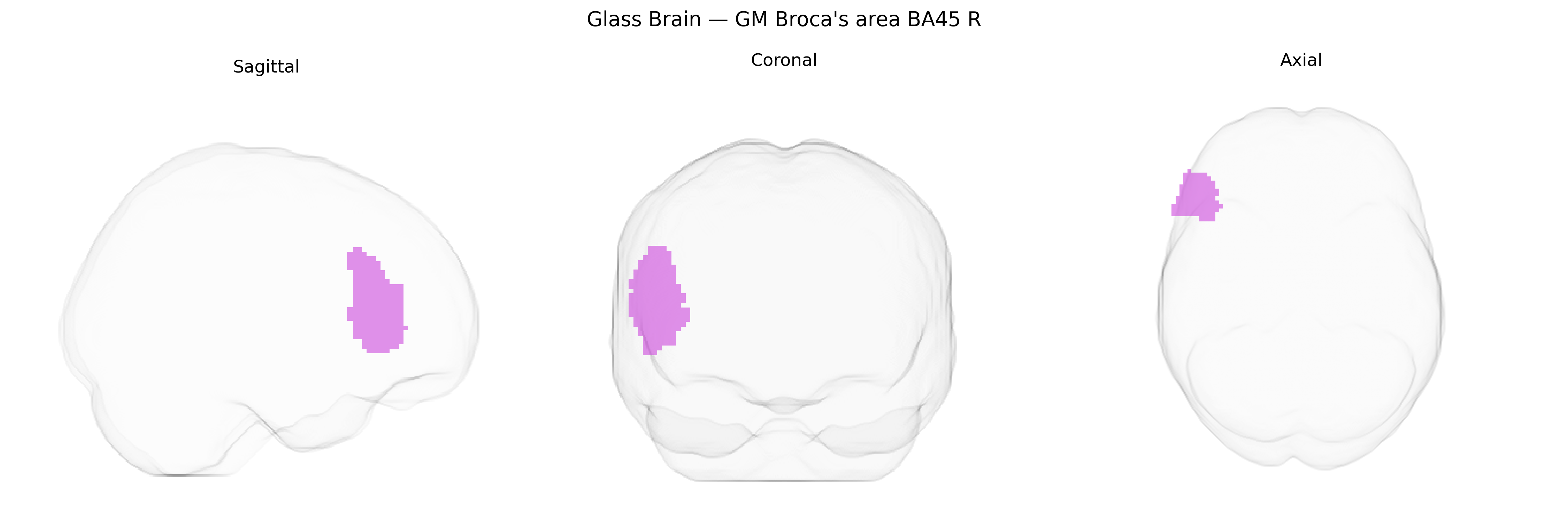
Bilateral GM Broca’s area BA45 R, as defined in the Juelich maxprob thr25 2 mm atlas, corresponds to the right-hemispheric gray matter component of cytoarchitectonic Brodmann area 45, a subdivision of the inferior frontal gyrus typically associated with higher-order language and cognitive control processes. Although classic Broca’s area is more strongly left-lateralized, the right BA45 contributes to aspects of discourse-level processing, prosody, semantic integration, and executive aspects of verbal behavior, as well as broader functions in working memory and inhibitory control. Cytoarchitectonically, BA45 is characterized by a granular frontal cortex pattern with distinct laminar organization, situated anterior to BA44 and adjacent to other prefrontal association areas, and is part of the larger fronto-temporal language and cognitive network. There is no direct Wikipedia article for “BA45”; a closely related entry is Broca’s area.
Genetic associations involving Broca’s area, particularly BA45 in the right hemisphere as defined in the Juelich maxprob thr25 2mm atlas, primarily implicate variants affecting language, speech, and higher-order cognitive functions rather than this subregion alone, since most GWAS and imaging‑genetics studies treat Broca’s area bilaterally or focus on left-lateralized language networks. Common variants in genes involved in neuronal development and connectivity (such as FOXP2, CNTNAP2, and DCDC2) have been linked to structural and functional differences in inferior frontal regions, including BA44/45, and to language-related phenotypes such as verbal fluency, reading ability, and speech sound disorders. Large-scale GWAS of brain imaging phenotypes (e.g., UK Biobank and ENIGMA) have identified polygenic influences on cortical thickness, surface area, and activation patterns in the inferior frontal gyrus associated with general cognitive ability, educational attainment, and risk for neuropsychiatric disorders (notably schizophrenia, autism spectrum disorder, and depression), although these findings usually map to broader frontal language networks rather than specifically isolating BA45 R. Some studies suggest that genetic risk scores for schizophrenia and autism correlate with altered activation or connectivity of Broca’s area during language and social cognition tasks, while variants linked to stuttering and developmental language disorder show associations with inferior frontal structural or functional measures. Overall, the genetic architecture of BA45, including the right-hemisphere region in the Juelich atlas, appears to be highly polygenic and shared with other frontal and language-related areas, with current evidence supporting associations to language ability, literacy-related traits, general cognition, and vulnerability to neurodevelopmental and psychiatric conditions, but without robust GWAS findings specific to the BA45 R subregion alone.
Overview generated by GPT-4o (2026).
Region ID: 16
Hemisphere: bilateral
Atlas: Juelich maxprob thr25 2mm
Full Quality Version: Download MP4
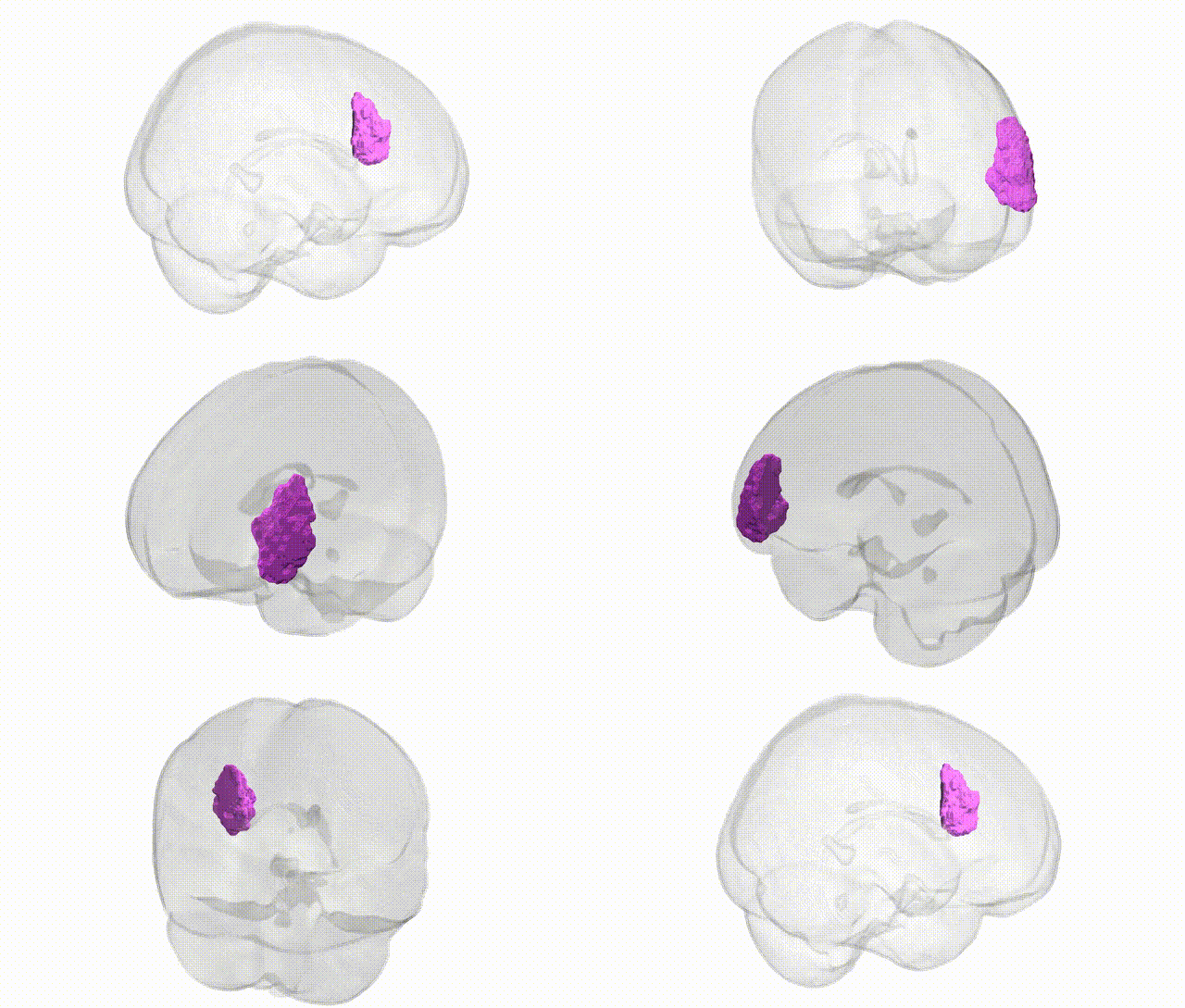
Full Quality Version: Download MP4
Wali Sidiqyar*, Gaurav Rudravaram*, Elyssa M. McMaster, Trent M. Schwartz, Adam M. Saunders, Kurt G. Schilling, Bennett A. Landman "Introducing SPINS: A Shared Public Visualization Library of Neuroanatomical Structures." Medical Imaging with Deep Learning- short paper
This resource is licensed under CC0 1.0 Universal (Public Domain).