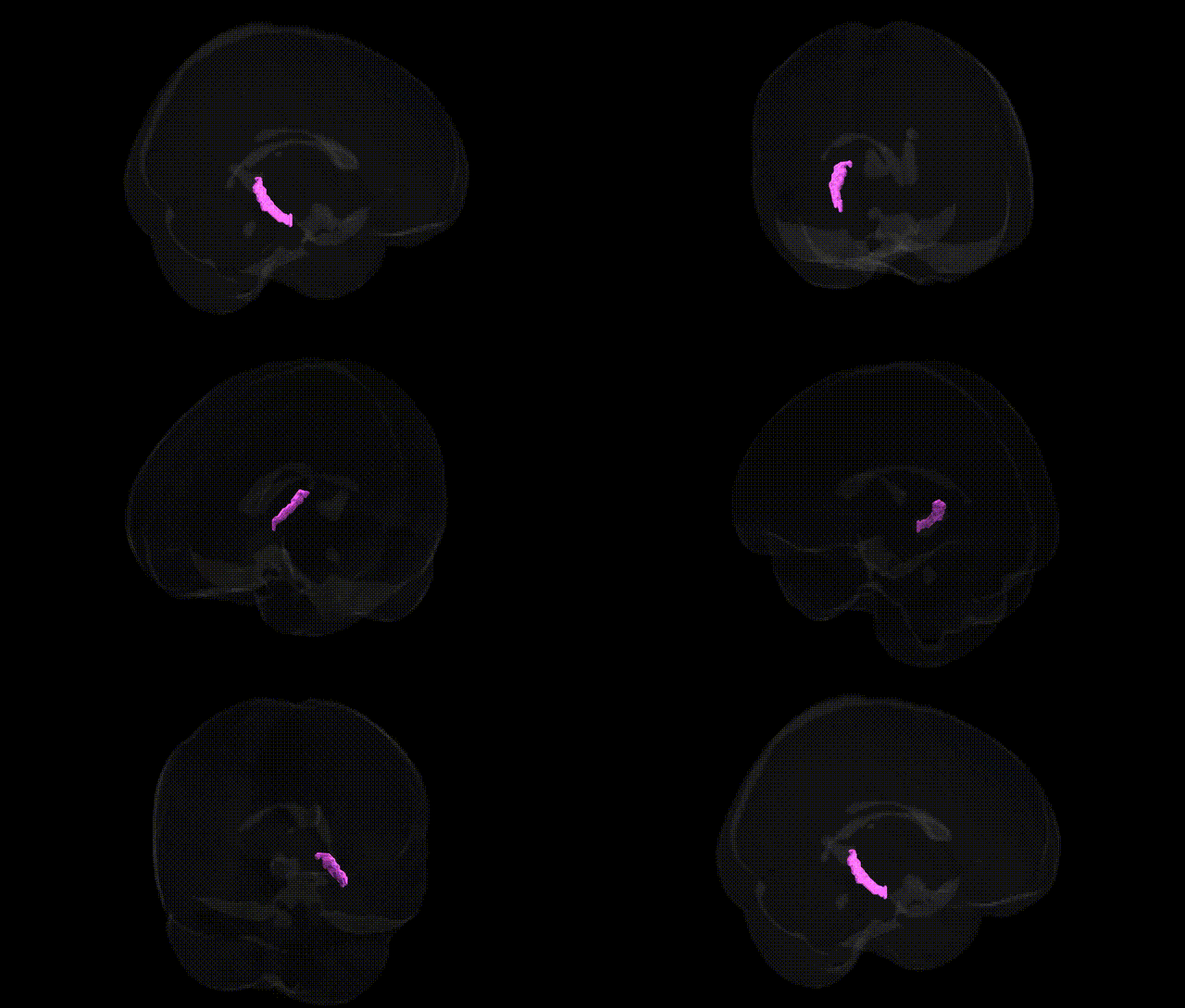
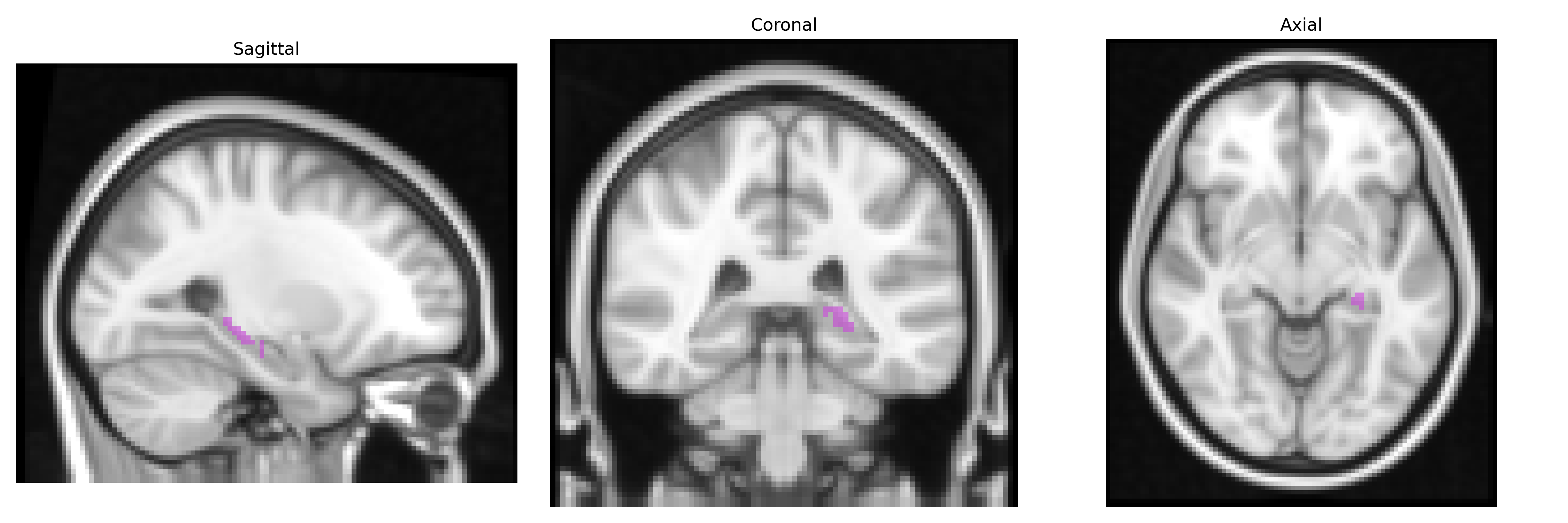
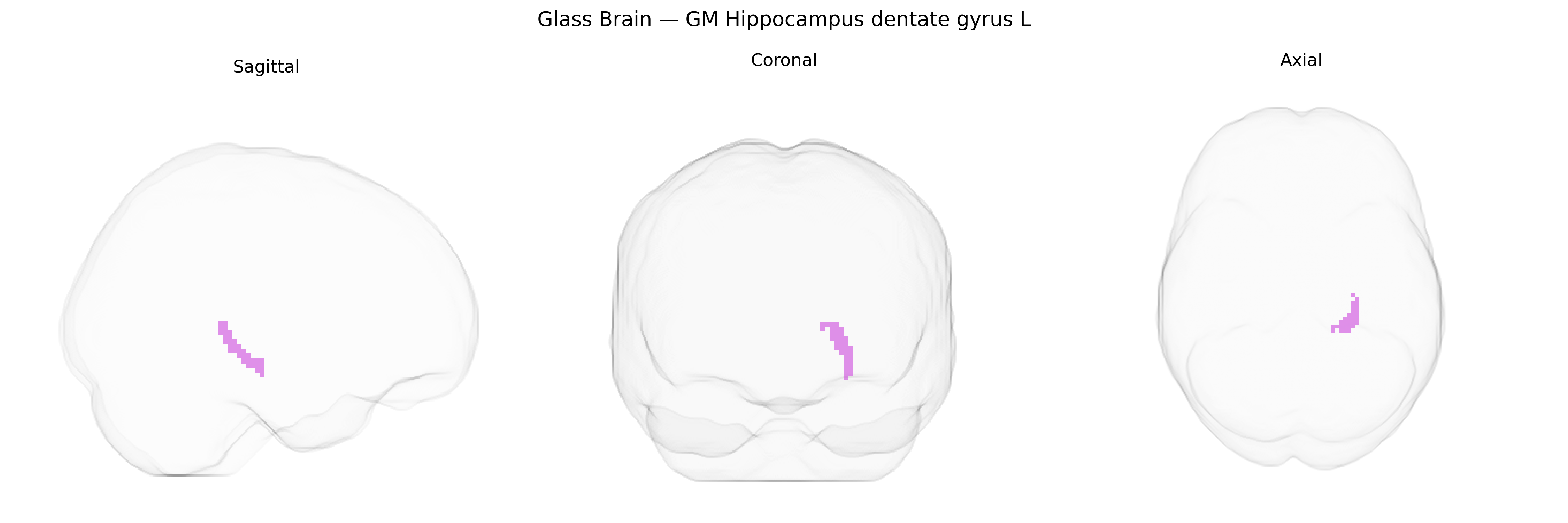
The bilateral gray matter Hippocampus dentate gyrus (left) in the Juelich maxprob thr25 2mm Atlas represents the left-sided portion of the dentate gyrus, a key subregion of the hippocampal formation located in the medial temporal lobe and crucial for episodic memory, pattern separation, and aspects of spatial navigation. It consists predominantly of densely packed granule cells that receive major input from the entorhinal cortex via the perforant path and project to the CA3 region, forming the first stage of the classic trisynaptic hippocampal circuit. Structurally, the dentate gyrus exhibits a characteristic C-shaped laminar organization and is one of the few brain areas where adult neurogenesis has been robustly demonstrated, contributing to its role in encoding new memories and discriminating between similar experiences. There is no direct link for this specific atlas-defined region; a closely related structure is the hippocampus: Hippocampus.
The bilateral gray matter hippocampus dentate gyrus (left) in the Juelich maxprob thr25 2 mm atlas corresponds to a subfield critically involved in pattern separation, and genetic studies frequently implicate it via broader hippocampal or subfield-specific analyses. GWAS of hippocampal volume and subfields have identified common variants in genes such as MSRB3, ASTN2, DPP4, KIBRA/WFS1, and loci near HMGA2 and FOXO3 that influence hippocampal morphology, with some analyses showing stronger effects in dentate gyrus–related subfields (e.g., CA4/dentate gyrus). The BDNF Val66Met polymorphism and other variants in neurotrophin signaling and synaptic plasticity genes have been associated with altered dentate gyrus structure and function, particularly in relation to memory performance and stress responsivity. Polygenic risk scores for major depressive disorder, schizophrenia, bipolar disorder, and Alzheimer’s disease show associations with reduced hippocampal volume and microstructural changes that often encompass the dentate gyrus, consistent with its vulnerability to neurodegeneration, neuroinflammation, and glucocorticoid-related toxicity. Genetic influences on adult hippocampal neurogenesis, including variants in DISC1, CACNA1C, and glutamatergic system genes, have been linked to traits such as cognitive performance, anxiety, and stress-related psychopathology, with imaging-genetics work suggesting that these effects are at least partly mediated by the dentate gyrus subregion represented in the Juelich atlas.
Overview generated by GPT-4o (2026).
Region ID: 21
Hemisphere: bilateral
Atlas: Juelich maxprob thr25 2mm
Full Quality Version: Download MP4
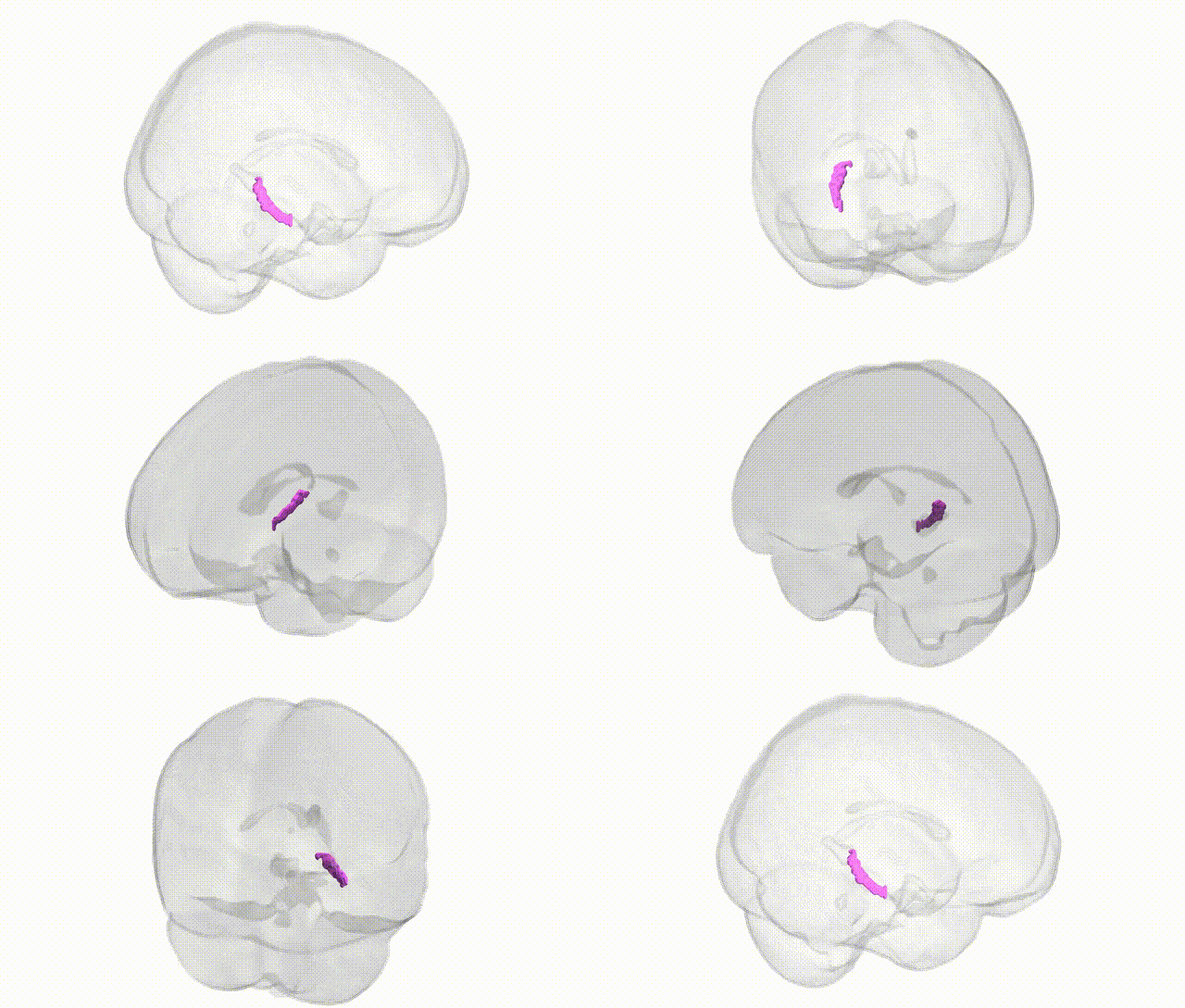
Full Quality Version: Download MP4
Wali Sidiqyar*, Gaurav Rudravaram*, Elyssa M. McMaster, Trent M. Schwartz, Adam M. Saunders, Kurt G. Schilling, Bennett A. Landman "Introducing SPINS: A Shared Public Visualization Library of Neuroanatomical Structures." Medical Imaging with Deep Learning- short paper
This resource is licensed under CC0 1.0 Universal (Public Domain).