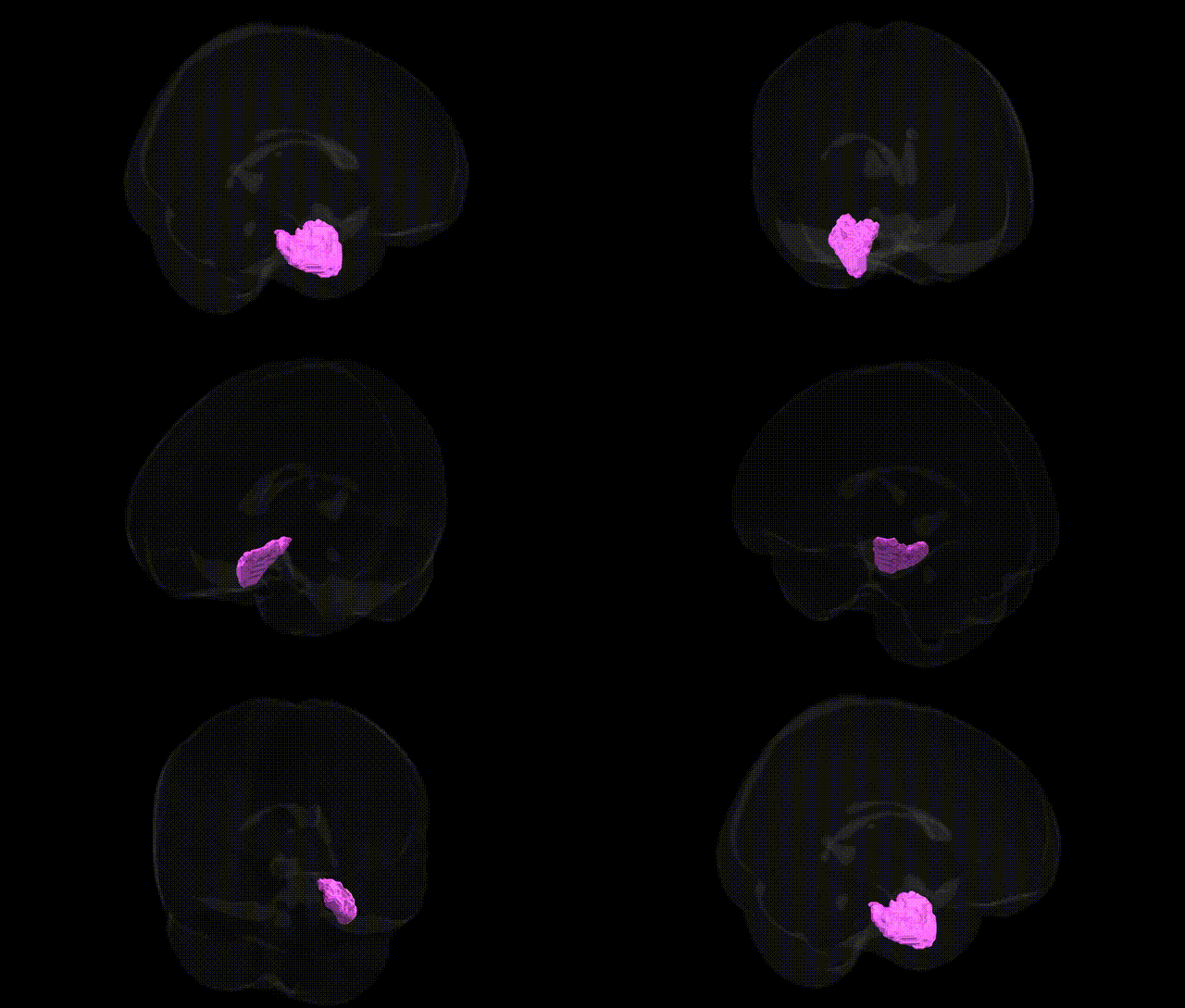
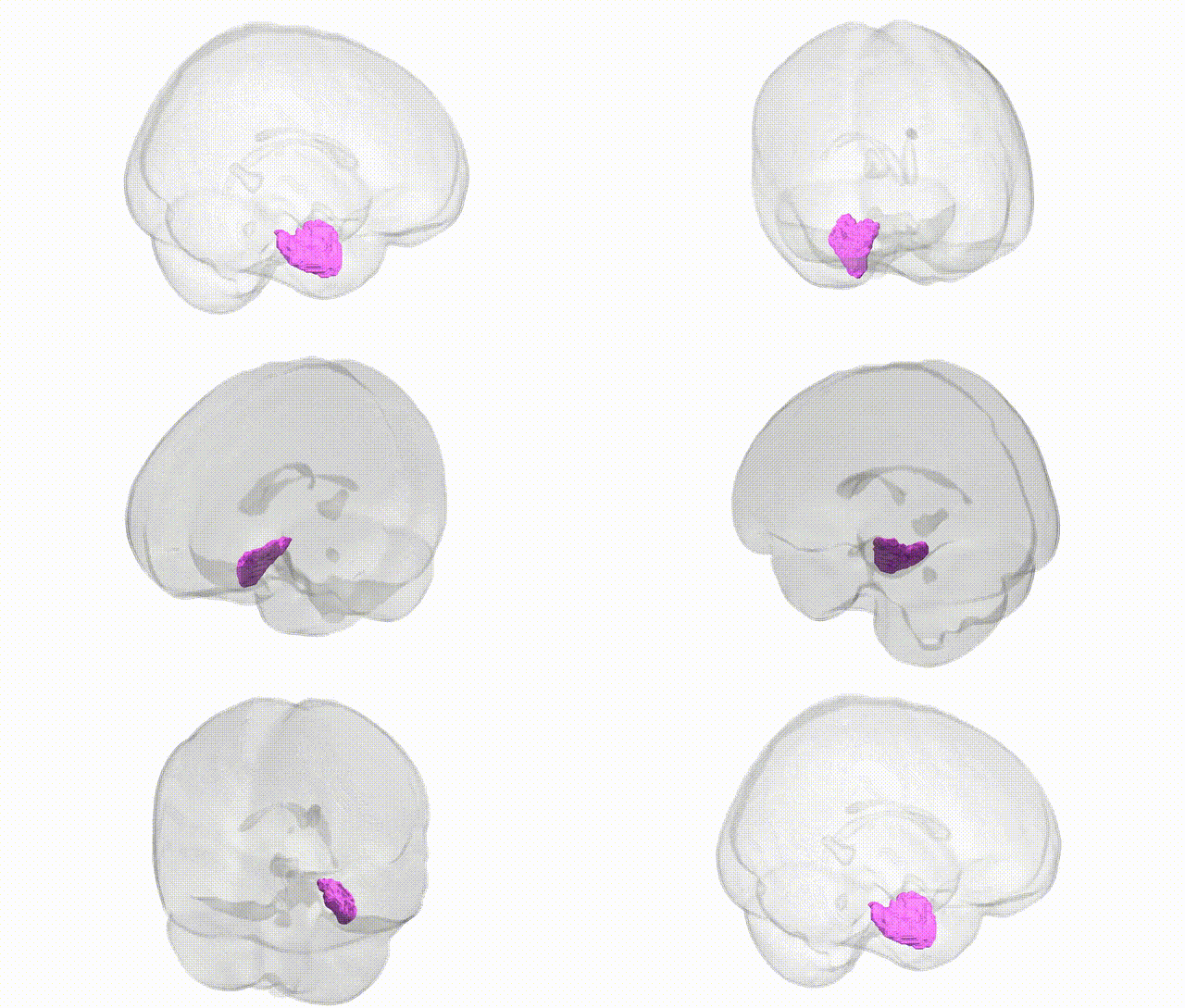
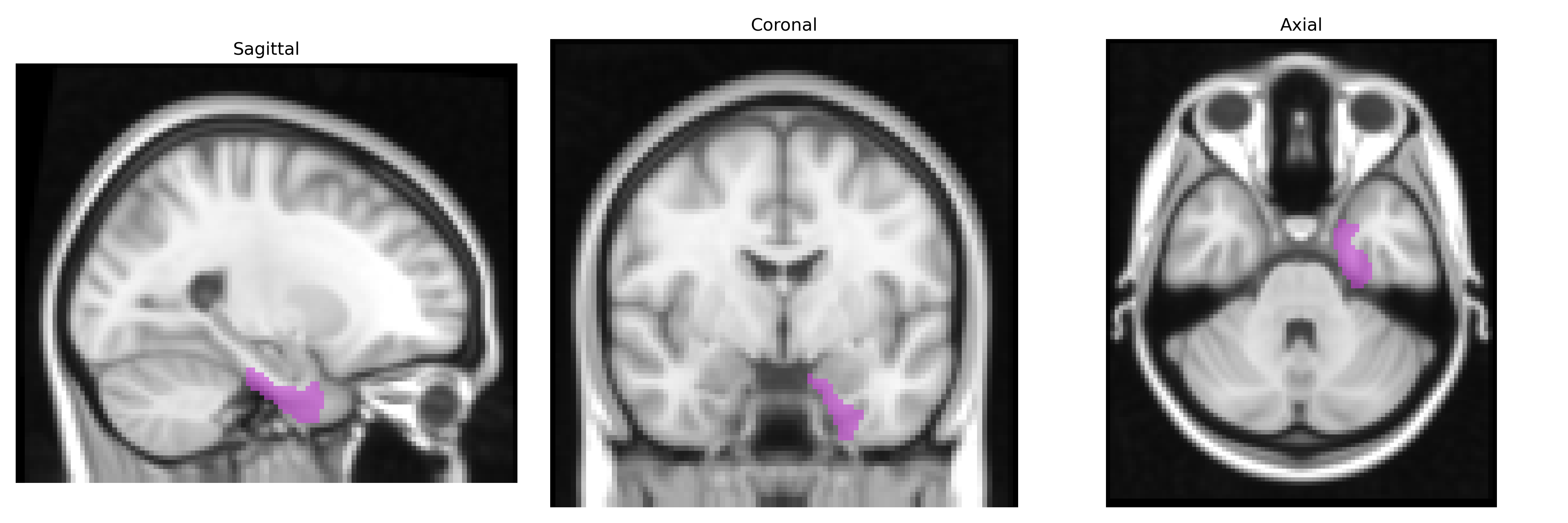
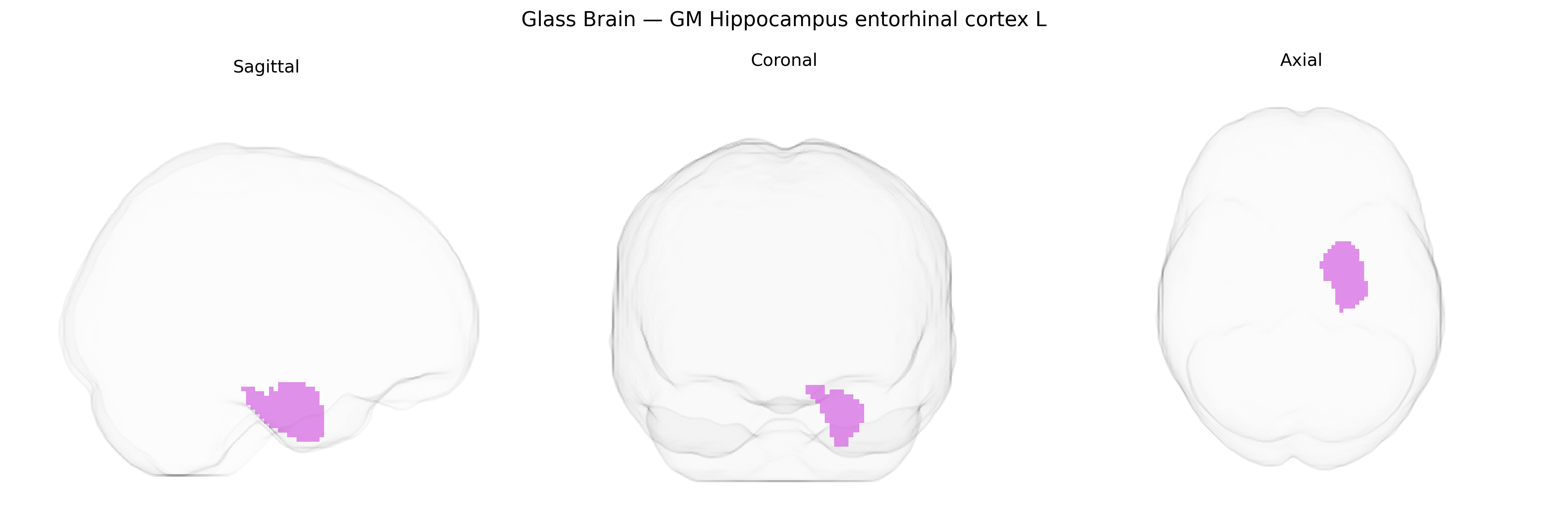
The bilateral GM Hippocampus entorhinal cortex L, as defined in the Juelich maxprob thr25 2mm Atlas, corresponds primarily to the left entorhinal cortex and adjacent hippocampal formation, including portions of the parahippocampal gyrus and medial temporal lobe gray matter. This region forms a critical hub of the medial temporal memory system, serving as a major interface between neocortical association areas and the hippocampus. It is heavily involved in episodic memory encoding and retrieval, spatial navigation, and representation of contextual and relational information, with dense reciprocal connections to the hippocampal subfields (e.g., dentate gyrus, CA fields, subiculum) and widespread cortical inputs. Cytoarchitectonically, it is characterized by a layered allocortical/transition-zone organization and is frequently implicated in early neuropathological changes in neurodegenerative disorders such as Alzheimer’s disease. There is no single direct Wikipedia article for this exact composite label; a closely related structure is the Entorhinal cortex.
The bilateral gray matter hippocampus–entorhinal cortex (left) as defined in the Juelich maxprob thr25 2 mm atlas corresponds to a medial temporal lobe hub critical for episodic memory that shows robust genetic influences and has been extensively interrogated in imaging‑genetics and GWAS studies. Twin and family studies indicate high heritability for hippocampal volume (often >40–70%), and large-scale GWAS (e.g., ENIGMA, UK Biobank) have identified variants in or near genes such as APOE, SLC4A10, WWOX, DPP4, HMGA2, MSRB3, and others associated with hippocampal and entorhinal cortical volume, thickness, or microstructure. APOE ε4 is repeatedly linked to reduced entorhinal and hippocampal volumes and accelerated atrophy, particularly in Alzheimer’s disease and mild cognitive impairment, while polygenic risk scores for Alzheimer’s disease and related dementias correlate with smaller volumes and greater longitudinal decline in this region. Variants in genes involved in tau processing (e.g., MAPT), amyloid pathways, and neuroinflammation (e.g., TREM2) are associated with entorhinal/hippocampal neurodegeneration, and schizophrenia and major depression GWAS have implicated polygenic architectures that partly converge on hippocampal volume differences. Additionally, GWAS of cognitive traits, such as general intelligence and memory performance, show overlapping genetic architecture with hippocampal–entorhinal structure, suggesting shared genetic determinants of neuroanatomy and cognition, while loci affecting neurodevelopment and synaptic plasticity appear enriched among variants influencing morphology of this medial temporal region.
Overview generated by GPT-4o (2026).
Region ID: 19
Hemisphere: bilateral
Atlas: Juelich maxprob thr25 2mm
Full Quality Version: Download MP4
Full Quality Version: Download MP4
Wali Sidiqyar*, Gaurav Rudravaram*, Elyssa M. McMaster, Trent M. Schwartz, Adam M. Saunders, Kurt G. Schilling, Bennett A. Landman "Introducing SPINS: A Shared Public Visualization Library of Neuroanatomical Structures." Medical Imaging with Deep Learning- short paper
This resource is licensed under CC0 1.0 Universal (Public Domain).