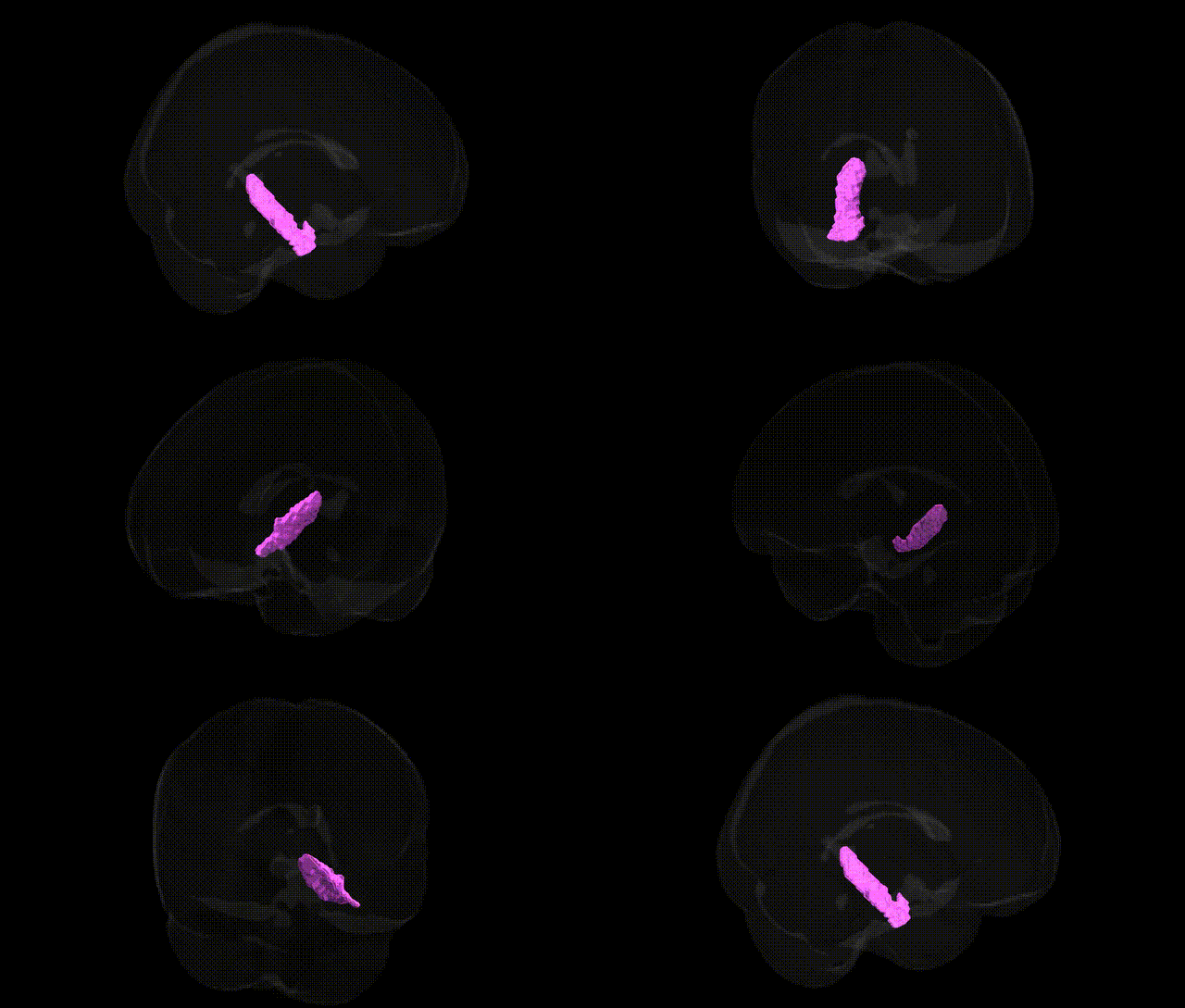
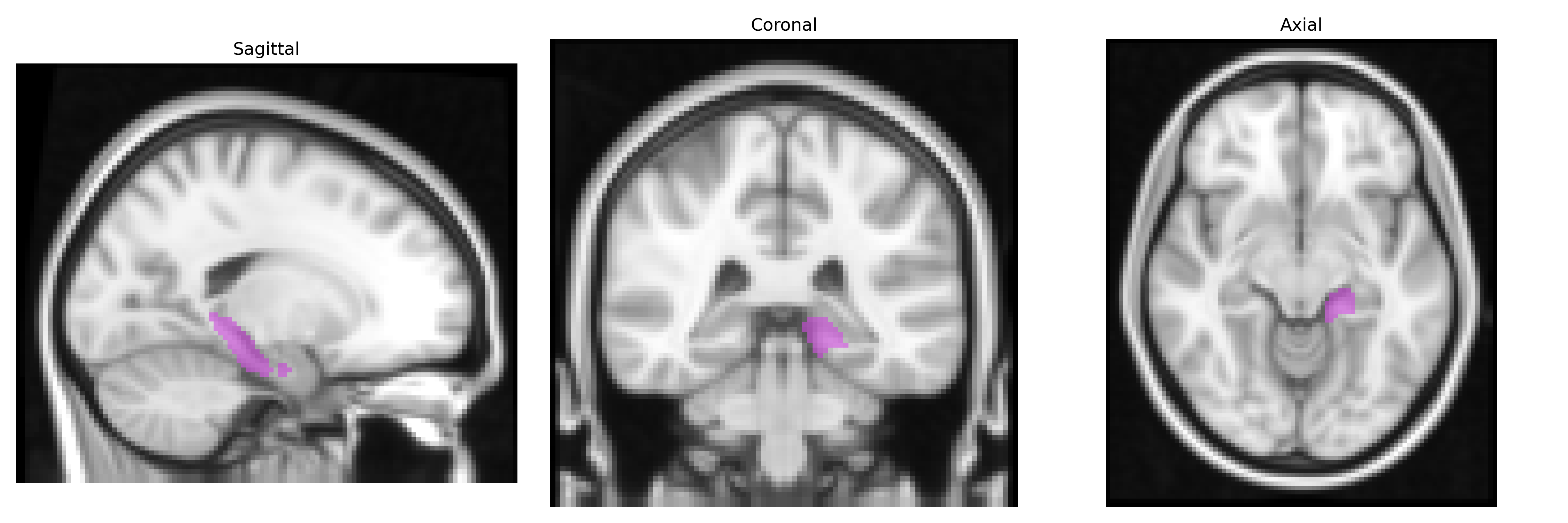
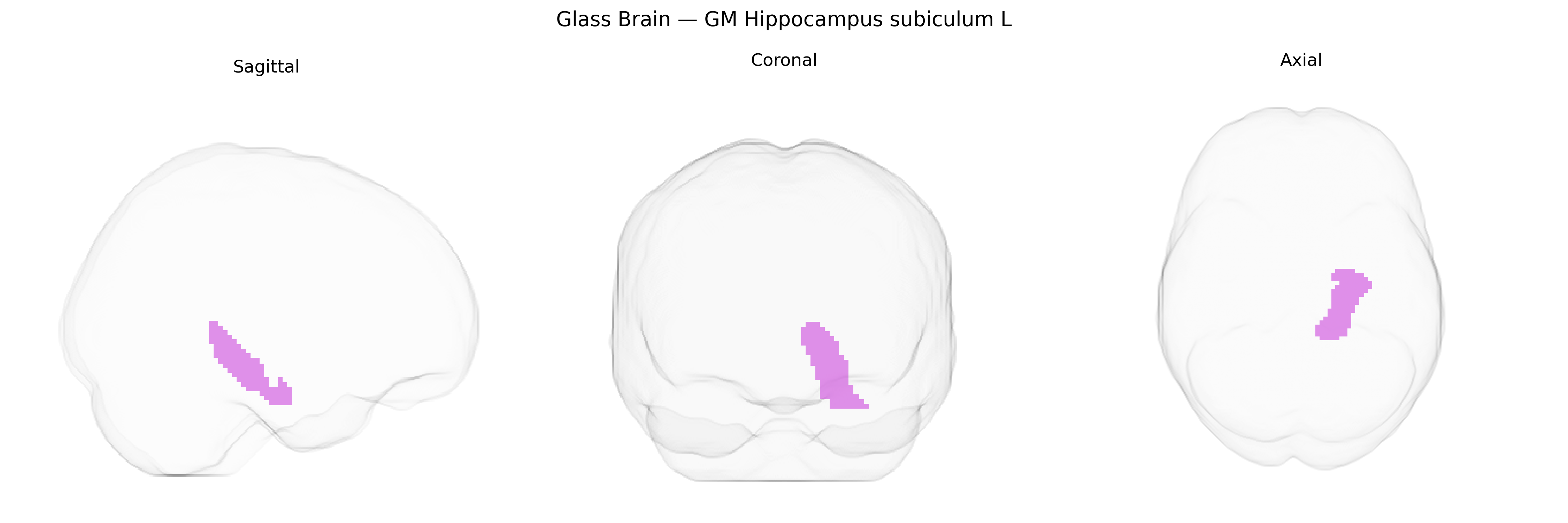
The bilateral GM Hippocampus subiculum L from the Juelich maxprob thr25 2mm Atlas corresponds to gray matter of the left subiculum, a key output subfield of the hippocampal formation situated between CA1 and the entorhinal cortex. It is composed predominantly of pyramidal neurons and serves as a major relay station, integrating hippocampal inputs and projecting widely to cortical and subcortical regions, including the entorhinal cortex, presubiculum, nucleus accumbens, hypothalamus, and prefrontal areas. Functionally, the subiculum participates in episodic memory, spatial navigation, context processing, and the regulation of the hypothalamic–pituitary–adrenal axis, and is implicated in neuropsychiatric and neurodegenerative conditions such as epilepsy, schizophrenia, and Alzheimer’s disease. There is no direct Wikipedia article for this specific atlas-defined region; a closely related structure is the broader hippocampus: Hippocampus.
Genetic associations involving the hippocampal subiculum, as defined in the Juelich maxprob thr25 2mm atlas, largely reflect studies of hippocampal subfield volume and function rather than this specific left-sided parcel alone, with many findings bilaterally applicable. GWAS and imaging‑genetics studies have identified variants in genes such as SLC1A2, DPP4, WNT3, ASTN2, and loci near HRK and FAF1 associated with hippocampal or subfield volumes, including the subiculum, implicating glutamatergic signaling, neurodevelopmental, and apoptotic pathways in structural variation. These genetic influences on subiculum morphology and activity have been linked to disorders and traits including Alzheimer’s disease (e.g., APOE ε4 and other AD‑risk loci correlating with subiculum atrophy), schizophrenia and bipolar disorder (with risk variants affecting hippocampal connectivity and volume), major depression and anxiety (where polygenic risk scores and candidate genes related to stress response and neuroplasticity, such as BDNF and FKBP5, associate with subiculum structure and function), and cognitive phenotypes such as memory performance, spatial navigation, and general cognitive ability. Additionally, polygenic architectures for traits like neuroticism and resilience to stress have shown relationships with hippocampal subfield metrics that include the subiculum, suggesting that common genetic variation shapes vulnerability and adaptation through this region’s role as a key output structure of the hippocampal formation.
Overview generated by GPT-4o (2026).
Region ID: 25
Hemisphere: bilateral
Atlas: Juelich maxprob thr25 2mm
Full Quality Version: Download MP4
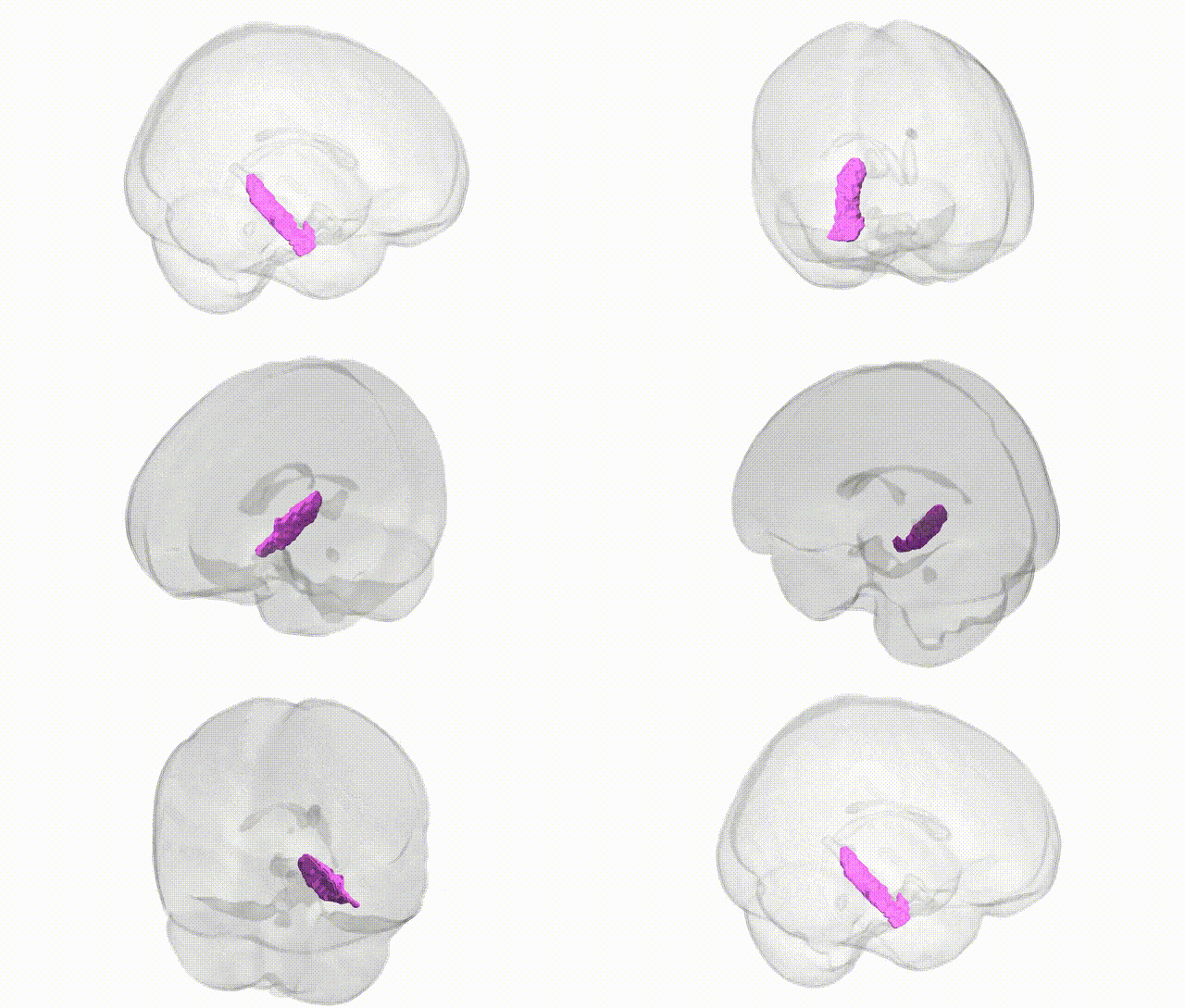
Full Quality Version: Download MP4
Wali Sidiqyar*, Gaurav Rudravaram*, Elyssa M. McMaster, Trent M. Schwartz, Adam M. Saunders, Kurt G. Schilling, Bennett A. Landman "Introducing SPINS: A Shared Public Visualization Library of Neuroanatomical Structures." Medical Imaging with Deep Learning- short paper
This resource is licensed under CC0 1.0 Universal (Public Domain).