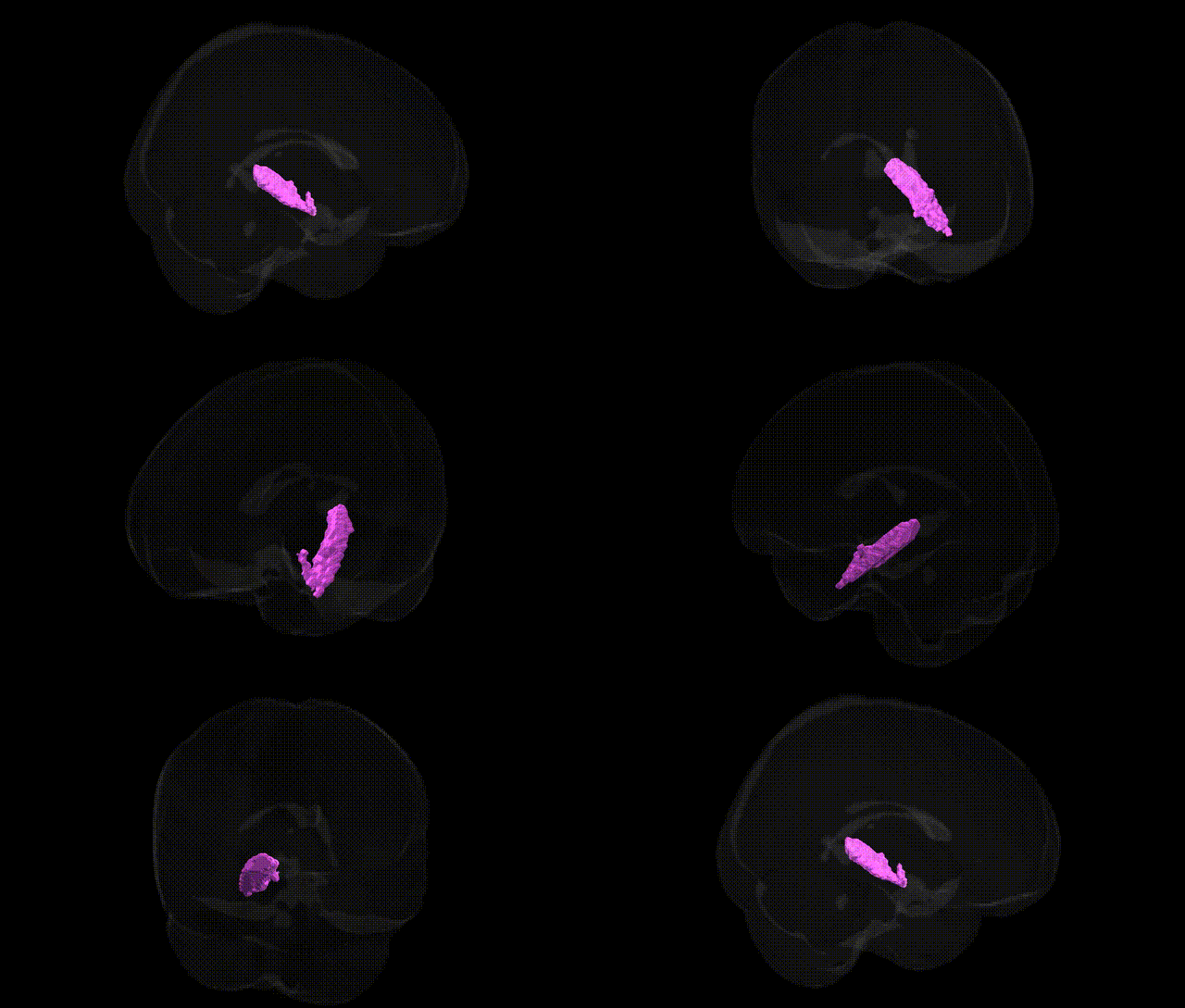
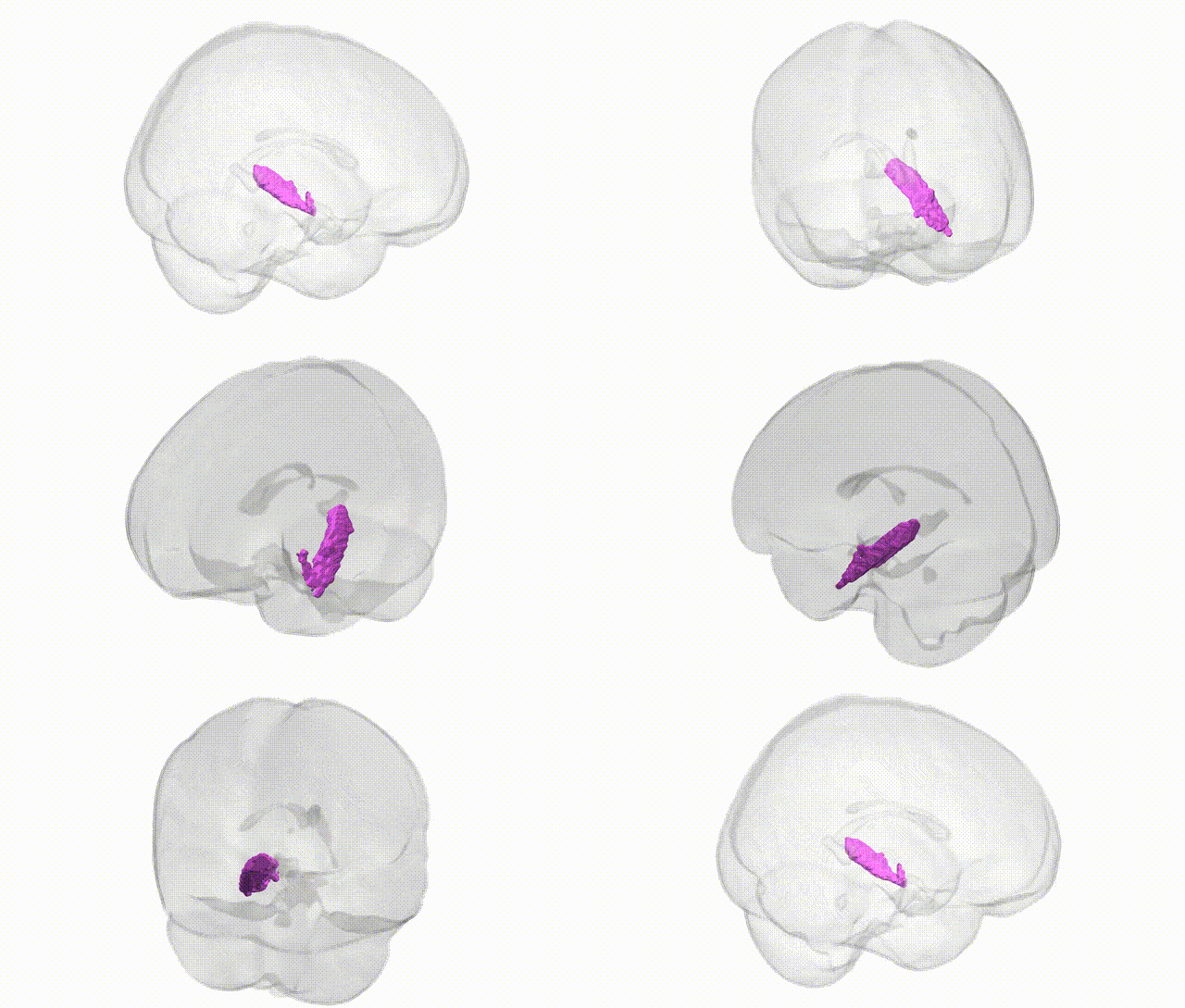
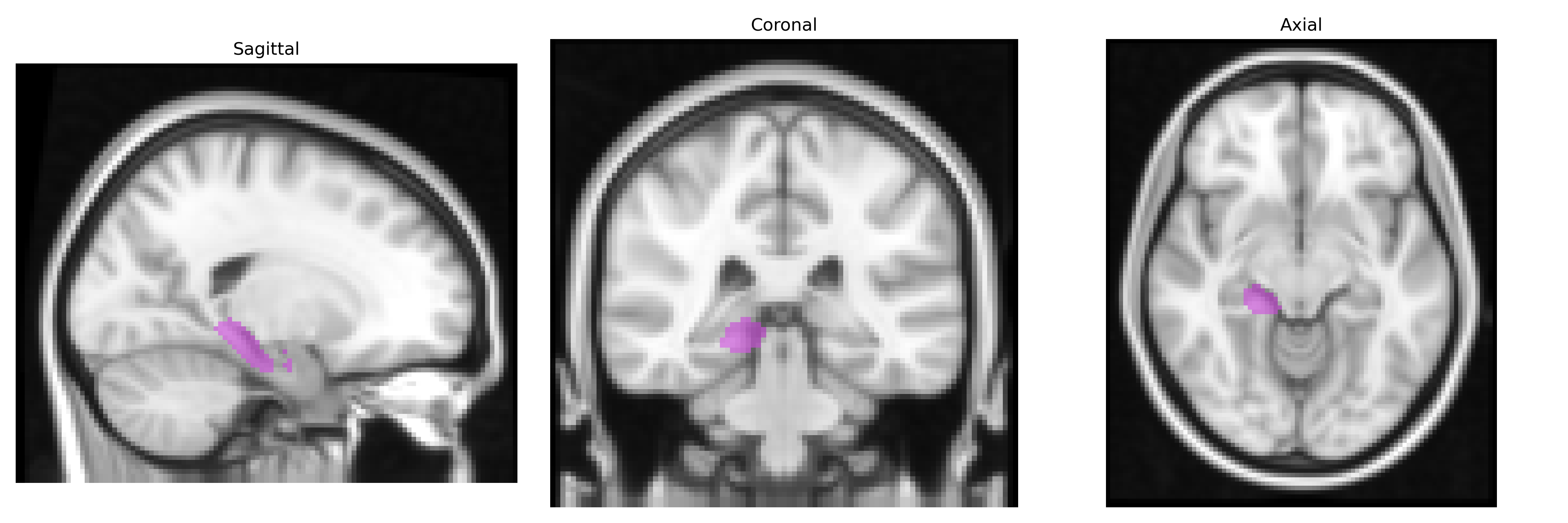
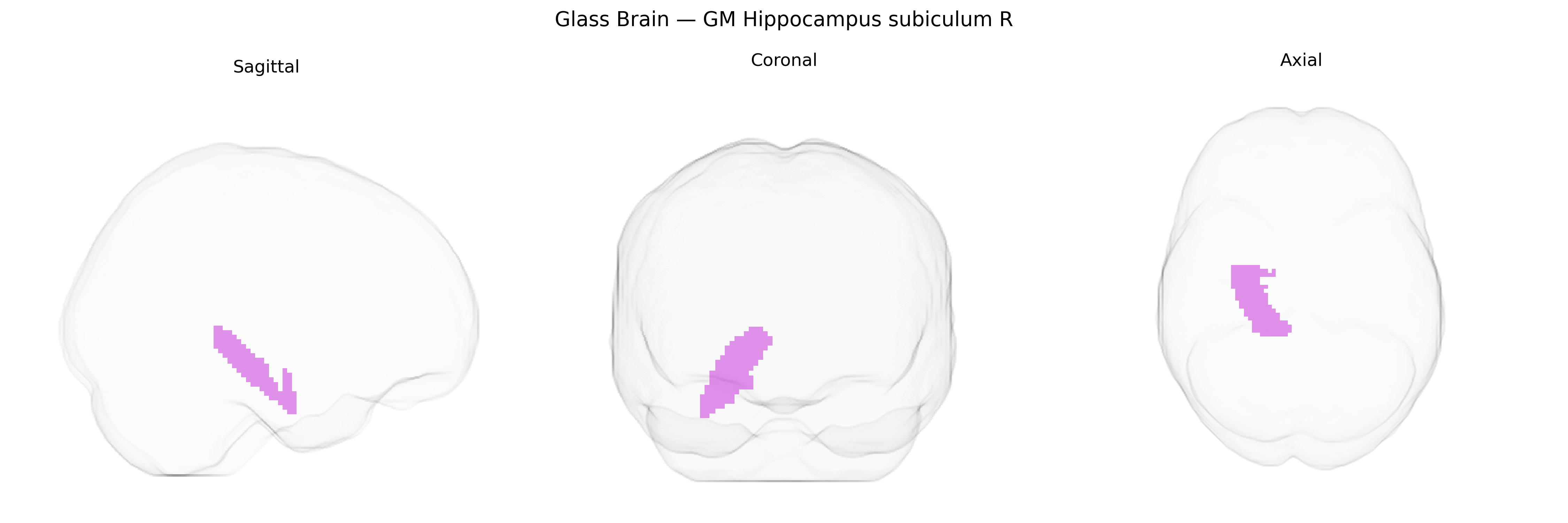
The bilateral GM Hippocampus subiculum R, as defined in the Juelich maxprob thr25 2mm Atlas, corresponds to the right subiculum portion of the hippocampal formation, a transitional cortical region situated between the hippocampus proper (Cornu Ammonis fields) and the entorhinal cortex. It serves as a major output structure of the hippocampus, receiving processed information from CA1 and projecting extensively to neocortical and subcortical targets, including the entorhinal cortex, presubiculum, nucleus accumbens, hypothalamus, and prefrontal regions. Functionally, the subiculum is involved in episodic memory, spatial navigation, context processing, and modulation of stress and reward-related circuits, and it plays a role in integrating hippocampal computations with broader limbic and cognitive networks. There is no direct Wikipedia article for this specific atlas-defined region; a closely related structure is the hippocampus: Hippocampus.
The subiculum region of the hippocampus, including the right subiculum as defined in the Jülich maxprob thr25 2 mm atlas, has extensive genetic associations primarily from large-scale neuroimaging GWAS that treat hippocampal subfields as quantitative traits. Common variants in and near genes such as SLC4A10, DPP4, MSRB3, WIF1, and loci within the 12q24 and 2q24 regions have been repeatedly associated with hippocampal volume and subfield measures, including the subiculum, in consortia like ENIGMA and UK Biobank–based studies. Polygenic risk scores for Alzheimer’s disease, schizophrenia, major depressive disorder, and epilepsy show significant associations with reduced hippocampal and subfield volumes, with the subiculum frequently implicated as part of the anterior hippocampal circuitry affected by these conditions. Specific Alzheimer’s disease risk variants (e.g., in APOE, CLU, PICALM, and BIN1) have been linked to greater atrophy or accelerated thinning in subicular and adjacent CA1 regions, paralleling the known vulnerability of the subiculum in early Alzheimer’s pathology. Genetic liability for stress-related and affective traits (e.g., neuroticism, anxiety, and stress reactivity) also correlates with subicular structural variation, consistent with the role of this region in hypothalamic–pituitary–adrenal (HPA) axis regulation. Overall, the right hippocampal subiculum emerges in genetic studies as a key structural target of polygenic influences on memory, neurodegenerative risk, psychosis, and mood-related traits.
Overview generated by GPT-4o (2026).
Region ID: 26
Hemisphere: bilateral
Atlas: Juelich maxprob thr25 2mm
Full Quality Version: Download MP4
Full Quality Version: Download MP4
Wali Sidiqyar*, Gaurav Rudravaram*, Elyssa M. McMaster, Trent M. Schwartz, Adam M. Saunders, Kurt G. Schilling, Bennett A. Landman "Introducing SPINS: A Shared Public Visualization Library of Neuroanatomical Structures." Medical Imaging with Deep Learning- short paper
This resource is licensed under CC0 1.0 Universal (Public Domain).