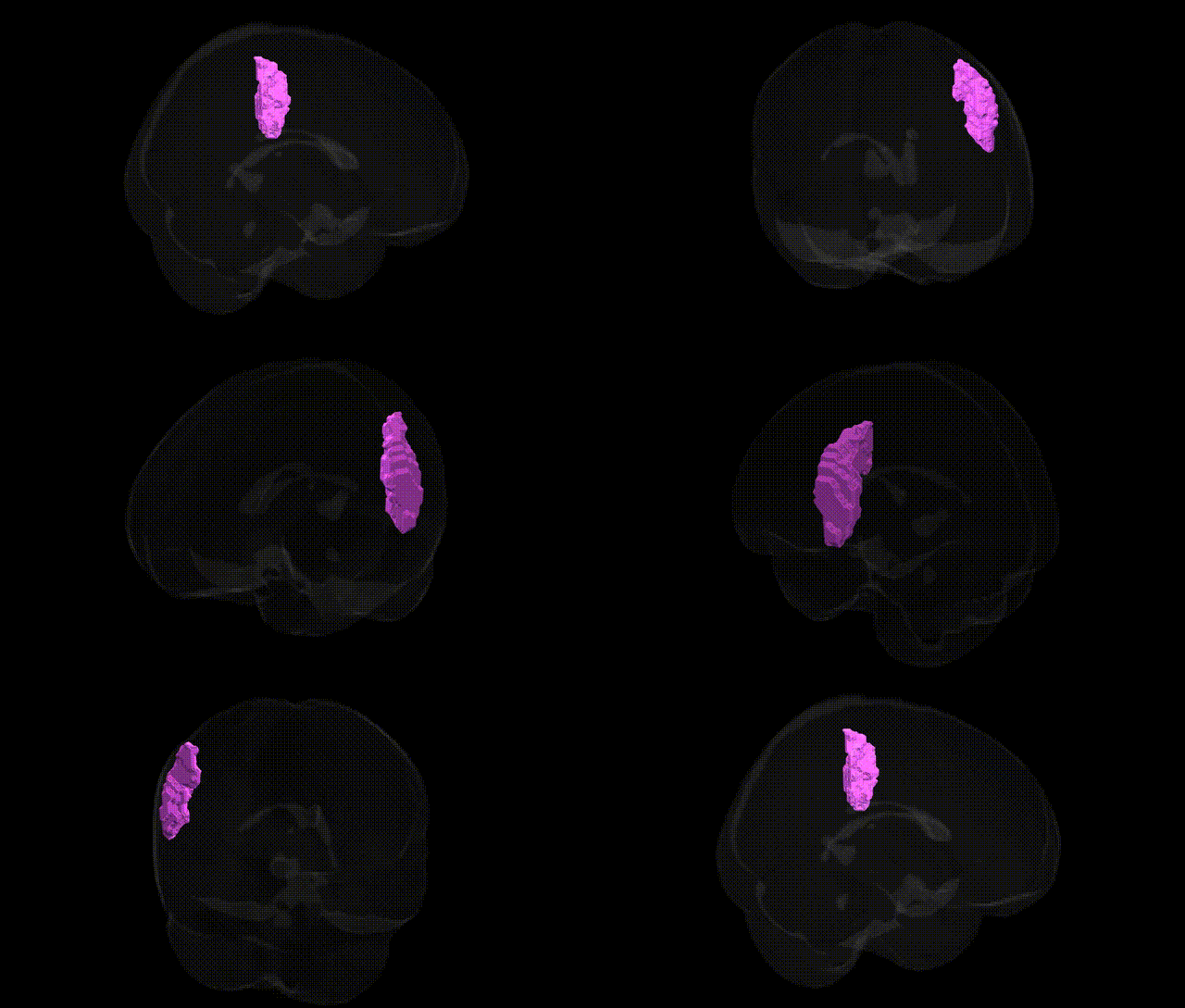
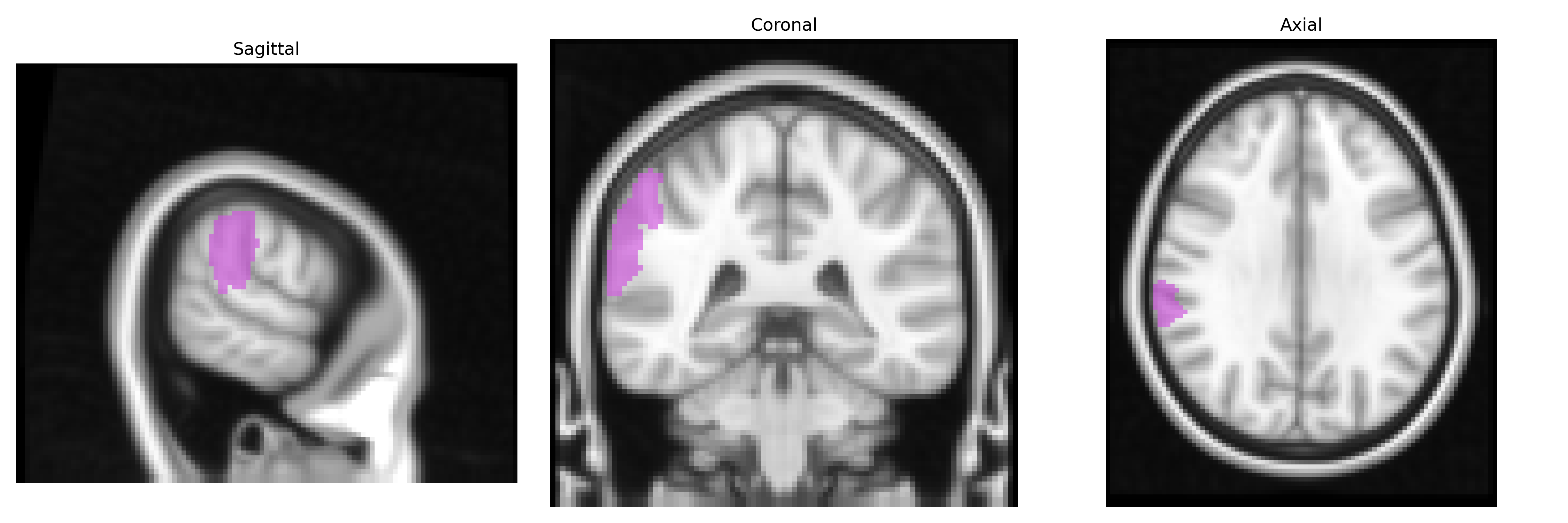
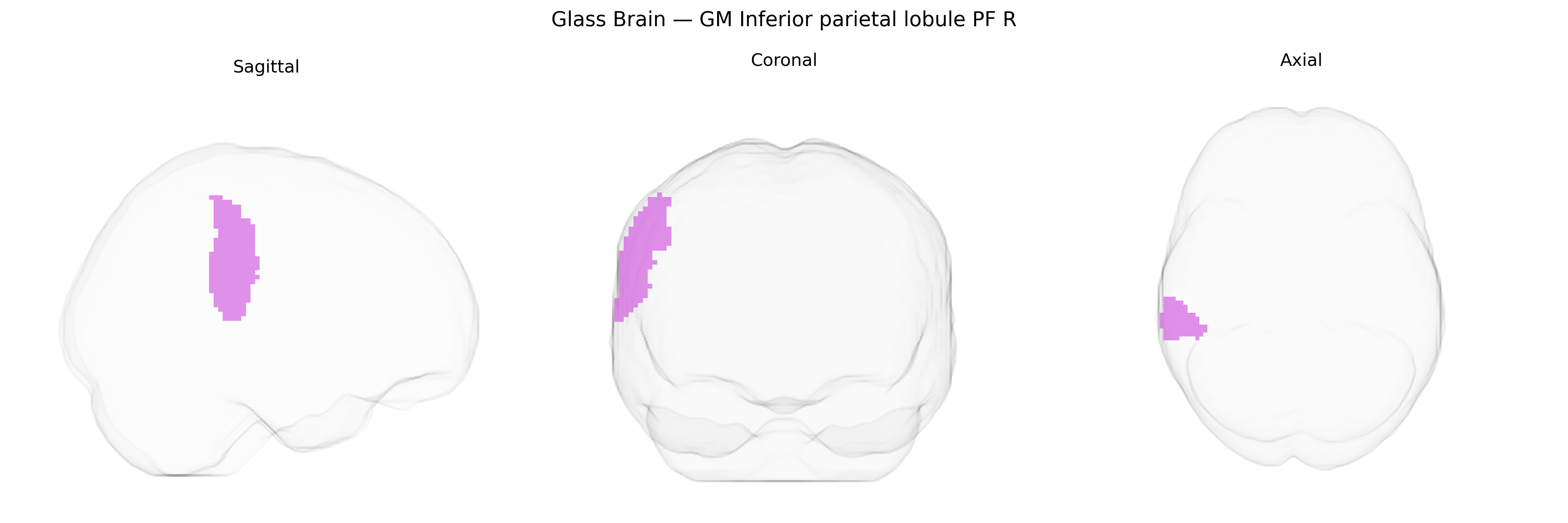
The bilateral GM Inferior parietal lobule PF R (Juelich maxprob thr25 2 mm Atlas) corresponds to a cytoarchitectonically defined subregion of the inferior parietal lobule located in the right hemisphere, associated with the supramarginal gyrus and adjacent parietal opercular areas. This PF subdivision forms part of the posterior parietal cortex and is implicated in multimodal integration of visual, auditory, and somatosensory information, contributing to functions such as spatial attention, sensorimotor transformation, body awareness, and aspects of language and social cognition (e.g., perspective taking and action understanding). Neuroimaging and lesion studies link this region to higher-order cognitive processes including working memory for spatial and object features, praxis, and attentional reorienting, with lateralization in the right hemisphere often emphasizing spatial and attentional roles. There is no direct link for this specific PF subregion; a related structure is the Inferior parietal lobule.
The bilateral inferior parietal lobule (IPL), including the PF subdivision in the Juelich atlas, has been implicated in several genetic and GWAS-based associations spanning cognition, neurodevelopmental and psychiatric disorders, and brain structural variation. Polygenic influences on IPL structure and function are supported by large-scale imaging genetics consortia (e.g., ENIGMA, UK Biobank), which show that common variants in genes involved in synaptic plasticity, neuronal migration, and axonal guidance (such as those within or near CNTNAP2, BDNF, and DLG4-related pathways) contribute to inter-individual differences in parietal cortical thickness, surface area, and functional connectivity. GWAS of general intelligence (including GWA meta-analyses by the SSGAC) and educational attainment have identified polygenic architectures that map to networks in which the IPL plays a central role, with higher polygenic scores for cognitive ability correlating with structural and functional measures in inferior parietal regions. Genetic risk for schizophrenia, bipolar disorder, and major depressive disorder has been associated with altered IPL activation and connectivity, with schizophrenia- and depression-linked loci (e.g., within CACNA1C and other calcium channel genes) showing enrichment in networks including IPL PF. Autism spectrum disorder and attention-deficit/hyperactivity disorder risk variants also converge on fronto-parietal attention and social cognition networks, where IPL PF contributes to theory of mind, language, and multimodal integration. Moreover, GWAS on cortical regionalization and parietal lobe morphology (e.g., studies by Grasby and colleagues) indicate that many implicated loci act through broad neurodevelopmental programs rather than IPL-specific genes, suggesting that genetic effects on IPL PF are largely network- and system-level, influencing association cortex organization, cognitive performance, and vulnerability to psychiatric and neurodevelopmental conditions.
Overview generated by GPT-4o (2026).
Region ID: 28
Hemisphere: bilateral
Atlas: Juelich maxprob thr25 2mm
Full Quality Version: Download MP4
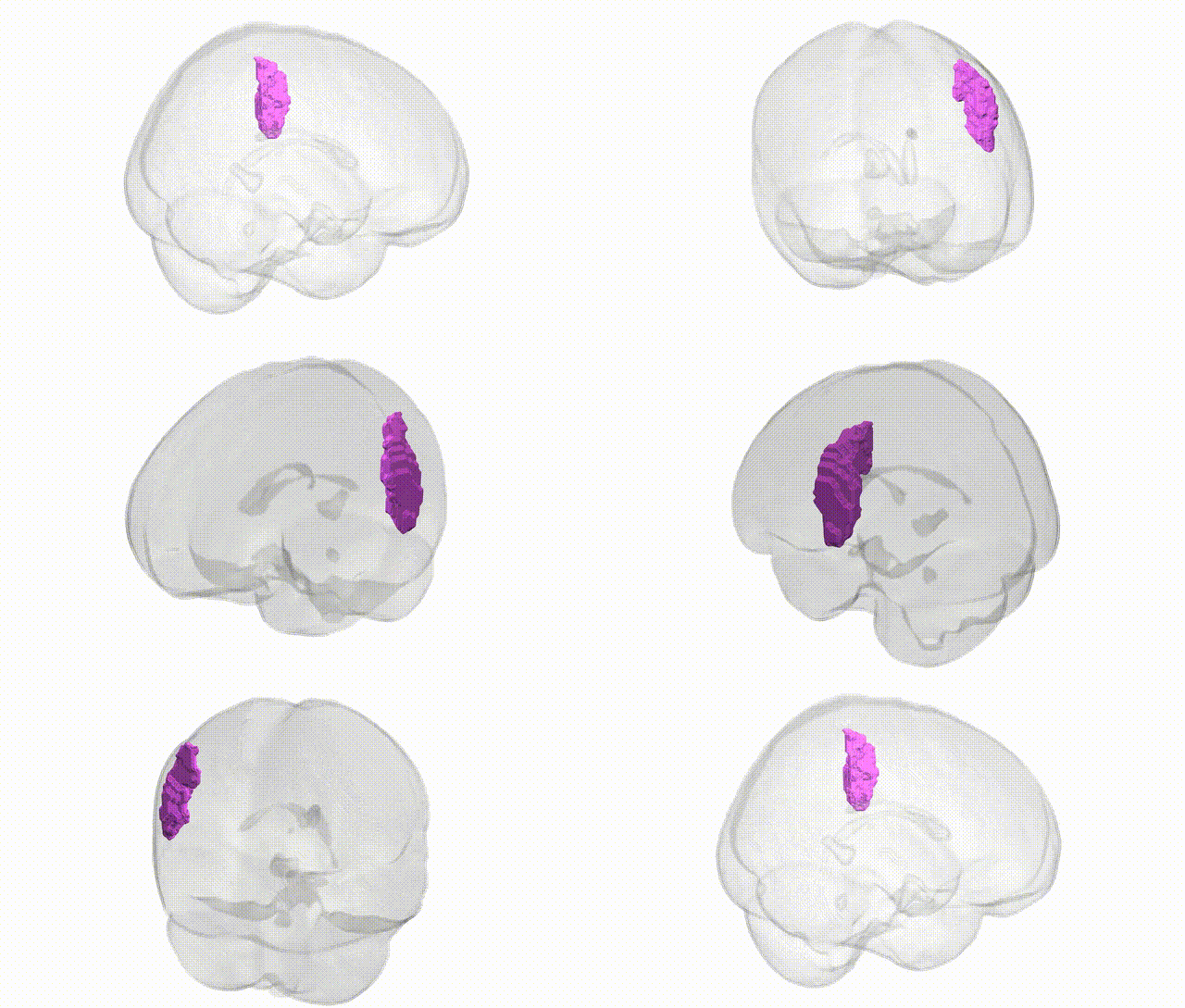
Full Quality Version: Download MP4
Wali Sidiqyar*, Gaurav Rudravaram*, Elyssa M. McMaster, Trent M. Schwartz, Adam M. Saunders, Kurt G. Schilling, Bennett A. Landman "Introducing SPINS: A Shared Public Visualization Library of Neuroanatomical Structures." Medical Imaging with Deep Learning- short paper
This resource is licensed under CC0 1.0 Universal (Public Domain).