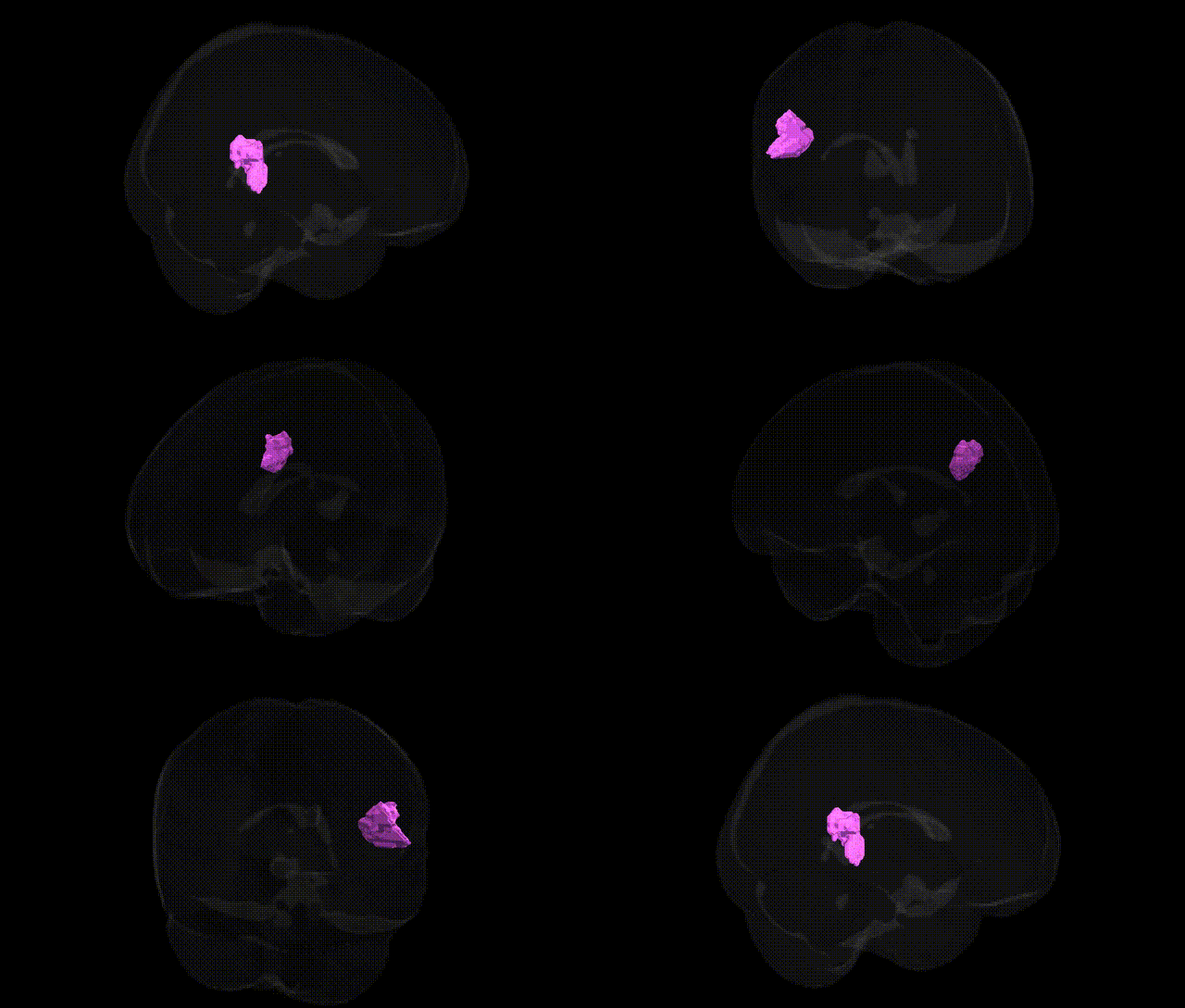
The bilateral GM Inferior parietal lobule PFcm L region, defined in the Juelich maxprob thr25 2mm atlas, corresponds to a cytoarchitectonic subdivision of the inferior parietal lobule within the supramarginal gyrus, associated with multimodal integration of somatosensory, auditory, and visual information. PFcm is part of the broader inferior parietal cortex implicated in higher-order functions such as language processing, action understanding, attention reorientation, and social cognition, including aspects of theory of mind. Neuronal populations in this area participate in transforming sensory inputs into more abstract representations relevant for conceptual knowledge and goal-directed behavior, and show strong connectivity with frontal premotor areas, temporal association cortex, and other parietal regions. There is no direct Wikipedia article for PFcm; a related structure is the Inferior parietal lobule.
The bilateral gray matter inferior parietal lobule PFcm (left) region, as defined in the Juelich maxprob thr25 2 mm atlas, corresponds largely to a segment of the inferior parietal cortex implicated in multimodal integration, language, attention, and social cognition, and genetic associations identified for inferior parietal and adjacent angular/supramarginal territories often extend to this area. Large-scale imaging–genetics consortia (e.g., ENIGMA, UK Biobank) have reported heritable variation in cortical thickness and surface area of inferior parietal regions, with significant genome-wide associations implicating loci near genes involved in neuronal development and synaptic function (such as HMGA2, microtubule- and adhesion-related genes, and several calcium channel and glutamatergic pathway genes), although PFcm-specific loci have not been uniquely resolved due to spatial smoothing and parcellation limits. GWAS of cortical morphology have linked inferior parietal metrics to general cognitive ability, educational attainment, and reading-related traits, in part via polygenic scores that overlap with neurodevelopmental and psychiatric risk variants. Genetic studies of disorders with robust inferior parietal involvement—such as schizophrenia, major depressive disorder, autism spectrum disorder, ADHD, and Alzheimer’s disease—indicate that risk alleles in synaptic, immune (e.g., complement), and axon-guidance pathways are associated with altered structure or function in this region, including left-lateralized language networks that encompass PFcm. Moreover, APOE-related risk for Alzheimer’s disease, polygenic risk for schizophrenia and bipolar disorder, and variants affecting tau and amyloid processing have been associated with atrophy or connectivity changes in inferior parietal and posterior temporoparietal cortices, which likely include the PFcm subdivision. Overall, current evidence supports a highly polygenic architecture in which numerous common variants influencing neurodevelopment, synaptic signaling, and neurodegeneration contribute to interindividual differences in the structure and function of the PFcm region, but no single gene or variant has been conclusively identified as specific to PFcm in the existing GWAS literature.
Overview generated by GPT-4o (2026).
Region ID: 29
Hemisphere: bilateral
Atlas: Juelich maxprob thr25 2mm
Full Quality Version: Download MP4
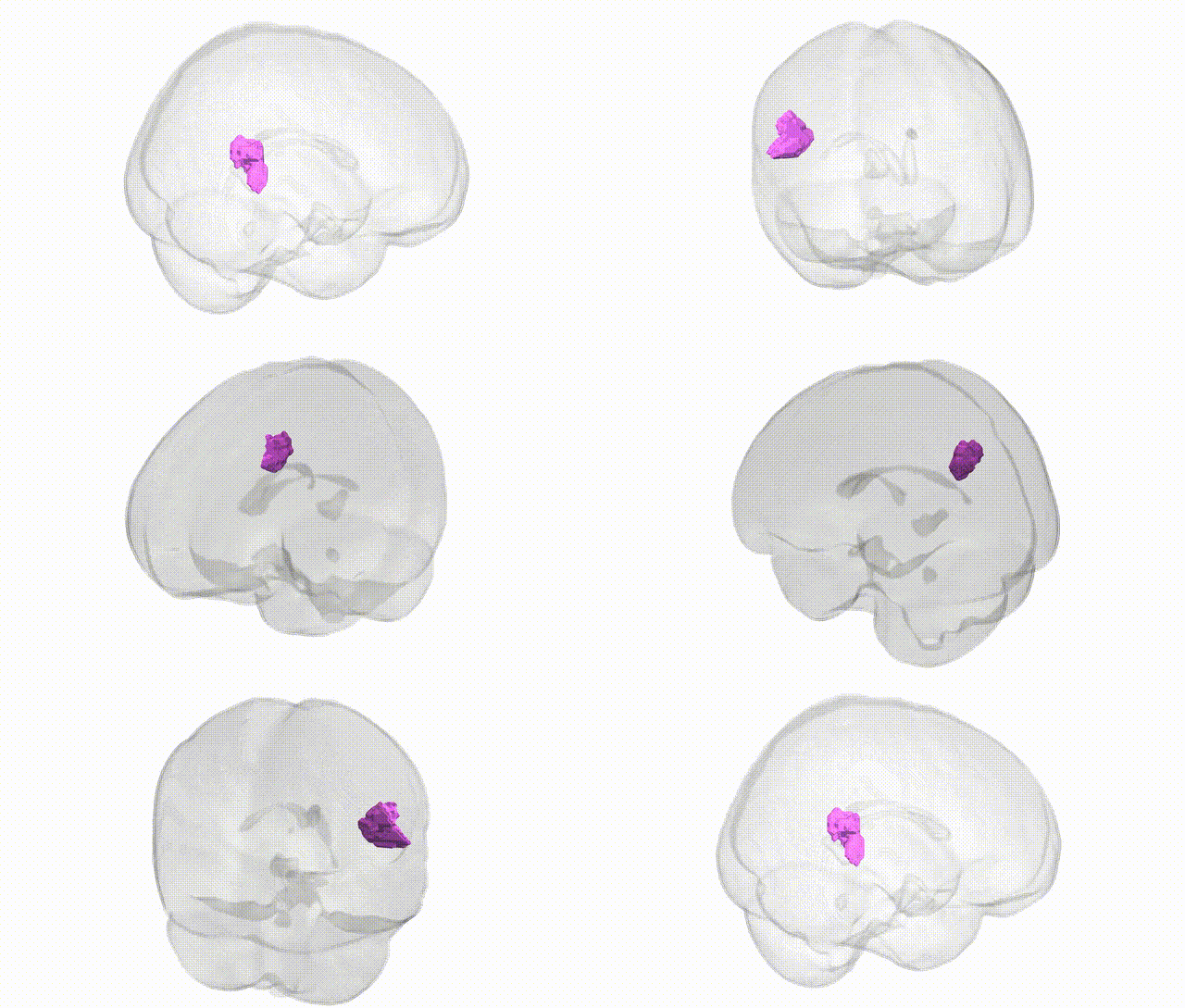
Full Quality Version: Download MP4
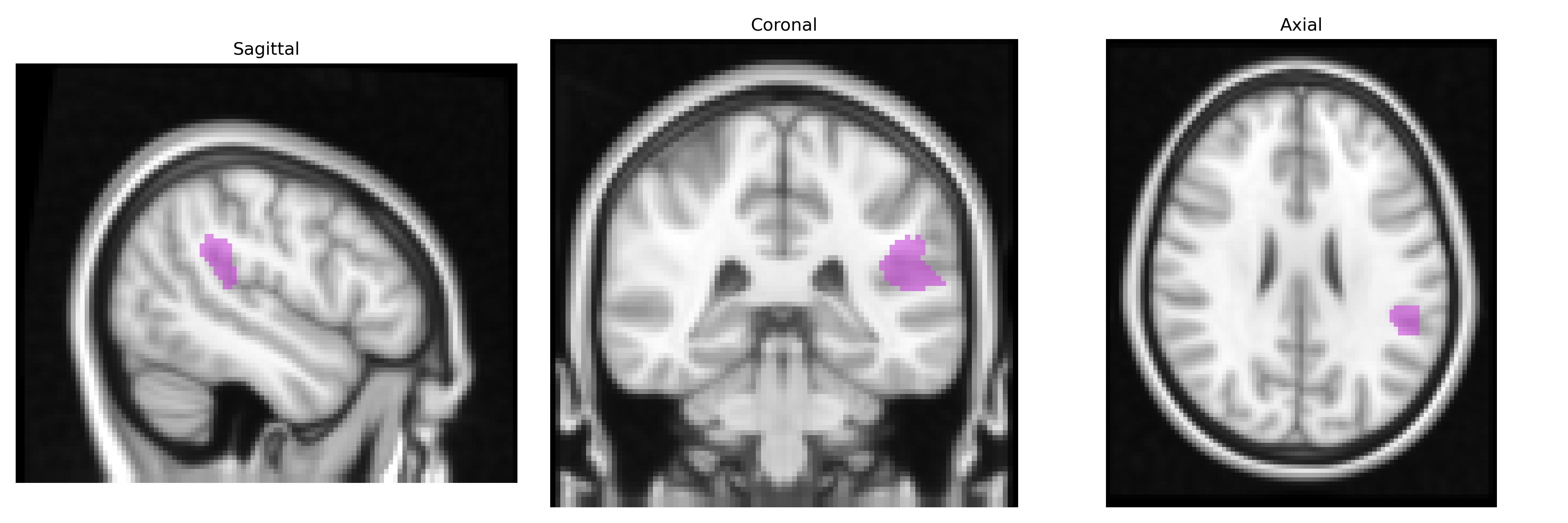
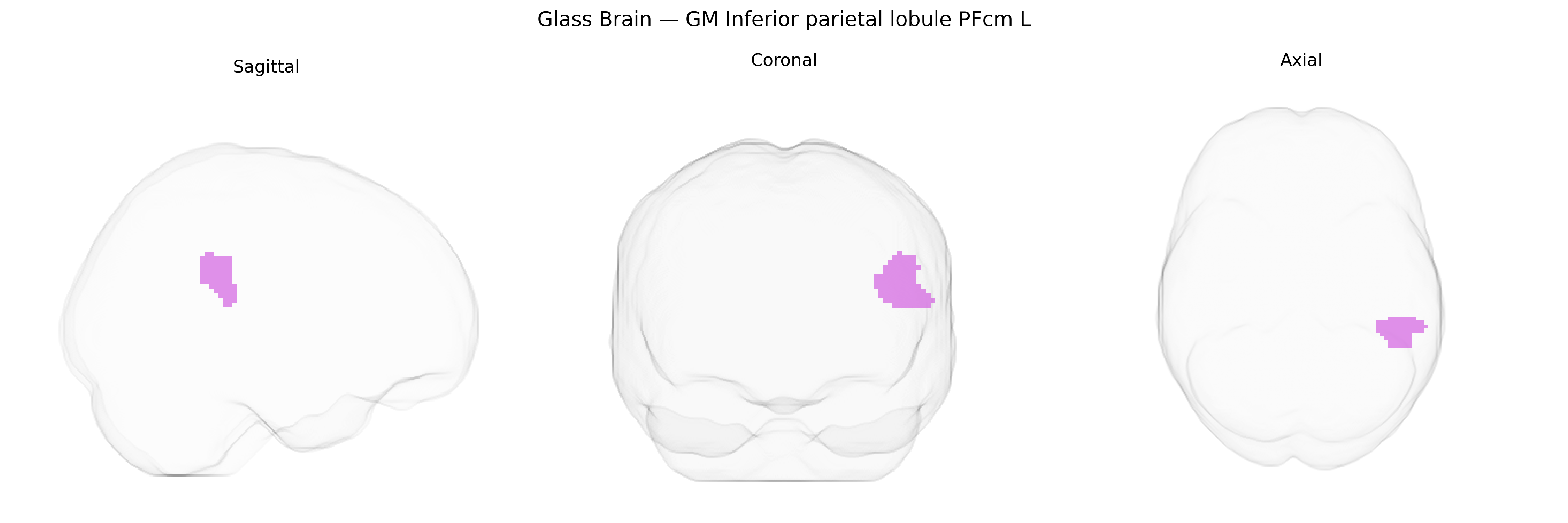
Wali Sidiqyar*, Gaurav Rudravaram*, Elyssa M. McMaster, Trent M. Schwartz, Adam M. Saunders, Kurt G. Schilling, Bennett A. Landman "Introducing SPINS: A Shared Public Visualization Library of Neuroanatomical Structures." Medical Imaging with Deep Learning- short paper
This resource is licensed under CC0 1.0 Universal (Public Domain).