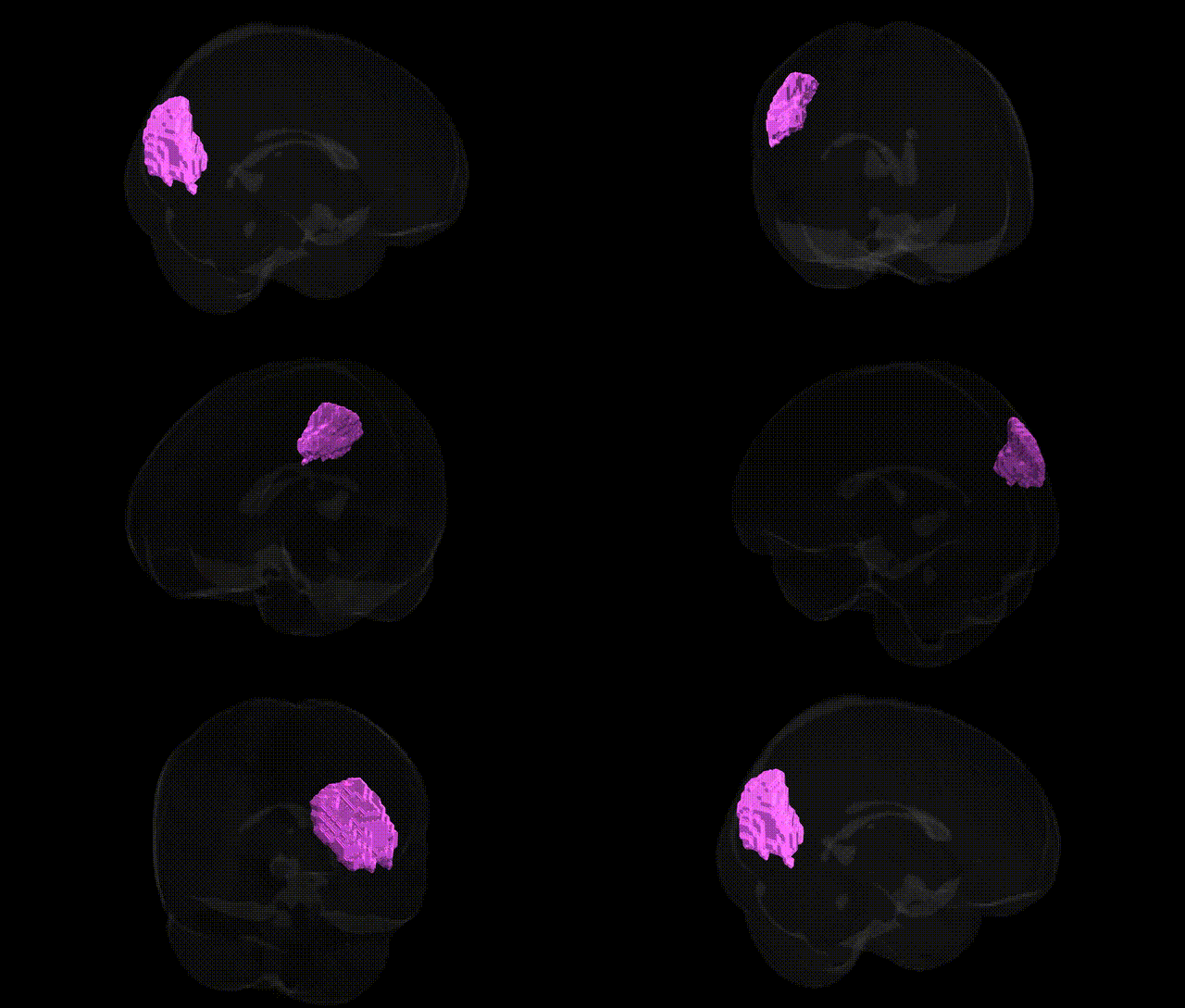
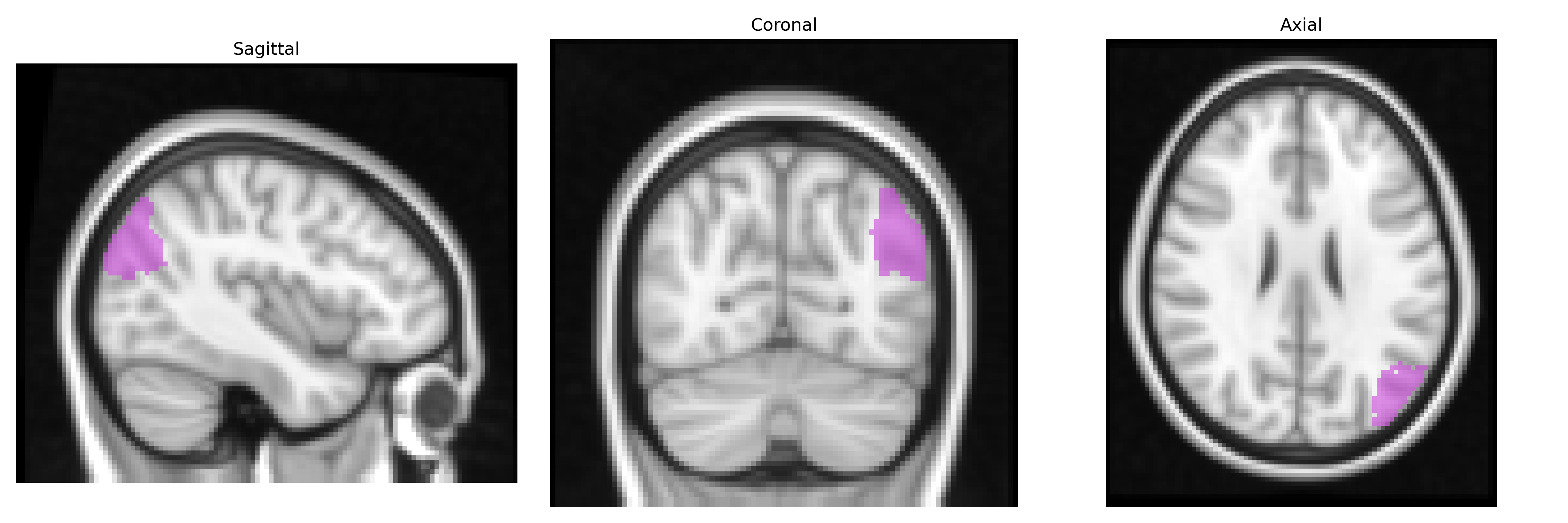
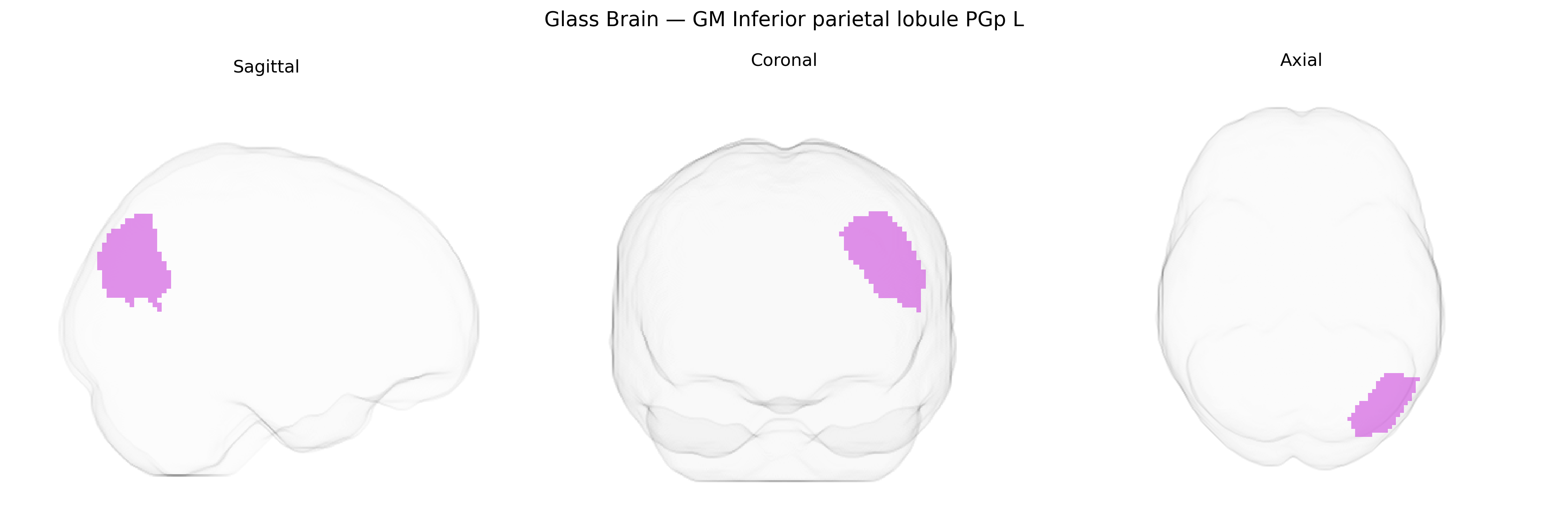
The bilateral GM Inferior parietal lobule PGp L region in the Juelich maxprob thr25 2 mm atlas corresponds to a posterior subdivision of the inferior parietal lobule, functionally associated with higher-order multisensory integration, spatial attention, and aspects of language and semantic processing. This area participates in integrating visual, auditory, and somatosensory information, contributes to body-centered and object-centered reference frames, and is implicated in processes such as mental imagery, tool use, and social cognition (including theory of mind). PGp lies within the inferior parietal cortex bordering the superior temporal and occipital regions, forming part of large-scale networks that link parietal, frontal, and temporal association cortices. There is no direct Wikipedia article for “PGp”; the closest related structure is the Inferior parietal lobule.
The bilateral GM Inferior parietal lobule PGp L (posterior angular gyrus region) from the Juelich maxprob thr25 2mm atlas has been implicated in multiple genetic and GWAS-based associations, primarily via imaging-genetics and large-scale brain-structure GWAS. Variants in genes involved in synaptic plasticity, cortical development, and axon guidance (for example, pathways including MAPT, BDNF, and neuregulin/ErbB signaling) have been associated with cortical thickness, surface area, and gyrification in inferior parietal regions encompassing PGp in ENIGMA- and UK Biobank–based studies, although individual loci are often reported at the parcel or lobe level rather than this specific subfield. GWAS of general cognitive ability, educational attainment, and reading/language-related traits consistently show that polygenic scores for these domains predict structural and functional variation in the inferior parietal lobule, a key hub for semantic processing, number cognition, and attention; some of these effects are mediated through broadly expressed neurodevelopmental genes that influence temporo-parietal association cortex. In psychiatric genetics, polygenic risk for schizophrenia, bipolar disorder, major depression, and autism spectrum disorder has been linked to reduced cortical thickness or altered connectivity in inferior parietal territories that include PGp, aligning with reported risk loci in genes regulating synaptic function and glutamatergic signaling. Neurodegenerative GWAS, especially for Alzheimer’s disease, show that risk variants (e.g., in APOE and other AD-related loci) are associated with greater atrophy and hypometabolism in angular gyrus/inferior parietal areas, which serve as key nodes of the default mode network and are early sites of amyloid/tau-related change. Overall, genetic associations with PGp L emerge mainly at the level of broader inferior parietal or angular gyrus parcels, indicating polygenic influences on association cortex organization rather than highly region-specific single-gene effects.
Overview generated by GPT-4o (2026).
Region ID: 39
Hemisphere: bilateral
Atlas: Juelich maxprob thr25 2mm
Full Quality Version: Download MP4
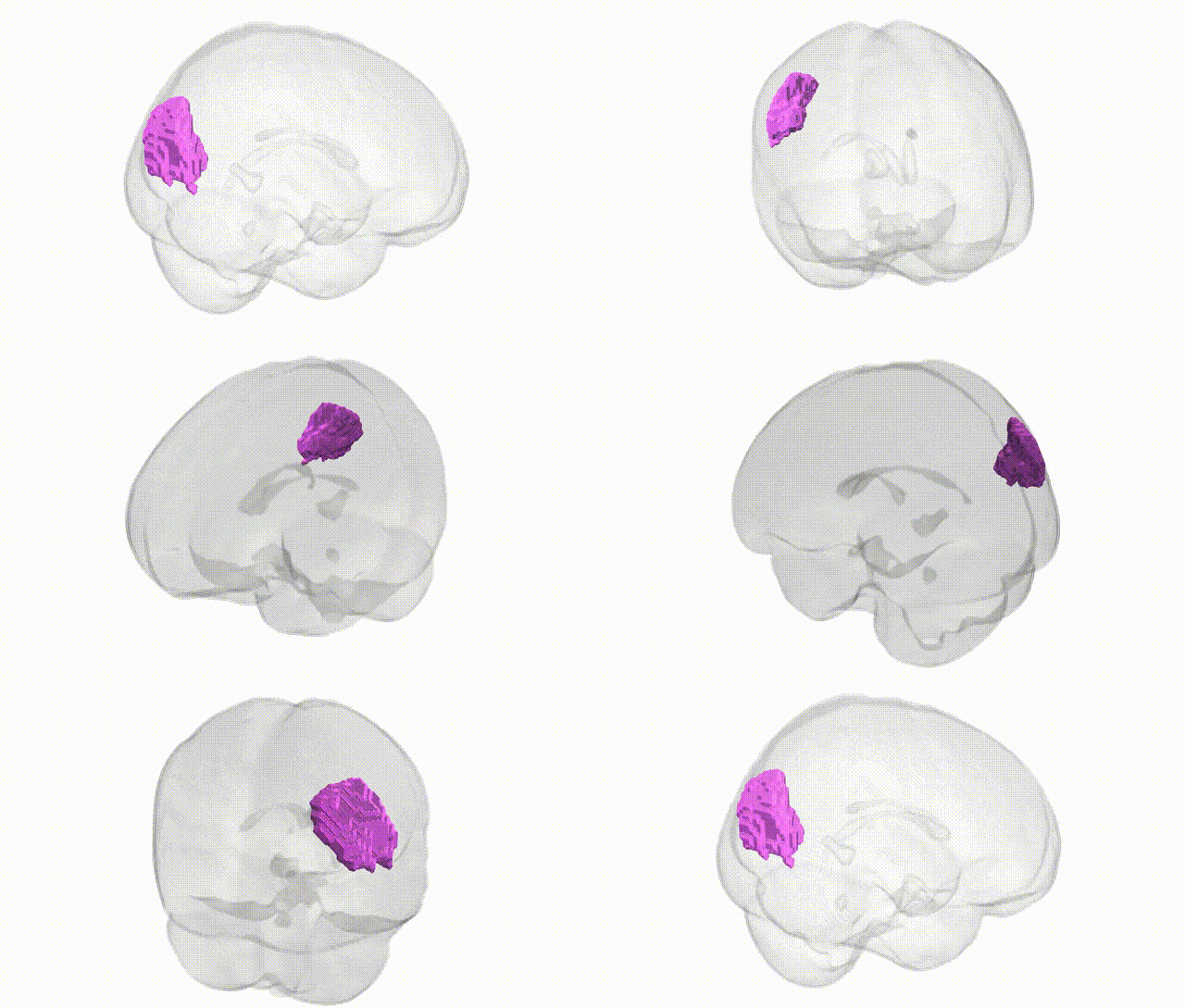
Full Quality Version: Download MP4
Wali Sidiqyar*, Gaurav Rudravaram*, Elyssa M. McMaster, Trent M. Schwartz, Adam M. Saunders, Kurt G. Schilling, Bennett A. Landman "Introducing SPINS: A Shared Public Visualization Library of Neuroanatomical Structures." Medical Imaging with Deep Learning- short paper
This resource is licensed under CC0 1.0 Universal (Public Domain).