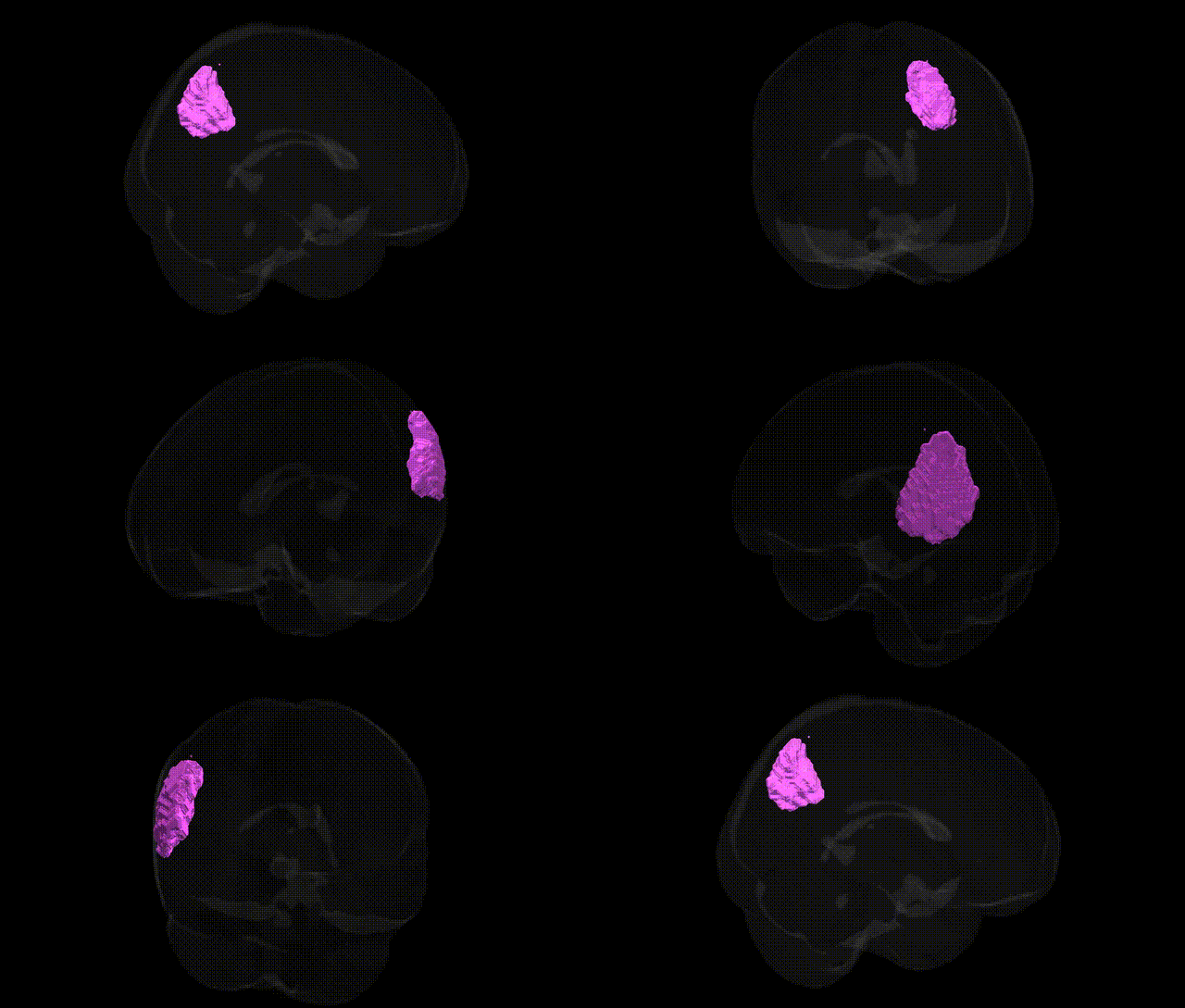
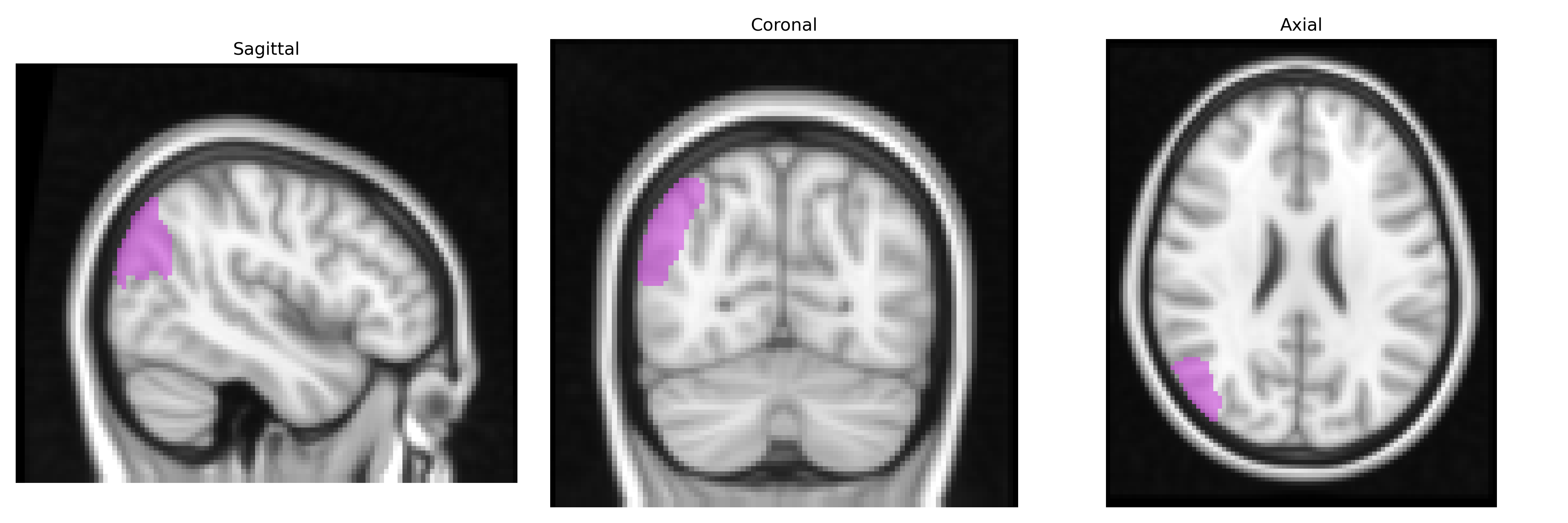
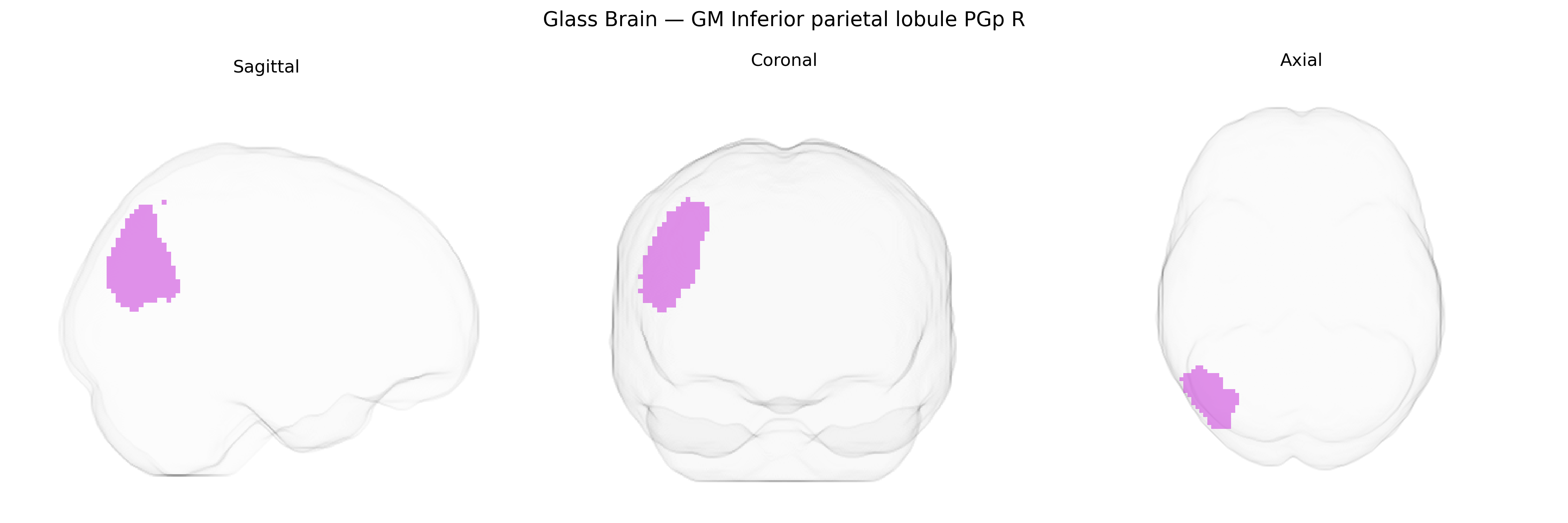
The bilateral GM Inferior parietal lobule PGp R region (from the Juelich maxprob thr25 2mm atlas) corresponds to a posterior subdivision of the inferior parietal lobule, typically associated with the angular gyrus and adjacent areas in the posterior parietal cortex. This region is implicated in multimodal integration of visual, auditory, and somatosensory information and contributes to higher-order cognitive functions such as language comprehension, semantic processing, number processing, spatial attention, and aspects of social cognition (e.g., theory of mind). PGp integrates inputs from temporal, occipital, and frontal regions and is involved in constructing abstract representations that support reading, writing, and conceptual knowledge. Lateralization effects have been reported, with the left hemisphere often more engaged in language and symbolic processing, and the right hemisphere more involved in spatial and attentional functions. There is no direct link for “PGp,” but it is part of the Angular gyrus.
The bilateral GM Inferior parietal lobule PGp (Juelich maxprob thr25 2mm, right hemisphere) lies within the inferior parietal cortex, a heteromodal association area frequently implicated in large-scale imaging genetics and GWAS of brain structure and function. Twin and SNP-heritability studies show high heritability of cortical thickness and surface area in inferior parietal regions, with common variants in genes involved in neurodevelopment, synaptic plasticity, and axon guidance (for example, pathways including BDNF/TrkB signaling, cadherins, and semaphorins) contributing to interindividual variability in parietal morphology and connectivity. Large neuroimaging GWAS (such as ENIGMA and UK Biobank–based studies) have identified genome-wide significant loci influencing inferior parietal cortical metrics, including variants in genes linked to neuronal differentiation, myelination, and glutamatergic signaling; these parietal-associated loci often overlap with risk variants for schizophrenia, major depressive disorder, ADHD, autism spectrum disorder, and Alzheimer’s disease. Functionally, PGp participates in networks subserving language, numerical cognition, attention, and default-mode processing, and genetic risk for disorders affecting these domains (for instance, language-related developmental disorders, dyscalculia, and neurodegenerative conditions with parietal atrophy such as posterior cortical atrophy and typical late-onset Alzheimer’s disease) shows convergent structural and connectivity alterations in inferior parietal cortex. Polygenic risk scores for schizophrenia, bipolar disorder, and dementia have been associated with altered parietal volume or thickness, including in inferior parietal subdivisions, and APOE ε4 status has been related to parietal cortical thinning and hypometabolism. Overall, current evidence indicates that PGp shares the broad genetic architecture of association cortex, with multiple common and rare variants of modest effect contributing to its structure and function, and with overlap between genetic influences on this region and those conferring vulnerability to major psychiatric and neurodegenerative disorders, although few studies have isolated PGp specifically rather than the inferior parietal lobule as a whole.
Overview generated by GPT-4o (2026).
Region ID: 40
Hemisphere: bilateral
Atlas: Juelich maxprob thr25 2mm
Full Quality Version: Download MP4
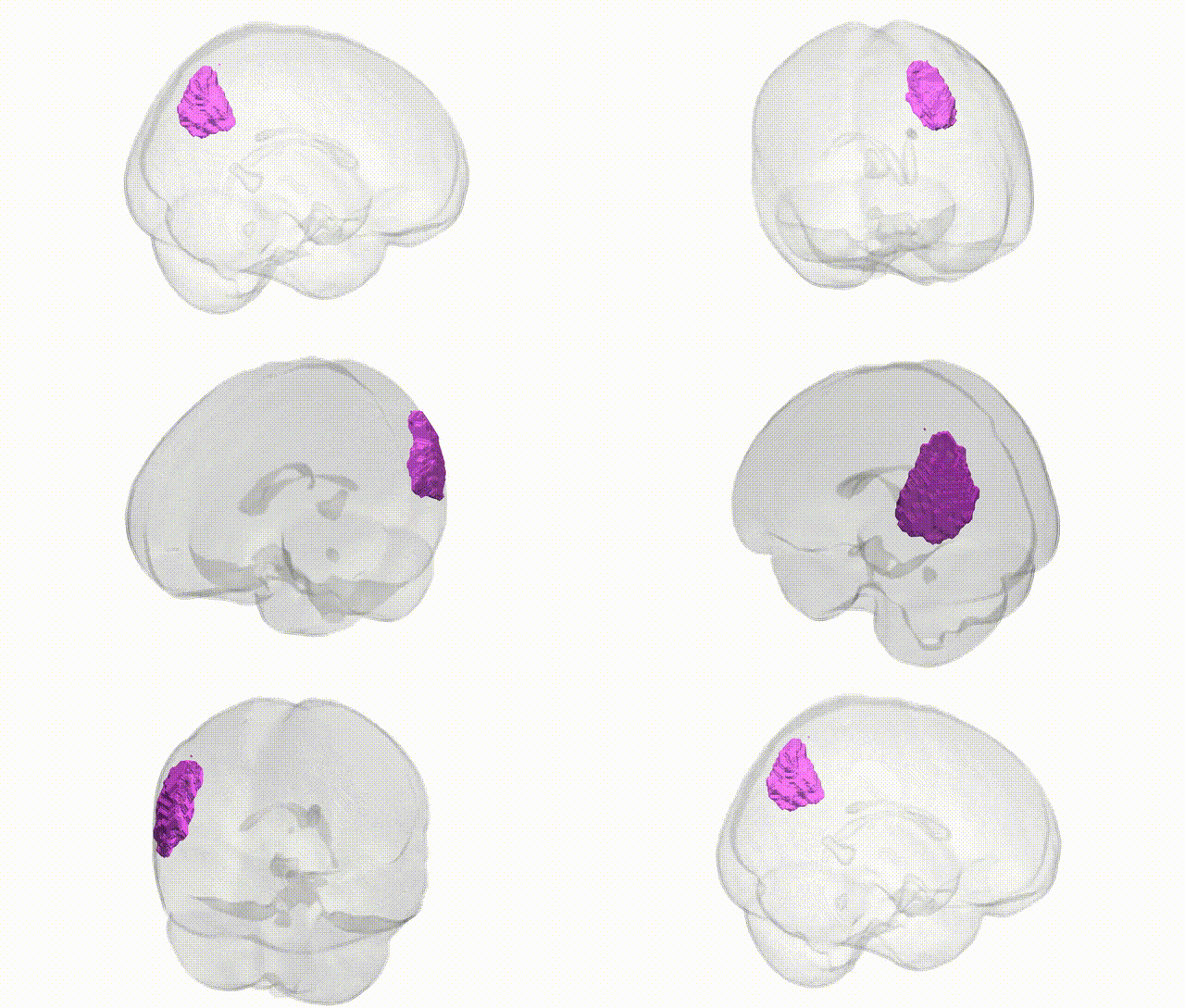
Full Quality Version: Download MP4
Wali Sidiqyar*, Gaurav Rudravaram*, Elyssa M. McMaster, Trent M. Schwartz, Adam M. Saunders, Kurt G. Schilling, Bennett A. Landman "Introducing SPINS: A Shared Public Visualization Library of Neuroanatomical Structures." Medical Imaging with Deep Learning- short paper
This resource is licensed under CC0 1.0 Universal (Public Domain).